Newcomers and Hazing

Joseph Reagle

Today question(s)

How to initiate and socialize newcomers?

Aronson and Mills

Research question?

. . .

Do people value those things that take greater trouble/pain to attain?

Based on whose theory?

. . .

Festinger’s _______________________predicts that if someone undergoes an unpleasant initiation, his cognition that he did so “for the sake of membership is dissonant with his cognition that there are things about the group he does not like.”

Cognitive dissonance

Can you think of some examples?

Method?

. . .

groups read words: control, mild (sexual related), extreme (obscene);

listen and rate interest of people in group

Effort justification

Results

Expressed interest?

case number mean std
control N=21 M=80.2 std=13.2
mild N=21 M=81.8 std=21.0
severe N=21 M=97.6 std=16.6

How to distinguish cognitive dissonance from the self-selection of those who really like the group and persevered?

. . .

subjects were randomly placed in control, mild, or severe groups

Critiques?

  • short term / experimental
  • naughty words sufficient?

Other reasons for cohesion/solidarity?

  • personality (e.g., “joiners”)
  • deindividuation (i.e., loss of self-awareness in groups)
  • shared pain

Pain as Social Glue: Shared Pain Increases Cooperation

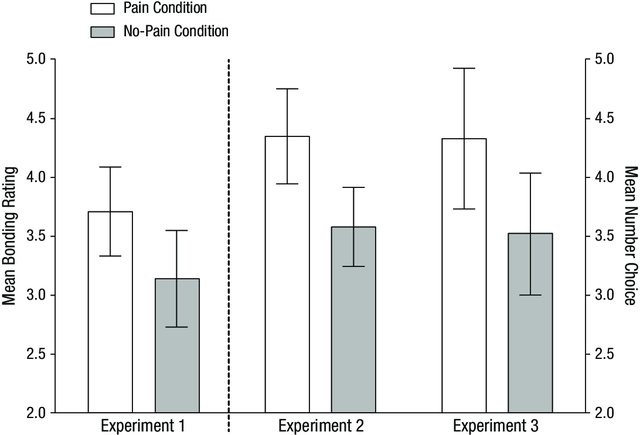
Students with no former group membership were paid $10 to experience pain (placing hands in ice water, doing leg squats, and eating a hot chili pepper), which was found to promote trusting interpersonal relationships by increasing perceived bonding among strangers (experiment 1) and increased cooperation in an economic game (experiments 2 and 3). (Bastian et al. 2014)

Results

ex1:3.14->3.71; ex2:3.58->4.35; ex3:3.52->4.33

Interpersonal bonding was measured on a 5-point Likert scale and shows increases in the pain conditions.

A game

You can bid on $20; winner gets $20, second highest receive $0 but must still pay bid.

Is this cognitive dissonance? Is this sunk cost fallacy?

Hazing

K&R

Keeping newbies

How many newcomers to Usenet and Wikipedia disappear?

. . .

Go around and checklist

  1. I will enumerate 17 to 25 on the board.
  2. As we QIK go-around, I will check off those we discuss.
  3. At end, make sure each claim got some coverage.

Dimensions of org tactics??

Use Table 5.1 to consider your experience as a WP newcomer.

Institutionalized Individualized
Collective: go through a common set of experiences designed to produce standardized responses to situations. Individual: receives unique training in isolation from others.
Sequential: are given a clear sequence of experiences or stages they will go through. Informal: receive onthe-job training to learn their roles.
Formal: are segregated from other organizational members and put through experiences tailored to newcomers. Random: The sequence of stages isn’t communicated in advance.
Fixed: are given a fixed timetable about when they will move through stages. Variable: The timing of role transitions is variable.
Serial: observe and get training from experienced role models, who give newcomers a clear view of the experiences they will encounter in the organization. Disjunctive: must develop their own definition of the situation and do not have more senior people to observe.

Conclusion

Why suffer hardship to join?

. . .

  1. genuine interest (you really want to)
  2. positives outweigh negatives (worth it)
  3. filtering (be with the best)
  4. cognitive dissonance (must be worth while)
  5. fallacious (sunk cost) thinking
  6. social pressure/bonding

Wrap up: questions

Create two high-order questions.

Review

Quiz

  1. List four reasons why people suffer to join?
  2. Give a new example of cognitive dissonance.