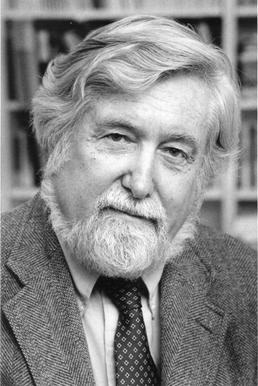
An “interpretive anthropologist” who studied cultural practices such as cock-fighting, religion, and kinship and advocated for “thick description.”
man is an animal suspended in webs of significance he himself has spun, [and] I take culture to be those webs, and the analysis of it to be therefore not an experimental science in search of law but an interpretative one in search of meaning. (Geertz 1973, p. 5)
Geertz borrowed Ryle’s concept of “thick description” and metaphor of winking.
To say someone winked is a “thin” description; to describe its meaning and symbolic import is “thick.” (Geertz 1973, p. 6)
(😉 is also “polysemous” or “multivalent”)
Doing ethnography is like trying to read (in the sense of “construct a reading of’) a manuscript—foreign, faded, full of ellipses, incoherencies, suspicious emendations, and tendentious commentaries, but written not in conventionalized graphs of sound but in transient examples of shaped behavior. (Geertz 1973, p. 10)
In Lindholf’s (1988) “interpretive community,” readers construct the boundaries of genres using shared interpretive conventions.
Radway (1991) argued readers interpret romances differently than professional cultural critics: texts can mean different things to different people. She claimed her readers were an “interpretative community.”
Lichterman disagrees with describing people who don’t know each other as a community.
It is debatable whether a concept originally applied to a literary establishment is as useful when applied to a loose network of readers. (Lichterman 1992, p. 425)
readers’ shared understanding of the words and concepts put forth in these books can be read and adopted loosely, tentatively, sometimes interchangeably, without enduring conviction. (Lichterman 1992, p. 426)
I name this culture ‘thin’ because it does not support a deep commitment from readers. Over a period of years, some readers do dive repeatedly into self-help reading, but they discover and rediscover that it is not such a long way from surface to bottom. (Lichterman 1992, p. 427)
What were some of the specific values, motives, and interpretations these readers shared?
(He had probably not read Grodin, which was published just the year before.)
In a group identify:
Write a simple multiple choice question for one of the following:
Share you multiple-choice question from last class.