Stoicism 101
connotation != philosophy
The difference here between the Epicurean and our own school [of Stoicism] is this: our wise man feels his troubles but overcomes them, while their wise man does not even feel them. We share with them the belief that the wise man is content with himself. (Seneca 1974, “Letters from a Stoic”, p. 48)
Other Ancient schools: Cynicism, Skepticism, Hedonism, …
The philosophy of Stoicism
Notable “Greeks”
- Zeno (334–262 BCE): shipwrecked merchant
We have two ears and one mouth, so we should listen more than we say. (Wikiquote 2020)
- Epictetus (“Aquired,” 50–135 ACE): limping slave
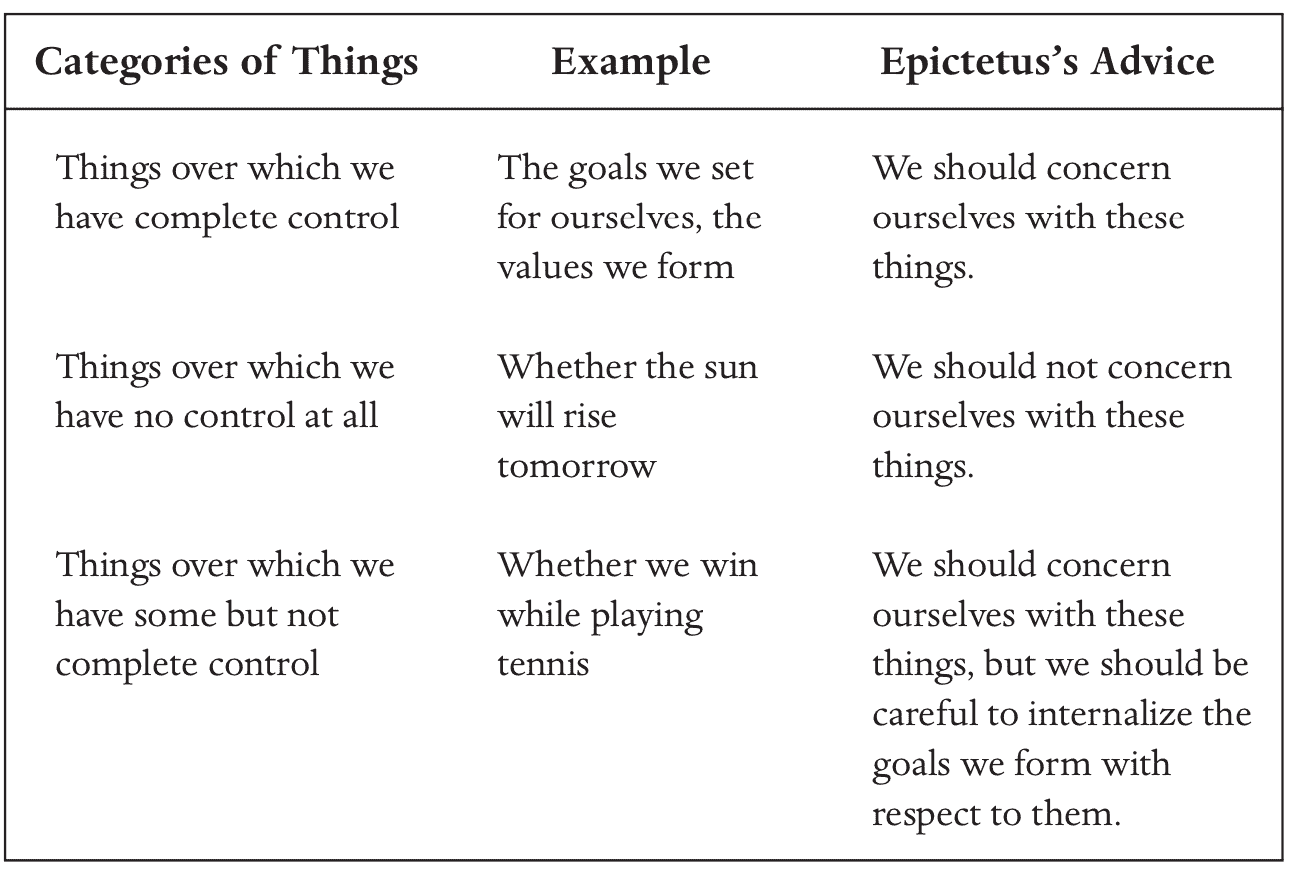
External things are not within my power; choice is within my power. Where am I to seek the good and the bad? Within myself, in that which is my own. (Epictetus 2014)
Notable Romans

Seneca (4 BCE–65 ACE): famed orator, forced to suicide by Nero
Provided that one’s thinking has not been adding anything to it, pain is a trivial sort of thing. (Seneca 1974, “Letters from a Stoic”, p. 134)

Marcus Aurelius (121–180 ACE), last of the Five Good Emperors, sickly with chronic pain
7.27. Do not indulge in dreams of having what you have not, but reckon up the chief of the blessings you do possess, and then thankfully remember how you would crave for them if they were not yours. At the same time, however, beware lest delight in them leads you to cherish them so dearly that their loss would destroy your peace of mind. (Aurelius 180/2005, p. 924)
Concept mnemonics??
- logos
- reason (and in accordance with nature) (Sulprizio 2015)
- ataraxia
- “imperturbability, literally ‘without trouble,’ sometimes translated as ‘tranquillity’ (Pigliucci 2015)
- eudaimonia
- human flourishing (often “contented happiness”) (Parry 2014)
- oikeiosis
- ethical duties and relationships of belonging (Sulprizio 2015)