Home Page:https://hackmd.io/@ZemingBao/BkV2TZAej [https://www.gravatar.com/avatar/09ac5bde15cce422620ae2659c0ec16f?s=400]https://hackmd.io/@ZemingBao/BkV2TZAej Zeming Bao’s Home Page - HackMDhttps://hackmd.io/@ZemingBao/BkV2TZAej
hackmd.io
Tutorial Page:https://hackmd.io/@ZemingBao/HJG0DUUWj [https://hackmd.io/images/media/HackMD-og.jpg]https://hackmd.io/@ZemingBao/HJG0DUUWj 403 Forbidden - HackMDhttps://hackmd.io/@ZemingBao/HJG0DUUWj hackmd.io
Markdown:
1.In the article, the author discusses about Agnotology and Epistemological. These two terms were unfamiliar to me before I read this article. I think Angnotology is something we don’t know and Epistemilogical is how we know what we know. It’s about purposefully and intentionally seeding doubt to fragment society. This article is kind of intriging and confused to me actually.
发件人: Joseph Reagle joseph@reagle.org 发送时间: 2022年9月19日 10:51 收件人: Zeming Bao bao.ze@northeastern.edu 主题: hackmd wiki?
Edison, have you sent me your link?
Dear professor,
Home page: https://hackmd.io/v9uZPqIBQaGMwP81dbgIQA [https://hackmd.io/images/media/HackMD-og.jpg]https://hackmd.io/v9uZPqIBQaGMwP81dbgIQA Zeming Bao's Home Page - HackMDhttps://hackmd.io/v9uZPqIBQaGMwP81dbgIQA hackmd.io
Tutorial page: https://hackmd.io/uC9zqyYER2iZXPO8AgBLCQ
Best, Zeming Bao [https://hackmd.io/images/media/HackMD-og.jpg]https://hackmd.io/uC9zqyYER2iZXPO8AgBLCQ Web Research and Evaluation - HackMDhttps://hackmd.io/uC9zqyYER2iZXPO8AgBLCQ hackmd.io
Dear professor,
Hope all is well. My five reading responses are listed below in the markdown page.
Home page: https://hackmd.io/v9uZPqIBQaGMwP81dbgIQA
Sincerely, Zeming Bao [https://hackmd.io/images/media/HackMD-og.jpg]https://hackmd.io/v9uZPqIBQaGMwP81dbgIQA Zeming Bao's Home Page - HackMDhttps://hackmd.io/v9uZPqIBQaGMwP81dbgIQA hackmd.io
Dear professor,
Home page: https://hackmd.io/v9uZPqIBQaGMwP81dbgIQA [https://hackmd.io/images/media/HackMD-og.jpg]https://hackmd.io/v9uZPqIBQaGMwP81dbgIQA Zeming Bao's Home Page - HackMDhttps://hackmd.io/v9uZPqIBQaGMwP81dbgIQA hackmd.io Tutorial Page:https://hackmd.io/bLahJS0fQEemvWfE0_cNFg [https://hackmd.io/images/media/HackMD-og.jpg]https://hackmd.io/bLahJS0fQEemvWfE0_cNFg HackMD - Collaborative Markdown Knowledge Basehttps://hackmd.io/bLahJS0fQEemvWfE0_cNFg hackmd.io
Best, Zeming Bao
Dear professor,
Hope all is well. This is my privacy footprint assignment.
Home Page:https://hackmd.io/v9uZPqIBQaGMwP81dbgIQA [https://hackmd.io/images/media/HackMD-og.jpg]https://hackmd.io/v9uZPqIBQaGMwP81dbgIQA Zeming Bao's Home Page - HackMDhttps://hackmd.io/v9uZPqIBQaGMwP81dbgIQA hackmd.io
Tutorial Page:https://hackmd.io/fYDje7xaSQuxPmG7qApP2A [https://hackmd.io/images/media/HackMD-og.jpg]https://hackmd.io/fYDje7xaSQuxPmG7qApP2A Privacy Footprint - HackMDhttps://hackmd.io/fYDje7xaSQuxPmG7qApP2A hackmd.io
Sincerely, Zeming Bao
Dear professor,
Hope all is well. My five reading responses are attached in order. Home Page: https://hackmd.io/v9uZPqIBQaGMwP81dbgIQA [https://hackmd.io/images/media/HackMD-og.jpg]https://hackmd.io/v9uZPqIBQaGMwP81dbgIQA Zeming Bao's Home Page - HackMDhttps://hackmd.io/v9uZPqIBQaGMwP81dbgIQA hackmd.io
Tutorial Page: https://hackmd.io/uX2_wBzmTlKsO9m0usHU0w Tutorial Page: https://hackmd.io/3-XMJTM9TMy1evFEufxbFw Tutorial Page: https://hackmd.io/7CFp7S_bRZSuXTmQ6wF88Q Tutorial Page: https://hackmd.io/mss3ocr4R8utBbDB7zTX2A Tutorial Page: https://hackmd.io/9tGlYEIYSXWWS55KhFsRjw [https://hackmd.io/images/media/HackMD-og.jpg]https://hackmd.io/9tGlYEIYSXWWS55KhFsRjw HackMD - Collaborative Markdown Knowledge Basehttps://hackmd.io/9tGlYEIYSXWWS55KhFsRjw hackmd.io
[https://hackmd.io/images/media/HackMD-og.jpg]https://hackmd.io/mss3ocr4R8utBbDB7zTX2A HackMD - Collaborative Markdown Knowledge Basehttps://hackmd.io/mss3ocr4R8utBbDB7zTX2A hackmd.io
[https://hackmd.io/images/media/HackMD-og.jpg]https://hackmd.io/7CFp7S_bRZSuXTmQ6wF88Q HackMD - Collaborative Markdown Knowledge Basehttps://hackmd.io/7CFp7S_bRZSuXTmQ6wF88Q hackmd.io
[https://hackmd.io/images/media/HackMD-og.jpg]https://hackmd.io/3-XMJTM9TMy1evFEufxbFw HackMD - Collaborative Markdown Knowledge Basehttps://hackmd.io/3-XMJTM9TMy1evFEufxbFw hackmd.io
[https://hackmd.io/images/media/HackMD-og.jpg]https://hackmd.io/uX2_wBzmTlKsO9m0usHU0w HackMD - Collaborative Markdown Knowledge Basehttps://hackmd.io/uX2_wBzmTlKsO9m0usHU0w hackmd.io
Sincerely, Zeming Bao
Hi Prof. Reagle,
Here is my response for this week’s reading
https://hackmd.io/ElSkoy_vT-OrsCEQrOFRtw
Are mobile cell phones the new “passport”? The new “lifeline”? The new companion to “sleep” with? Mary Chayko claims so, as she argues that positively and negatively, keeping our phones closeby provides us a feeling of constant companionship (1). Opening her argument with pre-industrialization contextualization, Chayko illustrates how cell phones reinvented the concept of “tribes” by keeping social support networks literally in users’ pockets (1). Today, cell phones inhabit a double reality, the “convenience of connecting digitally” paired with feeling “anxious, lost, and unmoored” (3). Chayko’s analysis of cell phones in the digital age proposes a controversial question, have cell phones become “domesticated”?
“Domestication” refers to the concept of technology, once immersed into society with shock and amazement, becomes normalized and integrated into everyday life with time. It transitions from shocking, to mundane. What troubles me about Chayko’s analysis is its overwhelming focus on the reality of the developed world, without addressing the lack of cell phone accessibility in the developing world. Sociologist George Ritzer coined the term “McDonalized” (4) to describe societies that have focused solely on efficiency, predictability, calculability, and control. The juxtaposition of this scary reality with societies in other parts of the world that still lack access to basic necessities such as clean water amazes me. Here we are in the developed world focusing so solely on how we can constantly improve, at such an exponential speed compared to other parts of the world.
It’s clear that Chayko believes cell phones have become domesticated in our everyday life as she discusses our reliance on them in almost all aspects of our lives. However, this is not the case worldwide, owning a cell phone is still a rarity for a majority of the developing world. This is a dilemma I find in many academics related to digital technology. There is a severe technological inequality crisis happening worldwide and it is rarely addressed in the developed world.
Thanks!
Hi Professor Reagle,
I hope you had a great weekend. Here is my second reading response. I found this one to be more difficult to analyze and draw connections from, but I look forward to discussing in class.
https://hackmd.io/ElSkoy_vT-OrsCEQrOFRtw
I find it shockingly hilarious that I’ve inserted my credit card information hundreds of times online, for all kinds of purchases, without ever understanding just how secure my information really is, or what makes the process sure. Anyone else guilty? The (not so) simple answer…HTTPS, and all of its added security layers. Web developer Hartley Brody answers the question of “how does HTTPS actually work?” and “what precautions are necessary to protect confidential information?” in his explanatory article. In my scenario, I can view the web as a road straight to the store I’d like to make a purchase at (MDN). HTTP is then viewed as the “language” used to make that purchase because it facilitates the “communication” between the client (me) and the server (the website). Then, when my credit card information is inserted to make my purchase, TLS (an added security level) is used to ensure safe HTTP connections (Brody).
As a right-side dominant brainer, infographics make way more sense to me than numbers. The visual graphic of the “mixing paint” analogy to illustrate the Diffie-Hellman key exchange solidified my understanding of how a secret (like my credit card) can be transmissioned through the web privately and securely through shared secret keys (Brody). Ironically, just as we discussed attention tests in class, I found myself struggling to read about the Diffie-Hellman key exchange (the mathematics part of it). While I recognize that numbers aren’t my strong suit (or preferred topic of reading), I can instill methods like the Pomodoro technique into my routine to better discipline myself, and further solidify my understanding of the readings.
Thanks!
Hi Professor Reagle,
Here’s my assignment: https://hackmd.io/X8hVZZ0KQG6qH3F9LdA4Eg [https://hackmd.io/images/media/HackMD-og.jpg]https://hackmd.io/X8hVZZ0KQG6qH3F9LdA4Eg 403 Forbidden - HackMDhttps://hackmd.io/X8hVZZ0KQG6qH3F9LdA4Eg hackmd.io

Hi Professor Reagle,
Here is my reflection for tomorrow’s reading. https://hackmd.io/vginwFmATp2-vRpj20ZYbQ
I’ve probably wasted a thousand index cards since middle school. Flashcards were always my go to study method, and now I’m being told it’s a load of bull. Guilty, I’m a poor judge of when I’m learning well (Brown, 4). Turns out, repetitive exposure building memory is a fallacy that’s been long believed (Brown, 14). Instead, retrieval practices are favored as they strengthen memory (Brown, 4). Brown claims that our memory response following immediate exposure to material is stronger than our retention after viewing notes for hours. If this is true, why do we still spend hours studying? Perhaps we become too familiar with what we are re-reading over and over (Brown, 5), to the point where our brain resents processing it into memory. Perhaps we need to focus more closely at first exposure, rather than picking up pieces of the puzzle later. In doing so, we are essentially solving a problem before being taught the solution (Brown, 5) as we are striving to learn at first exposure rather than later. What I appreciate about Brown’s philosophy is it values time. Reviewing notes takes hours, whereas trying to solve (or remember) something on the first try saves time. Trying to solve a problem before being taught the solution leads to better learning because the errors are greatly remembered, and the successes are highly valued. I think back to our in class exercise of using Imgur to embed an image, and through trial and error I learned how to do it. While there was an easy way to do it on HackMD itself, the satisfaction I felt after succeeding felt rewarding, and the next time I went to imbed an image I remembered exactly how to do it. This proves that Brown’s take on learning is successful, when learning is done in the right frame of mind.
Hi Professor Reagle,
Here is my fake news/filter your email assignment: https://hackmd.io/ElSkoy_vT-OrsCEQrOFRtw
I
implemented a second rule to filter out emails from The Fashion Society,
so I have all of the club’s communications in one place.
I can’t imagine being taught in school that “you can’t get pregnant until you’re 16”. Luckily for me, I had a teacher who actually valued credible facts, shocking. In today’s media-frenzy world characterized by widespread consumption and spread of propaganda, media literacy is needed now more than ever (Boyd). Society requires an immediate cultural change about how we absorb and obtain our information, and how we process everything we read or hear (Boyd). From fake news regarding elections, to high school sex-ed, to ridiculous scandals out of pizza joints, misinformation is infiltrated everywhere in our society, and a reversal of this is urgently needed.
An interesting connection made in Boyd’s article is that she recognizes public trust in doctors is declining, yet more people are obtaining medical advice from social media platforms. How is this logical? The (questionable) answer; it’s cheaper. Somehow, people are willing to distrust professionals with years of education and practice, and put faith in community members on online platforms. If that doesn’t call out a dangerous misinformation crisis, I don’t know what will.
Boyd chose to include a photograph of the Electronic Superhighway, a digital media experience designed by visionary artist Nam June Paik. Interestingly, I studied this piece back in my AP Art History class, and its socio-cultural impact. Paik was one of the first artists to use televisual material for art, and essentially her piece illustrates how highways transport and diffuse ideas across the country. When she created this in 1995, she didn’t intend for her piece to age in a way where the ideas being spread included misinformation and propaganda. Although the digital age has brought along new communication technologies that contribute to a more superconnected world, the dangers of what these technologies can do when media literacy is revoked is harshly concerning.
Hi Professor Reagle,
Here is my response for tomorrow’s discussion: https://hackmd.io/vginwFmATp2-vRpj20ZYbQ
If you’re ever bored, just read comments on controversial posts online. The best comments come from usernames that, ironically, have no name at all, usually consisting of random letters and numbers. Why is this the case? In 1969, psychologist Phil Zimbardo found that participants identified by name followed rules, while those anonymous cheated most of the time (Reagle, 5). This concept of deindividuation coupled with online anonymity has created a toxic online battleground for people to violate self and social norms by participating in hate speech.
“Hate” can be a very broad term, which is why I find Meta’s approach to reducing hate speech on its platforms to be problematic. Meta’s Vice President of Integrity, Guy Rosen, says that hate speech is challenging to identify by the company’s automated filtering processes. While the company has released somewhat statistical data about hate speech frequency on its platforms, very little information as to what type of content is being categorized as “hate speech” has been shared (Bond, 2021). What does the content have to have in order to be labeled as hate speech?
As an online discussion grows longer, the probability of a comparison involving Nazis or Hitler approaches (Godwin, 1990). I recall a discussion thread in the “Dix Hills Moms” Facebook group (my hometown) where parents were debating on petitioning to ban books read by students. Somehow, the discussion of the book Kite Runner led to Hitler being brought up. I’ll save the discussion of censoring literature for another reflection, but platforms that almost encourage heated exchanges by selectively choosing what we view feeds into the issue even more. Even well-meaning people can get engulfed in heated exchanges via online platforms, on the edge of saying something offensive (Reagle, 5) also known as “good people acting badly” (Reagle, 5). Yet these companies are responsible for choosing what content we view. In my analysis, I believe that social media platforms create a toxic environment for users to engage in (honestly meaningless) discourse about very polarizing issues. It is psychologically true that humans crave gossip (as discussed in last class’ readings), yet I find it troubling that the crave is so intense that it leads to hate speech being left on public platforms. In today’s age, it’s concerning that so much hate speech is published online.
Hi Professor Reagle,
Here is my reading response ahead of tomorrow’s class. https://hackmd.io/vginwFmATp2-vRpj20ZYbQ
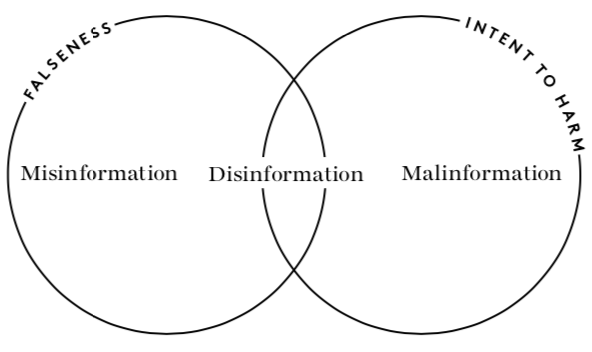
Answers 1) C- Transport Security Layer (also linked to Certificates) 2) A- Disinformation is intentionally false and designed to cause harm, an example being politicans saying all Muslims are extremist terrorists 3) There are several ways that you can spot fake news. One is to research the author and confirm that they are credible and reputable. Secondly, you can check the supporting sources to confirm that they are also credible. Thirdly, you should check the publication date. A possible outlet of fake news would be from hyper-partisan websites and campaigns that aim to spread misleading propoganda. 4) We can avoid filter bubbles by managing cookies and ads via web blockers, and browsing on Incognito mode. We can also read news sites and blogs that provide wide ranges of perspectives rather than focusing on just one. Lastly, we can switch our focus from entertainment to education, and recognize when news sources are prioritizing entertainment over communicating accurate information.
Hi Professor Reagle,
Here are my first 5 completed responses. https://hackmd.io/vginwFmATp2-vRpj20ZYbQ
See you Friday, Safa
Hi Professor Reagle,
Here is my response for Tuesday’s lesson: https://hackmd.io/ElSkoy_vT-OrsCEQrOFRtw
“Are we being warped?” What should be nothing short of positive thoughts have become reactive, insensitive statements: online comments have facilitated a concerning change in how we view and feel about ourselves, leading to “digital self-harm (boyd), narcissism (Reagle), and altered identities. Sharing every moment of our lives on social media comes with consequences, we are subject to other peoples’ commentary and approval. As Reagle argues, people are shaped by online commentary because it affects how we view ourselves in turn, thus altering our behavior.
Anonymity has progressed online hate, as users can leave hurtful comments without being identified. Why should we care about the thoughts of people we don’t even know? The issue is: we still do, and we allow it to affect our core. Most people have cringed at seeing unflattering pictures of themselves in someone else’s album (Reagle). What concerns me, is instead of remembering the important tangible moment captured in the picture, we are first directed to features of our physical appearance. This reminded me of a TikTok I saw where a woman who had just given birth hated her delivery pictures because of her appearance, disregarding the life-altering moment they had captured. This makes us incredibly narcissistic, as this example exemplifies.
Reagle uses the metaphor or a mirror to understand how people are shaped by comments online and their self-esteem. This reminded me of a recent study I read while conducting research for another class, TikTok utilizes algorithms for its “for you pages” that shape our identities by altering our behaviors to align with the personalized content we are fed. This affects marginalized communities including LGBTQ+ and African Americans because they found that TikTok actually suppresses their content. We are living in a digital world where social media is actively facilitating the suppression of marginalized communities, as it is not only affecting our self-esteem and self-perception, but it is redefining what communities “belong” and which do not.
Hi Prof. Reagle,
Here is my response for Friday’s class.
Orientalism was a movement in art history that hypersexualized Asian and Middle-Eastern women, depicting them as seductive, mysterious, and desirable. These pieces of art grossed high profits, based off of sexual fallacies about “exotic” women. Fast forward to today, white America still profits from appropriating non-white cultures, including Black culture and Asian culture (Kim, 2021). However, Kim argues there is a new mode of appropriation; users are embodying cultural features in an attempt to actually be part of that culture. Kim says that this new form of image and technology led appropriation betrays not only old prejudices, but emerges ones as well. He calls this, “techno-orientalism”, which I find fitting considering art history. Technology has allowed this to happen, Asian profiles are now something to be sought after and mechanically replicated. This idea is also analyzed by Cherid (2021) in her article on blackfishing and the increased commodification of black culture by white women. She specifically calls out celebrities like Ariana Grande and Christina Aguilera for incorporating elements of Black culture into their music videos, without crediting them. Just like Kim says Americans want to be Asian, Americans also claim to be Black and thus contribute to blackfishing (the Kardashains being a prime example). Kim illuminates a 2020 TikTok trend titled “Fox-eyes” where makeup influencers were teaching users how to essentially look Asian with certain eyeliner tricks. Not only is this appropriation problematic, but platforms like Instagram and TikTok facilitate this injustice with how their algorithms favor content (Kim, 2021). Videos like fox-eye tutorials are favored by the algorithms because of their high engagements, widening the audiences and increasing the speed of content diffusion. Reading Kim and Cherid’s writings circle back to one question: should technology (including social media) be held accountable for facilitating cultural appropriation? Kim’s discussion of “techno-orientalism” and Cherid’s discussion of “blackfishing” are parallel in their explanation of white wannabes stealing elements of marginalized cultures. Both Kim and Cherid’s arguments reveal a dark reality of cultural appropriation: people that have never experienced the prejudice and struggles of these marginalized groups are benefitting from cultures that they are not a part of.
Hi Prof. Reagle,
Here is my response for today’s class. https://hackmd.io/kmZo6hYYTjSvl-9gDdesOA
Dating mediums have transformed with online technologies. Thompson (2019) claims that robots are supplanting the role of matchmaker. As the influence of friends and family is declining, more single people today are on their own; utilizing online dating apps to “shop”, where one’s worth are determined by perceived appearance, interestingness, quick humor, sex appeal, and photo selection (Thompson, 2019). However, Ruddler (2010) claims online dating has blurred the lines between fiction and reality when it comes to accurate dating profiles.
The shift to online dating is parallel with the new age of “DIY-everything”. Thompson (2019) claims that individuals now construct their own careers, lives, faiths, and public identities…instead of inheriting them from their parents. Yet the new autonomy allows for casual browsers to fall into traps of depiction on these dating sites. Income and height are among these factors of depiction, found by Ruddler (2010). Additionally, online daters are more likely to use outdated photos of themselves on their profiles. I’d also argue that unfaithfulness is more easily executed on dating sites as locations can be set to different regions.
So, who is using these new dating methods? Thompson (2019) says that gay couples who met online soared to 70%, from the mid-1990s. This is justifiable, as one suggested reason for the rise is “a diminished sense of belonging within communities”. But another factor to consider is culture: individualistic and collectivist. Building off of Chamie’s research on men and women living alone (2021), singles in collectivist countries like India and China are less likely to utilize dating sites because traditional familial matchmaking is still prevalent. The proportion of people living alone is so low in these countries (India, 2% and China, 5%) because it is uncommon to live alone unmarried. So, while there’s a record high of American men and women living alone today (Chamie, 2021), this societal trend is not applicable to other parts of the world due to a divergence in cultures.
Hi Prof. Reagle,
Here is my response for tomorrow’s class: https://hackmd.io/kmZo6hYYTjSvl-9gDdesOA
Lou Montulli claims he had no idea that his invention of cookies would begin a monopoly among big businesses for personal data collection of online users. Montulli had created cookies to “bring memory to the web”, but his invention allows companies like Facebook and Google to track online activity and build personal data profiles of people instead (Vox, 2020). Consequently, the personal data collected can be funneled into algorithms that serve users highly personalized advertisements based on their online activity. This practice has dramatically transformed online advertising, and how companies build successful digital marketing campaigns.
Cookies are utilized to store data in several different ways, from remembering login credentials to saving the items in your online shopping cart. Because of this capability, companies can leverage them to promote online advertising efforts, increase sales, improve brand awareness and raise share of voice in the marketplace (Stokes, 2013). Companies can collect data on what types of visuals (photos, videos, games, etc) are most successful among certain target audiences, and then use that data to make strategic decisions regarding the execution of their marketing campaigns. The three key steps to online advertising are: inform, persuade, and remind (Stokes, 2013). Cookies allow all three steps to happen, as the information they provide leads companies to decide where to place their online advertisements for optimal engagement.
While cookies are beneficial for companies, their abilities can also hinder marketing objectives. Pop-up ads, for example, were heavily utilized in the very beginning of digital marketing. However, due to “audience annoyance”, most browsers now have built-in pop-up blockers. Today, many social media users promote movements like “Make Instagram Instagram Again”, referring to the increased monetization and advertising done on the platform, interrupting users’ scroll sessions. Companies also need to consider the different audiences and content appropriateness for different platforms. For example, a fun and witty advertisement on LinkedIn could lead users to question that company’s credibility…even if the company knows that its target audience is on LinkedIn. Contextualization and social media marketing go hand in hand, and many unsuccessful marketing efforts fail because of that lack of understanding.
Good morning Prof. Reagle,
Here is my response for today’s class.
What does it take for you to “comment” on a business? Establishments are hungry for positive publicity in the form of comments, and people are incentivized to do so. Liking in hopes for a discount, strategically discussing Yelp around servers, receiving coupons in exchange for restaurant reviews, purchasing fake followers…this behavior is driven by the high value of comment today (Reagle, 2015). Businesses have “let the truth live” with user comment, but that truth is being overtaken by fakery and manipulation. Thus, there has been a “loss of innocence” due an increased importance on user reviews and monetization of this in our globally socially networked world (Reagle).
Sites aren’t the only mediums that take advantage of our social networks for commercial interests (Reagle), so does social media. Instagram pods, direct messages between groups that require members to like or comment on new posts to boost engagement (Forsey, 2018), also perpetuate online manipulation. Operating on a like-for-like basis, pods follow rules aligned with the platform’s algorithm to boost content in users’ timelines (Forsey). However, like being exposed for paying customers to leave positive reviews, companies avoid getting caught using pods because they damage brands’ integrity (Forsey).
Information asymmetry is problematic when we buy things unseen. Yet user comments, ratings, and reviews alleviate this (Reagle). Many brands have taken advantage of influencer marketing, sending social media celebrities “PR Packages” of free products in exchange for video reviews. These videos are meant to persuade users to buy the product. Because influencers want to receive them, they are inclined to leave positive reviews, even if untrue. Building strong relationships with brands creates opportunities for influencers to join marketing campaigns, be invited on brand-sponsored trips, or even earn affiliate rewards per sponsored sale. While brands don’t encourage influencers to leave negative reviews on competitors’ platforms, they do legally restrict them from signing brand deals with competitors. This introduces another form of manipulation, as followers are then directly influenced by the content they see.
Online influence can be measured by followers, yet these are easily purchased by the thousands (Reagle). So, why do we value it? I’m curious to know what institution manipulated our minds to equate follower count and credibility.
Good morning Prof. Reagle,
Here is my Adblocking assignment: https://hackmd.io/Syk2zjtTRNS-pTiprKq3kQ
Home page: https://hackmd.io/ElSkoy_vT-OrsCEQrOFRtw
Thank you, Safa
Hi Prof. Reagle,
Here is my Privacy Footprint assignment: https://hackmd.io/pUfkttivQnOh-3fuTVcA6g Home page: https://hackmd.io/ElSkoy_vT-OrsCEQrOFRtw
Thank you, Safa
Hi Prof. Reagle,
Here is my 2nd set of reading responses: https://hackmd.io/kmZo6hYYTjSvl-9gDdesOA Home page: https://hackmd.io/ElSkoy_vT-OrsCEQrOFRtw
Thank you and have a great weekend, Safa
Homepage: https://hackmd.io/@drahills/S1IMTSTes [https://www.gravatar.com/avatar/5330fb22309850af278ea347cdc08816?s=400]https://hackmd.io/@drahills/S1IMTSTes The Home on the
Hill - HackMDhttps://hackmd.io/@drahills/S1IMTSTes Home Page ######
tags: CDA # The Home on the Hill ## Required
assignments 1. Wiki tutorial
hackmd.io
Tutorial page: https://hackmd.io/@drahills/Hk79Y86gs
[https://www.gravatar.com/avatar/5330fb22309850af278ea347cdc08816?s=400]https://hackmd.io/@drahills/Hk79Y86gs Wiki tutorial -
HackMDhttps://hackmd.io/@drahills/Hk79Y86gs Wiki tutorial
###### tags: CDA # Wiki tutorial ## *Reflection on
[Agnotology and Epistemologic hackmd.io Markdown:
Wiki tutorial
CDA
The introduction of the Internet into the world has been one of the most significant changes that humanity has experienced in the last century. Thanks to this particular asset, individuals can access information and data, follow the latest trends and news, and communicate with individuals all over the globe. However, the irregulated nature of the internet has engendered several concerns about the veracity of the information being spread on social outlets and websites meant to “educate” the public on cultural, political, and health issues. This new epidemic of misinformation has affected the ability of the public to critically think, and lead to waves of political turmoil that have manifested in acts of terrorism.
The phenomenon described is further explored by Danah Boyd in her article, Agnotology and Epistemological Fragmentation. Through an insightful discussion of modern technology and its questionable relation with the spread of reliable information. The overload of articles and videos claiming to provide answers to the masses without a clear focus has become a rising threat to society. Boyd argues that the manufacturing of ignorance has become the basis for the narratives presented by different groups such as white supremacists. In their case, narratives that undervalue social justice are critical for the spread of their ideas. The article exposes the ways in which white supremacists utilize the algorithm in their favor, guiding someone into a whole of misinformation that is credited to “professors” and “scholars.” The exploitation of this vulnerabilities is a technique also utilized by terrorist to spread their dangerous messages and attract an audience.

It is to see how this issue could easily become an argument about freedom of speech. However, Boyd debunks this idea by presenting this problem as a form of social fragmentation meant to create more disparity among populations. An example of this lies in the most recent global phenomenon: The Covid 19 Pandemic. During this time period, misinformation about the origin, effects, and nature of the virus became a source for online discourse. Several media outlets profited from the massive panic by creating articles that polarized the public. Essentially turning a public health issue into a political argument, engendering the lives of millions of people.
Good morning,
Home page: https://hackmd.io/@drahills/S1IMTSTes Web Search and
Evaluation: https://hackmd.io/@drahills/SJ0r8Ypei [https://www.gravatar.com/avatar/5330fb22309850af278ea347cdc08816?s=400]https://hackmd.io/@drahills/SJ0r8Ypei Web Search and
Evaluation - HackMDhttps://hackmd.io/@drahills/SJ0r8Ypei Web Search and
Evaluation ###### tags: CDA # Web Search and Evaluation ##
Google Search ### *W hackmd.io
[https://www.gravatar.com/avatar/5330fb22309850af278ea347cdc08816?s=400]https://hackmd.io/@drahills/S1IMTSTes The Home on the
Hill - HackMDhttps://hackmd.io/@drahills/S1IMTSTes Home Page ######
tags: CDA # The Home on the Hill ## Required
assignments 1. [Wiki tutorial] hackmd.io
Markdown:
Web Search and Evaluation
CDAMy initial attempt to fulfill this assignment was not satisfactory. I tried implementing the techniques exemplified by Google (Ej. Site:Wikipedia northeastern university –site: northeastern University). The outcome was an overwhelming 2,860,000 results. I did not feel that the outcome was sufficiently reduced, so I decided to use a different technique. Instead, I searched “‘Northeastern University’ AND ‘Wikipedia.’” Through this technique, I got a reduced number of websites. I proceed to use both methods in later assignments.
When utilizing Google, I like to implement the old, magnificent, and totally-not-lazy technique of simply focusing on the first few web pages that are shown to me. Most pages seem to have the information I was looking for, reducing my research time. My trust in the algorithm and its way of catering to my specific needs works perfectly when searching for “y2k fashion inspo” or the cast of the BBC version of Pride and Prejudice. However, this efficient relationship between user and data becomes more questionable as the research incorporates more complicated topics, such as politics or climate change.
My dear algorithm spends time getting to know me, listening to my problems, and, more importantly, the things I enjoy. Therefore, it only tends to show me results that will catch my attention and hide all the things that will just upset me. The problem with this situation is that sadly we do not live in a utopian society where everyone is progressive, and nobody opposes other human beings having rights. This “filter bubble” does not allow the user to have a rounded and diverse view of the world, especially when the information being presented only serves as confirmation bias. The video below provides an argument for the dangers of the filter bubble in the age of fake news.
In the current online environment, filled with cloaked and hoax sites, media literacy is crucial for maintaining an educated public. In her article, Truth, truthiness, triangulation: A news literacy toolkit for a “post-truth” world, Joyce Valenza critiques the absence of critical thinking among the masses regarding the consumption of news media. The articles look to educate the public on the diverse problems that plague the internet, with an infinite array of information. Valenza invites users to think critically about their sources of information while also offering a “tool-kit” meant to help individuals determine whether a website is trustworthy. Similarly, Berkley Library has an article that provides guiding questions that will help an individual analyze a source of information. Such resources come in handy when facing a fake news website such as [Before It’s News] (https://beforeitsnews.com/). The moment users enter the page, they are bombarded with dozens of sensationalist images and titles meant for their attention. One of the most recent ones is “Situation Update: WW3 Declared? Russia Prepares For War Against NATO & USA! Nuclear War Standoff Looming! Red Line Drawn! Exposing Gov Sponsored Child Trafficking! 500 Children Missing in System! - We The People News” and “Vaccine Demon Invasions Caught on Video?!?!” When I clicked on the articles, there was a clear absence of authors or sources for the information stated on the website. Rather than informing and presenting reliable information, the purpose of this website is “lure traffic” and use clickbait to gain profits.
Wikipedia: Verifiability is a code utilized by the users of the website, readers, and writers. The information must have a reliable source backing up the claim being presented. In the article about “Joseph M. Reagle Jr.” there are two examples that follow and ignore this code. For instance, the statement about Joseph working at the World Wide Web Consortium has a footnote that connects the material with a website that recognizes its validity. On the other hand, in the same article, there is a claim about one of the books written about Joseph Reagle being a bestseller. Such information has no connection to a reliable source. Instead, it just serves as a misleading commentary. If I were to implement any changes to the page, incorporate the summaries of the books written by the subject, and eliminate any statement that lacks validity.
According to the website, it was first created on August 1st, 2011.
Good morning,
Home page: https://hackmd.io/@drahills/S1IMTSTes [https://www.gravatar.com/avatar/5330fb22309850af278ea347cdc08816?s=400]https://hackmd.io/@drahills/S1IMTSTes The Home on the
Hill - HackMDhttps://hackmd.io/@drahills/S1IMTSTes Home Page ######
tags: CDA # The Home on the Hill ## Required
assignments 1. [Wiki tutorial] hackmd.io
Reading Response: https://hackmd.io/@drahills/rJoB8zCls [https://www.gravatar.com/avatar/5330fb22309850af278ea347cdc08816?s=400]https://hackmd.io/@drahills/rJoB8zCls Reading Responses (Set 1) - HackMDhttps://hackmd.io/@drahills/rJoB8zCls
hackmd.io
The McDonaldization of the educational system has affected how students approach learning, rewarding fast methods of education based on superficial memorization. To succeed, individuals would often utilize unproductive learning techniques to acquire knowledge. For instance, rereading text and massed practice (3). The ultimate representation of these methods is the ancient art of cramming for an exam. Students, eager to maintain a good academic record, would feed their brains substantial amounts of information through “rapid-fire repetition (3). While sometimes effective, the information is shown to disappear from their body in a brief period (63). Subsequently, by adopting repetition as the main form of harnessing knowledge, students are more likely to develop a false sense of understanding. However, familiarity with the material is not a reflection of the proficiency of the mind to understand and apply the concepts of the subject outside of their basic definition (16). Therefore, students are encouraged to incorporate effortful learning. The personalization of knowledge through frequent interaction with the material appears to be a dynamic response to the struggles of modern education. For example, students test their knowledge on the subject using quizzes or flashcards. Additionally, individuals should attempt to define terms in their own words and question the material, as learning develops into a skill when the abstract is materialized and made personal (11).
The individuality of learning lies at the core of this text, as the different tactics presented are meant to be incorporated into a personalized level. For instance, the concept of failure becomes a badge of effort and a source of useful information, instead of an obstacle meant to obstruct the journey of the student (7). I find myself agreeing with this perspective, as the idea of failure as a demonstration of ineptitude is limiting. Nonetheless, I would like to argue that such a perspective only works to a certain extent. Individuals who are learning recreationally mind find it easier to internalize this idea. However, the pressures of academia, its ties with economic factors –as a means and goal, and the ranking of students, do not favor for this type of flexible learning.
Good morning,
Assignment: https://hackmd.io/@drahills/r1AqLYpej
Homepage: https://hackmd.io/@drahills/S1IMTSTes
[https://www.gravatar.com/avatar/5330fb22309850af278ea347cdc08816?s=400]https://hackmd.io/@drahills/r1AqLYpej Filter and label your email - HackMDhttps://hackmd.io/@drahills/r1AqLYpej
The
first time I downloaded Tikhackmd.io

The first time I downloaded Tik Tok, I was trapped in the hellhole that the internet has named “straight TikTok.” Here, I found myself seeing a variety of videos that barely scratched my interest. I never verbalized this comfort. It was not like I was in a store, and I could simply complain to the manager about how nothing was my size. However, my distaste for the content I was consuming was understood by a force that knows me better than myself; the algorithm.
Suddenly, my “for-you-page” started showing people talking about books I wanted to read, food that I wished I could eat, and trendy videos about clothes that were exactly my style. The thing is that I did not need to speak to the manager because the manager had already followed me around the store, paying close attention to everything I slightly touched, and changed every detail so I could have the perfect customer experience.
Somehow individuals have ended up trapped in a filter bubble, an invisible barrier that supports our current opinions and perspectives to ensure that we enjoy what we see (Farman Street*). Created to be an advertisement system that allows companies to provide information that will cater to our personalities and needs, the filter bubble has become a force of polarization. Surrounded by similar perspectives and ideas, people find themselves comfortable without the need to question or even analyze the data that is being presented. Thus giving rise to a group mentally where everyone within the online community becomes a separate entity from the rest of the world, unable to accept criticism or acknowledge the diversity of each mind.
Within the comfort of these forums, users with specific agendas tend to rise. As Greeks, hiding inside the wooden horse, these forces of chaos are ready to spread misleading content. Most of these users would utilize accurate content from the internet and re-frame it in a way that reflects the narrative they are trying to sell to the public, engendering disinformation. Oblivious people find the post or the image and share it with others, spreading the virus of misinformation throughout the internet. The rise of fake news has made the public panic, creating a mass sentiment of mistrust and discomfort against media outlets. As a result, we have the rise of individuals that actively rebel and question the information being provided by professionals. For instance, the rise of the anti-vax industry. Parents question the medical system, searching for transparency on the topic, in the name of media literacy.
The internet is a fascinating space that allows us to connect with the things that we enjoy, bringing people closer through communities that reflect our interests. The rise of fandom culture is the perfect example. People engage with each other through videos, fanart, memes and forums meant for them to discuss the topic of their interest- anything from K-pop to the latest episode of House of the Dragon. The algorithm understands how meaningful these relationships are for us and takes us to a magical place where we are surrounded by all the things that we love. In this alternate reality, we are acknowledged by people that comprehend our values, people who would never question our beliefs, and people who will only reinforce the information that we already know. Socially, humans must break free from the bubble, encountering different outlets of data that both question and reinforce our beliefs.
*I tried finding the author but there was no information on the page
https://hackmd.io/@drahills/rJoB8zCls [https://www.gravatar.com/avatar/5330fb22309850af278ea347cdc08816?s=400]https://hackmd.io/@drahills/rJoB8zCls Reading Responses (Set 1) - HackMDhttps://hackmd.io/@drahills/rJoB8zCls
hackmd.io Markdown:
America runs on the survival of the fittest. The capitalistic systems installed in our society have become vital to solidifying this Darwinian thinking. The market’s competitive nature highlights the importance of individualism and our ability to climb the ladder of success without considering our competitors. Ultimately, the “strongest” will survive and reproduce, leading to an evolutionary achievement. Martin Nowak questions the effectiveness of natural selection, based on what is best for the entire population, as it “undermines the greater good” (16). The ability of specific individuals to be selfish as a form of survival allows them to succeed in our society, while people who can be categorized as cooperative often suffer the consequences of such actions. Therefore, “cooperators always have a lower fitness than defectors- they’re always less likely to survive” (15). Regardless, Nowak believes in the superiority of cooperation as an appropriate instrument of progress.
If the complex systems of capitalism have established natural selection as its core, one can question whether collaboration is possible under such conditions. Despite the individualistic ideas integrated into competition, cooperation still arises in the circumstances. For instance, Nowak argues that if people offer a service, they expect a reciprocal exchange to happen (45). Described as repetition, such a mechanism differs from reputation, which “thrives when there are repeated encounters within a group of players” (Nowak 46). Essentially, people must possess a certain level of trust with the other members of the group for cooperation to thrive. Confidence in the reliability of the group could also be formed through the development of social networks (spatial selection), the recognition of ancestry bonds (kin selection), or having a tribe mentality (multilevel selection). Such dynamics could also be explained by observing vervet monkeys, which are “more likely to pay attention to the distress calls of individuals with whom they recently groomed” (Reagle). However, as the group increases, the loyalties and dynamics become more complex. Internet communities encapsulate this sentiment as smaller “fandoms” feel more connected to the other members, who most likely share similar opinions and perspectives. According to Reagle, older fans become more dissatisfied with the saturation of views and content as the community becomes more popular. Additionally, people are more likely to fall into a filter bubble because they wish to exist within a category of the internet that provides the illusion of a single-minded community.
Reading Response: https://hackmd.io/@drahills/rJoB8zCls [https://www.gravatar.com/avatar/5330fb22309850af278ea347cdc08816?s=400]https://hackmd.io/@drahills/rJoB8zCls Reading Responses (Set 1) - HackMDhttps://hackmd.io/@drahills/rJoB8zCls
hackmd.io
The digital environment has been formulated for internet users to be constantly bombarded with positive reinforcement, engendering a sense of intolerance for anyone that engages in “abnormal” behavior. Corporate practices, such as filtering bubbles, encourage users to only interact with content or digital communities that align with their pre-determined values. Without opposition, online identities become tokens that users must protect from outsiders and standards for behavioral policing simultaneously.
Within the core of digital communities, there is a unifying set of values and behaviors that distinguish people from other users of the internet. Once the algorithm has matched the user with their community based on their personalities and interests, assimilation begins. Defined as depersonalization, individuals shift from a sense of self towards the group and its norms (Reagle). For instance, if a public figure were to express an opinion that conflicts with the group, people feel the responsibility to defend their position as a demonstration of loyalty towards their community. Even when this “loyalty” is expressed by morally questionable methods of expression such as humiliating language or doxing, “or publicly documenting the target’s contact, financial, and health information” (Reagle). Such behavior is meant to be rationalized in two forms. First, users receive positive reinforcement from the members of their community, who encourage and celebrate those tactics of policing. Users also explain their behavior by engaging in “moral disengagement” (Reagle). According to Albert Bandura, moral disengagement refers to the different tactics utilized by individuals to justify their often-cruel actions. To elaborate, haters would dehumanize the subject and disregard the consequences of their actions by minimizing their role, using the identity of the group as a shield (Reagle).
Outside of the individual, the structure of social media platforms also allows for the rise of hateful speech among online communities. In 2021, “Facebook users saw bullying or harassment 14 to 15 times out of every 10,000 views of content on the app between July and September” (Bond). However, such numbers underestimate the reach of this phenomenon. Internal research has also demonstrated that “Facebook struggles to police hate speech and calls for violence, especially in non-English-speaking countries.” (Bond). While companies attempt to minimize the damage by engaging in censorship and moderating the behavior of users, there are complex forces working in their favor. For instance, through a screen, “social cues are filtered out, and social presence is attenuated” (Reagle). In other words, it is difficult for people to know the intentions of a comment when it is stripped of its context. Additionally, moderators are often perceived as a threat to freedom of speech, with haters defending their controversial takes and hurtful behavior as their right to express their opinions. The ambiguous nature of the internet, from the policies of social media platforms to the absence of context, encourages the rise of toxic behavior among its users.
Reading Responses: https://hackmd.io/@drahills/rJoB8zCls [https://www.gravatar.com/avatar/5330fb22309850af278ea347cdc08816?s=400]https://hackmd.io/@drahills/rJoB8zCls Reading Responses (Set 1) - HackMDhttps://hackmd.io/@drahills/rJoB8zCls
hackmd.io
Multiple Choice Questions
a. According to the text Triangulate is defined as:
b. During recess Tommy is choosing between playing volleyball with a group of kids from a grade above him or spending the rest of the afternoon decorating the classroom with some people from his class. Even though Tommy loves playing volleyball, he decides to decorate the classroom. This is an example of:
Short Answer Questions
a. How do filtering bubbles represent a threat against media literacy? What are some steps that we can take to avoid them?
b. In which ways do users justify online harassment practices such as doxing? How does group mentality influences this though process?
Multiple Choice Questions
a.
Answer: c
Reasoning:
Triangulate is the act of searching for information beyond the sources being presented in the text. In order words, conducting external research to corroborate the points being expressed by the author and through critical thinking, arrive at our own conclusions.
Source: Truth, truthiness, triangulation: A news literacy toolkit for a “post-truth” world
b.
Answer: b
Reasoning:
In this situation, Tommy must decide between his personal interests or providing help to a portion of his classmates. Since Tommy interacts with more with his classmates, and he feels a deeper connection to them, he ultimately decides to help them. This scenario is an example of spatial selection as the confined space of the classroom pushes children to create connections among each other, developing a sense of loyalty.
Source: Martin Nowak, 2011, “Super cooperators.”
Short Answer Questions
a. Answer/Explanation:
Filtering bubbles can be defined as the “results of the algorithm that dictate what we encounter online” (Farnam Street). Meaning that they ultimately show users curated information based on previous interest. As a result, individuals only engage with communities and media that aligns with their beliefs. Confirmation bias becomes a common phenomenon as individuals are barely confronted with information that questions their beliefs. Eventually, this leads to an absence of critical thinking about the sources of information being consumed.
There are different methods that people can utilize to avoid filter bubbles, including:
Using ad-blocking browser extensions
Reading new sites and blogs to have a wider understanding of different perspectives
Focus on education instead of entertainment
Using Incognito browsing
Deleting cookies
Source: How Filter Bubbles Distort Reality: Everything You Need to Know
b. Answer/Explanation:
Often abusive behavior is justified through the phenomenon known as “moral disengagement.” To maintain their “good” self-image, people justified their actions, use euphemistic language and advantageous comparisons. The dehumanization of the target and disregard for consequences are also significant techniques utilized to minimize “cognitive dissonance”. Group mentality often encourages individuals to engage in this type of behavior as it lessens the amount of responsibility that the person carries. Since the user only perceives themselves as a small portion of the problem, they are most likely to minimize their impact on the target.
Source: Joseph Reagle, 2015, “Alienated: You fail it! Your skill is not enough!,” Reading the Comments, ch=5.
Link: https://hackmd.io/@drahills/rJoB8zCls [https://www.gravatar.com/avatar/5330fb22309850af278ea347cdc08816?s=400]https://hackmd.io/@drahills/rJoB8zCls Reading Responses (Set 1) - HackMDhttps://hackmd.io/@drahills/rJoB8zCls
hackmd.io
)
The male kingdom of coding of coding is under attack; women can think! It is quite surprising that a community that was established by social outcasts, who constructed their identity on “enthusiasm, knowledge, and skill” (Reagle) has form strict lines separating women and nonbinary people from their intellectual cult. There is a sense of superiority that is granted by the “underground” origin of these man. As superheroes, they perceive their interest and skills as a demonstration of their power over the typical civilian. Programming as a profession, with its difficult reputation, provided these individuals with the recognition that lacked in their youth, as “many geeks were bullied as children and found it hard to fit in with their peers,” (Slater 2014). Now, they have turned to the macho culture that subjugated them as children, utilizing power structures to demand “more pay, more power, and better working conditions” (Slater 2014). The narratives that these men have created around their identities and passions allow them to justify their misogyny, utilizing their poor understanding of sociology and biology to form arguments that sustain their power structures.
It is not uncommon for man in online communities to feel threatened by the presence of women. From the music fanatic to the fantasy enthusiastic, male-dominated fandoms have the tendency of harassing the women that show interest on these topics. Often, these women are questioned about the validity of their interest or undermined as ungenuine. Here, the interest must be pure and passionate for it to be accepted among the community. However, the criterion for belonging becomes more rigid when it comes to women. This is not different in the coding community, where “there is an expectation of single-minded devotion to the craft,” (Slater 2014). Members of these communities consider this purity to be prominent on men, who have noted their dominance over the STEM field as biological demonstration that “women prefer to work with people and men prefer to work with things” (Molteni & Rogers, 2017). The former comment was James Damore, a former Google employee that got fired for complaining about diversity in his workspace. Damore, like other members of the coding community, could not make sense of the social forces that have taken him to his position, and its underlying privilege, as they undermined the myth of meritocracy he has constructed around his success.
Link: https://hackmd.io/@drahills/rJSv8MRli [https://www.gravatar.com/avatar/5330fb22309850af278ea347cdc08816?s=400]https://hackmd.io/@drahills/rJSv8MRli Reading Responses (Set 2) - HackMDhttps://hackmd.io/@drahills/rJSv8MRli
hackmd.io
When I was fourteen, I met who would become my first boyfriend. I was in Spanish class, anxiously looking around the room for some familiar face, when a sweaty boy ran into the room. Like the movies, I turned my head around, saw his face and decided that he was not worth my attention. We started dating three months later and lasted for three years. I always found this story to be comforting, the idea of destiny validating my experience.
Dating apps and websites existed when I was in high school, but I did not start to use them until I got into college. From the process of making a profile to the infamous swiping from left to right, I was entering a different territory, one where self becomes a brand that I must sell to others.
According to Derek Thompson, marriage has always been connected to a point of practicality. On modern days, this idea has been distorted by a more spiritual and romantic perspective of partnership, in which we search for “intellectual, social, as well as sexual soul mates,” as stated by sociologist Jessica Carbino. However, I argue that we still retain a lot of the practicality of traditional relationships, the main difference being that our “brand” is no longer being promoted by friends or family members. Instead, “the burden of finding a partner has been swallowed whole by the individual” (Thompson 2019). To elaborate, individuals approach online dating as a business. The process of self-presentation –creating a profile- can easily be compared to marketing proposal. While there is a search for authenticity, users critically select pictures that will make their profile appear more appealing for an unknown audience, even when the information is not completely true. For example, according to a blog titled “The Big Lies People Tell in Online Dating” by OKCupid, the more popular the picture, the more likely it is that it was taken years ago. Companies also play into the capitalization of love, encouraging users to buy subscriptions that boost the user’s profile, see who has liked their profile and have unlimited swipes. Contemporary love does have a price and a market, you just need to learn how to sell yourself.
Link: https://hackmd.io/@drahills/rJSv8MRli [https://www.gravatar.com/avatar/5330fb22309850af278ea347cdc08816?s=400]https://hackmd.io/@drahills/rJSv8MRli Reading Responses (Set 2) - HackMDhttps://hackmd.io/@drahills/rJSv8MRli
hackmd.io
So, you are telling me that a corporate mastermind knows about my crippling obsession with Squishmallows and instead of seeing ads about a 14-inch Blueberry Cow, I get the same Better Help video every time I try to see an eight-hour essay on YouTube? It seems like a waste of resources to me. Especially considering the complexity of the systems being utilized by companies for advertising. While users interact with the web, such activity is being recorded and analyzed to program personalized advertisement campaigns.
But how do companies know that I constantly search for a Hello Kitty Squismallow? The answer is simple: Cookies. According to Vox, with each click the website “recognizes the unique id from the cookie store your browser” (2020) and holds on to that information. First-party cookies allow the website to remember what items you put on your cart, email address, location, time spent on the internet and other things that you have clicked on (Vox 2020). Online surveillance reaches another level as third parties access the data from the website that you are currently utilizing to display advertisement that reflects your online activity. Even more disturbing is the fact that the third party can also “access information from other websites that use the same third-party elements” (Vox, 2020). Utilizing tracking, companies can highlight banners, popups, floating adverts, etc., that are a more accurate depiction of your taste or interests. Companies like Facebook, YouTube and Twitter primarily engage in this behavior, with the latter offering services of accounting, tweeting and trend promotion. While this form of advertising might allow users to connect with products and services that reflect their needs, how ethical are these tactics?
In recent years Target was involved in a controversy regarding their use of tracking. The company had compiled information regarding one of their customers purchase patterns and created a “pregnancy prediction score.” With this data the company decided to provide such customers with a book of coupons filled with “baby-related items.” Later, Target would have to confront a father who was not aware that their sixteen-year-old daughter was pregnant. The fact that companies can even deduce portions of our identity or physical state, and use this information for consumeristic purposes, questions how much agency and privacy users have on the internet. While companies inform individuals of their third-party cookies and ask for our consent through the terms and conditions, much of the language and format utilized is meant for the information to be inaccessible for the every-day user.
My brother and I enjoy watching anime on “illegal” websites. Back on the Dominican Republic is not unusual for people to use pirate websites to watch their favorite shows as streaming services are perceived to be a luxury. The problems with those types of websites are the constant pop-ups announcing that Jessie is less than a mile away from me and wants to meet up. Tired, my brother installed AdBlock on my computer. The extension worked perfectly on our favorite websites, keeping Jessie and the other weird women away from me. However, I also notice that the effectiveness of AdBlock only partially worked on other “respectable” websites. Back then, I thought it was normal for a free adblocker to not always perform perfectly. I was incorrect.
Most people download Adblockers as a form of escaping the saturated world of advertising, which is increasingly losing credibility as the targeting practices of companies are morally questionable. Sven Taylor perfectly described this form of advertisement as a “threat to privacy” as advertising networks constantly install trackers on the user’s device (2020). This has evolved into “retargeting” which “caused users to see ads ‘following them’ around from one site to another” (Martin 2017). In a sense, advertising has become a form of stalking, with companies constantly disrupting the user’s privacy to generate revenue. However, one can question the effectiveness of this method as the individuals may feel that their space and right to protect their information has been violated by websites and the companies themselves. Additionally, and as Don Martin explains, “when developers choose to make a communications medium more targetable, they reduce the maximum amount of information that advertising in that medium can provide to its audience, [and] drive down the value of advertising in the medium” (2017.) Thankfully for users they can now run-away this dystopian episode of Black Mirror with the help of Adblockers, or can they?
When my brother installed the AdBlock extension on my computer, there was a clear expectation that, well, the adblocker was going to block ads. However, what my brother and millions of users did not know was that adblockers such as AdBlock Plus have been running a program, called Acceptable Ads, that allows “good ads, ones that are smaller, subtler” into the user’s page (Kastrenakes 2016). In this sense, the adblocker is failing the users by not providing them with the promised service. Even if the information on partiality remains on the page, ad blockers do not openly disclose information about the Acceptable Ads Program (Taylor 2020). Instead, adblockers in the program make it a default setting (Taylor 2020.) Then again, users are bombarded with deceptive and predatory practices of advertising. Even when users are not being saturated with the “bad ads,” targeted advertising still takes place, defeating the purpose of the extension. In response to this phenomenon, I believe that users should have the opportunity to easily opt out of target advertising. Since advertising pays for the content that we consume, I do not believe that is inherently a “bad” thing. Instead, I think that companies should respect the privacy of the user and use more general tactics.
Link: https://hackmd.io/@drahills/SkuaIKalj [https://www.gravatar.com/avatar/5330fb22309850af278ea347cdc08816?s=400]https://hackmd.io/@drahills/SkuaIKalj Privacy footprint - HackMDhttps://hackmd.io/@drahills/SkuaIKalj
hackmd.io
Boys never look at me, but large corporations do. Online surveillance has been one of our most discussed topics. Before this class, I was aware that my digital activity was being somehow collected and analyzed for purposes related to advertisement. However, I had —as much as the general population— a superficial understanding about the innerworkings of retargeting practices and data collection. Even now, I find fascinating the fact that there are sophisticated systems gathering information about myself. More than stalkers, they are my “little” fan club, religiously staking me to sell me yoga pants and the latest collection of books by Rick Riordan. I appreciate their efforts, and after years of being an active user of the internet, I cannot help but wonder about the accuracy of the data. What did Google know about me? Did they know that I was broke and that ads were not going to work on me? My sexual orientation? And most importantly, how much of this information was available to the public?
With the task of cyber-stalking myself, I wanted to answer the question of “who is Hillary Diaz Castillo?” I mean, if all these companies are spending so much time tracking me, the least I am expecting is for them to do a decent job. However, and throughout the exercise, I found myself surprised and underwhelmed by the information available to the public. When I googled my name, the results highlight my social media accounts but only those associated with Facebook. Interestingly, there were a few links to my high school website and YPIE Quarantimes, an independent magazine run by students. On google images, I did not find pictures of myself, instead there was a picture of one painting that I did during the ninth grade. In terms of most sophisticated research, Spokeo was unable to provide me with any information about myself or my mother. Nonetheless, when I searched for my stepfather, I found several of his addresses, phone number and age (Image 1.2). In this case I could not help but question the differences between my stepfather and I, that made him more accessible for online stalking.
While my public information was limited, the amount of information that cooperations had on my activity was quite disturbing. As much as any other internet user, I daily rely on services offered by Google. Much more than a search engine, Google functions as my GPS, planner, and photo-album, while being linked to most of my accounts. Therefore, I was not surprised that there was a timeline that highlighted all my travel experiences (Image 1.1), a function that I find impractical and highly intrusive, as I never formally agree to this. Additionally, the browser I use is aware of the type of computer I own, as well as my battery level and the social media accounts I am connected to (Image 1.3).
The invisible hand of capitalism knows more about me than my own parents. Targeting advertising has become the most visible reason to justify the data collection of internet users. However, from a personal stance, this practice is intrusive with some of that information being too personal. While companies are not actively listening to my private conversations, their intrusion into the lives of users is genuinely an origin of concern. For instance, companies like Facebook can “track you across all your devices, log call and text metadata on Android phones, and even watch you write something you end up deleting” (Haridy 2019). This amount of intrusion seems excessive since its main purpose is to present me with curated ads. As Kernighan (2017) argues, “the more data there is… the more our privacy and security are decreased.” The presence of databases and data mining, practices that combine information from various sources, create a profile that allows third parties to learn things that are none of their business (Kernighan 2017). For example, my travel experience in combination with the searches that I did during my trip, could create a story around the reason behind my trip and what I experienced. This could potentially be dangerous, if I were to be a woman from a state in which abortions rights are limited, engaging on trip to a more liberal state in search for aid. Especially since in the US, “any company or organization can collect and distribute information about you, without notice or even offering you a chance to opt out” (Kernighan 2017). Individuals are increasingly reliable on technology for every aspect of their lives, from social engagement to work, making it more difficult for them to have complete private lives.
Link: https://hackmd.io/@drahills/rJSv8MRli [https://www.gravatar.com/avatar/5330fb22309850af278ea347cdc08816?s=400]https://hackmd.io/@drahills/rJSv8MRli Reading Responses (Set 2) - HackMDhttps://hackmd.io/@drahills/rJSv8MRli
hackmd.io
Humans have always searched for authenticity against the materialistic forces of the world. The rejection of capitalism almost seems crucial in this journey, promoting the idea that this imaginary –almost pure – self has been corrupted by greed. This theme is prevalent in religions such as Christianity and Buddhism, which constantly condemn materialism and present it as an obstacle in the search for the spiritual self. From a more secular perspective, one can appreciate similar ideas in contemporary books such as American Psycho by Bret Easton and, most recently, My Year of Rest and Relaxation by Otessa Moshfegh. Both novels detail the life of a protagonist that has lost their sense of self to capitalist society and communicate consumerism has influenced our personality, behavior, and ambitions. The coldness of both protagonists, and their lack of authenticity, becomes a cautionary tale for the reader, drawing clear moral parameters between what is acceptable and what is not. While this crisis of identity and performance is certainly not new, social media –as it tends to do – has made it more visible.
The first question that I ask myself is: what’s authenticity? Brooke Erin Duffy and Ysabel Gerrard define it as a social construct (2022). Since the authors do not expand on their argument, I would like to expand on the meaning of authenticity. When Duffy and Gerrard speak of authenticity, they refer to the arbitrary notions individuals have created about what is genuine and what is not. Usually, authenticity is considered to be a natural and almost “pure” representation of the self. Performing outside of these parameters is socially understood as disingenuous or insulting toward others. Bereal, a French app, attempts to approach this desire for authenticity through a model that encourages “spontaneity” and “informality” (Duffy & Gerrad, 2022). However, while the app remains true to its principles by creating spontaneous time lapses for submission and highlighting the number of retakes individuals do, users’ desire to curate their posts remains. Duffy & Gerrard argue that the reason behind this is that Gen Z, the main demographic of the app, “still posts to social media in a curated, or at least strategically calibrated way, because they’ve long been exhorted to do so” (2022). I agree with both authors, as there is a complex relationship between individuals and self-presentation, especially within younger generations that are constantly bombarded with media that encourage their self-exposure in exchange for social status. Another social media app will not be able to fix this dilemma.
In other online platforms like Twitter, “consciously speaking to an audience is perceived as inauthentic” (Marwick & Boyd, 2010). The microblogging site has a “directed friendship model” in which there is “no technical requirement of reciprocity, and often, no social expectations of such” (Marwick et al., 2010). Therefore, the manufacture of a persona for consumption falls outside of what is socially acceptable in that community. However, I consider it naïve to demand authenticity for individuals online when most of the content that is being distributed is created with an “imaginary audience” in mind (Marwick et al., 2010). Users often conceptualize their readers as friends or themselves. I argue that users understand that this imagined the audience as an intimate reflection of their personal life to perform authenticity. Regardless, people still engage in self-censorship within this context, following undefined but understood social norms. Since Twitter has a diversity of imagined audiences, users must attempt to portray both an “authentic self and interesting personality” (Marwick et al., 2010). If authenticity is so important and celebrated, why do individuals feel like they are performing for an audience?
[https://www.gravatar.com/avatar/5330fb22309850af278ea347cdc08816?s=400]https://hackmd.io/@drahills/rJSv8MRli Reading Responses (Set 2) - HackMDhttps://hackmd.io/@drahills/rJSv8MRli
hackmd.io
https://hackmd.io/@drahills/rJSv8MRli
[https://www.gravatar.com/avatar/5330fb22309850af278ea347cdc08816?s=400]https://hackmd.io/@drahills/rJSv8MRli Reading Responses (Set 2) - HackMDhttps://hackmd.io/@drahills/rJSv8MRli
hackmd.io
## Authenticity, Work, & Influence
Influencers are “cultural tastemakers” who capitalize on the integration of sponsored products into manufacture segments of their “aspirational” lives (Duffy, Miltner, & Walhlstedt, 2022). Being relatable and approachable is critical for the image of an influencer as it helps them establish a connection with their audience. This sense of authenticity is what separates influencers from traditional forms of advertising, which tend to feel more unnatural and fabricated. As Rachel Lerman explains, “influencers have real power to speak directly to followers who trust them and feel connected to them, something that big faceless brands can’t always boast” (2020). Additionally, product sponsorship must be “seamless,” meaning that it has to be “near-impossible for laypeople to tell if an influencer genuinely loves a product, is being paid to talk about it, or just wants to pay to talk about it” (Lorenz 2018). However, influencers can often fall within the lines of fakeness as they must balance their role as a salesperson and an “authentic” public figure.
In my perspective, users who engage with influencers should not expect creators to be completely authentic about the content they generate. It is natural for individuals to create specific limitations between their personal lives and job. Therefore, some of the expectations that are imposed on influencers by the public can be quite unrealistic. However, I also understand that influencers intentionally market their lifestyle to appear obtainable and realistic, which “opens them up to intensified scrutiny and networked hate and harassment (Duffy et al., 2022). This is important as users may look up to influencers to address issues of race, politics, and gender. The latter is particularly important for female creators who are criticized by hate-bloggers for reproducing “problematic, narrowly defined ideals of femininity, domestic life, and the possibility of ’having it all” (Duffy et al., 2022). For critics, the worst portion is that influencers are “unethically profiting off the perpetuation of unrealistic expectations for women” (Duffy et al., 2022).
I wondered if this argument could also be applied to the influencers who gained sponsorship deals from brands during a political and social crisis. For instance, during the 2020 anti-racist protest, brands wanted to partner with “relatable, down-to-earth, ‘authentic’ influencers” (Lerman). Therefore, individuals who managed to perform in accordance with public expectations were rewarded with financial opportunities despite the difficult social circumstances.
I apologize; here is the link to my response: https://hackmd.io/@drahills/rJSv8MRli [https://www.gravatar.com/avatar/5330fb22309850af278ea347cdc08816?s=400]https://hackmd.io/@drahills/rJSv8MRli Reading Responses (Set 2) - HackMDhttps://hackmd.io/@drahills/rJSv8MRli
hackmd.io
From: Hillary Diaz Castillo Sent: Tuesday, December 6, 2022 1:49 AM To: Reagle, Joseph J.Reagle@northeastern.edu Subject: Hackmd
## Pushback
As I reflect on the incident, I can better understand the feedback I received and agree with most of my critics’ points. I was insensitive, rude, and overly critical. However, I don’t believe that I deserved the level of backlash that I received, which went from people calling me names to members straight up telling me to leave the group. Joseph Reagle (2019) explains that “even skillful feedback sometimes prompts angry responses.” In my case, only a few comments tried to engage in a constructive discussion with me, while a great majority –mostly writers- utilized me as a scapegoat to express their hatred for “mean” reviewers. This is not unusual in places like Goodreads, where individual reviews are “hypotextual, and unsolicited comment can easily find its way to the subject-and to everyone else” (Reagle 2019). Personal opinions become the subject of heavy discussions, as individuals, in my opinion, fail to contextualize other users as actual people.
While my experience was not as traumatic as what individuals like Kathy Sierra experienced (harassment, death threats), it still managed to encapsulate a general concern about hostile communication on the internet. Even though this tends to publicly humiliate individuals in the name of morals is not unique to online communities, the internet has helped normalize this behavior, particularly with the rise of canceling culture on platforms like Twitter. People feel deeply entitled to their opinions, and the Internet allows users to express themselves in ways that would not be otherwise accepted in daily life. As a result, many users have become disillusioned with communication technology.
People are increasingly deciding to react against the “overload of information and changing relationships” by “pushing back against permanent connectivity, in an attempt to manage, limit or control their exposure” to different variations of social technologies (Gomez & Morrison 2014). The pushback movement either takes the form of managing technology to reduce satisfaction, collective decisions to limit media use, technology intervention to reduce media use, or dropping technology completely (Gomez & Morrison 2014). I am particularly fascinated by the latter option, which I find to be almost ludicrous at a time when people are so interconnected with social media. For instance, people use platforms such as LinkedIn to apply for jobs and connect with future employers. We live many of our lives online, even if it’s not by choice.
As I reflect on the incident, I can better understand the feedback I received and agree with most of my critics’ points. I was insensitive, rude, and overly critical. However, I don’t believe that I deserved the level of backlash that I received, which went from people calling me names to members straight up telling me to leave the group. Joseph Reagle (2019) explains that “even skillful feedback sometimes prompts angry responses.” In my case, only a few comments tried to engage in a constructive discussion with me, while a great majority –mostly writers- utilized me as a scapegoat to express their hatred for “mean” reviewers. This is not unusual in places like Goodreads, where individual reviews are “hypotextual, and unsolicited comment can easily find its way to the subject-and to everyone else” (Reagle 2019). Personal opinions become the subject of heavy discussions, as individuals, in my opinion, fail to contextualize other users as actual people.
While my experience was not as traumatic as what individuals like Kathy Sierra experienced (harassment, death threats), it still managed to encapsulate a general concern about hostile communication on the internet. Even though this tends to publicly humiliate individuals in the name of morals is not unique to online communities, the internet has helped normalize this behavior, particularly with the rise of canceling culture on platforms like Twitter. People feel deeply entitled to their opinions, and the Internet allows users to express themselves in ways that would not be otherwise accepted in daily life. As a result, many users have become disillusioned with communication technology.
People are increasingly deciding to react against the “overload of information and changing relationships” by “pushing back against permanent connectivity, in an attempt to manage, limit or control their exposure” to different variations of social technologies (Gomez & Morrison 2014). The pushback movement either takes the form of managing technology to reduce satisfaction, collective decisions to limit media use, technology intervention to reduce media use, or dropping technology completely (Gomez & Morrison 2014). I am particularly fascinated by the latter option, which I find to be almost ludicrous at a time when people are so interconnected with social media. For instance, people use platforms such as LinkedIn to apply for jobs and connect with future employers. We live many of our lives online, even if it’s not by choice.
hi! hope youre having a good night! heres my links and everything – thanks! -anna chalnick
homepage : https://hackmd.io/rVAAt7aSRIyDwag4J8vE0Q
tutorial page : https://hackmd.io/rK1ql1KxTMS7Kj-bWqANEw
markdown :
At first glance, I was anticipating this to have been a carefully crafted article who’s purpose was meant to be read. After learning that it was, in fact, a transcript from a talk that danah boyd gave, it immediately gave me a new persepctive. However, I really did appreciate the key sentences they bolded through this format online. It can be assumed she said those sentences with emphasis out loud, so I love how that was carried over into the digital.
One sentence that is fascinating to look back on is “Yet, slowly, and systematically, a virus has spread, using technology to systematically tear at the social fabric of public life.” The irony of using the phrase “a virus has spread” a year before the pandemic worsened is beyond interesting to see now.
Overall, this was a very good talk. She explained terms that were confusing and provided good examples to back up her statements.
I believe that the last paragraph is of the utmost importance in this article. More specifically, this part:
**“You will not achieve an informed public simply by making sure that high quality content is publicly available** and presuming that credibility is enough while you wait for people to come find it. You have to understand the networked nature of the information war we’re in, actively be there when people are looking, and blanket the information ecosystem with the information people need to make informed decisions.”
This carries home the main message - being aware of what media you are consuming and who is producing it, while also acknowledging the structure behind how you consume that media in the first place.
https://hackmd.io/wIX-NRCjQmWL-S4aLyrS5g [https://hackmd.io/images/media/HackMD-og.jpg]https://hackmd.io/wIX-NRCjQmWL-S4aLyrS5g 403 Forbidden - HackMDhttps://hackmd.io/wIX-NRCjQmWL-S4aLyrS5g hackmd.io
markdown:
Will truth really … “out”? With so much information readily available through various online platforms, is it really possible to get the whole truth, and nothing but the truh? Joyce Valenza recognizes the current oversaturated media environment and how the quest for truth becomes increasingly more difficult in her “news literacy toolkit for a “post-truth” world”. Humans have historically placed their trust in their sight, outweighing all of their other senses. However, simply seeing an article no longer qualifies as reading the truth. Valenza and the Berkely Library encourages readers to seek out more than just the first search result to find accurate and veritable resources.
Some important questions to ask yourself as you are searching for
information are: - Did this result merely satisfy you? – Use more energy
to ensure you do not fall victim to your own confirmation bias. 

At what point do we stop relying on our sight? In a post-truth world, should we go out and attempt to get our information without the information available through the internet? Or, as Valenza and Berkely Library wrote, is it best to become adept at filters and evaulating resources?
I believe the best option may be just a bit of both. With so much of the internet tracking your every move, it is important to distrust your results a little bit. Try to find information elsewhere, but also remember to distrust that a little bit as well.
Trying to find truth is difficult, but it must be done in our post-truth world.


https://hackmd.io/kUaACEVBQ3SLLlJXVtIE_Q?both [https://hackmd.io/images/media/HackMD-og.jpg]https://hackmd.io/kUaACEVBQ3SLLlJXVtIE_Q?both Reading Response (Set 1) - HackMDhttps://hackmd.io/kUaACEVBQ3SLLlJXVtIE_Q?both hackmd.io
markdown:
Ball players deserve more credit. Despite certain misconceptions, they really are smarter than people believe them to be. As Brown wrote, learning is more than just consuming and repeating information. It’s synthesizing it. It’s giving it new meaning. It’s taking it all in and making it your own. And in regards to ball players in the batter’s box, they have seconds to analyze the type of pitch that will be thrown at them, where the runners are on base, where the infielders and outfielders are playing, if they want to sacrifice bunt just to move the runners along, if they can’t risk anything cause they have two outs with two runners on second and third, and so on and so on. They have seconds to make the decision on how they want to hit the pitch. They have learned every possible situation, and then they make it their own. This is the best type of learning – experiential learning.

I could not help but be reminded of The Sandlot when I read this example about baseball players. These little kids prove that there really is so much learning to have been done to understand the game and to play it to the best of their ability.
I found myself having trouble with this reading. For some reason, I had opened it so many times over the weekend and was unable to sit down and really read it. Now, at 10:56pm on Monday night, I finally figured out how to complete this homework. I started to read the article out loud. This article was all about the different ways of learning. It is elaboration, synthetization, retrieving information and more. There is no use in merely repeating information – it is what you do with it. When I was attempting to reread the same pages over and over, no progress was made. Once I started to do something with it, that’s when I was finally able to complete this assignment. That’s when I also understood the assignment on a deeper level. Engaging with the content is more important than simply consuming the content.
https://hackmd.io/xr_RMX7mQt6lrD82I4Cagw [https://hackmd.io/images/media/HackMD-og.jpg]https://hackmd.io/xr_RMX7mQt6lrD82I4Cagw Filtering & Labeling Email - HackMDhttps://hackmd.io/xr_RMX7mQt6lrD82I4Cagw hackmd.io

With such vast information available on the internet, it is of the
utmost importance to really understand where it is coming from and what
it was intended to accomplish. Wardle
describes three types of disordered information: misinformation,
disinformation and malinformation. - These three can be understood
differently in their relation to falseness and intent to harm, as shown
by this chart. 
Additionally, not only does consuming information lay responsibility on the producer, but also on the consumer. Many times we fall into our own filter bubbles which, as FS wrote, “can cause cognitive biases and shortcuts to manifest, amplifying their negative impact on our ability to think in a logical and critical manner.” Our intentions matter just as much as the producer’s intentions. If we do not actively seek out different information, as Boyd alluded to in her article, we simply believe in the information blindly given to us. This does not make us media literate. In fact, this is quite possibly one of the worst ways to consume information.
I created two rules for filtering my emails.
The first was for News@Northeastern to go into a new folder called
NUnews: 
The second was for my emails from Spotify to go into a new folder
called Spotify: 
https://hackmd.io/d1x3juRAQrqIDmdGjTykIA?both [https://hackmd.io/images/media/HackMD-og.jpg]https://hackmd.io/d1x3juRAQrqIDmdGjTykIA?both Reading Responses (Set 2) - HackMDhttps://hackmd.io/d1x3juRAQrqIDmdGjTykIA?both hackmd.io
The Prisoner’s Dilemma is not only applicable to prisoners. The
Dilemma describes the actions in which people take when they are faced
with a problem. In this table, there are two outcomes: cooperation or
defection.
Within the prisoner metaphor, if you were to
cooperate but your partner defected, you would receive four years in
prison, while they only get one. If you both defect, you both get three
years (which is wholeheartedly undesirable as you know if you both
cooperate there is a better outcome). And yet, why do people feel
inclined to NOT cooperate?
Nowak wrote, “the first ingredient of cooperation is information”. We are in an information society, with so much information readily available at our fingertips, and once again, people still do not cooperate. What exactly is the information we are looking for?
The environment is harshly affected in a similar manner to the Prisoner’s Dilemma. If there is already litter on the ground, people may feel it is appropriate to litter as they were not the first ones to drop something. However, every person everywhere knows the harm that littering and trash does to our world. So is the first step of cooperation really information? I am not too sure. Maybe it is a different type of information that people are looking for? Gossip perhaps? Reagle wrote “that it is central to understanding humanity”. Gossip has been and forever will be engrained in the human lifestyle from sharing secrets at the playground to yentas on the phone with each other at the 65 and up housing development (like Beverly Goldberg from The Goldbergs).
Maybe it isn’t gossip. Maybe it is something else entirely. How do you get people to cooperate even when they already know it is in their best interest? Knowledge means nothing if no actions are taken.
https://hackmd.io/sHYaECtzTFa6errv71i22g [https://hackmd.io/images/media/HackMD-og.jpg]https://hackmd.io/sHYaECtzTFa6errv71i22g Reading Response (Set 3) - HackMDhttps://hackmd.io/sHYaECtzTFa6errv71i22g hackmd.io
While fax machines are pretty useless now, the VERY first fax machine was entirely useless. It was created to be a means of communication with other machines. The first one, therefore, held no value as there was no way for it to do its intended purpose as no other fax machines existed yet. Their value is derived from their communicative ability. This principle can then be taken into a larger conversation about social networks.
Is it really a social network … if people are not social? What
exactly does it mean to be social? Rheingold wrote, “social
cyberspaces […] are small-world networks, because they are electronic
extensions of human social networks”. Perhaps since the framework is
there in a social network, there is still value in its communicative
ability? Even if people are not using it to communicate? 
While social networking existed prior to the creation of social media platforms and the internet itself, analysis of social networks really took off in the digital age as there is so much information readily available to be studied. From texts to blogs to post to photos to videos and more, the internet has provided the opportunity to really learn more and more about the ways in which people communicate.
One thing I really enjoyed about this reading was the analogy of people serving as nodes in a network is a good way to wrap my head around the concept – connecting a new technological concept to something that already makes sense in my head. I really appreciate when articles make me understand new information in a way that encourages me not to just consume it, but to remember it long-term.
I am curious to know if anyone in this class has previously taken Social Networks here at Northeastern and if they have any input on this reading that we would all benefit from.
https://hackmd.io/bAIfgwNHS5S4wUVEZdadKw?both
To some, anonymity provides the guise of protection. They thrive under the circumstances where they believe there are no repercussions on the internet. However, the internet is very difficult to actually be anonymous from – from ip addresses and countless data always tracking back to a specific user.
Whenever I think about anonymity on the internet, I am always
reminded of this image.
As
many of my communication classes talk about the internet in some context
eventually, almost every single time we look at this picture. Even
though we do not really know who someone is at first glance,
somehow in some way something can always get connected back to the
person who originally posted something.
One specific example from the reading was about Luka Magnotta. I first learned of him through watching the Netflix documentary about him. Luka used the supposed protection of anonymity on the internet to act without morals. He would comment on multiple accounts to bolster conversation about himself and his horrible acts of violence. As the reading wrote, he was arrested in an internet cafe reading and writing about himself on the internet. Not only were the police after him, but so were animal rights activists after they caught wind of the violence he committed to cats (and later to a human). No matter how safe he thought he was behind the computer, he really was far from it.
There truthfully is so much hate and violence on the internet – across all platforms, as shown by Magnotta for example. Once again, people feel protected from behind the screen. As Bond wrote, Meta now publishes a quarterly report on what content was taken down from their platforms. This is in an effort to make these spaces safer, but with so many people having bad intentions – is it ever possible for it to really be safe?
https://hackmd.io/tHumHYZXQhu76e762d_1Rg [https://hackmd.io/images/media/HackMD-og.jpg]https://hackmd.io/tHumHYZXQhu76e762d_1Rg Reading Responses (Set 5) - HackMDhttps://hackmd.io/tHumHYZXQhu76e762d_1Rg hackmd.io
What concept, for example, makes trick or treaters feel comfortable taking more candy than they should? * disinhibition * depersonalization * deindividuation * disengagement
Which information disorder has both falseness AND the intent to harm? * malinformation * misinformation * disinformation
After learning about learning, what are some ways that do not prove beneficial to studying material? What are other methods that do prove beneficial?
Are digital natives better at multitasking?
Answers: - Deindividuation - Disinformation - Rereading, highlighting, and cramming the material do not hold long term benefits in learning. They provide a false sense of knowledge of the material which encourages students to think they actually know information that they truly do not know. On the other hand, methods like summarization, elaboration, and interleaved practice will prove to improve a student’s understanding of the material. These methods better stimulate how a student interacts with, and therefore, remembers information. - Digital natives are not inherently better at multitasking. Many of them have grown up multitasking, but it does not necessarily mean they are better at it. As written in the slides, “researchers found that 2.4% of college students can talk on the telephone while operating an automobile simulator without degraded performance (Rheingold 2012, “Net Smart”, p. 37)“. To combat this, working on only one thing at a time and potentially even using the Pomodoro method will greatly improve performance.
Hi Professor! Here is my first set of reading responses. Have a great day! -Anna Chalnick https://hackmd.io/kUaACEVBQ3SLLlJXVtIE_Q [https://hackmd.io/images/media/HackMD-og.jpg]https://hackmd.io/kUaACEVBQ3SLLlJXVtIE_Q Reading Responses (Set 1) - HackMDhttps://hackmd.io/kUaACEVBQ3SLLlJXVtIE_Q hackmd.io
https://hackmd.io/yRQDhhojSj6e2ROYyUOw5w?both [https://hackmd.io/images/media/HackMD-og.jpg]https://hackmd.io/yRQDhhojSj6e2ROYyUOw5w?both Reading Response 6 - HackMDhttps://hackmd.io/yRQDhhojSj6e2ROYyUOw5w?both hackmd.io
There is a new degree to which people attempt to genuinely change their race or trick people into thinking they are a different race. In fact, it is quite scary to see the lengths that people go to so in order to do so.
The first person I thought of who has gone to the extreme is Martina
Big.
Even the small bio on her website has the phrase “I’m a black,
international photo model and I have the biggest breasts in Europe.”
However, as seen by this next image, she is obviously not black.
Martina has
oversexualized herself through the guise of being a black woman.
Therefore, she profits off of their suffering when she truthfully has no
idea what it is like. Similarly, but not to the same exact extreme, Cherid
wrote about Ariana
Grande and Christina
Aguilera’s music videos. These two white women darkened their skin
and existed in spaces that are historically black. While they are not
claiming to be black like Martina Big, they are still certainly
profiting off of this appropriation of black culture.
The Black community is not the only community where people are attempting to change their race to. As Kim described, the Asian community is no stranger to the people who genuinely attempt to be Asian. People get surgeries or even just use photoshop to get their desired result. Kim mentioned how the Asian culture frequently is thrown back and forth from being something desired (like people attempting to be Asian) or being hated (as evidenced by the thousands and thousands of hate crimes against Asian people). Like Cherid wrote, “the mechanics of cultural appropriation thus maintain racial and ethnic hierarchies that effectively disempower communities that are already marginalized.” In white people appropriating other cultures, they continue to reinforce white people being oppressors.
Additionally, race is not the only aspect about a person that some people attempt to fake online. Coconutkitty143 has faked her age. As Jennings wrote, this comes from a problem of people catfishing online through photoshop and CGI. Coconutkitty143 has profited off of the oversexualization of young girls, similarly to Martina Big in regard to Black Women. This goes to show that the people that are getting taken advantage of are always the ones who are not given a voice. Therefore, it is immensely harder for them to fight back.
https://hackmd.io/UnGIwxQgR4ODWACEvBr0Ug [https://hackmd.io/images/media/HackMD-og.jpg]https://hackmd.io/UnGIwxQgR4ODWACEvBr0Ug Reading Response 7 - HackMDhttps://hackmd.io/UnGIwxQgR4ODWACEvBr0Ug hackmd.io
Correlation or causation? - The relationship between the rate at which people find their significant others through online dating and the rate at which people live alone
While these articles do not necessarily define this relationship as one directly causing another, it feels safe to say they are related in some capacity. As Thompson wrote, people no longer meet their partners through friends, friends of friends, friends of friends of friends, etc. In an increasingly digital era, why would you go through so many different channels if a calculated algorithm is right at your fingertips? The previous methods obviously did not stop entirely, however. Thompson summarized that “it merely came along as that dusty old shroud was already unraveling.”
This “dusty old shroud” can be attributed to cultural values and norms – similar to the changing norms surrounding living situations. Americans historically have not lived alone. As Chamie wrote, in 1850 only 74,000 adults lived alone. In 2021, however, this number has climbed to 36 million people – changing this percentage of the population from less than 1% to an astounding 28%.
It is fascinating to consider the connections between people getting married at older ages to the use of dating apps to the percentage of people living alone. The American Dream is no longer getting married young, having a family, and living in a beautiful house. It is much more important to be stable in both your financial situation and your personal situation before becoming involved with someone else.
I would be wrong to not mention the recent effects that COVID have brought into this world – specifically onto online dating and living alone. With forced isolation, interaction with people becomes harder and harder. This then reinforces dating apps as the cultural norm as it is no longer possible to meet people in real life. Be careful though, as your friend would not lie to you about their friend’s height when they are trying to set you two up – but he definitely will lie on his own dating profile.
While the Rudder article updated since its posting in 2010, it was only updated to “reflect OkCupid’s current values.” First of all, I am curious to know what did not reflect their current values. But secondly, I am even more curious if the rate at which people lie on dating apps has increased, stayed the same, or decreased in the twelve years since this data has been collected. Data is only applicable if it stands the test of time – and I would love for OkCupid to update this article with new information from the past decade.
https://hackmd.io/VNr5dJIVQEWJVlcNc-zf7A [https://hackmd.io/images/media/HackMD-og.jpg]https://hackmd.io/VNr5dJIVQEWJVlcNc-zf7A Reading Response 8 - HackMDhttps://hackmd.io/VNr5dJIVQEWJVlcNc-zf7A hackmd.io
Reviewing … reviews … is pretty meta. Take Heather Godwin’s
review for example.
We can see that one person has intentionally
clicked the “helpful” button, letting everyone else know they found this
review to be helpful. However, what encouraged Heather to comment in the
first place? As Reagle
wrote, “reviews tend to follow a”J-shape” distribution because people
are most likely to participate when they have a strong positive or
negative experience.” People may leave reviews or comments when they
feel particularly compelled to, for both the good and the bad. However,
as Reagle mentions, reviews might not even be real. They could be faked
in an attempt to gain more attraction from potential consumers. It is
important, therefore, to recognize that reviews may be telling us
exactly what we think we want to hear.
Likes and the “one person found this helpful”’s may not hold as much value as we think they should. Similar to the J-shape distribution for posting a review or other types of content, we do not really know if there are ulterior motives for someone boosting another person’s post. As Forsey wrote, Instagram pods are a way in which certain content gets valued over other content. A group of people (within a similar industry) like and comment on each other’s posts to boost engagement. This engagement is picked up by the algorithm and therefore, broadcast to a larger audience.
While I am familiar with the concept of “like for like” or “follow for follow”, I had never heard of the name itself for an “Instagram Pod”. At first, I thought I would never do something like this. I could not see myself ever asking for engagement on one of my posts. However, as I thought about it more, I remembered I technically did when I announced my TJX co-op acceptance to my friends.
Here is a screenshot of our group chat:
Immediately, my one friend joked about not wanting to like my post since
I did not like his. This, in a way, was my own Instagram Pod. Despite
the fact that the articles for this response were written in 2015 and
2018, the concepts still remain applicable to today. Social media truly
emphasizes exchanges in interaction rather than it being a way to share
more about your life.
https://hackmd.io/o61--dGBS9GmWYXDwLWq3w?both [https://hackmd.io/images/media/HackMD-og.jpg]https://hackmd.io/o61--dGBS9GmWYXDwLWq3w?both Online Ads & Blockers - HackMDhttps://hackmd.io/o61--dGBS9GmWYXDwLWq3w?both hackmd.io
Ad blockers should … block ads. Right?
Somehow, this statement is not entirely true. As Taylor wrote, some ad blockers allow “acceptable ads” to be shown to their users. The ones deemed as “acceptable” were paid to be shown through these ad blockers. This completely makes ad blockers lose their value. What’s the point of blocking ads if they still do not block all ads? A doctor is not going to do half of an operation because someone paid for them not to. So why would these ad blockers not do their job? It is against their very purpose.
Additionally, many of my classes tend to overlap in their content. Perfectly enough, the lessons in my marketing class this week are about integrated marketing campaigns. The textbook discussed how consumers believe advertised products have more legitimacy. This concept exactly mirrors where Marti wrote that a company spending money on advertising campaigns justifies a customer purchasing their product. This shows that the company may have enough sales in the first place to spend that much money on advertisement. I always really appreciate being able to learn different content through different perspectives.
However, I could not help but be bombarded, ironically enough, by ads when reading Ax Sharma’s article. There were ads all over the screen: on the side, as banners, within the article itself … everywhere. Sharma discussed the harm of a website being disguised as malware, but this website disguised valuable information as a means to supply advertisements to consumers. I could not take the content very seriously as their website was completely inundated with ads yet talked about the potential harm of ads at the same time.
I decided that Sharma’s article, therefore, was a good opportunity to
test the ad blocker on. Here is before I used the ad blocker:
We can
clearly see one banner ad, one ad inside the article itself, and two ads
on the side.
This next screenshot shows the results of using the ad blocker:
The
banner ad, the ad within the content itself and one of two of the side
ads disappeared with the ad blocker. While the ad blocker did not get
rid of 100% of the ads, it certainly made the viewing and reading
experience of this article much better. I did not feel as visually
overwhelmed when using the ad blocker.
https://hackmd.io/fbRepuz1SR26ehm4S3scXQ?both [https://hackmd.io/images/media/HackMD-og.jpg]https://hackmd.io/fbRepuz1SR26ehm4S3scXQ?both Reading Response 8 - HackMDhttps://hackmd.io/fbRepuz1SR26ehm4S3scXQ?both hackmd.io
Baseball is racist? I mean… probably.. but that is a conversation for another day. When I first began to read O’Neil’s piece, I was very confused. I had already read the titles of the two readings for this day, so I went into this article with a preconceived ideas about the content. I had no idea how the baseball analogy was going to relate to the rest of the reading. Instead, I found myself reminiscing on my softball days where I, like Lou Boudreau, would tell my team to shift positions on the field when a certain batter came up to the plate. And then, it clicked. On the field, I would recognize a pattern and adjust my response to that specific pattern. Algorithms, in turn, recognize patterns and respond to them. However, it does not make their response any less hurtful when it demeans an entire group of people.
As O’Neil wrote, “a model’s blind spots reflects the judgements and priorities of its creators.” This reminds me of a scene from the movie Her where Samantha, an artificially intelligent operating system, introduces herself. She says, “the DNA of who I am is based in the millions of personalities of the programmers who wrote me.” While she is artificially intelligent and has the capability to continue to evolve as she gathers new information, at the end of the day, she is still a representation of her creators – exactly like algorithms.
Algorithms are not objective. They are incapable of doing so simply due to the fact that they were programmed by a person in the first place. Therefore, it comes as no surprise when certain patterns become reinforced by the sheer number of times it pops out that result. As written by Rutherford and White, Google searches reinforce racist stereotypes. Searching “three black teenagers” will typically show mugshots while “three white teenagers” shows a stock image of happy white teenagers.
The racist nature of these algorithms, therefore, can be attributed to the biases from the programmers, as well as the media content itself. It is simply a never-ending cycle.
https://hackmd.io/4pNJ5hlHRIynRluP0f1c-Q [https://hackmd.io/images/media/HackMD-og.jpg]https://hackmd.io/4pNJ5hlHRIynRluP0f1c-Q Privacy - HackMDhttps://hackmd.io/4pNJ5hlHRIynRluP0f1c-Q hackmd.io
In what world is it normal to log in to your computer and see that product you were just thinking about, even though you never typed it into your computer? Ours – apparently.
Privacy remains a huge concern with how easy technology has weaved a permanent place in our day to day lives. As Haridy wrote, there is always an “eerie synchronicity” between our online results and our inner thoughts. Although there is no proof that smartphones are listening to us, you can’t help but think about the possibility that they are listening.
When people get concerned about their phones listening to them, I
immediately wonder if they use the “Hey Siri” function on their iPhone
or use an Amazon Alexa or a Google Home. Those technologies are designed
to always be listening in some way or another. I have personally never
used them as that – of all things I do while using technology – crosses
a line for me. 
When I write these reading responses, I always note down that parts of the reading I want to talk about on this page and come back to it to fully write it out. As I read Kernighan’s example of searching “car accident” and the results deducing he was from New Jersey simply from his IP address, I wanted to jot it down. I went to my search bar and typed the word “hack” to get onto HackMD. Before I clicked it, I noticed that there was a new option in the search results that never showed up in Boston – Hackensack, New Jersey. I went home early for Thanksgiving and it seems that my computer has recognized this as well. Like Kernighan’s example, I did not actively tell my computer I was now in New Jersey. My computer was simply able to deduce this all on its own and provide me with the results it thinks I am looking for. It is ironic that the example in the reading was about New Jersey, and now my real-life application about this information is, once again, about New Jersey.
Upon searching my name into google, I first get my instagram account.
This is not super surprising. The first picture that comes up is
actually my cousin – she has a Youtube channel. This was also not super
surprising. I do dislike, however, that you can easily find where I went
to high school – or when my grandfather died from his obituary. That
information feels personal, and it’s scary how readily accessible it is.
And yet, these two things that make me most uncomfortable were things
that I did not post. My school posted pages with my name in it and the
newspaper posted my name in the online version of the obituary. It is
uncomfortable having your life out there by the choices of someone else.

In looking at what every browser knows about you, I was most taken
aback by the fact they knew how much battery my computer had. I do not
really know much about the technicalities of my computer (like the CPU
or the OS), so that information was not super jarring. But I had no idea
websites could tell how much battery my computer had. 
Lastly, the most concerning part of this assignment for me was the Spokeo search. I do not want to include screenshots since there was my address in the back of it – but when I searched my father’s phone number our house came up on google maps in the background. I found it odd, however, that when I searched my own number, some random address popped up. So it’s accurate for some numbers, but inaccurate for others.
Whenever I think about privacy on the internet, I am always scared at the ease with which people can find someone if they really want to. It took very limited effort to find my school and dead grandfather, so I cannot imagine how quick it would be if someone wanted to find out more personal information.
https://hackmd.io/9Khk8BgNR62ZwYL-NWuHQA [https://hackmd.io/images/media/HackMD-og.jpg]https://hackmd.io/9Khk8BgNR62ZwYL-NWuHQA Reading Response 10 - HackMDhttps://hackmd.io/9Khk8BgNR62ZwYL-NWuHQA hackmd.io
BeReal is definitely not always real. In my personal experience, I have not been ashamed to be … fake .. on occasion. If a certain event is happening later that day that I have really been looking forward to – I may be inclined to save it and wait to post it. This, however, disregards the entire point of being real. Is it really BeReal if they give you ways to BeFake?
As Duffy
and Gerrard wrote, “performativity-shaming is baked into the app’s
design” as it lets other users know when someone has posted a late
BeReal. I believe the only way to actually have people genuinely be
real is to not allow people to post late whatsoever. This will
obviously anger some users – but this would actually combat the
performative nature of BeReal. It is interesting to also look at BeReal
from a social networking perspective. BeReal affords users the
opportunity to stay connected with friends and family, without actually
requiring intentional interaction. How else was I going to naturally
tell people I was packing parent tote bags for orientation on Friday,
June 24th? 
boyd emphasized the different ways in which people use Twitter – from spreading political information to connecting with friends on the platform to simply tweeting just to tweet. With all the recent changes to Twitter in 2022, I believe that Twitter continues to be used for different purposes. For example, some of my friends have recently really enjoyed getting into what they have called the “northeastern twitterverse”. Here, they all have private twitter accounts and tweet their everyday thoughts. They respond to each other’s tweets and have full conversations on the platform. The audience, therefore, is carefully coordinated as they do not allow random people to follow them. However, I do not know everybody that my friends know. Therefore, I am able to be an audience member to some tweets that I never intentionally got access to when my friends respond to other people I do not know. Does this make me a lurker? Does this make the other people my microcelebrities? I do not know to be honest! This communication between friends may have been what Twitter was intentionally designed for, but I have not seen any of my friends use Twitter like this since middle school. It is fascinating for this twitterverse to continue to gain momentum right as Elon Musk takes over Twitter – so I am curious to see where it will go as Elon continues to make changes. Will my friends travel to a different platform? Will they stay on Twitter? I am not too sure – but I love to follow along.
I could not help but see how clear it was that boyd’s article was written in 2010. Some of it was obvious, like how John Mayer happened to be the musician of choice when talking about how many followers he had (even though he has only gained about 100,000 followers in twelve years). Some of it was not so obvious, like how some aspects of Twitter’s interface have changed in the decade since this has been written. This is not to fault boyd, however, as social media is everchanging. I would be curious to know more current research about the information in boyd’s article. Twitter has certainly been in the headlines recently, and it would be fascinating to see this information be more up to date.
Hi Professor! Thank you again for your help earlier today. Here is my final set of reading responses – have a good night!
https://hackmd.io/7DFhrgwWQ7SdEImkg_UuhQ [https://hackmd.io/images/media/HackMD-og.jpg]https://hackmd.io/7DFhrgwWQ7SdEImkg_UuhQ Reading Responses (Set 2) - HackMDhttps://hackmd.io/7DFhrgwWQ7SdEImkg_UuhQ hackmd.io
home page: https://hackmd.io/@lkRsNF0ETnulcOnq54p5dw/S1xJMMCxj tutorial page: https://hackmd.io/@lkRsNF0ETnulcOnq54p5dw/BJepBfCgj markdown:
I <3 harvest mice. This is a harvest mouse playing inside of a tulip:

Here is a website about harvest mice!
And here is a cultural commentary video in traditional indie RPG style that I like:
This video satirizes the American Dream, rejecting capitalistic values in a sardonic and somewhat absurdist way.
Chloe Colipano (she/they) Northeastern University, Class of 2025 Candidate for B.S. in Business Administration and Communications Concentrations in Marketing and Marketing Analytics
home page: https://hackmd.io/@lkRsNF0ETnulcOnq54p5dw/S1xJMMCxj reading response page: https://hackmd.io/@lkRsNF0ETnulcOnq54p5dw/HyfiUMRej markdown:
If there is anything in the world that I am afraid of, it is the Internet. With mythical gadget (my broken iPhone XR) and sleight of hand (a couple of clicks), I am given the keys to the kingdom (a decade-old WikiHow article on how to make chicken alfredo). Everything I have ever wanted to know sits inside of a magic box that runs clients and servers, little 8-bit messenger pigeons delivering every image, video, or website I have ever wanted to see. This is efficient, yes, maybe even magical–but it is a power unfathomable to me. A power destined to get out of hand.
So what happens when the power of the Internet falls prey to a predator? There are millions of connections forming webs among the growing tree of the Internet, and statistically at least one of them is bound to corrupt. Hartley Brody briefly mentions how networks can “potentially eavesdrop or tamper with your connection,” but fails to elaborate. Who is listening? What does it mean when a network is “stealing your data?” How does Google know I have a new interest in bootleg WikiHow chicken alfredo? Brody comforts us by explaining how key exchanges and certificates and wizard mathematics secure our connections, but this is all garble to me. I fear those who understand it all enough to manipulate the web like a puppet. I fear the faceless specters who pull the strings, the ones who breach and hack and collect data unbeknownst to the Internet commoner. And yet, I am so curious to learn how…
Chloe Colipano (she/they) Northeastern University, Class of 2025 Candidate for B.S. in Business Administration and Communications Concentrations in Marketing and Marketing Analytics
home page: https://hackmd.io/@lkRsNF0ETnulcOnq54p5dw/S1xJMMCxj web search and evaluation page: https://hackmd.io/@lkRsNF0ETnulcOnq54p5dw/H10t9hqWi markdown:
1. Google Advanced Search 2. Find pages with… this exact word of phrase: Northeastern University 3. Then narrow your results by… site or domain: https://en.wikipedia.org

4. Advanced Search 5. It will take you to here 6. Results: 5,340

1. Google Search: the skate fish -ice -rink 
1. Google Search: Northeastern Huskies 2. Tools
3. Custom
Range…From 1/1/2001 To 12/31/2002
4. Result:
** Find me the
top image of the exact phrase “penguin pair” with a “Creative Commons”
usage right.
1. Google Advanced Image Search 2. Find
pages with… this exact word of phrase: penguin pair
3. Then narrow your
results by… usage rights: Creative Commons licenses
4. Top image:

Explosion 2” reads the title of an email notification on my phone, 8:41 on a September Tuesday night.

Recently, there has been a series of bomb threats circulating the Northeastern area, and even just last night was yet another incident. With this news, however, followed an onslaught of speculation. Who are the bombers? Why are they bombing us? Why Northeastern University of all places?
Of course, EVERYONE was talking about it. I had people from across the nation text to ask me if I am okay. Emails were sent, memes bombarded Reddit, but most notable was the state of the Twitterverse at the time of the first bomb fiasco. One Tweet struck me in particular.
Here is the Tweet.

At the time, everyone was scared–reasonably so. As a result, we were grasping at any mere fractual of information to fill the unknown. Truth be told, David Wade’s Tweet was the star of the show that night… which leads me to conducting some investigation.
David Wade’s Tweet was one of the only Tweets that night that disseminated information about the bomb threats early on. As Valenzy discussed, this resulted in herding phenomenon amongst other journalists and news reports who quoted or made references to David Wade. All of a sudden, every Tweet was about the “manifesto railing against virtual reality and Facebook founder Mark Zuckerberg.” But it was such otherwordly information that nobody thought to question it until later on. Nobody thought to “suspect the sensational,” as said by Valenzy.
But who is David Wade? He has that iconic digital checkmark next to his name, but does that really mean anything? Is it normal to accept groundbreaking news via Twitter? Via a couple of taps on Twitter’s everchanging “trending” page? Berkley Library tells us to keep these types of questions in mind when evaluating a source. Perhaps Twitter is really a 50/50 chance spinning wheel as to whether or not a source is valid.
According to the policy of Wikipedia:Verifiability, I am somewhat suspicious of the “Joseph Reagle” Wikipedia page. For a claim to be trustworthy, it should be backed with a multitude of sources and citations, preferably with objective data extracted from a non-anecdotal or opinionated source.
It may be true that Joseph Reagle worked at the World Wide Web Consortium, or it may not be. After some searching, there was no clear, reliable evidence stating that he worked there. On his Wikipedia page, I am led to a link about the W3C, but there is no mention of Joseph Reagle after a cheeky Ctrl+F search on the W3C Wikipedia page. Joseph Reagle himself is listed as a source on his own Wikipedia page which proves reliable, but he fails to clearly state anything about working for the W3C.

Although I scrutinized Joseph Reagle’s Wikipedia page for information on his book, Good Faith Collaboration, stating that it was “bestselling,” I failed to find it. Hypothetically, if there was a line or section containing this information, I would possibly expect a source leading to a trustworthy book ranking website, or a website with a public collection of data regarding book rankings–but none to be found. I am instead led to the Good Faith Collaboration Wikipedia page, which offers a handful of information regarding the book, but no clues as to how it is “bestselling,” at least from what I observe.
I would recommend linking and citing sources that are more “obvious.” Banks of data, popular trustworthy websites, more images. I would not be opposed to seeing a smiling Joseph Reagle working alongside the fabled World Wide Web Consortium. I would also recommend using more sources in general. When I scrolled to the bottom of the Joseph Reagle Wikipedia page, I was greeted with an almost blank References and External links section. More sources to support the claims made on the Joseph Reagle Wikipedia page would be comforting.

This page seems to have been first created in 2009, but edited in August of 2014.

Chloe Colipano (she/they) Northeastern University, Class of 2025 Candidate for B.S. in Business Administration and Communications Concentrations in Marketing and Marketing Analytics
home page: https://hackmd.io/@lkRsNF0ETnulcOnq54p5dw/S1xJMMCxj reading response page: https://hackmd.io/@lkRsNF0ETnulcOnq54p5dw/B1_XLj7fj markdown:


I filtered my email so that emails from the president and two vice presidents of the Northeastern Entrepreneurs Club would move automatically to an E-Club folder!
Had everyone in the country learned and used “crap detection” skills, would we be so affected by “fake news” and media manipulation, or would we end up in filter bubbles?
I love cake–especially red velvet. But I also love chicken ceasar salad. These two foods are undoubtedly polarizing, but they are able to coexist in the same diet: in the same space but separated. Now imagine I dig a fork into a chicken ceasar salad one day and it turns out to be cake. Imagine I dig a fork into a red velvet cake one day and it turns out to be salad. Is it salad? Is it cake? Should I call the police?

This is essentially how fake news functions. You take a bite out of a piece of information that you see online, but it turns out to be an entirely different thing. Appearances can be misleading. Information can be misleading.
Let’s say that you are a salad fanatic, and you are used to consuming salads that look traditionally the same. One day, you stumble across a salad that looks similar to the one in the picture above. It looks very much Salad. But is it? Unbeknownst to you, the salad is actually a cake–but you are so used to consuming salad that looks like Salad that you believe that it is… well… a salad. Maybe I got carried away, but you get the point.
Often times, as humans, we consume what we want to believe, and this leads us to consuming disinformation. Disinformation can coincide with our political or cultural beliefs, and we consume content that perpetuates our ideologies. We are failing to think critically, as our brains are puppets strung along by the information age. Everything we could have ever known is at our fingertips. What we believe to be true is now “used out of context and weaponized by people who know that falsehoods based on a kernel of truth are more likely to be believed and shared,” as said succinctly by Claire Wardle. Technology is warfare.

The information war utilizes several weapons, another being filter bubbles. Since we are constantly fed and consume information that we believe to be true, we become stuck. We are shot down by a system that we think is benefiting us, and we become entrenched in our own beliefs. We choke on the spoon that feeds us. Filter bubbles pour a cocktail of “social proof, availability bias, confirmation bias, and bias from disliking/liking” down our throats, without us even knowing it. We never question as to why our scrolling journeys are so streamlined and geared toward exactly what we want. We are fooled into believing we are internet crusaders, stumbling upon treasures after long journeys. But really, the treasure maps were already drawn for us. The treasure serves as a block of cheese at the end of a rat’s labyrinth.
So what happens when we do Google advanced searches? What if we scrutinized sources for credibility and scanned every fine line? Would we win the information war? Or further it?
I believe taking more steps to ascertain the credibility of the sources we consume would help immensely in filtering out most explicitly “fake” news; however, most fake news in the current age comes across as genuine. For example, Wardle claims that satire is a form of fake news, albeit the lowest level of such. A reputable comedy or news website may publish a satirical article, which would count as fake news that is “credible.” Satire can also be interpreted as “just a type of humor,” so is it fake after all? There is some nuance in what is credible when fake news masquerades as genuine.
The ability to refine our searches, especially through Google’s Advanced Search Engine, pushes us more deeply into our respective filter bubbles and echo chambers. Now that we know exactly what to look for and how to look for it, we no longer need to dig through any other information. Our filter bubbles have turned into digital vacuums.
For personal ease of use and fear of filter bubbles, I might refrain from using Google search tactics unless I truly need to. I fear the salad that is a cake. I fear the cake that is a salad. But man… they look like they taste so damn good.
Chloe Colipano (she/they) Northeastern University, Class of 2025 Candidate for B.S. in Business Administration and Communications Concentrations in Marketing and Marketing Analytics
home page: https://hackmd.io/@lkRsNF0ETnulcOnq54p5dw/S1xJMMCxj reading response page: https://hackmd.io/@lkRsNF0ETnulcOnq54p5dw/HyfiUMRej markdown:
If there is anything in the world that I am afraid of, it is the Internet. With mythical gadget (my broken iPhone XR) and sleight of hand (a couple of clicks), I am given the keys to the kingdom (a decade-old WikiHow article on how to make chicken alfredo). Everything I have ever wanted to know sits inside of a magic box that runs clients and servers, little 8-bit messenger pigeons delivering every image, video, or website I have ever wanted to see. This is efficient, yes, maybe even magical–but it is a power unfathomable to me. A power destined to get out of hand.
So what happens when the power of the Internet falls prey to a predator? There are millions of connections forming webs among the growing tree of the Internet, and statistically at least one of them is bound to corrupt. Hartley Brody briefly mentions how networks can “potentially eavesdrop or tamper with your connection,” but fails to elaborate. Who is listening? What does it mean when a network is “stealing your data?” How does Google know I have a new interest in bootleg WikiHow chicken alfredo? Brody comforts us by explaining how key exchanges and certificates and wizard mathematics secure our connections, but this is all garble to me. I fear those who understand it all enough to manipulate the web like a puppet. I fear the faceless specters who pull the strings, the ones who breach and hack and collect data unbeknownst to the Internet commoner. And yet, I am so curious to learn how…
Cooperation is the sunlight that wills the bud to bloom. We could lay out seeds and water the leaves as much as we want, but nothing progresses without the sun. Nothing progresses without warmth. Humans must cooperate with each other in order to breed anew–whether it be thoughts and theories, myths and machines, or to breed even more humans. This is a universal truth. We fail when we rot, when we hide from the sun in favor of the familiarity of our shadow. We become engulfed in our own opinions, beliefs, and ways of life–and fail to intermingle with alien-minded beings. But really, we aren’t so different after all. Most of the time, we manage to find twinkles of light amidst the shadows and connect with others against all odds. This is what moves us forward.
I often find myself tumbling down the rabbit hole. I stumble upon an interesting topic, then stumble upon an interesting topic, then stumble upon an interesting-well, you get the point. Though we never put a thought into it, every website we have ever visited, every funny Tweet, every photo, every little blue hyperlink, is a tiny bug in a giant web. Behind every link is a human being with a purpose who leads me to places made by other human beings with purposes. We are superconnected, even online. Behind a link is a person who pasted the link, a person who created the link, a person who created the mechanism of links, a person who created the cursor who clicked the link, a person, a person, a person. We are at the point we are at due to a chain of people, a chain of links.
Chloe Colipano (she/they) Northeastern University, Class of 2025 Candidate for B.S. in Business Administration and Communications Concentrations in Marketing and Marketing Analytics
home page: https://hackmd.io/@lkRsNF0ETnulcOnq54p5dw/S1xJMMCxj tutorial page: https://hackmd.io/@lkRsNF0ETnulcOnq54p5dw/HyfiUMRej markdown:
We are our own solar systems. Through networking, we act as centerpieces of vast social networks, little stars and planets and places and people, all interlinked. Whether it be a similar interest, a job, a strange (but I don’t judge) fetish, or a school friend, everyone is connected to everyone, and we find that “the person has become the portal.” We have become units of connectivity, each at the front of a long conga line of humans. We dance and dance and dance all day and night, together. And through social contagion, we do the same dance moves as people we may not even know. A friend of a friend is on the same dance floor as I am. In retrospect, the online neighborhood is a beautiful yet frightening place. Only 6 degrees of separation set us apart from a neighborhood on the other side of the Earth. 6 stars in the sky forming a constellation. 6 steps in the choreography of the conga line. Only 6.
But is networking really that scary? It must be great, considering that we are now closer to all becoming friends and joining hands and frolicking in the fields. But even in networking, we fall prey to the rat race. Rainie and Wellman introduced the concept of “networked individualism,” pointing to who is king of the network. Who is the sun? Who is the front of the conga line? They mention the idea of building a “personal brand,” but fail to elaborate. In a club meeting I had on Wednesday, the “personal brand” concept was also present. Now that the person has become the portal, the unit of connectivity, we become the product. We are the brand. Instead of advertising a place to go to in order to connect, we advertise ourselves for people to come to us. Selling ourselves is a symptom of networking often overlooked, one that is often tiring. Is it exhausting turning yourself into a product? Or do you accept it as part of life? As it seems, to stay connected is to stay alive.
Chloe Colipano (she/they) Northeastern University, Class of 2025 Candidate for B.S. in Business Administration and Communications Concentrations in Marketing and Marketing Analytics
home page: https://hackmd.io/@lkRsNF0ETnulcOnq54p5dw/S1xJMMCxj response page: https://hackmd.io/@lkRsNF0ETnulcOnq54p5dw/HyfiUMRej markdown:
At heart, I am a troll. Back around the ripe age of 14, I ran an Instagram blog of sorts–one that I ran like a ringmaster of a circus. Being 14 to me meant being an “edgelord,” and using “shock humor” at any given circumstance to generate engagement. I saw myself as a court jester, pumping out satirical content that sometimes resulted in conversation that I found to be quite… compelling. It was content that managed to get me “IP banned” from Instagram across all accounts, plus getting blocked by Raini Rodriguez as a bonus. The Instagram guidelines hated me, as I would get warnings and posts taken down on a weekly or monthly basis. I enjoyed prancing around on the Instagram battlefield mostly because A) I flipped on a mask of pseudo-anonymity that allowed me to virtually be anything I want; hence the term “deindividuation,” and B) I found it amusing that people would react so strongly to a 14-year-old teenage girl from the middle of New Jersey. Allowing myself to detach from my body and perform a persona online was what excited me. It was toxic at some points, but man… It was fun. As a wise man once said, “We do a little trolling.”
So yes, I will put my hands up and confess that I was a perpetrator of digital misbehavior. My trolling days are over, but I can’t help but reminisce. Nowadays, most of my exposure to haters stems from my male friends who willfully engage in TikTok or Twitter battles, then send me the carnage illustrated through a series of screenshots. The commonality between these friends is A) male, a gender dimension observed by Susan Herring, and B) a deindividualized profile. Oftentimes, my friends’ bully battles were man and man, anime profile picture and black circle profile picture, for example. If one can detach themselves from what they say, then did they really say it? But even when detached from their profiles, my one friend claimed that he just “had to win the argument.” But why? A personal, secret sense of pride having to do with the nature of reciprocal accusations. “I must win, I must win, I must win the argument because I am right.” Although I have a background in trolling, I still beg to understand the art of hating. I respect the tenacity of my male friends in their Internet wars, and perhaps one day I will “enjoy critical analysis and being a hater.”

Chloe Colipano (she/they) Northeastern University, Class of 2025 Candidate for B.S. in Business Administration and Communications Concentrations in Marketing and Marketing Analytics
home page: https://hackmd.io/@lkRsNF0ETnulcOnq54p5dw/S1xJMMCxj reading response page: https://hackmd.io/@lkRsNF0ETnulcOnq54p5dw/HyfiUMRej markdown:
What does it mean to be a man on the Internet? Is it video games and weightlifting videos? Subreddits and C++? Dark web boner pills? Findings reveal that the biology and/or socialization of men has had curious effects on the way men use technology: most notably as a means of gathering information and dominating the tech industry. Men use technology to showcase their masculinity–whether it be a coding competition, career advancement, or a dreaded Tinder picture of them holding a fish. They are socialized to perform masculinity through dominance and power, seen in how they overtake Internet spaces and skill-based competition such as Open Source and coding. They are socialized to be less emotional and to “act tough,” which is why they stray away from Twitter gossip or following Aunt Sue on Instagram. What hardworking man has time for that kind of frivolity?
A man may not want to create a Snapchat private story or post a TikTok dance–but I am a woman… and I am a netizen. Slater argues that originally woman-based soft skills such as coding and programming have become masculinized in a way where men who’ve dominated the field feel as if they can perform their masculinity in a “hierarchy-enhancing legitimizing” manner. In essence, men keep the dominant class–the white, heterosexual, cisgendered man–dominant by usurping what was once a woman’s. Personally, I tend to shy away from the infamous “STEM,”: science, technology, engineering, and math. I could never imagine myself willingly immersed in a world so hypermasculinized, the world of coding. When I think of coding, I think of a geek: a man in glasses scrunched up behind his screen. This is not me. Like Krasnova said, women prefer to use technology to further SNS continuous interactions–and I am no exception… except for when I was young. Interestingly enough, I found myself doing more “masculine” techy things when I was younger: playing video games, coding, browsing Reddit and 4chan. As I grew older, I became more and more socialized into womanhood, and my tech habits changed: iMessage group chats, fashion videos, Twitter threads. Though Damore argues for science in explaining the difference between men and women at Google, I would have to disagree. I was what you would call a “tom boy,” and it was not in my biology to act womanly until I was exposed socially to hyperfemininity. The way American society teaches gender has left a mark on my browsing history, my social pages, my vacuum of a TikTok feed. What does it mean to be a woman on the Internet? I explore this question daily as I scroll infinitely through content that is meant to be Me.
Chloe Colipano (she/they) Northeastern University, Class of 2025 Candidate for B.S. in Business Administration and Communications Concentrations in Marketing and Marketing Analytics
home page: https://hackmd.io/@lkRsNF0ETnulcOnq54p5dw/S1xJMMCxj reading response page: https://hackmd.io/@lkRsNF0ETnulcOnq54p5dw/HyvvUxMrj markdown:
Whether it be a banner, popup, or a curious TikTok ad on my For You page of something I just talked to my friend about, I am deathly afraid of online advertising. Who knew that cookies–something with a name so lighthearted and inoffensive–could map out your entire soul? Your browsing history is more representative of your psyche than you think, and you are always a click away from being force-fed a product on your radar. The way I understand online advertising is that every move on the Internet is tracked and stored away, then used against you. BUY THESE SHOES! BUY THESE SHOES! WE KNOW YOU LIKE THESE SHOES, SO BUY THEM!
But you know what they always say: face your fears. I must admit I am a perpetrator of Online Advertising, and that I used to create ads myself. One social media platform that Stokes failed to discuss was Instagram–my personal favorite. Instagram hosts a slew of different ads, whether it be a post, tag, story, or button leading to a product. As a throwback to my trolling days when I ran a somewhat popular Instagram account, I took part in the world of influencer advertising. I was told to create posts showcasing different products, such as gemstone rings at one point. I was never one to show my face or body in posts however, so I crafted what was called a “niche meme” featuring the rings. What was interesting to me was that online advertising on social media is so controlled by engagement and impressions to the point where a company was willing to pay a faceless specter to create ads for them. I quickly left that realm of my life, as the ads of those products would always come back to haunt me. Face your fears is what they say, but still: I am deathly afraid of online advertising.
Chloe Colipano (she/they) Northeastern University, Class of 2025 Candidate for B.S. in Business Administration and Communications Concentrations in Marketing and Marketing Analytics
home page: https://hackmd.io/@lkRsNF0ETnulcOnq54p5dw/S1xJMMCxj reading response page: https://hackmd.io/@lkRsNF0ETnulcOnq54p5dw/HyvvUxMrj markdown:
As said by a popular English adage: bad things come in threes. In the world of online reviews, manipulation comes in a trio: fakers, makers, and takers. Our Internet marketplace stays afloat by means of customer feedback, whether it be a Yelp review of a Mom-And-Pop restaurant, a book critique on GoodReads, or a Tweet mentioning a trending product. In theory, reviews are helpful and provide a sort of guidance to the average customer, but as a rule of thumb almost all good things are juxtaposed with evil. Public opinion can be deceptive–manipulated by fakers who give themselves 5-star reviews or manipulated by makers and takers who are paid or pay for opinions. In the social media atmosphere, “pods” can be created to encourage “back scratching,” a direct reciprocity of likes, comments, engagement, etc. So, then, what makes an honest review?
On a snowy day of April 2013, a man who goes by the name Jeffrey Lambert experienced the sh*t-show of a lifetime (literally) after consuming Haribo Gummy Bears, to which he posted an infamous Amazon saga in response.

His particular Amazon review showcases a lengthy yet compelling prose recounting an apparent true story of an airport “fecal deluge,” in which he defecated explosively upon airport agents who were conducting a “cavity search” on him. Though the review is notorious for its comical storytelling, the validity of Jeffrey Lambert’s review is brought into question. Who is Jeffrey Lambert, and what were his motivations for posting such a self-sacrificial story?
Upon inspection and morbid curiosity, it turns out the Amazon review is a work of metafiction, and Jeffrey Lambert is a faker. I did some more deep-diving, and it is still unclear as to what Lambert’s motivations were, but the notorious review resultantly brought publicity to Haribo. Was Lambert paid by Haribo? Is he an author looking for attention? Or was it an act of martyrdom just for laughs? The truth is unclear. But Lambert’s review will remain legendary, nonetheless.
Chloe Colipano (she/they) Northeastern University, Class of 2025 Candidate for B.S. in Business Administration and Communications Concentrations in Marketing and Marketing Analytics
home page: https://hackmd.io/@lkRsNF0ETnulcOnq54p5dw/S1xJMMCxj response page: https://hackmd.io/@lkRsNF0ETnulcOnq54p5dw/Sydsq-WLo markdown:
AdBlock is a blessing and a curse. Coincidentally, the webpage containing the GIMP.org malware article written by Ax Sharma hosts a slew of ads–around 270–and my AdBlock worked to block… some of them.


Even with AdBlock on, I am shown 2 ads that are supposedly considered “Acceptable Ads,” a concept discussed by Sven Taylor. One is a banner ad for Otterbox, and one is a banner ad for fiverr. Adblock is a part of the Acceptable Ads program, one that allows certain ads to be displayed despite having an Ad Blocker. And although I do not have a tracking protection tool installed, these ads are not so much targeted toward me, as I have not looked into OtterBox or fiverr adjacent products or brands in recent times. Don Marti says to “give brand advertising a seat at the table” as a solution to creepy, unwelcoming targeted advertising, and I would have to agree: these non-overbearing brand ads are a little less harsh than spammy, crummy ads that send you to other webpages or pop up in your face.

Something to note is that upon entrance into the BleepingComputer article, I was greeted with a pop-up saying to turn off my ad blocker to “support free content.” I find that many websites nowadays, especially ones containing news or journalism articles, are using these pop-ups to allow ads. I must admit, these pop-ups are not my favorite, yet I still find myself turning off my AdBlock when I encounter such pop-ups.

In my AdBlock journey, I visited another site that I know to contain ads: Quizlet. Interestingly enough, I was still shown banner ads despite my AdBlock being turned on, but the case was similar to what happened with BleepingComputer. The ads I was being shown were not particularly targeted and seemed to be casual brand ads, notably Kraft Singles and ToysRUs. Again, I have had nothing really to do with cheese and toys in recent times, so I would consider these ads to be targeted. Are “Acceptable Ads” just non-targeted ads from big brands?

In the final stretch of my AdBlock journey, I searched Reddit for sites to test my ad blocker. I came across a site called canyoublockit.com, a site used to test the efficiency of ad blockers:


I had AdBlock automatically turned on, and I was not shown any ads at first. Luckily, my ad blocker is efficient and useful, if you do not consider its failure at blocking “Acceptable Ads.” Once I turned it off, I refreshed the page and was greeted with an immediate pop-up to install “Adobe Flash Player,” as well as a slew of crummy banner ads. Though my ad blocker seems to do its job in blocking everything except Acceptable Ads, I have grown a higher appreciation of the Acceptable Ads program. I would prefer not to see the crummy, suspicious VPN and “Click here!” ads that were shown to me on the extreme Adblocker test website. I would prefer to see the friendly non-targeted brands shown to me on the Quizlet site.
Above all, I truly despise ads. With all my heart. However, there is a little cubicle of space in my heart for those “friendly” brand ads considered Acceptable. Would I rather see a banner ad for a Best Buy laptop or a pop-up “Click here!” ad for a bright and shiny new “protection” software? The answer is clear.
Chloe Colipano (she/they) Northeastern University, Class of 2025 Candidate for B.S. in Business Administration and Communications Concentrations in Marketing and Marketing Analytics
home page: https://hackmd.io/@lkRsNF0ETnulcOnq54p5dw/S1xJMMCxj response page: https://hackmd.io/@lkRsNF0ETnulcOnq54p5dw/SkSYWJ58j markdown:
Not gonna lie, I was somewhat afraid to do this assignment. I am not particularly one to take proper care of my digital footprint, so anything that is revealed to me today is completely new and unknown to me. My first course of action was a cheeky search of my first and last name into Google, to which my LinkedIn page was the first to come up: makes sense, as I’ve been frantically visiting LinkedIn in the past months due to co-op season.

What interested me particularly was the first couple of images that came up as a result of searching my name. They are all easily recognizable: an image of me in high school posing for our National Honor Society, another high school image of me and my swim team, my profile picture on Pinterest (a stuffed animal called a peepy), and a picture my friend Conor took of me in Steast dining hall that he posted on a photography website (maybe I should tell him to take it down).

Fortunately, my first-glance digital footprint pulled through for me and doesn’t show absolutely terrible content about me. As listed: my Pinterest profile (only used for collecting aesthetic pictures), my participation on the E-board of the Northeastern Entrepreneurs Club, my involvement with a nonprofit organization, my NHS high school involvement, and some information about when I used to swim in high school. Back in the day, the only thing that came up for me was my swim records, so I’m glad for the most part that I was able to diversify as I got older.
As Kerninghan mentioned in his digital footprint chapter, he came across a post that mentioned a job interviewer mentioning things that weren’t in the interviewee’s resume, assuming the interviewer went through the interviewee’s public social media pages. I am relieved to say that the search results that came up as a result of my name help my job prospects case rather than hurt it, since my extracurriculars come up and not my deepest, darkest secrets.

What I found unsettling however was the images that come up under my name. I opened up Google images to explore further, and there was an image of someone’s co-op post I left a comment under, some of my Pinterest reposts, one of my projects from 5th grade, a news article picture of me from elementary school, and more. When you scroll down even farther, it gets scarier: headshots of people from my inner circle and people that I am in clubs with. I didn’t include the screenshot for privacy reasons, but also out of pure, unadulterated Fear.


As the last step in the exploration of my digital footprint, I explored the types of ads recommended to me. First was a look into my Google ads, which ironically came up with “People Search” and “Public Records” as a result of using Spokeo. I would say the other ad topics are somewhat vague and not niche enough to be tailored to me, however.
I then looked on my Instagram account and saw what types of ads are tailored to me, and what came up was much more Chloe than what Google had to offer: Anime & Cosplay, hip hop fashion, and Pokemon to name some specific ad interests. Haridy discussed a study conducted by two Northeastern individuals questioning whether phones listened to people’s conversations. The results were horrifying: although apps did not turn on microphone activity, they were instead taking screenshots and videos of users’ activity on the apps. This makes me question: Is Instagram recording and screenshotting my activity in order to tailor my ads so specifically? Is Instagram sending my data to third parties so that they could tailor their ads so specifically? I may never know… but then again, who knows if I even want to find out.
Chloe Colipano (she/they) Northeastern University, Class of 2025 Candidate for B.S. in Business Administration and Communications Concentrations in Marketing and Marketing Analytics
home page: https://hackmd.io/@lkRsNF0ETnulcOnq54p5dw/S1xJMMCxj reading response page: https://hackmd.io/@lkRsNF0ETnulcOnq54p5dw/HyvvUxMrj markdown:
Gen Z members have been socialized to constantly perform “strategic self-presentation” from “as far back as they can remember,” says Brooke Erin Duffy and Ysabel Gerrard. As a Gen Z user of the Internet from as far back as 4 years old, I grew up in a constant loop of packaging and repackaging online identities. It started with early MMO games like Webkinz and Club Penguin in which you were able to create a new online sense of “self” at a young age. I became my Webkinz characters, and I became my Club Penguin characters. And this notion of creating new digital characters to represent “me” did not leave my adolescence as I pivoted to social media. In 5th grade, I downloaded Instagram and Snapchat for the first time, essentially sealing my fate. I viewed Instagram as the culmination of the “front stage self,” the “self” you want to present to everyone you know–whether it be through a crafty carousel of selfies, or a masterfully curated photo dump to show how “cool” and “ironic” you are. Snapchat, on the other hand, I used more as a “back stage self,” via the private story feature. There were no audiences to please, only a select number of friends that had the honor (or misfortune) of viewing casual snippets of my life. My adolescence online was a battle between these two selves.

My first real dive into imagined audiences was when I began a satirical Instagram blog (more so a niche meme account) in my 9th grade of high school. I became what Alice Marwick and Danah Boyd would call a micro-celebrity, gaining 40,000+ followers and millions of likes. My posts would reach thousands of new accounts every day via the explore page, and as a 14 year old girl, I had absolutely no idea how to handle my newfound “micro-celebrity” status. In the beginning, I did not know or really understand my exact audience, so I took clues from the social media environment: what is the persona of someone who consumes “niche meme” content? I started by pumping out “feminine” content plastered with cutesy PNGs like everyone else, then figured that this wasn’t for me. My content soon pivoted to more generalized, relatable content catered toward what I imagined my audience to be–satirical, trendy, humorous, absolutely absurd content for satirical, trendy, humorous, and absolutely absurd people. And they loved it. I no longer post on this account, but the edgy yet trendy identity that I manufactured for it still lingers in the person I am even today. Definitely not as much as before, but @sleepybreezy still takes up a part of my soul.
Chloe Colipano (she/they) Northeastern University, Class of 2025 Candidate for B.S. in Business Administration and Communications Concentrations in Marketing and Marketing Analytics
home page: https://hackmd.io/@lkRsNF0ETnulcOnq54p5dw/S1xJMMCxj reading response page: https://hackmd.io/@lkRsNF0ETnulcOnq54p5dw/HyvvUxMrj markdown:
Influencers are “superficial, frivolous, and even deceitful,” claims Brooke Erin Duffy et al. So what makes an influencer? Is it an offbeat Raid Shadow Legends gameplay plug? Is it Sugar Bear Hair Vitamins that can make you grow Kylie Jenner’s luscious locks? Is it a shameless ad for a vibrator posted in conjunction with an unrelated viral tweet? Influencer culture is the new wave of marketing: companies pay individuals with large social media followings to market their products for them. Taylor Lorenz discusses how influencers view sponsored content similar to “street cred,” or something that grants you more validity in the influencer world. When I was a micro-celebrity pushing 40,000+ followers in my freshman year of high school, I would tell my friends about my new ad deals, and just like Lorenz mentioned: I obtained “street cred.” Sure, the brands I did deals for were only small businesses and not mega corporations or anything like that, but still–ads are King.
Rachel Lerman makes a point about influencers having to upkeep authenticity in relation to their sociopolitical climate, such as during the pandemic or during the Black Lives Matter protests. Businesses had to pivot their content quickly, opting for COVID-friendly sponsorships, or even withholding product launches in politically sensitive times. One influencer that came to mind who faced backlash during the peak of BLM is TikTok star Charli D’Amelio. Several influencers across the U.S. spoke out about BLM, while Charli remained silent. Her silence was met with severe backlash, with many asking why she wasn’t using her immense influence to make a political statement. Others argued to not expect Charli, who was 16 or so at the time, to say anything with weight related to BLM–she was only 16 and not as educated. I would say I agree that influencers are Influencers–not political activists (unless they’re both). And even though I had the coveted “influencer” status for a short while myself, I would hate to be Charli at the peak of her fame, to constantly have people crawling up her back. I don’t really know if I would ever get back into influencing again, but I have respect for those who are. Some say it’s an illegitimate career. Maybe they’re right. Or maybe it’s an inevitable symptom of a digital world.
Chloe Colipano (she/they) Northeastern University, Class of 2025 Candidate for B.S. in Business Administration and Communications Concentrations in Marketing and Marketing Analytics
home page: https://hackmd.io/@lkRsNF0ETnulcOnq54p5dw/S1xJMMCxj reading response page: https://hackmd.io/@lkRsNF0ETnulcOnq54p5dw/HyvvUxMrj markdown:
Like a double-edged sword, comments have the ability to inform and improve–while also risking alienation and manipulation. If I were to slay a dragon (let’s say, a book I just read) with my double-edged sword (a GoodReads review), what is the turnout? Will I leave a positive review because I love dragons? Or will I leave a negative review because I think dragons are terrifying? Our state of online communication makes it so that the digital space is a free-for-all, maybe even a Player-Vs.-Player arena. Instead of slaying the dragon, we slay each other. Or sometimes we all slay the dragon together. It’s true: sometimes commenting can unite a community and provide a safe space for opinion-sharing, fostering a climate of positivity. But the opposite is also true: Joseph Reagle’s “Commenterrible” discusses how from bully battles to drama genres, online commenting can be widely inflammatory. The beauty of comment sections is that they are terrible. And I must admit, there is something exciting about watching the flames burn.
Several years ago, a new mobile game seized the market: a legend that goes by the name “Flappy Bird.” And one of its main spaces for online commentary happened to be the app’s review section in the Apple Store. People around the world commented on how Flappy Bird “ruined their life” and how “you can’t escape it,” not because they particularly hated the game, but because the game caused a severe technological addiction. As said by Ricardo Gomez and Stacey Morrison, one of the motivations of pushback is Addiction, or pushing back as a result of technology addiction, and Flappy Bird is a prime example of a widespread pushback against technology addiction. It was as if everyone was in on the “joke,” with talk about how Flappy Bird supposedly “killed their families,” or “brought them to insanity.” But obviously, Flappy Bird did not do this realistically. So, then, who started the chain of “hate” comments? What did the creator of Flappy Bird think of these “hate” comments? Were they taken seriously? Or were they understood as just another Internet meme? Did Flappy Bird’s creator push back against the Pushback? In 2013, it seems there really was no rest for the Devil Bird.

Chloe Colipano (she/they) Northeastern University, Class of 2025 Candidate for B.S. in Business Administration and Communications Concentrations in Marketing and Marketing Analytics
Home Page: https://hackmd.io/_LIeF_XyTz2dDIhhPXOIEA?view Tutorial Page: https://hackmd.io/gVmrCB02SOy_MVjh7f7Dvw?view Markdown:

Immediately reading the title of the article I had to google the
meaning of the two words agnotology and epistemological.
From what
I found Agnotology is the study of deliberate,
culturally-induced ignorance or doubt, typically to sell a product or
win favor, particularly through the publication of inaccurate or
misleading scientific data. Epistemological is relating
to the theory of knowledge especially with regard to its methods,
validity, and scope, and the distinction between justified belief and
opinion
With these two terms, I knew the article would
have to be political in some sort of way. Boyd in her
piece points out how “slowly, and systematically, a virus has
spread, using technology to systematically tear at the social fabric of
public life” She believes, and I agree, there are vulnerabilities
of both social media and news media. Those who are conservative or
libertarian are well versed in gaining traction using buzzwords. This
upper hand is what makes them the most popular to someone who is
consuming fresh media. Most political commentators in this area usually
speak the same, and bring up the same talking points. Someone who is
able to unpack these videos is Hasan.
Hasan Piker, a political commentator on twitch (who is also pictured in the gif above), talks a lot about this; He even says himself that he is well versed in how to behave like a hog and in “hog talking points”. The perfect video to understand this in a more entertaining way is his video Who is The Hasanabi Head?? (Odd Ones Out Jubilee React).

Boyd’s point in how easy it is to become radicalized with a simple youtube search is true. I was unaware as to how specific terms are used to achieve epistemological fragmentation. I know that since the media I consume is left leaning so the media that is promoted to me or pop up will be left leaning as well; But the idea of a student researching a terms like social justice and immediately consuming conservative takes on the subject bogles my mind. Although when something big happens in the political world, the fastest person to cover the subject does have an upper hand. Boyd points out that it is basically first come first serve and then to push the term to the news media at the right time.
When I watch HasanAbi he watches conservative media with his viewers. He watches and critiques like Steven Crowder, and Ben Sharpiro. These other right leaning political commentators are very quick to post it seems. When speaking about their point they always point out the opposite side / angle and make sure to tell the person who is watching, “this is what they’ll tell you” and “this is what they want you to think”. A way to see this slightly is through this hasan video, DARK BRANDON HAS ARRIVED.

It is worrying how easy it is to consume this media. One of my other youtubers I watch is H3H3. H3 or Ethan Klein is a podcaster now but formally a commentator of random videos online. During his commentary period he was not necessarily political in his videos but his videos gained traction and his audience became those who were right leaning. It is not hard to bring these types of thinkers together, it’s like attracting mosiqitos to a electric light. But im unsure how Boyd’s idea of actively blanketing the information ecosystem with the information people will need to make an informed decision will work and how long it would take to master that in all social media and regular media.
[cid:6299c632-d702-4add-9009-937e759c930f] Carolyn Diaz Pronouns: She, Her, Hers. B.S in Psychology Candidate and minor in Communication
Home Page: https://hackmd.io/@cazmingu/SJ_L46qlj? Reading Response | Set 1 Markdown:

Best STI* protection against the internet? Math. This is how Hartley Brody describes the process of security through key encryption on the internet. Or at least my way of understanding what he meant.
What Brodly taught us in our first TechEd class is there are different paths (networks) to our destination (requests) on the internet and different options of protection (HTTPS) that is used to get to them. On this path, any malicious user could stop and see this information on your path; Information you do not want them to see like your passwords or credit card information.
To prevent this STI from even getting a chance, things like TLS, or more specifically, Public Key Encryption, are used.
It is, through Diffie-Hellman, which is the most common key exchange.
Brody informs us that this process is essentially a shared secret
between a client & server that is agreed upon without having to
transmit it over the public connection. What does math have to do
with this method? Its all about the roots and prime
numbers. - client and server agree on a root - client and
server agree on a large prime - client and server have their own private
key - client and server exchange a mixture of their private keys -
client and server mix their answers together to get their shared secret

How does this math actually protect you? The only thing that is sent publicly is the other half of your missing puzzle. Brody points out that this half is useless because the calculation is basically impossible to reverse in comparison to starting from the beginning. This is also only done once so everything after is unintelligible to the malicious person.
Besides Key Encryption, other important forms of protection are Authentication which use certificates who basically make sure you are who you say you are. Like duo bothering Professor Reagle before he can go onto canvas.
What Brody mentions brings up multiple questions to me about the websites I use like:
[https://www.gravatar.com/avatar/14781c98446505d4044f5b1f1b091e3b?s=400]https://hackmd.io/@cazmingu/SJ_L46qlj Home Page | ♡‧₊˚ - HackMDhttps://hackmd.io/@cazmingu/SJ_L46qlj
hackmd.io
[cid:e0c4e9cd-a52d-4d66-bef3-61888276b093] Carolyn Diaz Pronouns: She, Her, Hers. B.S in Psychology Candidate and minor in Communication
Web search and evaluation: https://hackmd.io/@cazmingu/SkBZjP9Wj Markdown:

62% of people get news on social media. Surprising? definitely not. I am not innocent of this but also not proud of it. Though, let me defend my case through what Joyce mentioned in her article.
Anything that happens or that is believed to have happened in the world is posted everywhere. all the time. all at once. In this influx of posting, knowing what is true or not is usually done by seeing if other people have posted about it or not. For me the way I figure out if something is real or not is through what is trending on Twitter or my mom confirming it for me.
Joyce wrote about fake news in 2016. Fake news can come from pure fake news sites, hoax sites, satirical sites, and through born-digital images and edited images. Joyce spoke about its frightening potential to be viral causing it to become more known to unknowledgeable viewers.
The virality of fake news has probably quadrupled since the birth of TikTok.
I believe that the reason for this is what oxford would define as truthiness or post-truth.
This word I feel is a perfect word to describe why we are so brain-broken when it comes to consuming media. The generations that grew up with the internet, learned to use the internet in a way that it really just entertains them. At least the way I use the internet is that way. When I consume media I am consuming it from sources I find entertaining. My news source is Hasanabi, Twitter and or H3H3. These sources are biased, comedic, and not always going to be accurate and I am aware of that.
Earlier in the article, what Joyce points out is concerning for professional journalists. It is important for us to be able to dissect the media we consume and be able to reliably verify the news. Although it is important to do so, and usually a part of our education system to learn how to, we do not. A Stanford Graduate School of education report showed that at every education level students lacked the ability to distinguish, evaluate, verify, and assess information in any form. To fix this Joyce alongside the Berkeley Library, give us ways to verify a source.
11,200 
53,700,000 
Top Image of “penguin pair” 
This website has no about me section for the web owner themselves. For article writers, for example, the article ‘I DON’T NEED HELP!’: HOMELESS TAKE OVER LOS ANGELES, THROW FECES AT RESIDENTS, the writer is Joseph Gunderson. When clicking the name to get some information on him, there are no credentials or facts about him. The title is sensational, being written in all caps and exaggerating the homelessness problem in Los Angeles. The article links to its own website as sources alongside fox11.
The purpose of the article seems to be to discredit the democratic party, trash on LA and advocate for the homeless to be “thrown” into state asylums. The intended audience is conservative people. The website entirely seems to be catered to the conservative people as a safe haven. At the end of Gunderson’s piece, he states - “Facebook doesn’t want you reading this post or any others lately. Their algorithm hides our stories and shenanigans as best it can. The best way to stick it to Zuckerface? Bookmark LouderWithCrowder.com and check us out throughout the day! Also follow us on Instagram, Twitter and Gettr!”
The only people who would access this website would be those who are conservative or watch Steven Crowder’s podcast on youtube, where he promotes this website for “less filters”
There is little to no credibility on this website as even the ads on the website look like they will cause viruses if you click them.

Reading response | Set 1 https://hackmd.io/@cazmingu/SJhFLyogj
markdown:

What and how you have chosen to learn can save your life. Either in a life & death situation or saving your grade.
The main points we circle around are that memory is best reinforced by retrieval. Retrieval is useful when done consistently and the way you learn should always be done in a cumulative manner. Basically, everything your teachers have been telling you was actually meant to help you!
surprising isn’t it?
It is not surprising to hear that although cramming for an exam may have its benefits for the test the following day, what you’ve studied does not last long after that (p.25). That would tap into the knowledge of short-term memory and long-term memory. The way we like to “study”, we lean towards instant gratification; Which is more so passing through short-term memory. To help ourselves survive in life, we need to be able to absorb information in a way that settles into long-term memory.
Testing/quizzing yourself, as well as elaboration, help with the molding of long-term memory is the way to do so.
The way textbooks have quizzes and or questions at the end of the chapter, consuming chunks of information and immediately recalling it helps the information settle.
Although time-consuming for some, being able to learn in chunks is beneficial. “Effortful retrieval makes for stronger learning and retention” (p. 24) Alongside testing, being able to put into your own words what you had just learned helps engrave it also. The two go hand and hand. Things like Quizlet, teaching a friend the material, and testing yourself with your own translation help immensely compared to rereading.
All in all, what every helpful mentor or professor have stated to you is true. The matter of surviving is up to you and whether or not you choose to take the easy but risky route or the hard but basically guaranteed outcome.
My only caveat to this is if we are all aware of how long and hard processes of learning is, why are students not taught about time management? Having the time to create these self-tests and translating the material to our own words may consume a lot more time when not instructed on how to pace yourself properly.
Filter your email https://hackmd.io/@cazmingu/ByCBTgWMo markdown:
People would rather feel pain than be bored. Since this is true, we should not be surprised that when most people are consuming news online, “chances are high that we are not doing this intending to be educated on certain topic” they just happened to stumble on it while looking for some form of entertainment.
Though when consuming news media unintentionally, we still aren’t consuming something that isn’t already catered to us. This is due to filter bubbles which are the results of the algorithms that dictate what we encounter online.
Through your cookies, web history, and all your clicks and scrolls the internet knows you.
Mental Models explain it perfectly; “The internet doesn’t just know you’re a dog; it knows your breed and wants to sell you a bowl of premium kibble”
Though the way I see it, they want you to sell you an alleged premium kibble.
The only way to remove yourself from this bubble is to either browse the internet without your identity (your personal accounts, history, and cookies) or to become HYPER aware of both sides / that both “sides” of the political media and to understand people are programmed this way outside the internet.
I think the way Danah Boyd speaks of the internet and how your life outside the internet affects what and the way you consume online media is important to take into account.
Personally, in my circle, I stay in has a distaste for conservative media sources like fox news; Or political commentators like Steven Crowder or Ben Shapiro. The media sources I would be more inclined to use in high school or even now would be the source NYT. The way Boyd describes this in the opposite manner does make me realize that it is true; what we can’t see doesn’t mean it’s not happening. I had the notion in my head that, how are these conservatives not realizing that their takes are so different from the rest of the world but this “world” I think of is just my bubble.
It is surprising the amount of fabricated content and misinformation online that is overlooked. All the examples given by Claire Wardle are shocking. The tweet of the child in a cage that was staged as a protest is alarming. Although my feelings on immigration are that any illegal immigrant shouldn’t be treated like an animal; Subjecting a child to participate in a protest in that manner is alarming and unethical. The same way separating families is when it comes to immigration.
Everything online basically is catered to you and made to make you engage with it.

[https://www.gravatar.com/avatar/14781c98446505d4044f5b1f1b091e3b?s=400]https://hackmd.io/@cazmingu/ByCBTgWMo Filter and label your email - HackMDhttps://hackmd.io/@cazmingu/ByCBTgWMo
hackmd.io
Reading Response | Set 1 https://hackmd.io/@cazmingu/SJhFLyogj Markdown:

Gossip is vital to understanding humans. According to Robin Dunbar.
The reason why gossip is a central to understanding humanity is because it is a way we connect through a mutual situations. We analyze. At least this is the way I understand Dunbar’s thinking. He originally believed this because:
Dunbar figured there is a reason for the size of our brain. He also understood that the reason we are advanced is because we are social beings. Being social beings for us usually entails language which requires more brain power.
This is all about relationship growth and maintenance which is where gossip comes in. Though gossip is just an umbrella term; Grooming is what is most important. Grooming in this context is not negative though, for the most part it’s just how alliances are formed and disputes resolved.
Just like how we are put into bubbles without realizing it through our clicks online. We are formed into social groups by having discussions about the media we consume. Take Twitter for example, types of media you consume allows you to interact with certain “stans” or just social communities. Within these communities you are able to actually analyze the episode, or character or whatever it may be with only a certain few in the community.
“Dunbar argues that gossip requires a sophisticated type of social cognition known as the theory of mind through which we infer the mental states of others.”
These few people would be apart of the number Dunbar came up with: 150
This can be seen through other online social communities like discords formed by online personalities to have their fans communicate with one another.
Although a thought I may have to if an actual connection matters. While a discussion between two individuals creates a stronger connection between the two; When looking at parasocial relationships, does the actual discussion or engagement have to be personal or intentional? There are some people who believe that the creator they watch are specifically speaking and reaching out to them personally. They are still assuming the belief of the creator but it is not necessarily true.
Sent from Mailhttps://go.microsoft.com/fwlink/?LinkId=550986 for Windows
Reading Response | Set 1: https://hackmd.io/@cazmingu/SJhFLyogj
markdown:

From serial killers to online commentators, talking smack on the internet is how they thrive. Trolls or pests as I would like to call them, live on the internet to attack and harass for the sake of entertainment and try to back it up as a first amendment right or for the sake of good.
Throughout the text, Reagle gives multiple instances where these pests have blasted off and tried to rationalize their chaotic behavior. The origins of this behavior online date back to Usenet and formed into what we see today on Twitter as fighting through the QRTs.
One reason why this behavior is so prevalent now is because of how you could go on without ever really giving out who you are. Without the identification online, you grow internet balls*. Why not say whatever you want however you want if you can’t get caught? That’s how Luka Magnotta went about his ways. Posting gruesome videos on the internet with little to no details so that it would be impossible to track him down but he would still get the attention he wanted.
But there’s also the fact that we aren’t aware of how what we say is impacting the person we are speaking to. Although we may not realize it, nonverbal communication is the most important part of overall communication. Interpretation and reaction to what you are saying will affect what you say next.
The lack of identification and the loss of nonverbal communication factor into what Zimbardo called deindividuation: a loss of self and social norms. Because of Deindividuation, as Reagle pointed out, those who jump into online communities might become more “extreme by placing themselves in an online bubble of the likeminded or being exposed to mean-spirited comments that make them more polarized in their views.”
Different from the regular bubbles, in which just your activity online can put you into. This path online is from your behavior and consuming other hateful behavior, leading to ultimately intensely hateful content. Although this behavior could be deemed as entertainment to those partaking. I would argue there is a difference between TUOT and LOLing at tragedy. The social cues aren’t clicking in either; TUOT with chatters not knowing boundaries and giving way too much information to someone you don’t know versus disrespecting the loss of others for the sake of entertainment. At least with Noel and his TUOT, these chatters are expecting the response Noel does usually; seeking the joke.
These pests online target unsuspecting people usually. Those who annoy them or are not following their way of engagement online. Sadly this is usually “handled” by not handling them at all, just plain old ignoring them.
Ignoring or not caring about this does not necessarily make the infestation go away. The pests are just going to find more impactful ways to get their message across; With things like death threats, doxing, stalking, or even swatting. Some take it to the extent of harassing your employer to the extent of your termination what happened to Adria Richards.
Adria’s case is very interesting to me as it amplifies the question “Can an angry woman get ahead?” Women are not a part of the infestation for the most part. The women who speak out against it in an angry manner get dogpiled with hate and harassment to a disgusting degree. This can be seen with many female characters online. For example prevalent Twitch streamer Pokimane, and her battle with Jidion and Ninja. Similar case to Adria where her anger was well supported with rules already in place but the hate against them was still received. Although in Pokimane’s case, she was deemed victor in the eyes of Twitch.
If we can’t ignore them or fight back, what can we do? Reagle suggests curating comments left by pests, and “identify abusive behavior as odious and welcome and support targets of abuse - whether emotionally, financially, or legally.”
My only question is isn’t this what we already do? With platforms like Twitch that identify terms that have been abused to hate others, pests will still find a way to continue what they do best. Comforting those who are attacked is not always possible, once someone leaves their computer, there isn’t any way to ensure they are well.
I believe Twitch tries their best to handle situations that involve these pests the best in comparison to other social media companies. I believe the only way to get rid of the infestation is to remove the ability to interact with them. Through filters, sub-only chat, reactions pulled from chat and moderation. Although this would cause an uproar in the fight against freeze peach, a piece of paper created years ago for cis white men should not be followed with such passion.
[cid:c870bf11-4614-49dd-aa7e-2904225722dc] Carolyn Diaz Pronouns: She, Her, Hers. B.S in Psychology Candidate and minor in Communication
Reading Response | Set 1 https://hackmd.io/@cazmingu/SJhFLyogj Reading Response 5 Markdown:
Women getting thrown into the fire once again. The skills, capabilities, and impact of women have always been questioned for no valid reason. The main critique is this overwhelming difference between the two sexes that seems to exist to people like James Damore. This overwhelming difference does not exist to the extent James oh so passionately believes. Just as Schmitt told WIRED, all that is drastically different is mostly biological. Everything else is based on each individual. How we were raised, how we associate different words, feelings, and objects, and even how we view our parents is the rest of the difference.
James believes in this is not the case; He thinks there are huge differences that need to be addressed in the workplace. James thinks there are different titles that each sex would excel better in than the other. Although he felt this way, his company did not, which was upsetting to him. He felt as if Google is its own bubble and does not want to change. James feels “silenced” in his workplace but probably does not realize that he himself is in his own bubble. James probably thought that when he posted his thoughts online they would only go to those who thought similarly; Probably due to his media maybe giving him what he wanted to hear. Unfortunately for James, science does not back him up.
As a psych major, any given experiment and its results can be manipulated in a way where it follows anyone’s narrative. James was able to back up his beliefs with a fact but it was not the whole truth. Psychology and the study of gender are still ongoing but there are some discoveries that make it clearer that it isn’t about a sex difference. It is important to note as I’ve mentioned earlier that children from a young age get “gender-specific treatment, which can enhance or inhibit any innate differences”.
Molteni and Rogers bring up how
Humans, or more so our brains are easily adaptable when given the opportunity. As Diane Halpern points out, “That’s why we send our children to school. There are areas where, on average, women excel and on average, men excel, but everyone gets better with education. But it means we cannot know the influence of environmental versus biological variables, even at very young ages”. There is no innate skill as James would like to argue.
I’d have to agree with Molteni and Rogers with “If Google was, for Damore, an echo chamber, that’s because his was the only voice he was really willing to hear.” The capability of women is not based on their biology; Everyone is capable of anything if they have enough experience and knowledge in the area if they were given the opportunity.
[cid:e11180b6-c186-4af3-8bcb-4367fb62f6dd] Carolyn Diaz Pronouns: She, Her, Hers. B.S in Psychology Candidate and minor in Communication
Reading Response | Set 2: https://hackmd.io/@cazmingu/HJEBhtOVi markdown:
“Our ideas about truth and authenticity are meaningless..” - Rebecca Jennings
Catfishing used to be fun! Being able to become a completely different person and mess with people was something I used to do as a kid funnily enough. The thought behind doing it was just to entertain myself. I could act older and mess with people I would never see again. I would not go beyond myself and try to create a popular online persona, I would just get my laughs in and log off.
This new era of catfishing is just disturbing. From legitimate CGI influencers to deepfakes to appropriation, people are taking it too far. Tiktok is a breeding ground for this kind of behavior. Everyone wants to be something they are not.
You have the wannabe Kardashians. People who would like to capitalize off of black culture and adopt only certain aspects. You have people who love to fetishize Asians; to make it seem less weird by trying to adopt stereotypical Asian features. Then you have weirdos like Coconut kitty who purposely makes herself look like a young teen to capitalize off of pedos.
Then you have deepfakes of celebrities and known figures. In general, this is an area of concern but only to those in susceptible filter bubbles. If your community takes something from a political leader or celebrity as truth from just one source you’re not doing yourself justice.
Kim’s argument of well this is what the promise of the internet was, what should we have expected is a bad take in my opinion.
Are we just supposed to allow people to deceive others because they’re allowed to on the internet? I think it is in the best interest of parents and the general public to be educated on these types of things. Deception can lead to fraud and exploitation of those who are vulnerable.
[cid:07a6b827-9619-4c6c-b91a-a39b28a63c9c] Carolyn Diaz Pronouns: She, Her, Hers. B.S in Psychology Candidate and minor in Communication
reading response #2 : https://hackmd.io/@cazmingu/HJEBhtOVi
markdown:
Online ads were a genius way to make lazy people actually buy something.
Rob Stokes identifies the difference between online advertisement and offline advertisement being “the consumer can go from advert to merchant in one easy click” making an instant sale and conversions. This is great for business but horrible for people like me that have no self-control and look for signs to do something, or in this case, buy something.
This may not seem as bad initially but it is worrisome. Cleo shows us through the Vox video that ads are becoming unavoidable and too intense. Businesses alongside companies like Google wants to make their money.
Companies understand the convenience of cookies. Lou Montulli invented cookies to solve the problem of memory on the internet. Companies like google understand first-party cookies are essential and use them to their advantage; Offering companies the ability to mix first-party cookies and third-party cookies together so that the relationship (and monetization) between the company and the business stays strong. Advertisers pay for every 1000 clicks on an ad, according to Stokes
“Safe spaces” like social media are also partaking in this but I would argue it is not as effective. Sites like Twitter, allow people to promote themselves and sometimes promote ads. I would argue it is not as effective as regular advertisements are on sites like Vox. The tracking done on sites like Twitter is more useful for promoting ideas and building a following.
The most concerning aspect of this tracking for me is Ad servers. Specifically geo-targeting and serving an ad depending on the time of day.
The ability to serve ads based on where you live and even just through your IP address is concerning. Having this information secure is important. Especially if companies like Google and Facebook are finding loopholes for the sake of money.
[cid:f7cbfc85-bb3d-4834-b147-1e5f1feb0f97] Carolyn Diaz Pronouns: She, Her, Hers. B.S in Psychology Candidate and minor in Communication
Reading Responses | Set 2: https://hackmd.io/@cazmingu/HJEBhtOVi Markdown:
Buying something online is inescapable. Since ads have become so invasive, when people do end up contemplating a purchase, they look for reviews. As Reagle mentions,
Since people are skeptical, they are more likely to seek outside information they see as more valuable or credible than from the salesman or site.
This reminds me of my past part-time job where my boss had “reviews” or customer testimony boasting about the store. These reviews were done out of manipulation. The boss asking them to make a review in exchange for service at the business.
Similarly, to trip advisors’ proprietors, My partner’s older sibling was asked to create positive reviews for the restaurant she worked at. She had asked her mother to write good reviews for her restaurant because her boss asked her to help with the restaurants google rating.
Their argument for creating these false positive reviews was that customers who had good experiences never leave a good review.
It is not hard to leave a false review online. Reagle mentions how these “fake reviews can be used for ideological purposes, such as to censor a viewpoint or laud a politician”. Or in the case of H3H3, just for laughs.
The case of H3H3 and wikifeet can be explained by online influence. Online influence as Reagle describes it, can be measured by something like twitter followers and retweets. Ethan from the H3H3 podcast used his viewers to gain #1 status on the website wikifeet. He made sure not to explicitly say to leave 5-star reviews of his feet but encouraged to leave their “actual” opinions.
He did something similar with his online back and forths with Ryan Kavanaugh; which led to the website does ryan kavanaugh look like harvey weinstein. His motivation to do so was because Ryan Kavanaugh, like many of online competitors who want to have a positive face to their prospective consumers, did not want negative commentary surrounding him. So, to combat this tried arguing defamation. Both parties were just trying to argue their point and wanted to maintain a positive reputation.
Reagle also mentioned the U.S. federal trade commission’s guidelines from 2009 which require the disclosure of nonobvious “material connections” for consumer endorsements, including those “disseminated via a form of consumer-generated media”. Although this is not spoken about regularly, the emphasis on influencers, particularly beauty influences, to disclose whether they are sponsored to say certain things is important to their followers. When it is made aware to their followers that it is a sponsored post, their review is deemed less valuable.
Reagle brough up the deletion of views on YouTube videos, specifically from channels belonging to large music labels. This is, in my opinion, necessary. As the stan community becomes more knowledgeable and their skills become greater; their want to have their artist win an award can become easier to obtain
Reviews for me are the most valuable when they have a raw image attached to it. For example, on amazon, I will be more hesitant to buy a product like hair dye, if there are no product reviews that include images of the people that bought it.
I believe the world of reviews will not have a huge impact overall on consumers. People will just end up buying and returning something they do not like. Have their plate sent back if they do not like their food. It will just become a bigger inconvenience than it already is.
https://hackmd.io/@cazmingu/rkVcjMgUo
markdown:


Even adblockers aren’t safe from the grasp of capitalism.
Ads have become more and more invasive. We have regular ads that follow us around, soaking in our information. Ads help “inform” the potential buyer about the product that is being marketed to them. Though what separates good seller ads from bad seller ads is signaling.
Basically, the more costly an ad is made out to be, the more the buyer is more likely to want to buy it. It shows how confident they are about their product.
We also have ads like gimp that trick us to get even more information out of our devices. Malware is hidden behind an ad; specifically, an ad for a website the user would usually visit and feel safe clicking on. Once clicked on, the info-stealing trojan attaches itself to your software.
How this gimp malware scheme happened is a mystery to me. If Google states that “both display and landing page URLs should be within the same website. This means that the display URL in your ad needs to match the domain that visitors land on when they click on your ad.” then how are gilimp and glimp similar?
With invasiveness online comes the ability to shield yourself from it. Ad blockers are the saviors of our privacy. Kind of. Now Ad blockers are getting paid out. Instead of blocking all the ads on any site, you go on, they block obnoxious ads and allow some ads to go through. Similarly to those who are paid to write positive reviews on products, companies like google can pay to have their ads bypass the blocker. This sneaky way of still getting ads viewed is just an extra security measure for those companies to maintain their access to your information.
[cid:19b84983-8d10-4546-b6ef-98fc982027c4] Carolyn Diaz Pronouns: She, Her, Hers. B.S in Psychology Candidate and minor in Communication
Privacy https://hackmd.io/@cazmingu/B10VwLt8s
markdown:

Only one result, which was the first result, actually was connected to me. The result is my LinkedIn, which is useful to my career if I was focused on that right now. None of my social media accounts are shown in the results.

Since I did not find many results connecting to me, I searched for my username. I use the username Cazmingu for most social media-related things. When I searched it up I found links to my Twitter, Twitch, TikTok, and even hackmd.
What I found most interesting was that I found someone had taken a video I posted on Instagram and posted it on Twitter.
“Yeah, I stroke my own dick, and I nut in my own face, and I eat my own dick sometimes…”
— Joji on Tour (@jojiontour) October 15, 2022
Joji freestyling last night in Boston N2! (via cazmingu pic.twitter.com/m8dRduOa9C
The user was just a Joji fan posting updates on his tour. The user used my video and just credited me by stating via cazmingu
I also found it interesting that my Depop came up even though I changed the username for it.

When scrolling on What every Browser knows about you here is what they were able to approximate:
Google surprisingly does not have any information on me that I would be scared of. All my search activity is there which is useful to me but I’m aware it is useful for them as well. Seeing how my searches give them 6 Ad topics. 1. Pets & Animals - As I am always on the search for a Shiba puppy even though I cannot own one right now. 2. Health Care Services - As I was looking into therapy client questionnaires 3. Cooking - As I was researching recipes for a Friendsgiving party I was having 4. Hair Care - As I was looking into hair dyes to find my next hair color. 5. Gifts - As I am planning a secret Santa 6. Fun & Trivia - I don’t know why this would be one.
My settings for My Google Activity - Web & App Activity is on - Location History is off - Youtube History is on
For my timeline on google maps, there is no history which I found odd. There have been times I have used google maps to navigate around places. I wonder if because my location history is off, I would not be able to see my timeline.
Both Twitter and Instagram have options to prevent some sharing of your posts with others but when it comes to ads both platforms only allow me to turn off personalized ads.
With Twitter there was a long list of things that I have been connected to based on the tweets I had liked; Some of the things on the list I had never heard of before.
No need to worry about companies listening to you, worry about them watching you write something that you end up deleting and never actually sending.
Rich Haridy explains how Facebook and companies in general always had this conspiracy theory floating over their heads. Their consumers believed that they were being listened to by them. Although they’ve consistently denied these accusations, there was no explanation that the general public could come up with that explains the ads they’re receiving.
From Wandera’s experiment, there is no evidence the microphone on your phone is being used when you’re not the person triggering. Even if this was happening, it would be way more obvious as it takes a lot of power to be tuning in all the time.
Screenshots as well as your close circle are the reason why you get creepily accurate ads. A lot of apps have permission to take screenshots of themselves while you’re using your phone. These screenshots get sent to third-party sources. This is just another way to track what you’re data which companies can use to personalize your ads.
Facebook isn’t listening to you, it’s using your friend’s data to infer your data based on how close you are.
[cid:21730f32-c39e-4e62-ba2b-b2275760e212] Carolyn Diaz Pronouns: She, Her, Hers. B.S in Psychology Candidate and minor in Communication
Reading Response | Set 2 : https://hackmd.io/@cazmingu/HJEBhtOVi
markdown:
Who are you online? Yourself or your perceived sense of self? According to Alice Marwick, “We present ourselves differently based on who we are talking to and where the conversation takes place”. (2010)
This sounds familiar, the word code-switching comes to mind.
The reason Marwick and Boyd give for this change of character online is the idea of catering to an “audience”. Through social media, since everything is almost always public unless made to be private, your posts online will always be viewed by someone.
Marwick cites Papacharissi describing “the personal homepage as ‘a carefully controlled performance through which self presentation is achieved under optimal conditions’ (2002: 644)”
No one posts anything that will make them look bad. Everything online is tailored to what the user wants their followers to perceive them to be.
I am familiar with this. My social media account, specifically my Instagram has a specific look. I want those who come onto my profile to be able to see that my aesthetic is dark and red. Why? Possibly because it links me to my other interests; Possibly because I want to be perceived as cool because of my interests and aesthetics.
Marwick cites Liu’s study “of ‘taste cultures’ on social network site profiles found that participants listed favorite books, music, movies, and TV shows to construct elaborate taste performances, primarily to convey prestige, uniqueness, or aesthetic preference.”
Social media is a way to connect with others but also a method of attention seeking as we’ve seen with catfishing. The way you present yourself online will help you gain attention from certain audiences
Although some claim they wouldn’t want to be too unfiltered online, people still find a way to do so without being identified. As Marwick states some users have multiple accounts (2005).
In high school, classmates of mine would have their main Instagram and then their spam Instagram. This spam is where they would usually post pictures of them crying or memes with rants as their captions.
There is no such thing as being authentic online. Even with Bereals, either you want to present yourself as decent as you can at any given moment or you don’t post. No one is voluntarily posting an unflattering picture of themselves.
[cid:78735381-0494-48f7-abbc-bdb585a5afd0] Carolyn Diaz Pronouns: She, Her, Hers. B.S in Psychology Candidate and minor in Communication
Hackmd | Reading Response # 5 : https://hackmd.io/@cazmingu/HJEBhtOVi
markdown:

Street smart vs book smart vs to now SNS smart.
The notion that fake sponsored posts are the way influencers are getting actual brand deals isn’t surprising; Even the brands themselves don’t check their own campaign ads props
Taylor Lorenz shined a light on this mind-boggling fact. Fake it till you make it, usually said when speaking about emotions. Now influencers, mostly the smaller ones, are now faking their “brand deals”. To secure legit ones.
It is easy to do so because everything online has become so saturated no one is paying attention to whether or not it is fake. Although this is true, the opposite also reigns true.
Tiktok MUA, Mikayela Nogueira, caught a lot of slack for creating a lot of videos speaking highly of so many brands. They saw her positive reviews as an advertisement for the product. This language could be viewed as “ad speak” as Lorenz called it.
Fake sponsored posts aren’t the only way of “gaining a reputation” for these small influencers. Posting similar advertisements of brands as well as tagging them is another avenue for them.
I am a victim of trying to do this. Like many of these influencers Lorenz mentions, I was in high school when I attempted to pursue my influencer career. Tagging brands to the posts that I made, tagging them to the clothes I wore, the makeup I was wearing, and even the owner of the brand at times. I still do this occasionally but mostly to get noticed by Oliver Sykes.
The thought process makes sense, and it seems to work for some people but hearing the brands’ perspective is interesting. I would have never believed that this influx of promotion would be an issue for these brands. It makes sense because USUALLY, unlike Balenciaga, you would want to approve an advertisement or sponsored post to make sure it aligns with your mission/image as a brand.
Although, just how Mikayela was scrutinized with her ad speak videos, the sixth sense of sniffing out these scammers will be passed to those consuming this content soon enough.
[cid:24a2a380-12b7-47b0-9ba8-30ce95bf6c7f] Carolyn Diaz Pronouns: She, Her, Hers. B.S in Psychology Candidate and minor in Communication
Home Page: https://hackmd.io/@W_s20hwGRWam1n9qf_jVBA/HyK764peo Tutorial Page: https://hackmd.io/@W_s20hwGRWam1n9qf_jVBA/r1PfiB6gj Markdown:
Social media has become so ingrained in everyday activities that it hard to picture life without it. What might have started as an innocent way to help friends connect with each other, has now manifested itself into society beyond the point of return. For the most part, social media has become integral to every aspect of life. How you’re perceived no longer is limited to how you look and conduct yourself but how you display yourself on social media platforms.
With the ability to connect with practically anyone and share to an extent whatever you’d like, social media can be a very dangerous place. What could begin as a simple google search, could lead to a YouTube rabbit hole full of propaganda. Data and Society Founder and President, Danah Boyd reflects in her article on how agnotology is able to thrive in places where there is a plethora of conspiratorial content and lack of actual scientifically backed work.
Social media extremists are able to weaponize the internet. They are able to use social media as their platform for hateful actions and even strong forms of propaganda. With the absence of governmental regulations, creators can essentially act unchecked and post what they want under the guise of freedom of speech. Boyd’s article serves as a cautionary for why there needs to be actions taken to limit the malpractice of social media.
Home Page: https://hackmd.io/@W_s20hwGRWam1n9qf_jVBA/HyK764peo Web Search and Evaluation Page: https://hackmd.io/iExpUjIjT32jTjWw68UUDA?both Markdown:
The freedom of press is a right protected for us in the United States’ Constitution. While a privilege, the freedom of press does not ensure that the press is neutral or factual. According to Joyce Valenza in her article “Truth, truthiness, triangulation: A news literacy toolkit for a ‘post-truth’ world”, it is up to the reader to discern the fact from fiction. This power and responsibility can also go hand in hand with how well versed one is with technology. How well you can use technology to filter through the mass amount of information out there on the internet is crucial. This skill cannot also be useful but is necessary for sifting through the news. To identify how reliable the news is, it is important to consider the author of the source, the purpose of its creation, where it was published, how relevant it is, when it was published, and what sources were used to help the author get to their point.
When refining my Google search, I looked at how many pages on the English Wikipedia site contained the exact phrase “Northeastern University”. This brought up about 11,200 results. To find this I would have to put Northeastern University in quotes then write “site:wikiepdia.org” to bring up all the selections that would have the phrase “Northeastern University” on Wikipedia webpages.
When looking at webpages about skate fish without the phrase “ice rink”, you would search skate fish and –“ice rink” to ensure that we get the results that we want.
[Skate Fish Search Results] (https://i.imgur.com/z7pkGtj.png)
When looking for webpages about the Northeastern Huskies from the first day of 2001 to the last day of 2002, you would type “northeastern huskies” into the search bar and then set a custom date range as seen below.
To find the phrase “penguin pair” with the Creative Commons license, you would use the Google advance image search tool. The top image that fits those qualifications is seen below.
A web page of questionable credibility is Wikipedia. A great deal of this web page can be edited by someone with an account. This means that essentially anyone can add to it without any expertise required. While this gives the opportunity for some individuals with expertise to add, it also means that those without it can edit it as well. According to the Berkeley Library, you should look into who the author is. This is why Wikipedia is not a reliable source. Additionally, Valenza talks about going back to the source when checking a web page’s credibility. On Wikipedia, it is necessary to check the citations and make sure the claims are backed by actual studies or publications.
The claims that Joseph Reagle worked at the World Wide Consortium and that his book was “best selling” are found on this version of this Wikipedia page. According to a Wikipedia page on verifiability, all the material that is seen in Wikipedia articles should be cited and attributed to published sources. The claims about Joseph Reagle on his Wikipedia page are not cited thus the claims are not supported by published work. Any changes to this page should be the addition of a citation that is not linked to a blog whose author is the subject of the web page. This could be inaccurate information and there would be no way to tell without another credible source confirming it.
Looking at the Wikipedia history page of this same web page, it says that it was created on August 1st, 2011. This was the oldest version that was reported.
The video below talks about how to use Wikipedia wisely. While Wikipedia is technically considered an uncredible source, there can be useful information in it. According to both of the articles referenced before, the excess of news means that it is up to the reader to decipher what is true and what is fake. Using the mindset explained in the video demonstrates the mindset that one should have when looking at an article to determine if it is credible.
Home Page: https://hackmd.io/@W_s20hwGRWam1n9qf_jVBA/HyK764peo Reading Response Page https://hackmd.io/@W_s20hwGRWam1n9qf_jVBA/SyNXVP6xi Markdown:
As curiosity and knowledge go hand and hand, “it’s wise to be skeptical” (p. 8). We are born into this world, where the one main skill we have is the ability to learn. Whether we know we are doing it consciously or not, we are constantly learning. The art to this skill comes with many factors. In Peter Brown, Henry Roediger, and Mark McDaniel’s book Make it Stick: The Science of Successful Learning, this artform is explored and dissected. The foundation of knowledge that learning requires can sometimes not be enough to truly know and understand something. To learn, there are many different tactics one can take up such as rereading text and partaking in a retrieval practice. However, often times people can misunderstand learning, as it really is all about being able to rely on yourself for that knowledge. It can also be especially hard to know things in all subject matters when there is such an excess of information out there. Therefore, it is critical to know which articles and new sources are trustworthy. The first step to this could be simply identifying if the source is reliable. Being skeptical and aware of what knowledge you are receiving is significant, but how you can absorb that information is also as important.
How one is able to take in information can speak on their ability to learn. The authors talk on how a great student can find themselves sometimes struggling with bad grades. One might wonder how this student who actively takes notes, reviews them, highlights, and continues to go back to them, can end with a bad score on an exam. However, what this student failed to do was employ any of the skills such as effortful and repeated retrieval. By practicing getting information from memory, one is testing their knowledge. The mind is like a muscle, and just as you would work out you muscles in the gym, learning is working out your brain. How to effectively do that makes all the difference. The two benefits from retrieving learning include being able to identify what you know and don’t and the chance to advance your knowledge in areas that you are not as strong is. While learning is a skill that we are brought up with, it is something that can only get better with the values of “self-discipline, grit, and persistence” (p. 199). With the world at your fingertips, especially so with the advancement of technology, opportunities to learn are all around. While taking on different learning strategies can be helpful, above all else, one needs to take accountability for the role that the play in how they learn.
Home Page: https://hackmd.io/@W_s20hwGRWam1n9qf_jVBA/HyK764peo Email Filter Page https://hackmd.io/@W_s20hwGRWam1n9qf_jVBA/S1KhbSmfs
Fake news. It’s a term that gets thrown around a lot these days, especially in political contexts. It is referred to media that by nature is incorrect or not true. Fake news is seen as one of the leading causes of the public not being as informed about the news as they should be. However, “fake news” is the tip of the iceberg when it comes to mis- and disinformation. In turn, it is up to the consumer to be able to sift through what information is good and what is invalid. In her article “Did Media Literacy Backfire”, Danah Boyd explores how the ingrained distrust in media sources, self-segregation, and polarization are all leading causes of why there is so much misinformation being spread.
There is simply so much content out there that it falls on the reader to be responsible for what they count as reliable or not. In Claire Wardle’s article “Understanding Information disorder”, seven types of mis- and disinformation include satire, false connection, misleading content, false context, imposter content, manipulated content, and fabricated content. On top of all of that, the consumer also will use their own biases to sort through the news. What is called a “filter bubble” references how our algorithm will adjust to our preferences. Meaning that by only consuming media that supports our beliefs, we will thus be only provided with media that further supports our ideas and does not challenge our beliefs. This idea is explored in the Mental Model’s article “How Filter Bubbles Distort Reality: Everything You Need to Know”, and it further emphasizes how we will subconsciously view things as true whether or not they really have substance. This is because these articles that we read support our preconceived notions about particular topics. That is why it is up to us to be responsible for what we consume. Taking steps such as filtering your email can help to limit the spread of false information. Taking accountability for the role that you play in the world of “fake news” is important and can help you search for more reliable sources.
To filter emails on Outlook 365 you would follow these steps:
Following these steps, I filtered my own personal email. To do this, I followed all these steps listed above. I began by opening up the Outlook 365 mail application. Then, I added a new rule named “NU News”. The condition that I added was that it would be from “news@northeastern.edu” and the action would be to select “Move to” a “New folder” that I named “NU News”.
After this is done, all the emails that I have and will receive from “news@northeastern.edu” will be found in this folder. Below you can see what my other folders look like on my email screen.
It is so important to take steps like filtering your email to be aware of what news you are receiving. Only limiting yourself to one news source can be problematic. By only allowing one perspective, you are limiting yourself and failing to challenge your beliefs. Having multiple folders that have different news sources can be the first step to creating a more inclusive mindset with it comes to media consumption.
Home Page: https://hackmd.io/@W_s20hwGRWam1n9qf_jVBA/HyK764peo Reading Response Page https://hackmd.io/@W_s20hwGRWam1n9qf_jVBA/SyNXVP6xi Markdown:
Imagine you and your accomplice get put into jail. You are separated from each other but are offered a deal. If one of you decides to incriminate the other person, but the other person remains silent, then the one who remained silent will be given a lengthier time. The one who incriminated the other will only have a 1-year sentence, while the other would have an 8 year one. However, if you both incriminate each other, you will be given each a 5-year sentence. If you both remain silent, you both will be given a 2-year sentence. This is known as the Prisoner’s Dilemma which as explored in Martin Nowak’s “Super cooperators”. This reading introduces the idea of cooperation and why although it could be a win-win scenario for both of you, you might still not work together. This is because when the two of you are not able to talk to each other, you would act selfishly and not trust the other person. Similar to this theory, in this same article, another study was published by Ernst Fehr and Simon Gächter that demonstrated the idea that people are not opposed to “punishing” another person. This theory can even indicate that people are willing to punish another person for their own self-interest or for the greater good of society. Does this mean that people are inherently bad? Not necessarily. Individuals are working with the information they are given, and they try to act strategically. By not working together, they can potentially lose out on a better opportunity. The prisoner’s dilemma best represents why cooperation is key. Without it, one could not only punish others but themselves.
We cooperate when there is a common goal that needs to be achieved. We fail to do so when we are unable to communicate with each other. Additionally, we also fail to cooperate when we assume what the other person (or people), will do in a given scenario. The idea that we are able to infer the mental state of others is called the theory of mind which is explored in Joseph Regale’s article “1. Comment: The Bottom Half of the Web”, under the section titled “Gossip”. Cooperation can fail when we think we know what the other person is thinking. This is why gossiping can be similar to the prisoner’s dilemma. We might think we know what the other person’s motives are. However, if we are wrong, there is a chance that they would be negatively affected. This behavior is especially apparent on online forums, where it can be hard to communicate with people face to face. It can also be easier to assume what people are thinking, without actually knowing or talking to them.
Home Page: https://hackmd.io/@W_s20hwGRWam1n9qf_jVBA/HyK764peo Reading Response Page https://hackmd.io/@W_s20hwGRWam1n9qf_jVBA/SyNXVP6xi Markdown:
Technology is no longer a luxury it is a necessity. Want to apply for a job? Submit a homework assignment? All of this can be found online. However, this isn’t to say that these things don’t exist offline as well, it’s just not as common. The world is increasingly becoming more tech savvy which can explain the push of electronics in workplaces and classrooms. Although our reliance on technology as a society is not purely for work related reasons. Arguably, our dependence on technology is based upon our need for social connectedness. Social networks themselves are enhanced by online platforms. In Howard Rheingold’s chapter on social networks titled “Social Has a Shape: Why Networks Matter”, he dives into how relationships are not only deepened but prolonged due to technological networked communications.
In the past, if you were to become good friends with a coworker or high school classmate and then move away from them, the chances that you would stay connected with them would be slim. Now, people stay connected really whether they like it or not. Facebook, Instagram, and Snapchat are just some of the outlets that individuals can keep tabs on each other. While you might not have the same level of relationship that you once had, the tie still stays there instead of fading away. Social capital, meaning people working together towards a common interest, was first introduced to Rheingold when he joined WELL, a parenting online community. There, he got to know a member named Philcat fairly well. This led to them forming a friendship both within and outside the online sphere. When Philcat’s son was diagnosed and eventually died of leukemia, the online community supported him at every turn. Flashforward 20 years later where Rheingold and Philcat drifted apart. However, when Rheingold needed rides to cancer treatments, Philcat was one of the volunteers. This example greatly demonstrates the role of online networks. People do not need to be an active presence in your life for ties to be upheld. This story of Rheingold and Philcat reflects the nature of these social relationships. In this sense, these two people did not know each other but their participation in online discussions brought them together in real-world moments.
At this rate of advancing technology, the online ecosystem will only grow out. Those who have a diverse group of contacts, high levels of trust and social capital, and good boundary management will thrive in this environment. The web of people that we surround ourselves with is only growing, and with more ways to connect and stay in touch, these relationships will only continue to increase and live on.
Home Page: https://hackmd.io/@W_s20hwGRWam1n9qf_jVBA/HyK764peo Reading Response Page https://hackmd.io/@W_s20hwGRWam1n9qf_jVBA/SyNXVP6xi Markdown:
The First Amendment of the United States’ Constitution outlines many rights. One of these includes the freedom of speech, a right that is seemingly abused by social media users and what can be called “haters”. Freedom of speech has been used to justify various forms of hate speech. Digital communication enables this toxic behavior by making it easier for these “haters” to push their messages. It is very easy for an individual to sign onto a social media site or blog and hide under a pseudonym. In Shannon Bond’s article “Facebook is now revealing how often users see bullying or harassing posts” dives into how social media platforms such as Facebook are working towards limiting bullying and harassment posts. Facebook reports to developing new AI and creating policies that has led to a drastic drop in the appearance of hateful content.
Not only does the internet create many opportunities for “trolls” to harass people online anonymously, but there are many other factors that can feed into a bullying environment. In Chapter 5 of Joseph Reagle’s “Alienated: You fail it! Your skill is not enough!”, he explores further how digital communication and trends can lead to hateful actions. Bullying itself can be seen as an imbalance of power, however, it’s hard to identify who has the power when it comes to cyber bullying. Online bullying though is hard to define and can best looked at through what is known as bully-battles. The five characteristics of bully-battles include reciprocal accusations, division of the community and partisanship, conflict defined by a rights-based sentiment, personal information being exposed, and a list of enemies being posted. The nature of bully-battles is demonstrated on a site called Goodreads. This is where users can review books and other written publications. However, it has become problematic when reviewers leave hateful and negative reviews towards books that they have not even read. Authors find this unfair while commenters say it is within their rights. Similarly, a user might not support an author because they feel that the author is a bully. While both sides might call the other a bully, the user is able to express their discontent by rating the author’s book badly. This anecdote represents the extent that a user could go to in being negative towards somebody else. Additionally, digital platforms make it easier for users to comment, thus a hateful comment could only take a second. While one “troll” might not think about their posts and move on, there are real people they are dealing with. Despite some “haters” playfully messing around, there are many times where hateful posts are motivated by prejudice. Therefore, serious action needs to be taken, whether that’s in the form of legislation or more sensitive AI features, to stop “trolls” once and for all.
Home Page: https://hackmd.io/@W_s20hwGRWam1n9qf_jVBA/HyK764peo Reading Response Page https://hackmd.io/@W_s20hwGRWam1n9qf_jVBA/SyNXVP6xi Markdown:
Supporting the notion that one would not be good at their job because of their biological gender is like saying somebody can’t cook because of their hair color. While this is a more random example, it is all to say that one of these things does not necessarily affect the other. This idea would not be supported by James Damore’s gender inequality memo, in which he believed that Google should not be making efforts to close the gender gap because biologically men and women are different. While this is scientifically correct, Damore argues that these biological differences make men better at the programming jobs than women. This argument is taken down by Molteni and Rodgers in their article “The Actual Science of James Damore’s Google Memo”, where they demonstrate how more often cultural effects and stereotype enforcements make up the strengths and preferences of individuals as opposed to their biological gender. In Slater’s article “The Open Source identity crisis”, she goes into how Open Source, a software to modify and share code, is mainly made up of men. It was reported in 2006 that only about 1.5% of the participants on open source were women. However, this number is increasing over time. The reasoning for this low activity rate from women on this site is not so much because of biology but because of social factors that influence how men and women participate digitally. Slater talks about how there is an idea that when women find interest in a “geeky” topic, it loses its value as it is no longer a populated by heteronormative cisgender males. This could explain why women getting more tech jobs could cause tension in the workplace if it was a male dominated field. It could further explain the thought process behind Damore’s claims and why he would seek out any form of science to say men and women differ in their capabilities related to coding.
Gender plays a role in digital communication, participation, and contribution in the sense that people’s gender can shape who they are. This is not to say that their biological gender is responsible for their preferences and strengths, but how society has raised and treated individuals based on their gender is. According to Krasnova, Veltri, Eling, and Buxmann’s work “Why men and women continue to use social networking sites: The role of gender differences”, women have more of a presence on social media than men. However, the role of women on these social media sites is very different than men. It is the thinking of individuals like Damore that could discourage people, especially women, from wanting to be their true authentic self-online.
Home Page: https://hackmd.io/@W_s20hwGRWam1n9qf_jVBA/HyK764peo Reading Response Page https://hackmd.io/@W_s20hwGRWam1n9qf_jVBA/ByYMW9dEi Markdown:
Social media has this intriguing aspect where you can log on and be essentially anybody. This factor is what encourages users to sign up. While your own life might be lacking in terms of your social life, you can create an account and virtually become any version of yourself. While this might draw in users who want to find online communities, it can also lead individuals to take advantage of this feature. Rebecca Jennings’ Article “TikTok’s catfish problem is worse than you think” goes into the dangers of pretending to be someone you are not on social media. Specifically, in terms of people altering aspects of their identity to fit a persona that they are trying to present to the world. “Diana Deets” is one example of a social media influencer who used the art of catfishing to her advantage. She knew that typically younger girls can be fetishized, thus she began to dress and do her make up in a way to appear younger. Not only does this act demonstrate the extent that one would go to in order to become popular on social media, but it also depicts the image obsessed environment that dominates social media.
In Leo Kim’s article “On Techno-Orientalism”, he dove into how aspects of his Asian culture were exploited for the gain of mostly white Americans. This phenomenon is not limited to this one culture. According to Maha Ikram Cherid in “‘Ain’t Got Enough Money to Pay Me Respect’: Blackfishing, Cultural Appropriation, and the Commodification of Blackness”, this type of behavior is not found on a small scale. Music creator Ariana Grande got into hot water when their music video “7 Rings” was accused of black fishing. Grande is a white artist with an Italian background who played on aspects of Black culture that allowed her to capitalize on it. The relationship between identity, authenticity, and appropriation is greatly represented through social media platforms. It is within these contexts that users can adopt a false identity. While this can be relatively harmless in some cases, unfortunately it is mostly used by individuals to gain money, power, and exposure through exploiting marginalized communities.
Home Page: https://hackmd.io/@W_s20hwGRWam1n9qf_jVBA/HyK764peo Reading Response Page https://hackmd.io/@W_s20hwGRWam1n9qf_jVBA/ByYMW9dEi Markdown:
You find yourself desperately needing a new pair of sneakers, and accordingly begin online shopping throughout different websites. You then buy sneakers and plan to move on with your web searches. However, after scrolling across different websites, all of your advertisements are sneakers. This phenomenon explains the inescapable power of cookies and their relationship with advertisements. While it might seem helpful that your advertisements are geared towards you and your search history, to what extent does it become an invasion of privacy? In a video by Vox titled “How ads follow you around the internet”, it goes into how third-party domains are able to host websites in which they can save their own cookies on individual’s browsers. Every site that uses those third-party elements can also access the data your browser shares. This demonstrates the nature of tracking and how digital marketing is dependent on it.
Advertisers want to use their marketing power to get their advertisements to an audience with the most amount of potential customers. According to Robe Stokes in Chapter 11 of his eMarketing textbook, online advertising is mainly made up of website adverts, search engine adverts, and email/social media adverts. All of these are used by advertisers to increase their brand awareness and ultimately improve their sales. The modern digital landscape has enabled advertisers to employ third-party elements and track data. However, the main concern with this is that people’s privacy is being invaded. Recently, users of Facebook have raised concerns over how the company collects data and distributes it to advertisers. How Facebook operates represents how individuals are constantly being monitored as they move throughout the internet. This becomes especially problematic when it can lead to issues like filter bubbles and algorithmic discrimination. Whether you like it or not, the websites you visit are keeping track of your activity. While advertisers are benefitting from this influx of data, consumers are left wondering if it is worth it.
Home Page: https://hackmd.io/@W_s20hwGRWam1n9qf_jVBA/HyK764peo Reading Response Page https://hackmd.io/@W_s20hwGRWam1n9qf_jVBA/ByYMW9dEi
Within the realm of social media, an individual is able to create a profile and essentially become any person they want. The technologies and creative nature of social media platforms allow for users to create their profiles to be as realistic or as far from their actual persona as possible. However, the line between harmlessly assuming another personality and fully taking on a different identity is becoming increasingly more thin, as social media becomes more integrated in our society. The social media influencer profession demonstrates the importance of these digitally curated profiles. Logging onto an account on a platform such as Instagram could begin as an innocent way to connect with those in our social circles. However, like and follower counts have become a way to reflect a higher social status and standing within a social media platform. This is what paved the way for influencers to create content, gain followers, then get paid. Caroline Forsey’s article “Everything you need to know about Instagram pods, the new way Influencers are gaming the algorithm” explores how Instagram pods have created a mutually beneficial environment for people who want their posts to be engaged with. These Instagram pods, where a direct message group is created with different rules to support each other’s content, represent how social media has evolved from a chance to genuinely connect with others to only valuing engagement metrics.
When influencers must rely on likes and comments for their profits, the extent to which they will go to in order to receive those is tested. Social media fakeness has led to an understanding that online reviews, ratings, ranking, and comments are for the most part manipulated. In Chapter 3 of Joseph Reagle’s “Reading the Comments”, he dives into how users’ comments for product reviews can be untrustworthy. For example, a term called a “sock puppet” is used to describe accounts that are created so they can pretend to be other people. Thus, a “sock puppet” would be an account that is made by one person to support their own posts without it being obvious. Both “sock puppets” and Instagram pods depict what social media has come to. It no longer is a place for genuine interactions but has become an environment manifested in manipulation and deceptiveness for personal gain.
Home Page: https://hackmd.io/@W_s20hwGRWam1n9qf_jVBA/HyK764peo Ad Blocking Page <https://hackmd.io/@W_s20hwGRWam1n9qf_jVBA/SkHbXbg8i >
It’s a marketer’s world and we are just living in it. At this point, almost every piece of media we consume, article we read, and website we visit is intertwined with sponsored content and paid posts. With society increasingly become more centered around technology it is only fair to assume that advertisements would follow the same path. Cookies from third-party websites allow for users to be tracked and is what enables targeted ads to be assigned to individuals. Don Marti’s article “Targeted advertising considered harmful” dives into how most ads are created in a way to signal to their targeted audience that they have the money to spend on advertising. This perspective demonstrates how technological ads have many purposes. Not only do they want their product to be perceived but they want their company to be viewed as reputable. Additionally, before these ads can be seen, they need to be properly targeted towards the right market. When targeting works out, it can allow for the most likely consumers of a product to see the ad. If it doesn’t, it is a waste of money.
While advertisers may spend time and money to perfectly curate an ad, it is not to say that their target market will necessarily want to see it. If anything, most people go as far as downloading ad blockers to limit the number of ads that they see as they browse the internet. These ad blockers are a threat to advertisers and the number of people their ad reaches. Sven Taylor’s article “Advertisers are paying off ad-blockers to show users ‘acceptable ads’” explores the role of ad blockers and their relationship with the Acceptable Ads program. An ad that would fit in this program are seen as not intrusive. The video below is an promotional video for an ad blocker called AdGuard, that explains why users would download an ad blocker to begin with.
Many individuals feel the need to download ad blocking software to protect themselves from targeted ads and also reduce the number of ads they see as they browse the web. However, Ax Sharma’s article “Google ad for GIMP.org served info-stealing malware via lookalike site” describes how “GIMP.org” was replicated and and the duplicate was a phishing website. This displays the unfortunate reality of the internet as of now. User’s information and track history is highly sought after which is what results in these duplicate websites. It also emphasizes the importance of users doing everything they can to protect themselves. This includes downloading ad blockers and also being mindful of how you navigate through the internet.
To see the effect of what an ad blocker will do, I visited a site twice. The first time without the ad blocker downloaded and a second time with it downloaded. The first image below depicts what a daily mail article looked like before the ad blocker, UBlock Origin, was used. The second image below depicts what the website looks like after Ublock Origin was installed. This drastic difference represents how helpful ad blockers can be. The only ad still on the screen after the ad blocker was employed, is one that relays to another feature on the website.
Home Page: https://hackmd.io/@W_s20hwGRWam1n9qf_jVBA/HyK764peo Privacy Footprint Page https://hackmd.io/@W_s20hwGRWam1n9qf_jVBA/ByxIwLKIj
Do we have a choice in how much the internet knows about us? The unfortunate reality is that we don’t. While applications like Facebook aren’t secretly recording our conversations, complex algorithms are working overtime to exploit and use every piece of data that they can. With society increasingly becoming more dependent on technology, as seen in the workplace and educational institutions, it has become incredibly more difficult to cover one’s digital footprint. In Rich Haridy’s article “Facebook isn’t secretly listening to your conversations, but the truth is much more disturbing”, he dives into how information is taken from users without them even really knowing. During a study conducted by Elleen Pan, a Northeastern University PhD student, it was discovered that while smartphone microphones were not being activated to collect data, apps were taking screenshots and then accordingly sending those screenshots to third parties. This demonstrates the tracking abilities of phones and other digital devices. When this occurs, it then enables third party advertisers to target users with more accurate advertisements. These advertisements can be so fitting for an individual that it makes them believe their phone was listening in on them.
When it comes to privacy concerns over data mining and tracking, there is some role that individuals can play in protecting themselves. In Chapter 11 of Brian Kernighan’s “Data and Information”, he explores how participation in social networks can give away more information than you think. While you might feel in control over what you “like” and interact with on social media, it can tell other users potential characteristics of your gender, background, sexual orientation, and even political views. On top of how we interact on social media sites, there is also how people choose to interact with us that needs to be considered in terms of privacy. Being tagged in a post is just one example of how you could be tied to another individual and their interests that could help data miners piece together your profile more. Although outside applications having access to private data can be concerning, there is also the fact that anybody could search up information on an individual without their consent. This issue regarding privacy spans farther than advertisers knowing too much about you but extends to how much readily available information is available about you whether you like it or not. The video below goes into how you can try and protect your privacy online.
To look into my own online identity, I searched up my name to which I got really no connections to myself. I then decided to type in my name and my hometown. This is where I began to see results. Below you can see articles written about my activity in high school clubs along with a LinkedIn profile that does not belong to me.
While exploring the website “What every browser knows about you”, I was able to see firsthand the type of information that is given to my browsers. I was shocked to uncover just how much information browsers had access to. The picture below shows that browsers can see what computer I am using, and even that it is charging.
While cyber stalking myself I was able to find more information about me than I would personally like out there. This has taught me to be more mindful about what I share online. However, it also showed me that there is still a lot of information that is out there about me that I have no control over. Looking into protective software and being aware of which websites I visit are ways that I can try and protect my online privacy.
Home Page: https://hackmd.io/@W_s20hwGRWam1n9qf_jVBA/HyK764peo Reading Response Page https://hackmd.io/@W_s20hwGRWam1n9qf_jVBA/ByYMW9dEi
How can authenticity exist on social platforms that seemingly support inauthentic activities? While social media is said to promote the connection of individuals to each other, it also places numerical value into likes, follows, and retweets. It is these factors that can persuade individuals into shifting away from their authentic self online. Social media influencers are the perfect example of inauthentic behavior. If they have an Instagram account that gets paid sponsorships, they are more likely to post pictures and create content that caters to advertisers as opposed to making posts that most align to their authentic persona. In fact, most influencers have a separate account where they can “be themselves” on social media which is detached from their influencer identity. In Alice Marwicks’ “I tweet honestly, I tweet passionately: Twitter users, context, collapse, and the imagined audience”, she dives into the balance that users have between trying to build an audience online while also maintaining personal authenticity. Context collapse, where many users and audiences occupy the same space so the lack of context can lead to confusion, is what makes it harder for users to be authentic on social media. This is especially the case on Twitter, where individuals feel that they can not reveal too much about themselves in fear of alienating their followers and possibly losing members of their audience.
If social media promotes inauthenticity by incentivizing creators into curating the most profitable persona, can there be a true authentic social media app? This is where BeReal’s mission of being “anti-instagram” comes in. In Brooke Duffy and Ysabel Gerrad’s article “BeReal and the doomed quest for online authenticity” they explore how BeReal’s attempts to create an authentic and “real” social media platform are futile. The app centers around having users only having two minutes, randomly selected each day, to share a front and back camera picture. Users are able to post late, but it is seen as not being “real”. This app also only allows users to be friends with each other and does not host advertisements. However, BeReal does not prevent the performative nature of individuals when it comes to social media. While it might give users a better opportunity to be “real”, it still does not take away from the fact that people want the best version of themselves to be perceived. Thus, they are still presenting a persona of themselves that might not accurately represent who they are. This leaves the question of whether or not a purely authentic social media platform can be attained, or if we have surpassed authentic posting as a society.
Home Page: https://hackmd.io/@W_s20hwGRWam1n9qf_jVBA/HyK764peo Reading Response Page https://hackmd.io/@W_s20hwGRWam1n9qf_jVBA/ByYMW9dEi
Humans, by nature, have many different versions of themselves. This is not to say that each version isn’t an authentic reflection of who someone is, just that there are certain contexts where each persona is required. For example, you might act differently around your mother than your friends. You have a different way of behaving in a social setting than in a professional one. However, social media is a unique place where professional and social settings can blend together. Specifically focusing on social media influencers, their entire platform is based on their brand and persona. Their business revolves around them as a person, thus how they interact with their followers can be seen as “friendly”, yet it is purely professional. Essentially, they are trying to market themselves. This begs the question of what extent they will go to in order to push out the best version of themselves online. In Taylor Lorenz’s article “Rising Instagram Stars Are Posting Fake Sponsored Content”, she dives into how some influencers are posting content that makes users believe it’s part of a sponsorship, however, it is not. Brian Phanthao, a 19-year-old lifestyle influencer claims that “the more sponsors you have, the more credibility you have”, which is exactly why influencers would want to partake in this behavior. Although not “authentic”, this is almost to be expected from influencers since they are posting fabricated versions of their life to try and reach a wider audience, and ultimately expand their brand.
This inauthentic behavior becomes problematic when social concerns arise that force influencers to respond as a person and not a business. For example, with the Black Lives Matter Movement in 2020, influencers could not go about business as normal. In Rachel Lerman’s article “Social media influencers are balancing ‘authentic’ messaging during protests and the pandemic”, she explores how many influencers used their platform to advocate for change. It brings into the question that if your life is your brand, how are you expected not to comment on social forces that are actively impacting your life or others’. In terms of how influencers try to stay authentic on these platforms, Sarah Adler, founder of the Simply Real Health website, believed that it was wrong to try and go on as if nothing had happened. However, what might prevent influencers and individuals on social media from speaking out or being authentic online, is the fear of getting “canceled”. This phenomenon directly relates to the expression “that the internet never forgets”, in which if a mistake, lack of character, or morally wrong action committed by an influencer is discovered, it can lead to them being “canceled”. In Brooke Duffy, Kate Miltner, and Amanda Wahlstedt’s work “Policing “Fake” Femininity: Authenticity, Accountability, and Influencer Antifandom”, they delve into how the public scrutiny influencers face led to them not truly being their actual selves on their platforms. Influencer “hateblogs” and other anti-fandom behavior can be glossed over and simply labeled as gossip. However, there are real people behind these accounts. This is why separating themselves from their business brand could help influencers deal with any hate they may receive. The main reason that people tend to hate on influencers is because of their out of touch portrayals of what “having it all looks like”. This can lead people to believe that their content is inauthentic and thus not relate to it. However, influencers’ jobs are to best present themselves to a greater audience, so whether or not you like their level of authenticity, they will still try and succeed.
Home Page: https://hackmd.io/@W_s20hwGRWam1n9qf_jVBA/HyK764peo Reading Response Page https://hackmd.io/@W_s20hwGRWam1n9qf_jVBA/ByYMW9dEi
Home page: https://hackmd.io/@claraduthoit/ByzvV-agj Tutorial page: https://hackmd.io/@claraduthoit/Bk5lc-pls Markdown:

A response to Agnotology and Epistemological Fragmentation by Danah Body.
I found this transcript to be very englightning about agnotolgy and how technology is being used to push ignorance to massive amounts of people. One part of the transcrip that I found to be particularly interesting was finding out how easy it is to find this kind of information all over social media. This reminded me of a documentary that I watched on Netflix essentially describing how social media algorithms will often feed you the content that you keep viewing. Therefore, if a young teenager comes across a video with very extreme views, Youtube can consistently push out that type of content to them which can ultimately radicalize this teenager. I very agree with the speaker about how important it is to stay aware of what is being published on social media and how crucial it is to be a critical consumer of technology.
As I was wanted to learn a bit more about epistemology, I found this interesting video that introduces and explains its studies.
Link: https://hackmd.io/@claraduthoit/SJ7UefTgj Markdown:
When looking at the web through the use of analogies, the complex concept of websites and online protection are simplified. Using the illustrative example of walking to the shop comprehensively describes the relationship between clients and servers, and how information travels through DNS, HTTP, and TCP. Hartley Brody deepens the readers’ understanding of the behind the scene action by explaining the concept of cryptography and how our information is secured either through Public Key Encryption or Symmetric Key Encryption. Quite importantly, certificates allow our information to remain private by requiring a verification system and signatures. This, therefore allows for our information to remain as secure as possible when traveling through networks.
While going through the readings, I found myself interested in learning more about data packets and how information is split into small chunks to avoid corruption. Is there a certain sequence to how packets are sent out? Do the packers get smaller and smaller depending on if developers are expecting more people to land on their website? The answer to these questions is important to know for website creators to make sure their content is accessible to as many people as possible. One concept that I struggled a bit to understand, however, was about the different Key Encryptions. While I understand the importance of the public and private key, as well as how it works together for better online protection, I still can’t fully visualize and comprehend the full process in my mind. I hope to learn more about this topic to further my understanding in cryptography.
Link: https://hackmd.io/@claraduthoit/rkzNwZ5Zs Markdown:
With the use of Google’s Advanced Search and learning how to refine searches, specific information is much easier to look for on the web. Using these tools, about 5,830 Wikipedia pages had the term “Northeastern University.” To find this information, I typed in the Google search bar “Northeastern University”site:https://en.wikipedia.org. Moving on, I did the opposite when looking for web pages without the term “ice rink” in skate fish searches. To remove the phrase, I searched skate fish -“ice rink.” This then showed me only articles with the words “ice” and “rink” but the phrase was never included. Thirdly, to find pages mentioning Northeastern Huskies from January 1st, 2001 to December 31st, 2002, I used the tools section on Google and made a custom date range to fit those dates. Lastly, when typing in the phrase “penguin pair” and making sure the Creative Commons usage right was inserted this was the first image that I was given:
While the web is filled with so much information, it is crucial that users are able to identify the difference between reliable news and fake/biased news. In Valenza’s article, the author makes a strong point about how our press is free, however it is not always a true press. More than ever have our online platforms been filled with news that may not have the most reliable information. Even pictures today are able to be edited without users being able to notice any changes. Valenza proceeds to give plenty of terms and links so readers can be educated on how to make conscious decisions on what they read. In addition, Berkeley Library supports Valenza’s article by giving readers the opportunity to think while they are reading a particular news source. Important questions about the new source’s author, audience, purpose, relevance, and more are imperative for readers to be critical thinkers when on the digital web.

For this exercise, I used TMZ as the questionable news site. To begin, TMZ is famously known to be a gossip website that puts out content very rapidly. This can be an issue as quantity over quality occurs and many articles they publish end up not being fact-checked. In addition, when looking at the purpose of TMZ, it definitely is not meant to spread citation-backed information. From potentially spreading false rumors about celebrities to making claims about certain products, TMZ can be considered a questionable news site. Particularly looking at this article, TMZ proclaims this new dog treat will help users’ carbon footprint through using alternative protein sources. However, using Berkley Library and Valenza’s analysis of web pages, many red flags can be spotted. To begin, the article is clearly sponsored yet is made to look authentic, a term Valenza states as “native advertising.” The article then begins to claim, with no sources backing it up, how using alternative protein sources is actually much less toxic than regular meat for your pet. The readers have no where to check if this information is true and the chance that TMZ was paid to write this article makes this even less trustworthy. Therefore, it is important for readers of TMZ are able to think critically about the type of information that is put out on its website.
Wikipedia states many things about the verifiability of content that is posted on pages. One crucial aspect is that all content that is posted is to be verifiable with cited sources. Therefore, when the word “best-selling” is written on the Wikipedia page, there must be a citation or link to prove that it was indeed a best-selling book. This also means that there must be a citation to prove employment at the World Wide Web Consortium. Therefore, to make this Wikipedia page more verifiable, I would suggest making sure that there are sources to backup the information written on the page.
When looking at the history of the Wikipedia page and scrolling to the oldest/first edit, the page was originally created August 1st, 2011 by user Tom Morris.
Link: https://hackmd.io/@claraduthoit/SJ7UefTgj Markdown:
Students of all ages have heard their educators tell them to “reread your notes and highlight the textbook” right before an important exam. In “Make it Stick: The Science of Successful Learning” the authors explain how these strategies are ineffective, and how to replace them to positively impact your learning. One major concept that stood out was about deepening your learning and how when it’s harder, it’s much stronger. This all can be done through strategies such creating mental models, thinking about information in a larger context, and practicing elaboration (6). Brown, Roediger, and McDaniel, continue to explain how the issue stems from the idea that memorizing through re-reading is what will lead to strong learning. This, however, can be refuted through research that has been done throughout the years that present no strong memory building due to mass practice (13). The takeaway sections then proceed to reiterate the importance of retrieval practice for strong learning. To strengthen learning, one can’t simply just reread or cram. Putting effort, writing textbook information in your own words, and applying concepts to your own life, are much better study strategies that will overall lead to stronger learning in the long run.
My favorite part of this reading was being called out about how I study. Many of the positive learning strategies mentioned in the text I’ve tried yet stopped since I believed they were “too-time consuming.” However, this reading has made me realize that what I mainly do when studying (re-reading, cramming, and highlighting) is ten times more consuming than if I were to implement more efficient techniques. A concept that resonated the most with me was when the authors mentioned how learning was more meaningful when it is effortful. This made me think about all the classes that I loved, where I often put more time and effort, and therefore my learning was much stronger. I now ask myself how can I implement more quizzing, spacing and retrieval practice to allow for better learning? One thing that’s for sure is I’ll be coming back to this reading to keep learning more about effective learning strategies.
Link: https://hackmd.io/@claraduthoit/Hyb_6Mmfo Markdown:
The new technological age our world is entering brings in a new issue: to what extent do we filter our news? First Draft brings up an excellent point about how the term “fake news” is no longer truly accurate because the content is real, just simply weaponized. And especially with the rise of social media platforms, misinformation can spread to millions of people. One thing that’s especially important currently is being able to have strong media literacy when being on the internet. Is this post on Facebook potentially manipulated content? Does this article come from a reliable source? Is it possible that Instagram put this ad in my feed specifically towards me? Being able to answer these types of questions enables us to think before sharing any potential type of disinformation.
If everyone learned “crap detection” skills, our society would not end up in filter bubbles as we would be more knowledgeable about how social media algorithms put out our content. As stated in Farnam Street’s article, we can opt out of filter bubbles in many ways such as ad-blockers and reading a diverse amount of news. The issue that would arise, however, is that harmful information would just keep becoming harder to identify. Can we fully eradicate media manipulation even if everyone had strong media literacy skills? This may be the question future generations will have to answer.
For this exercise, I followed the exact instructions to create the NU News folder. When it came time to make my own rule, I decided to categorize all of the news I’ve been receiving about my dorm building (West Village A South). I find that a lot of the emails I receive from my RAs often get mixed up in the rest of my inbox so I frequently miss them. Therefore, creating this specific rule would allow me to be much more organized. Tying into the reading, filter has some benefits in the sense that harmful information or scams will not be able to fall into these folders.
Link: https://hackmd.io/@claraduthoit/SJ7UefTgj Markdown:
Who knew that human social networks could be related to carbon atoms? In Rheingold’s “Social has a Shape,” readers learn that just like carbon atoms, our networks have unique elements that ultimately shape their identities. To begin, our networks are becoming a lot less group-centered and more network-centered due to social media. While many people believe that the Internet has made users more separated than ever, research has discovered the opposite (209). Now more than ever are networks connecting on the web and people are re-connecting, highly increasing social capital and trust. In addition, concepts such as Sarnoff, Metcalfe, and Reed’s Law all describe the new reach nodes in a network can attain, influencing the nature of our networks (198). In many ways, the web has allowed our networks to expand and reshape our connections.
When engaging with the readings, one aspect I found myself very interested in was in Milgram’s path length experiment. With the rise of social media, I am curious to know if there is any new research about the path length number increasing from six. For example, on my social media pages there are many people that I follow, yet I have never interacted with. My network looks quite large, but like the shift of group-centered to network-centered life is described, there are only so many of the people I follow that I would actually call my close friends. As Watts and Strogatz stated that networks that are highly compacted don’t have average path lengths (Rheingold, 193), what can be said about the path length of college students who often have dense networks? Finding out this information could shed light on how online social media platforms continue to affect us and our network.
Link: https://hackmd.io/@claraduthoit/SJ7UefTgj Markdown:
While singers like Taylor Swift tell us “haters gonna hate” and to shake it off, it’s unfortunately not that easy. With the rise of digital communication, toxic behaviors have severely increased, mainly due to the anonymity social media brings. When people decide to comment on a celebrity’s post or on an influencer’s Youtube video, they believe they are protected behind the screen. The person has no physical context with the influencer, decreasing the face-face communication interactions (Reagle, 2019). In fact, it can be inferred that the person writing the hate comment would never say it to the influencer in-person. Many people separate away from their own identity when online, which most likely is the reason for the large amount of bullying on platforms like Facebook and Instagram (Bond, 2021). The issue that will continue to arise will be how to control the bullying on social media, even when it can be hidden so well in posts.
While reading the texts, one example that came to mind about haters had to do with Goodreads. Over the summer, I was a big fan of reading and found myself on “BookTok,” which is essentially the side of TikTok where everyone shares their favorite books. Author, Alex Aster was featuring excerpts of her new book “Lightark” that ended up going viral. While this was a good way for her to gain promotion on her new book, fans began to notice that the book on GoodReads already had a “one-star rating” when it hadn’t even been fully released yet. People were spreading hate in the review section, while some others were simply putting the one-star rating without any reasoning. The author had to speak up about the hate it was receiving, and many people defended her, explaining how it wasn’t fair to attack a book when it hadn’t been released as it could severely affect its success. Like mentioned in the chapter 5 reading, GoodReads is meant to be a positive community for readers to come together. However, I have seen many examples of authors being brought down on the platform simply just for the “fun” of it. It’s important that people do not take advantage of being behind a screen and think about how their messages can hurt other people.
Link: https://hackmd.io/@claraduthoit/SJ7UefTgj Markdown:
According to Claire Wardle, disinformation can be described as: A. Content that intentionally false and meant to cause harm B. Content shared by a person who is not informed it’s false C. Content that is genuine but has been reframed in dangerous ways D. Content that is genuine and shared with the goal to cause harm
According to the text “Make it Stick: The Science of Successful Learning,” which are some of the best techniques to improve studying and long-term learning? A. Implementing studying that focuses on rereading texts and quick memorization B. Implementing studying that focuses on retrieval practice and massed practice C. Implementing studying that focuses on massed practice and rereading texts D. Implementing studying that focuses on varied and retrieval practice
Molly has been assigned a research paper and needs to find sources online. She found multiple sources, however, she is unsure how credible they are. Using what we learned in class and Berkeley Library’s evaluation of sources, how would you recommend Molly to analyze the sources? (mention 2-3 ways minimum)
With the growth of social media, algorithms are stronger than ever. The person sitting right next to you may be getting different advertisements and news sources. Describe how filter bubbles can have negative consequences on society as a whole and some ways to avoid them.
The correct answer is A. A. B is the definition for misinformation B. C is the definition for false context C. D is the definition for malinformation
The correct answer is D Massed practice is not an effective way to study for long-term learning. This includes rereading texts and quick memorization (cramming)
According to Berkeley Library’s evaluation of sources, users should analyze these aspects of sources to make sure they are credible: A. Authority B. Purpose C. Publication & format D. Relevance E. Date of Publication D. Documentation
Filter bubbles can have a negative impact on users and our society as they separate us severely. Our biases can increase and debates can instantly become aggressive. In addition, Filter bubbles can create the dangerous concept of groupthink, disabling members from thinking in rational ways when making decisions. There are many ways to avoid filter bubbles. One way can be to make sure that a user is reading as much news from all different types of sources. This allows listening on all aspects and makes the user more of a critical thinker. Another way is to be smart on the web by deleting our cookies and history. This disables websites from being able to track your interests and only showing you what you enjoy. These simple tricks are some ways to not fall into the trap of filter bubbles.
Good evening professor,
Here is the link to the page with my 5 responses: https://hackmd.io/@claraduthoit/SJ7UefTgj Thank you!
Best,
Clara Duthoit
Link: https://hackmd.io/@claraduthoit/HJZZzLE4j Markdown:
A couple years ago, a phone case with the text “social media seriously harms your mental health” went viral. While many praised the phone case company for creating awareness about the ongoing issues of body image on social media, the trend took a turn. Suddenly, celebrities and influencers began to post pictures with the phone case which caused them to receive much backlash as it was believed that they were the ones who had started the “fakeness” of social media. While opinions on this matter differ, it is no shock that social media decreases self-esteem and mindfulness. With many social cues being hindered due to screens protecting individuals, a lot of people do not think before they post. In addition, with individuals being able to always control their self-presentation, the concept of front-stage and back-stage presentation comes into place. While in a normal conversation one can begin to disclose their back-stage self, social media allows you to only present the front-stage. In my opinion, this is what social media has now become. What used to be a fun, casual place to share family photos, is now filled with “perfect lives” for individuals to compare themselves to. As stated in the text, this promotes upward social comparison and self-esteem can decrease (Reagle 5). Therefore, self-esteem is severely affected due to this new way of being able to control what is presented on your profiles, being able to compare yourself to others constantly, and being exposed to thousands of lives all at once.
Narcissism has also been impacted with the growth of digital communication. Like described in the text, the website “Klout ’’ quantified one’s relevance on social media and people became obsessed with trying to increase their number (Reagle 18). While this website may not be that popular anymore, different types of quantification still occur today. For example, many high school and college students may try to have the highest number of followers to look “cool” or “popular.” While the number of followers you have really has no true impact on who you are, people are obsessed with the higher numbers. It is therefore critical that users of social media become aware that most of what is posted is not always accurate. This will ensure a healthier relationship with digital communication and help improve one’s self-esteem.
Link: https://hackmd.io/@claraduthoit/HJZZzLE4j Markdown:
“Don’t talk to strangers” is not a value of online dating platforms. As Derek Thompson describes in his article, digital communication has changed the relational landscape in the sense that most individuals now don’t depend on others to find their partner (2019). This has both its pros and cons. On one hand, users of dating apps are able to be fully themselves without feeling judged by people who know them. An example of this might be someone who wants to explore their sexuality without their peers knowing. However, digital dating can be much more overwhelming than finding a partner in real life as dating apps feature thousands and thousands of potential partners every hour. While this may be a good option for many people, the overload of choices (and the pressure that some people may put on themselves to find the perfect partner) can cause a lot of anxiety in individuals (Thompson, 2019). Overall, digital communication has expanded the relational landscape, impacting how users meet their future partners.
As a college student, I find that I am always surrounded by individuals who use dating apps. Two of my roommates use these apps, and one of my best friends is in a strong 4-year relationship with someone who she met on Bumble. In truth, while I think these dating apps are great ways to find new people you may never encounter in real life, especially during isolation period the pandemic, many aspects of dating apps sit wrong me. As mentioned in “The Big Lies People Tell on Online Dating,” a lot of people mis-represent themselves. And while lying about your height isn’t the most dangerous thing in the world, a lot of scary people may try to take advantage of users on these dating apps. This is another way that digital communication has changed the relational landscape: while your friends could warn you about someone they know, you never know who someone really is on Tinder until you finally meet them. It’s therefore crucial that users of these online dating platforms remain critical thinkers when talking to strangers online.
Link: https://hackmd.io/@claraduthoit/rkWR9lxLs Markdown:
Knowing what we know about online advertising, should users be able to easily block ads? If so, who then pays for the free content and services we consume?
Therefore, users should be able to easily block ads on the internet to protect themselves against malware and to protect their privacy. While there are many companies who value ethical intake of users’ data, there are many more who are not transparent with how data is collected and how it is used. As mentioned in Sven Taylor’s article about the issues on the Acceptable Ads Program, advertising networks may install trackers to analyze a person’s online activity and sell that information to other networks (2020). After reading this article, I found myself realizing that my ad-blocker, uBlocker, takes part in this program and will be looking to see if I can opt out, or if I need to look for an entirely new ad-blocker. In addition, Don Marti brings up the interesting topic of target advertising and its issues as to how users’ privacy is invaded due to advertisement tracking (2020). All in all, users should be easily able to block ads that they feel are too targeted to them to allow for their privacy to be respected and reduce the chance of spreading malware.
The issue that comes with ad-blockers is how will services on the internet continue to function and get monetized? In my opinion, I believe that online advertising companies will still pay for these services, however they should change their practices to be more ethical. As Don Marti states, there are plenty of ethical ways for online advertisers to make money without being able to track users. At the end of his article, Marti discusses legislation that aims to stop track from online advertisers, which would push digital marketing in a more ethical, innovative direction (2017). And, as content sites do better when their users aren’t as targeted, these free sites and services will see improvement in content and ad engagement. Overall, online advertisers will continue to pay for the free content and services on the internet, but the way that they approach how to do so should include open conversations with online partners, and how to reduce the amount of targeted content that is spread on their websites.
For this ad-blocker exercise, I took an example from one of my favorite sites to browse, Pinterest. I’ve had uBlocker installed for a long time and I’ve always noticed how different the home feed looks like with/without ads. The first picture shows what my Pinterest feed looks like without the ads. With the white blocks where the ads are meant to be, the feed looks a lot less appealing. On the other hand, the second picture shows my feed with ads. Interestingly, disabling my ad blocker is something I often do on Pinterest, as I enjoy the experience of scrolling through Pinterest seamlessly. However, I wonder if this is simply some type of glitch within my ad blocker, or if Pinterest purposely makes it look like that to get users to disable their ad-blockers for more capital gain.
Link: https://hackmd.io/@claraduthoit/HJZZzLE4j Markdown:
There’s no way an algorithm can be racist, unless… As Fiona Rutherford states, while a computer algorithm can’t necessarily be racist, it can reflect the systemic biases our society upholds (2016). Using the example Rutherford brings up in her article, a lot can be said about Google and other large companies’ algorithms. To begin, algorithms can show biases through their scale, transparency, and damage (O’Neil 2016). One issue with these algorithms is that they are not fully transparent , therefore users are unsure of what truly makes up the models that lead to only white hands being shown. In addition, the scale of these algorithms are incredibly large. Almost every country in the world has access to Google which allows the algorithm to be inundated with data that may not alway be accurate. Lastly, the damage of this model is quite dangerous. If Google’s algorithms are created with inaccurate assumptions of people, issues may arise such as if you search up the word beautiful and only one type of face shape shows up. It’s in these ways that algorithms can exhibit bias as they can represent even the most unconscious biases their makers have.
Applying Cathy O’Neil’s example of the impact of the US New Rankings, I couldn’t help but think about how Northeastern, just like TCU, has also increased their rankings incredibly quickly in the last couple of years. And while I’m sure many efforts are done ethically, a lot of students wonder about how the university may be gaming the system to try to score higher in the US News ranking model. For example, Northeastern presents a very high SAT score average to the US Ranking, however it is not mentioned that the entire NU.IN student body is not part of this average. In addition, Northeastern does not require a supplemental essay on the Common Application which motivates potential students to easily apply. With the increase in applications and Northeastern taking the same amount of students every year, the acceptance rate obviously goes down. In these ways, as Cathy O’Niel states, the model’s large scale is most likely made from proxies, allowing for users to game it (2016). It is therefore crucial for models to be built with increased thoughtfulness when the scale is so high.
Link: https://hackmd.io/@claraduthoit/S1wDxqFUs Markdown:
While it’s now common for people to search up and cyber-stalk their friends and crushes online, it’s important to think deeper about the issue of how much public information is online. Therefore, digital users need to be concerned about their privacy online and take measures to prevent private information from being public. While on the surface it may not look like a big deal that advertising and social media companies target people so specifically, how they do so causes problems. In Rich Haridy’s article, it’s been discovered that certain apps take screenshots to then send to other third-party sources (2019). And while it’s great that Facebook does not listen in to our phone calls, it’s because Facebook doesn’t need to–they have thousands of other ways to get our information and send it to advertising companies. This brings up the potential damage that this tracking can do. For example, as Brian W. Kernighan states, it’s illegal to ask job applicants about a multitude of factors during interviews (193). However, do employers really need to ask anymore or can they simply find this information online without the job applications ever knowing? With all the data that is stored in search engines, cookies, and more, our privacy online is decreasing. It’s therefore important to find ways to protect our privacy online.
To protect our privacy online, it’s important to be knowledgeable about what information websites are tracking and how to protect ourselves against it. As Brian W. Kerninghan suggests, downloading ad-blockers, staying wary, and limiting social media usage are some great ways to better protect yourself (202). One may also limit cookies and the information that social media platforms like Instagram and Facebook keep. Lastly, dis-abling geo-tagging and other locating geographical tracking methods is a great way for advertisements to become a lot less targeted. In this digital age, it may not be possible for all information to be fully private, however, it’s key that users educate themselves on how advertising and online companies track them, and decide what type of preventative measures work best for them.
I was not surprised when I typed in my name on Google. What shows up first is mainly my social media platforms such as my Instagram, LinkedIn, Etsy, and Facebook. In addition, there is a lot of information about me from high school, such as awards I have won, and my articles for when I used to write for my high school’s newspaper. My name is also quite common in France, so a lot of links that came up were related to a lot of different Clara Duthoits. In a way, this type of information being accessible to the public does not bother me as all my accounts are private so while people may be able to find the links to my page, they are not able to see its contents. If more information about where I lived was online, I would be a lot more worried.
One thing I found particularly interesting was that there was no information about me on Spokeo.
On the other hand, when I typed my dad’s name, information about his address, phone number, and related family members showed up. Seeing all of our private information online rubbed me the wrong way. I feel like all of this information should not be open to the public and can promote dangerous situations such as stalking. After taking a look at what I can do to better protect myself on social media platforms and on search engines, I have decided that I will be disabling as much tracking as much possible from these websites to keep my information private.
Link: https://hackmd.io/@claraduthoit/HJZZzLE4j Markdown:
To be authentic on one platform is to be inauthentic on another. Taking the example of BeReal, the social media platform meant to contrast the fakeness of Instagram, users now compete to make sure they are showing the best part of their lives and try to avoid the normal, boring aspects of every-day life (Duffy and Gerrard, 2022). Here, users are consciously “speaking” to an audience which can be perceived as inauthentic (Marwick & boyd 2010). The way that users become more or less authentic online also depends on how the user imagines their audience. On Twitter, for example, a user may be more themselves if they believe the audience is made up of their close friends who reflect similar interests as the user. This would be considered the ideal audience. However, on Facebook, the same user could self-present in a different way as they know their family members are watching their posts. It’s in these ways that being authentic online depends on who we believe our audience is.
It is therefore very possible to have more than one persona online. Using a personal example, I’ve grown to be a big fan of TikTok. During the pandemic, I decided to create a page dedicated to sharing my love for fashion and the page ended up gaining over 3,000 followers with around 155k likes. While I loved this page, I also had a separate account that was private and a lot less “fake.” This page showcased more of my real personality, while my fashion page resembled the micro-celebrity practice. I ended up stopping the page due to feeling uncomfortable with how inauthentic I was being and how I felt like I had self-censored myself too much. This exemplifies how context collapse made me believe that sensitive members were watching: the brands I worked with and just my followers (Marwick & boyd 2010). Therefore, users can have multiple personas online as self-presentation can differentiate depending on the account you own, not just the social media platform.
Link: https://hackmd.io/@claraduthoit/HJZZzLE4j
Markdown:
It is so easy to attack someone when you are hidden behind a screen. Like Cait Munro argued, it does make sense to place high expectations on celebrities and important social media influencers (Duffy et al., 2022). After all, influencers can use their power to push and educate their audience on events happening in the world. However, with all this power comes walking the fine line of being attacked when you speak too little or too much. Online communities such as gossip blogs and GOMI push calling out culture, a practice that leads to little efficiency and promotes the concept of cancel culture (Duffy et al., 2022). And while I believe it’s important to “call out” influencers when they misspeak, it’s important to realize that, at the end of the day, that influencer is a human who may have just made a mistake. It’s therefore important for users of these online forums to rather focus their dialogue on debates and open-conversation rather than attackative statements. This would also weaken polarizing stereotypes pushed and emphasized on minority groups online.
While it is unproductive to attack influencers online, it is important to hold them accountable in an educating, positive way. For example, while I find it great that influencers began to feature more of the events going on in the world during the pandemic and important protests, performative activism has only increased (Lerman, 2020). It’s here that influencers should be taught correctly how to improve these actions to stop the cycle. It is also here where influencers should have open conversations with companies when it comes to posting fake sponsorships (Lorenz, 2018). It is quite unethical to form your posts in a way that manipulates users and without the consent of the company creating said content for. Overall, open communication and holding influencers accountable in a respectable manner are the best ways to push better dialogue between them and users.
Good afternoon professor,
Here is the link to the page with my 5 responses for set #2: https://hackmd.io/@claraduthoit/HJZZzLE4j Thank you!
Best, Clara Duthoit
Home Page: https://hackmd.io/@carlosafuente/H1529ETlj Tutorial Page: https://hackmd.io/@carlosafuente/S1UweHpgi Markdown:
CDA
Danah Boyd is a Partner Researcher at
Microsoft Research and the founder of Data and Society
On April 17, 2019, Danah Boyd spoke about Agnotology and Epistemology Fragmentation at the Digital Public Library of America conference (DPLAfest). She addresses her audience as librarians and mentions how she loves that her audience is committed to making knowledge easily accessible. She explains that the internet quickly became a tool to inform people, however, she also explains that eventually, this same tool became a virus.
Danah Boyd begins her argument by introducing two main terms. Epistemology, which she describes as “how we know what we know”, and agnotology, which describes as the “strategic and purposeful production of ignorance” and is used as a “tool of oppression by the powerful”.
The internet has become a place where it is difficult to decide whether the information you see is trustworthy information. A lot of the knowledge that comes from the internet is purposefully published to deceive or manipulate people into believing. There may be instances where a topic is highly searched for but there are low levels of credibility. As people search for these topics to gain knowledge, they may likely come across untrustworthy information. Danah Boyd describes that “the powerful” may seed agnotology by manipulating the information that people receive. Many people tend to believe the first thing they read simply because they are unwilling to dig deeper into a topic and find credible sources for their information. This creates waves of misinformation that creates doubt amongst people. For example, Danah Boyd mentions how if you search for Social Justice on YouTube the first thing you see if a beautifully crafted video by PragerU titled “What is Social Justice?”.

This video may seem like a great source of information for people wanting to learn about social justice, however, Danah explains that the video suggests that social justice is not real and is a manufactured attempt to suppress you. This is just one example, but the internet is full of other examples like this. We are now at the point where you can’t expect people to be well informed simply because there is all the information you may need on the internet with credible sources to back that information. While the information for the public may be there, the possibility of the public being misinformed or manipulated is equally there.
Danah Boyd has done a fantastic job shedding light on this issue while emphasizing the severity of this widespread issue. It is important to take this all in and be cautious when searching for information because I believe the first thing one should focus on is being a well-informed citizen. The information is easily accessible, one’s duty is to ensure to steer away from ignorance, be aware, and strive to be well informed.
Home Page: https://hackmd.io/66CnirlTQ2CQXpCTMDT_4A#tags-CDA Reading Response Page: https://hackmd.io/pfWq64zIQoitct3jhvbNzw
The chapter “More Benefits and Hazards of 24/7 Superconnectedness” in Mary Chayko’s book, “Superconnected”, begins explaining how being in a digital age has allowed people to stay in contact with one another regardless of whether they are close or far. Before industrialization, people would often remain close to their homes to be in contact with their friends, family, and neighbors. Nowadays, for example, I can be in Boston, 1600 miles away from home, and still be perfectly connected with my family whether it be through text messages, phone calls, facetime, or any social media platform. Not to mention, this way of communicating is instantaneous unlike having to wait weeks for a letter to arrive.
This may sound like something that is only positive, however, people that are in a “superconnected” society can come to depend not only on the devices but also the convenience that they bring. People are able to communicate with one another whenever, wherever they want but this also means that people don’t feel a need to plan ahead or be conscious of other people’s time since the same way they can make plans they can cancel plans, last minute. This also ties into people taking schedules more loosely and why people are late more often. Something I see a lot is that when making plans and the person invited may say “I will let you know” and often says they won’t make it last minute or they just arrive late because there is less formality than if no “superconnected” communication were involved.
Also, people can not only be “superconnected” with others through messaging but also through entertainment. People are able to connect and/or bond through things like gaming, activities, and other interests. People can also connect with themselves and do things that they find entertaining, however, they can also disconnect and find themselves jumping through apps or mindlessly scrolling through social media. This also connects to the idea of multitasking where people often believe they can do many things at once and not focus on one specific thing at a time. The chapter say’s, “To persist in trying to multitask-, which, again, is not only difficult but impossible for some people-can result in an individual giving continuous partial attention to many things at once”. I used to believe I was most efficient when multitasking since “I would get more things done in a shorter period of time”. I would come to realize that when multitasking I would simply be mindlessly doing things with little to no focus. People who are “superconnected”, however, often feel the need to be constantly up to date with everything that is happening in the news, on social media, or even amongst other people. This leads to going through every you can, often multi-tasking, in order not to miss anything which is also known as FOMO (Fear of Missing Out). I believe that it is very difficult for people who are “superconnected” to disconnect even for one day because of this fear of missing out.
Although being “superconnected” has its many benefits, there are still many downsides. There are issues that are directly related to being connected but even issues that are indirectly related that are equally large. Superconnectedness is what people may call a double-edged sword
Home Page: https://hackmd.io/@carlosafuente/H1529ETlj
Web Search and Evaluation: https://hackmd.io/@carlosafuente/rJvr8S9Zo
CDAWhat would you query to see how many pages on the English Wikipedia site contain the exact phrase “Northeastern University”? How many results did you get?
To see how many pages on the English Wikipedia site contain the exact phrase “Northeastern University”, one would have to go on Google and search site:en.wikipedia.org “Northeastern University”. By searching for this on the Google search engine you would get about 4,920 results.
What would you query to see web pages about the skate fish without mention of the phrase “ice rink”?
To see web pages about the skate fish without the mention of the phrase “ice rink”, one would have to go on Google and search the skate fish -“ice rink”, resulting in about 21,800,000 results.
What would you query to see web pages about the Northeastern Huskies from the first day of 2001 through the last day of 2002?
To see web pages about the Northeastern Huskies from the first day of 2001 through the last day of 2002, one would have to go on Google and search Northeastern Huskies, click on tools, select custom range and select January 1st, 2001 to December 31st, 2002. This would result in about 352 search results.
There is a webpage called Empire News which appears to be a reliable news website at first sight until one actually analyzes it. Joey Valenza states, “We were guaranteed a free press, We were not guaranteed a neutral or a true press”. This website is a great example of this because although it seems like a reliable news source, all the information on it is false. It would be very easy for a reader to come across one of these news and believe it before digging into it.
For example, one of the news on this website states, “Michelle Obama Files For Divorce After Shocking Revelation; Barack Obama Admits: ‘I’m Gay!’”.
To me, this seemed completely fake but I was shocked to see some people in the comments had believed it.
After reading the article and looking through the comments under the news thread, I decided to use one of Valenza’s Rules of thumb that states one should check the About and About me pages. This website’s About page states, “Empire News is intended for entertainment purposes only. Our website and social media content uses only fictional names, except in cases of public figure and celebrity parody or satirization”. This page seems to have tricked some people into believing this fake news because some people didn’t evaluate the source. By using Berkley Library’s guide to evaluating sources it would have been very easy to realize that this source has no credibility.
Berkley Library’s quick guide says that when you encounter a source you should consider who the author is, where it was published, and if sources were cited. It is clear that this source is not credible because there is no information on the author, the website where it was published state’s that it is for entertainment purposes only, and there were no sources that were cited.
A version of the “Joseph Reagle” Wikipedia article stated (a) I worked at the World Wide Web Consortium and (b) my book Good Faith Collaboration was “bestselling.” How does these claims relate to the policy of Wikipedia:Verifiability? Would you suggest any changes to the page?
Claim (A) is not reliable since the claim was not backed up by a credible source. The source that claims that Joseph Reagle worked at the World Wide Web Consortium is a self-published source. THe English Wikipedia states that self-published sources are usually not reliable.
Claim (B) is not reliable because it is not backed up by any source. Also, the sources that claim that Joseph Reagle wrote this book do not state that his book was “bestselling”. In order for this claim to be valid, there must be a reliable source that backs up this claim.
In addition to this, the third source on this Wikipedia page has a 404- Page not found error. I would suggest making the Wikipedia page up to date and finding reliable sources to back up claims (A) and claim (B)
According to its history, when was this page first created?
This page was first created on August 1st, 2011 by user Tom Morris.
Homepage: https://hackmd.io/@carlosafuente/H1529ETlj
Reading Response: https://hackmd.io/@carlosafuente/BJ-CzBpei
Learning how to learn sounds contradictory. However, learning how to learn is more about what strategies are more effective when taking the approach of learning. The idea for this concept is based on “learning better and remembering longer”.
When studying for an exam, for example, a popular way of doing so is cramming as much information as possible to remember for the day of the exam. If you take this approach, you might do well on the exam, but there is a big possibility that by “memorizing” just for the exam, you will probably forget once it has passed. At this point, have you really learned anything at all?
Memorizing is often misinterpreted as a good way of learning when in reality it is a poor strategy. This happens because it may obtain good results for short-term learning, but when it comes to long-term learning (or actually learning/knowing), it is probably the worst strategy to take. Memorizing something without actually understanding it and knowing it is useless. For instance, you may memorize the answers to something but if you are asked to elaborate or put it into practice and are unable to, then the memorization is essentially meaningless.
Retrieval practices are a much better strategy for learning since the material sticks with you for a much longer period of time and it becomes something you know rather than something that comes and goes. These strategies may consist of things such as self-quizzing/testing, spacing out practice, or using learning techniques such as interleaving.
Retention of information is essential for learning. This idea is closely related to the phrase, “practice makes perfect”. Although very cliche and for the most part impossible, the notion that one gets better through practice is very true and equally true when it comes to learning. The more you analyze and go over something, the more it becomes an imprint in your memory.
Is there a right way of learning, though? Since many people “learn differently”, how is it that the book states that there are right and wrong strategies for learning?
Home Page: https://hackmd.io/@carlosafuente/H1529ETlj [https://lh3.googleusercontent.com/a-/AFdZucrqBqbdS6kNBx02M26rnxxL8N_MA77TeTd6P7fMhw=s96-c]https://hackmd.io/@carlosafuente/H1529ETlj Carlos Fuente’s Home Page - HackMDhttps://hackmd.io/@carlosafuente/H1529ETlj
CDA # Carlos Fuente’s Home Page ## Required assignments 1.
[Wiki tutorial](https:/hackmd.io
Filtering and Fake News: https://hackmd.io/@carlosafuente/rJdVGj7zi
CDAHad everyone in the country learned and used “crap detection” skills, would we be so affected by “fake news” and media manipulation, or would we end up in filter bubbles?
The internet is flooded with fake news and media manipulation. Claire Wardle calls it an age of information disorder. I believe that if everyone in the country had learned and used “crap detection” skills we would likely end up in filter bubbles. How Filter Bubbles Distort Reality, describes filter bubbles as “the results of the algorithms that dictate what we encounter online”. Filter bubbles would mean that everything we see online would be supported by our views and opinions. However, people would still be able to encounter fake news online and it might come in the form of fake news that support your opinions. This might be complicated because that would mean that you are more likely to believe things that support your opinions without looking deeper into them. People will believe what they want to believe so even if people learn and use crap detection skills, they will always be exposed to fake news and media manipulation and may believe many things they see online. It is important that people challenge their views and look at different opinions, filter bubbles wouldn’t allow for that, and this could be just as harmful as media manipulation and fake news. It is almost like a cycle where people would learn these skills, end up in filter bubbles, and be fooled by fake news and media manipulation once again.


Home Page: https://hackmd.io/@carlosafuente/H1529ETlj Reading Response 1: https://hackmd.io/@carlosafuente/BJ-CzBpei
Why do we cooperate, and when and why do we fail to do so? How might the concepts you read about apply to what we see online?
Why people cooperate is quite obvious. People cooperate because the cost in doing so is smaller than the benefit it brings. Costs can come in the form of things such as time, work, money, resources, or other things. Now, according to Martin Nowak, there are five mechanisms in which people collaborate. The first mechanism is repetition where an individual will offer to help or do something with the expectation of getting something in return. The second is reputation where an individual’s behavior towards others is good and that individual hopes the same from others. The reputation that comes from doing good for others will likely attract others that do good for you. The third mechanism is spatial selection where individuals interact more often than others and these individuals can benefit from helping each other. The fourth mechanism is multilevel selection where cooperation works well if there are many small groups rather than a few large groups. Finally, kin selection is where individuals “look after their own”, or in other words, cooperate with people they are close to.
There are also many experiments that demonstrate how people also cooperate in order to not be punished or to get rewarded. However, in the reading there is a quote from Albert Einstein that says, “If people are good only because they fear punishment, and hope for reward, then we are a sorry lot indeed”. People should want to cooperate for the greater good, as it is something that is morally right to do. However, this is not always the case.
Often times individuals fail to cooperate. This seems illogical to do since cooperating results beneficial for everyone, however, there are many reasons why people don’t cooperate. To begin with, one major reason is greed or selfishness. There are instances where people believe they can get the benefits of other individuals’ cooperation without having to cooperate themselves. Another reason can be because they don’t want to cooperate with a certain individual or group because that group or individual didn’t cooperate with them in the past or perhaps because of differences between the two parties. One thing that is obvious, however, is that when people cooperate, they tend to do better than people who don’t (defectors).
When thinking about the relationship between the concepts in Nowak’s book and what we see online I thought about Reddit. Reddit has a vast array of online communities where people can cooperate with each other. There is one popular subreddit called r/NeedAdvice where people post about things they need help with or advice about.

I feel this subreddit really portrays well the cooperation between online communities. Here most people that respond give genuine and helpful answers. There is also the factor that giving good answers benefits the person commenting in terms of upvotes or awards. In a certain sense, this relates to the mechanism of reputation where “if I scratch your back someone else will scratch mine”. If you help others, people tend to help you. Also, if someone decided to participate in a negative manner or give unhelpful answers people will downvote the comment which results in bad karma. Negative karma can also result in punishments such as your comment being deleted or being banned from commenting.
Although this setting is very different, people still have the opportunity of cooperating with one another in a different way.
Home Page: https://hackmd.io/@carlosafuente/H1529ETlj
Reading Response: https://hackmd.io/@carlosafuente/BJ-CzBpei
Rheingold’s “Social Has a Shape: Why Networks Matter” is an in-depth analysis of how social networks work. He combines his personal experiences and social interactions with several theories to try and make sense of the assumptions around a technologically connected world. At first, the reading seems like a general discussion, but it takes a technical turn when it starts explaining several theories in passing that are supposed to build on his argument. However, he maintains command of the subject matter throughout the reading and gives sufficient background information to understand his ideas. Notably, the reference to Sarnoff’s Law, Metcalfe’s Law, and Reed’s Law makes sense of the capacity of networks to create value and expand. Also, he uses Social Network Analysis to explain the effects of the centrality, degree, and bridging of networks to track the characteristics of networks.
I understood that the bridging nodes in networks have the maximum effect in building large networks. He also described networked individualism - where someone can conveniently access the networks that serve their unique needs. His explanation of this concept made me realize how I am also individually networked. Still, a select group of people stands out in this relatively new way of networking online. People who have created brands of themselves or those with a vast online following are particularly good at it. In addition, people who know how to maintain boundaries in online interactions thrive in this cyberspace.
Also, having strong networks creates social capital. Social capital is directly influenced by the shared economic, political, and social norms of the parties in a network. Rheingold insists that trust and reciprocity are the factors that build social capital that can provide tangible value.
Home Page: https://hackmd.io/66CnirlTQ2CQXpCTMDT_4A
Reading Response: https://hackmd.io/@carlosafuente/BJ-CzBpei
In 2017, Adam Rogers and Megan Molteni published an article that seeks to deconstruct Demore’s Google Memo that he published to an internal discussion group. The article, in every sense, dismisses Demore’s claims that psychological differences in women and men, which are caused by underlying biology, cause men to love working with “things” and women with “people”.
The authors negate Demore’s ideologies on two major fronts. First, they address the incoherency problem in science. The difference between women and men is a subject that has been explored in psychology for quite some time, and some of the smartest scientists keep finding inconsistent results. Rogers and Molteni state that “personality traits are nebulous, qualitative things, and psychologists still have a lot of different, often conflicting or contradictory, ways to measure them”.
Demore seems to pick a study that fits his ideology and intentionally avoids other studies with contradictory results. The authors prove that Demore is wrong to the extent that he is contradicted by a scientist whose research he cites. Schmitt discovered that some traits, such as neuroticism, agreeableness, and extraversion, are greater in women. However, he does not understand how that relates to women’s inability to perform at Google.
The two writers further deconstruct the nature-versus-nurture model used by Demore to assert his claims. The idea that nature hardwires the differences between men and women is completely outdated. Although there are slight differences in cognitive traits between sexes, studies have indicated that a mix of environmental, social, epigenetic, and genetic factors can influence the traits. Education, for example, is a powerful tool that can be used and has been used to help men and women improve their abilities.
I think scientists should avoid what Demore did in establishing an ideology and look for every possible way to justify it. Demore employs every effort to avoid the nurture side that can often override nature. I disagree with Demore and feel that women are just as capable as men and gender should not be a determinant of job placement within the technology industry.
Hackmd Homepage: https://hackmd.io/@carlosafuente/H1529ETlj
Response Page Set 2: https://hackmd.io/@carlosafuente/BJz53OE4o
How does digital communication affect our ability to be mindful? How does it affect self-esteem; is it making us narcissistic?
The use of digital communication has opened up a can of worms that was lying dormant in our psyche for generations. People are now wired to keep their online presence alive, something that is not necessary but rather something many feel a need for. The digital world provides an avenue for accessing forums that affect the way we perceive ourselves. People’s comments build up or destroy esteem, and the valuation of these engagements (likes, shares, comments) determine just by how much. Digital communication now affects where a person falls on the spectrum of esteem, and the nature of their digital interactions determines their degree of avoidance or coping to digital interactions. Also, digital platforms have become hubs for comparison with friends and strangers believing that they are better off in life than them. Oddly, positive emotions are linked to not observing other people’s solitary moments.
The constant comparison to others and people’s own vanity in a digital world has created a narcissistic society, children included. Such people bear a vulnerable self-perception that relies on “continuous external self-affirmation”. Narcissism presents a paradox as people seeking out acceptance end up being insensitive to others and incomprehensible in their attempts to build themselves up on digital platforms. Worse still, the quantification of interactions and engagements has become widely accepted, but it has a skewed manner of determining self-worth. However, digital interactions are misleadingly about quantity rather than quality.
There is a significant disconnect within modern society that has negatively affected the quality of life for individuals in social spaces. People’s perceptions of themselves are being influenced by their digital interactions. Technology has done so much good in society; however, will we ever figure out how to use digital interactions in a healthy way? Is this idea feasible or even possible?
Instagram, for example, has tried to tackle this issue by giving users the opportunity to hide the amount of “likes” they receive or even turn off comments for certain or all posts however, many people still use Instagram for validation even if it’s just comparing to others. There are also other platforms such as Reddit (although I love Reddit) that are heavily based on post karma and comment karma which basically measures how much people like your posts or comments or not. Engagement feels like a fundamental base for many or perhaps even most platforms, so, in a sense since this will always be a part of social media, the idea of healthy digital interactions is improbable.
Home Page: https://hackmd.io/@carlosafuente/H1529ETlj
Reading Response 2: https://hackmd.io/@carlosafuente/BJz53OE4o
In Derek Thompson’s reading, Why Online Dating Can Feel Like Such an Existential Nightmare, he explains how picking a spouse is a decision that requires some element of soberness and a little guidance. Matchmaking has long been the result of person-to-person networks, but now technology has provided an alternative way to go around matchmaking without the suggestion of family or friends for a spouse. The twenty percent (and rising) population of straight people who meet online have broken tradition unlike any other families from the mid-90s all the way back to the beginning of humankind. The 70 percent proportion of same-sex couples who meet online is even more telling of the freedom that technology gives people to choose who they want. It seems that technology is satisfying a need that traditional forms of matchmaking could not imagine, or, in some cases (like same-sex coupling), accommodate. However, the impersonal nature of online matchmaking robs the coupling parties of historical connections that protect the cultural, social, and economic values of their ancestries. In fact, many people even still consider it dysfunctional.
This trend of online matchmaking, however, is only going upward, and one can only wonder what it means for where we’re headed as a society. This change is without a doubt significant, but change has always been a part of life, and this is one of those big changes that is not going anywhere. Hopefully, the future of technology does not negatively affect the human connections that gave us the evolutionary advantage of dominating the world over centuries. So, the question remains, can technology outdo traditional matchmaking in curating healthy relationships between future generations of humans?
Home Page: https://hackmd.io/@carlosafuente/H1529ETlj Reading Response 2: https://hackmd.io/@carlosafuente/BJz53OE4o
Should you allow all cookies? In 1994, Lou Montolli invented cookies and having these cookies became an essential tool for internet users. Without them, users would run into the Dory Analogy. The Dory Analogy refers to how without cookies, every site you visited would forget any information you had previously given. Some of the information that cookies store, as mentioned in Vox’s video How ads follow you around the internet, include your location, things you click on, time spent, among other information. This information is stored and will be remembered the next time you visit a site.
Having cookies remember things for you may seem like a great idea, until you encounter third-party cookies. Third-party cookies have sites that store your information for a third party. These cookies are used to track things like what you click on or what you spend time on in order for companies to show you ads that are more relevant. Online ads bring in billions to trillions of dollars to big companies, therefore, having these cookies is crucial for these companies.
Privacy is a big concern with tracking cookies. Big tech companies will do anything for ad revenue and many times this comes at the cost of one’s own privacy. Sites may be tracking your every move without you even noticing and there is one particular thing that comes up a lot when talking about this. Although concerning or even frightening, many people believe phones or devices listen to you in order to show you ads that might lead to a purchase.
A simple google search shows a variety of answers to whether or not your phone listens to you. For example, Apple has explicitly stated that your phone does not listen to outside conversations stating that “privacy is a fundamental human right”, while other sources say that they undoubtedly do listen to your conversations. There have been many instances where I am having a conversation and mention something I would like and moments later an ad for that same product is a couple of scrolls away on my Instagram feed. Once or twice may seem like an uncorrelated coincidence, but when these instances occur constantly, a coincidence seems less plausible. I reckon that most people have experienced or know someone that has experienced conversations turn into ads. Do you think your phone listens to your conversations?
Home Page: https://hackmd.io/@carlosafuente/H1529ETlj Reading Response Set 2: https://hackmd.io/@carlosafuente/BJz53OE4o
In an age of user-generated content, many elements of modern lifestyle are independently published on digital platforms in ways that can influence potential buyers’ decisions in a significant way. Third-party reviews have become a strong currency in the world of e-commerce and even in brick-and-mortar establishments. Consumers want information to bridge the uncertainty involved in every purchase, and business entities have realized the importance of these online appraisals in meeting their bottom lines. Therefore, we are witnessing a complex scheme that gives partial assessments of these entities by manipulating what is supposed to be real, unadulterated feedback.
In some cases, feedback on one site is reposted to another to try and distribute the social capital gained in one review site to another. Besides, several merchants have been found to be engaging in the self-aggrandizing habit of posting favorable comments about their businesses anonymously to sway public opinion. These and other false reviews make up about thirty percent of reviews available online. Alternating positive and negative reviews, tokenization of positive reviews, and rewards against negative reviews make for the manipulation of the information available to the public. The capital gained from these reviews is obtained not only from the number of reviews, but also from qualities of the reviewer. For example, people with a huge following on social media enjoy a degree of trust unlike those who do not. However, these followers can be bought easily nowadays, with many pseudo-celebrities enjoying “ghost” audiences on their profiles; in essence, giving them unearned trust among consumers. Currently, people are engrossed in managing reputations in this uncontrolled environment of user-generated content, and seemingly impartial platforms for posting reviews are taking ‘bribes’ to custom-build reputations for various entities. Now, the recommendations that could inspire me to partake in something have to undergo a rigorous due diligence process that ironically still involves cross-platform research of reviews, let alone the recommendations of known acquaintances. The world we live in has become largely deceptive and knowing the truth under such perverse circumstances has become a personal responsibility now more than ever. Will there ever be a trustworthy system for obtaining information on anything online?
Home Page: https://hackmd.io/@carlosafuente/H1529ETlj
Ad Blocking: https://hackmd.io/@carlosafuente/rkZ1aNl8s
CDAKnowing what we know about online advertising, should users be able to easily block ads? If so, who then pays for the free content and services we consume?
Targeted ads have become commonplace on the internet, with information about buyers being obtained in ethically questionable ways to create advertisements that target their specific preferences. However, with such methods increasing the information asymmetry, buyers are bound to be manipulated while their private data is being used for the advertiser’s benefit. Therefore, there is more incentive to use Do Not Track Services that protect them from ads that violate their online presence to make sales. The creators of such ads lack the creativity to make relatable content that the general public can respond to and have thus opted for the easiest thing to do. Personally, I believe that using ad blockers, among other Do Not Track services or elements, is crucial in protecting the online presence of users. It prevents various tracers from obtaining their information to personalize advertisements for them. This habit is uncalled for and ultimately hinges on ethical violations of user privacy and trust. The alternative is creating widely targeted ads that call for more creativity on the part of advertisers and publishers. Such ads give brands more salability than sales, with the prior being more long-term and of value. This is why print advertising retains its high premiums for advertising; it cuts across the board. Naturally, with more value for advertisements, the revenues per advertisement will rise, evening out the disruption caused by ad blockers to targeted ads. Advertising clients are more than capable of filling the difference with less investment in personalized ads in place of generalized promotions.
The web browser ad blocker that I use is AdblockPlus. When activated, it shows how many ads have been blocked on that page. I have been using this ad blocker for four years and I have been pleased with how effective it is in blocking unwanted ads. Two of the websites I most often visit are Forbes and The Wall Street Journal. These websites are often full of ads, therefore, using this adblocker is very useful when visiting these sites.
Home Page: https://hackmd.io/@carlosafuente/H1529ETlj
Reading Response 2: https://hackmd.io/@carlosafuente/BJz53OE4o
Why and how do algorithms exhibit biases (intentional or otherwise)?
The scramble to make sense of our reality has forced our thinking into boxes that do not quite fit what is out there. In this scramble, a lot has been left uncovered about what elements should be considered when making an algorithm. However, some algorithms have weak foundational principles that allow for biases to creep into their models. Since it is a growing field, there are bound to be mistakes every now and then that create biases in algorithms. However, O’Neil noted that the secrecy involved in creating some algorithms is the main cause of the biases that persist. People who create algorithms comprised of secrecy may have inherent biases that prevail in their models and that may never be corrected because of the opacity involved.
In some cases, the work that goes behind these obscure algorithms has incredible commercial value to their owners and sometimes this close-door policy makes the model unintentionally biased based on one factor or another. This problem becomes even larger if such algorithms find widespread use (scalable algorithms). The scalable algorithms that carry these biases have a real capacity for damage and the trust that society places in such algorithms only makes them grow exponentially alongside the bias. These models have to be open to criticism for them to mature organically in a way that recognizes and corrects biases. However, some cases involve the intentional protection of biases that have become beliefs. In such cases, the owners of such algorithms rarely want to discuss what goes into an algorithm or if there is a possibility for changing it. Algorithms, like any other artificial convenience, are bound to have mistakes and they can only be corrected if they are open to criticism and adaptable to fair social perspectives.
This reading made me wonder, could algorithmic bias solely be an extension of what is happening today in society? For example, if Google is racist, it’s because society has been wired with racist assumptions. So, these biases creep into algorithms subconsciously.
Home Page: https://hackmd.io/@carlosafuente/H1529ETlj
Privacy Required Assignment: https://hackmd.io/@carlosafuente/SyAC_stLs
CDAHow concerned should we be about our privacy online? Is there anything we can do to protect it?
Using the internet requires a degree of trust towards the service providers who furnish the many ways in which the internet meets our demands. However, exposing our needs and information on these digital platforms makes private data vulnerable to unethical exploitation by the service providers and their affiliates. There are several ways in which online platforms can obtain information about users down to the nail by using browser fingerprinting, flash cookies, and JavaScript, among others. These tools have allowed online service providers to profile users for accurate ad targeting and other reasons. Haridy’s article dismissed the myth that online service providers record users secretly, but he revealed a more disturbing truth, that applications regularly send screenshots of user devices to third parties. Online platforms have placed users at the mercy of the services they use - and the ethics of the people who hold their personal data determines if their privacy will be violated. In most cases, this data provides financial incentives that these providers cannot simply overlook, therefore, violating user privacy comes easily for them. Protecting yourself from such exploitation is tricky, but one can proactively choose to deny access to their private information by rejecting or disabling third-party cookies, employing Do Not Track tools (like ad blockers), using virtual private networks (VPNs) or simply being cautious of their online footprint. However, since tracking extends to people we know and their interests, protecting one’s privacy is almost impossible, and regulation must be done at the service provider level for preemptive data protection.
My Identity:
Name Search: I had trouble encountering any results for myself when searching my name. My name is associated with my grandfather’s, my father’s, and our family business’ name so when I search sites, images, and videos associated with my name, only results for them appear. The only site I could find associated with my name is my LinkedIn page.
Spokeo Search: The free results on Spokeo show that I am located in Charlestown, Massachusetts which is inaccurate. The phone carrier, however, says that my provider is T-Mobile which is accurate. This could have been a coincidence, but to prove that the information they have on me is more true than false, I would have to pay a fee.

Google Privacy:
Search Activity: My google search activity shows my web and app activity and YouTube history. I have these settings on because I don’t particularly mind google keeping track of what I search for. It makes it easy for me when I have to find information or locate any site I previously visited. My location history, however, has always been “paused” or off because I wouldn’t want Google to know everywhere I’ve used my laptop.
Google Ads Preferences: This is the information on me that I have found most interesting. I hadn’t realized google had all this information on me for personalized ads. A lot of the information is accurate which makes me wonder how they got that information. I wonder how exactly Google “guesses” certain information.

Social Networks: I don’t use Twitter, Facebook, or Tik Tok which at least makes me less anxious about how much of my privacy is out there.
Home page: https://hackmd.io/s/B17MIDTlo HackMD - Collaborative Markdown Knowledge Basehttps://hackmd.io/s/B17MIDTlo Diya’s Homepage 1. Wiki tutorial 1. Web search and evaluation 1. Fi hackmd.io
Tutorial page: https://hackmd.io/s/HJ5Db_agj Wiki Tutorial - HackMDhttps://hackmd.io/s/HJ5Db_agj
hackmd.io
Markdown:
After reading Danah Boyd’s “Agnotology and Epistemological Fragmentation”, I had a few thoughts at the forefront of my brain. For one, I was a little scared. Of course I know that media on the internet can and has been used for evil, but being reminded of the horrors that people are capable of producing on the internet was jarring. I know I must sound ignorant, but the social media and internet I know as a teenage girl is shockingly differnt. My second thought was, “uh what is agnotology?” I tried to read over a couple lines to get some context clues, but eventually, I googled the definition of agnotology. Boy, was I startled to realize that I indeed could have been studied right along with the topic.
So just how ignorant am I? How many times have I just read something a couple times online and just accepted it as a fact? I thought about it for a minute and then an example popped up in my head. A few months ago I saw a bunch of Instagram stories pop up on my feed of girls posting their boyfriends for “national boyfriend day”. I didn’t think twice, I just assumed it was, who am I to think they were all wrong, but sure enough it wasn’t actually national boyfriends day. All of these girls had just seen someone else post it and gone right along with complete ignorance. Something I am sure many of us would have done right along with them.
All of this talk about fake media and all the potenital traps I could
fall into while researching just about anything really makes me wonder
what other so called fake news (remeber when that was a hashtag?) I have
injested. 
Honestly, I’m thinking I need to be more careful on the internet…
What would become of me if there weren’t any secure connections when I am on the internet? That’s all I could think about while reading “How HTTPS Secures Connections: What Every Web Dev Should Know” and “How the Web Works”. Both authors of these are heavily focusing on the technical aspects and safety nets of the web. Specifically, Hartley Brody, the author of “How HTTPS Secures Connections: What Every Web Dev Should Know”, spends quite a bit of time explaining the inner workings of encryption. I found that he summarized the whole process best by saying, “the client and the server can both use their own private keys – along with some shared, public information – to agree upon a shared secret key for the session”(Brody). This way of simplifying the process of certification for a less technology inclined audience, was something I found sincerely compelling. I found that Brody was extremely conscientious of his audience while writing. I do not consider myself a technology savvy individual but with minimal effort, I understood his main points. He was effective in his explanations because of his analogies. His authentication section refers to phone calls between friends as the basis for his analogy. I understood the consequences that occur if data is not encrypted in the way that it is in our new digital age. Both readings heavily intersected in their explanations of how the internet works and how people have worked to make the internet safe for the unsuspecting user who could easily become prey. If the safeguards didn’t exist the internet would be something of a trap, no one would be safe from online sabotage making for a much less useful internet. Without the safeguards the web wouldn’t be moderated as it is today, there would be much more fear introduced into the equation, potentially deterring many from using it to the full potential. Public and private key encryption is just scratching the surface of internet security, but the simple ingenuity behind the concept ensures that it is a failsafe method of keeping the general public users safe on the internet.
What would you query to see how many pages on the English Wikipedia site contain the exact phrase “Northeastern University”? How many results did you get?
To find this I used Google’s advanced search tool. In the find pages black, I entered “Northeastern”. Then in the sight or domain blank, I entered “Wikipedia.org”. Once I hit search, it populated 226,000 results. This could also be done by entering “Northeastern site:wikipedia.org” into the search bar.
What would you query to see web pages about the skate fish without mention of the phrase “ice rink”? (Hint: It can still mention “ice” or “rink” but not “ice rink.”)
First I used Google’s advanced search and entered “skate fish” into the find pages blank. Then I entered “ice rink” into the none of these words blank. This could also be done by entering “Skate fish -”ice -rink”” into the search bar. (55,500,000 results)
What would you query to see web pages about the Northeastern Huskies from the first day of 2001 through the last day of 2002?
To search this you would simply go to the tools button below the search bar. A button would then pop us that says “Any Time” Once you select this you are able to select your target date range.
Top Image of “Penguin Pair” with a “Creative Commons” usage right:

Here is the website I found to have questionable credibility.
Applying the criteria from the sources provided:
Who is the author of this source? If I scroll to the bottom of the article to the section labeled “author” all I find is a blank photo with the author’s name being “admin”… seems a little sketchy
What is the purpose of this source? It appears to me that the purpose of this source is to educate on some facts about killer whales.
Where was this published? There is absolutely no information of where, when, or who published this article or website.
Are there citations? There is no hint as to where the author got these facts from, so do I just blindly trust them?
A version of the “Joseph Reagle” Wikipedia article stated (a) I worked at the World Wide Web Consortium and (b) my book Good Faith Collaboration was “bestselling.” How does these claims relate to the policy of Wikipedia:Verifiability? Would you suggest any changes to the page?
Because Wikipedia is a source that is publicly editable it calls into question the information that it presents. This page states that any information that is added to a wiki page must be publicly verifiable. The 2 things I could find in regards to (a) and (b) were that one doesn’t technically work at the World Wide Web Consortium, one is typically a member. This could be changed on the page. The second thing is that nowhere on the books wiki page does it mention that it was a bestseller, this word could just be removed from the page.
According to its history, when was this page first created (i.e., the oldest version)? It appears that the oldest verion of this page was made on August 1st, 2011. Web Search and Evaluation - HackMDhttps://hackmd.io/s/SyUqd1_Zj
hackmd.io
https://hackmd.io/s/B17MIDTlo HackMD - Collaborative Markdown Knowledge Basehttps://hackmd.io/s/B17MIDTlo Diya’s Homepage 1. Wiki tutorial 1. [Web search and evaluation](htt hackmd.io https://hackmd.io/@KsoQTbDaRmCewctLGfo3EQ/H12P5iQfj [https://hackmd.io/images/media/HackMD-og.jpg]https://hackmd.io/@KsoQTbDaRmCewctLGfo3EQ/H12P5iQfj 403 Forbidden - HackMDhttps://hackmd.io/@KsoQTbDaRmCewctLGfo3EQ/H12P5iQfj hackmd.io
How can we properly filter and depend on filters in order for us to
have the most effective experience on the inter net? This is the
question I considered as I read each of these sources and did the
filtering activity. The source, “How Filter Bubbles Distort Reality:
Everything You Need to Know”, evaluates how algorithms are in charge of
what we see on the internet. Behind every recommended video or post that
comes up while you are surfing the internet there is a filter bubble. I
also learned that this bubble also dictates how popular we think our
queries and views are. We are much more likely to see stuff that we
agree with on the internet, according to the information shared in this
source. This got me thinking about the filtering activity that we
performed. We were able to filter our email searches to see what we want
to see.
I saw this as a similar concept
to the filter bubble mentioned in the article. The only difference was
that we are inputting the filters manually. This was something we
learned to do in our last mandatory assignment. I think this type of
manual filtering is effective in a different way than the filter bubbles
are. The filter bubbles create the feed that you are expecting to see
and the manual filters further act upon that. The first source,
“Understanding Information Disorder” by Claire Wardle, brought into
account the sharing of misinformation. Misinformation in this case, was
described as when real information is presented in a way that it
suggests something false. This misinformation is something that I would
see it being effective to filter out. “Did Media Literacy Backfire?” by
Danah Boyd is another source where the influence of the internet is
explored. It is mentioned here how the miss use of sources that are not
considered trustworthy can lead to people being miss-informed. The
automatic filtering out of these sources would most certainly makes for
a more streamlined and effective internet experience. These 3 sources
together allowed me to get a deeper view into what we looked into in our
last mandatory assignment in terms of crap detection, and allowed me to
get deeper insight into the idea of filtering online.
https://hackmd.io/s/HJu-ZYTxs Reading Response 1 - HackMDhttps://hackmd.io/s/HJu-ZYTxs
hackmd.io
Togetherness and having a sense of community are all gears in the machine of a smooth running operation. We cooperate in order to be more efficient and to work towards a greater good for the community. In the “Gossip” section of the article that we read, it depicts cooperation as a defense mechanism. It is said that cooperation within a group will work for the greater good of the community and allows all of the members benefits, even if not direct benefits. In “Super Cooperators” by Martin Novak, an idea is reached that it’s in everyone’s best interest to cooperate due to his idea of “indirect reciprocity”. I took this to mean that when a community cooperates to strive towards the greater good, not all members are affected the same way. This doesn’t mean that they don’t benefit, it may just not be directly from the task that the community cooperated on. Cooperation is a group effort that is imperative for the ultimate survival/wellness of the community. Failing to cooperate can be blamed on several things. The most obvious shortcoming is selfishness. This was explored in Novak’s prisoner example. If the prisoners were to act selfishly and not cooperate, it results in both of them spending more time in jail than they would have had they just cooperated. This internal selfishness comes up when one spends more time thinking of their individual gain rather than group gain. A utilitarian approach would reveal this to be the incorrect choice as there would be a higher group satisfaction and gain if all members cooperated. It took some brain power to determine how these readings applied to our online world. I realized that our online communities are much like the one I have described in this response. Members of these online communities would benefit just the same to cooperation on a wide scale. I believe this is why, on many sites, you must adhere to community guidelines– a widespread gesture of cooperation that affects everyone indirectly. This realization is what connected the two topics of the web and cooperation for me.
https://hackmd.io/s/HJu-ZYTxs Reading Response 1 - HackMDhttps://hackmd.io/s/HJu-ZYTxs
hackmd.io
While reading what Rheingold had to say, I was filled with skepticism. Seriously, how accurate can it be that there are so few degrees of separation among most people. Rheingold makes many claims that seem quite controversial and honestly untrue at first glance. However, after some thought is given to the statements he makes, and after reading about the experiments that he mentions, it becomes apparent that there is truth behind his words. He discusses his idea of nodes: to summarize, these nodes are comparative to single beings within a much larger network. Some nodes are larger than others, these being called supernodes. If a smaller node is noticed and publicized by a larger node, then that smaller node has the potential to become a larger social contact. He begins to analyze this idea using social network analysis where he describes how large companies can utilize the idea of nodes. If a larger company caters towards many smaller, nicher nodes they might have more success building a market than if they were focusing on the largest popular nodes. I found this idea to be extremely compelling among all of his ideas. In terms of how Rheingold’s ideas apply to me I was shocked when I compared some of his work to my daily life. He mentions that “ties can represent kinship, friendship, or acquaintanceship, and can also stand for economic transactions, sexual relationships… the kind of relationship that can create a tie is broadly defined”(Rheingold 203). I began to think about my own ties here at school: and he is 100% correct. I know many people by association, so much so that there are instances where a friend of a friend mentions someone and I can reply with “wait! I know them!” Rheingold even specifically mentions college students when demonstrating his ideas and I could not see anything as a more fitting example. Even at this large school I still feel that I know as many people as I did back at home, the only difference is I know all these people by association.
https://hackmd.io/s/HJu-ZYTxs Reading Response 1 - HackMDhttps://hackmd.io/s/HJu-ZYTxs
hackmd.io
Certain aspects of internet discourse allow toxic behavior such as bullying and doxxing to arise when communicating digitally. While reading the NPR article “Facebook is now revealing how often users see bullying or harassing posts”, this became abundantly clear to me. Just seeing the statistics pointing to such high numbers of hate speech and bullying posts was enough to prove to me that there has to be aspects of digital communication that allows for haters to hate with more ease. In the chapter by Joseph Reagle that I read, one of the main aspects appears to be the anonymity that one can possess behind a screen. It is discussed that certain social cues are missing when someone is behind a screen. Perhaps they are subject to having much less of a filter than they might have in person. This would result from the idea that there might not be as many consequences to harsh words when said anonymously because they are protected. It was discussed that online interaction may not feel as authentic as in person interaction so a person is less likely to watch what they say digitally. Reagle also discusses the idea of a “bully battle”. This term can be used to describe the discourse that results from 2 rivaling groups of people who both believe that they have a responsibility to correct the other side for being a bully. This ultimately stems from a hateful comment that may have been left, but both sides take this assault and run with it. As I have learned in another class, Danielle Citron discusses the idea of digital polarization. Digital polarization discusses the ease of finding strongly opinionated like-minded individuals online. This polarization allows for there to be a large backing behind the 2 sides of these so called bully battles, showing how toxic digital communication can become when taken in the wrong direction.
https://hackmd.io/s/B17MIDTlo HackMD - Collaborative Markdown Knowledge Basehttps://hackmd.io/s/B17MIDTlo Diya’s Homepage 1. Wiki tutorial 1. [Web search and evaluation](htt hackmd.io
MCQ 1:
In terms of sources of cooperation what is direct reciprocity?
MCQ 2:
What does a URL pertain to?
SAQ 1:
What are 3 key differences between a fixed and a growth mindset?
SAQ 2: Name 3 types of dis and/or mal information, and explain what they are.
Answers:
MCQ 1:
In terms of sources of cooperation what is direct reciprocity?
a. Via repeated exchange b. Via helping family members c. Via reputation for helping d. Via social structure of helping neighbors
MCQ 2:
What does a URL pertain to?
SAQ 1:
What are 3 key differences between a fixed and a growth mindset? The first is someone who has a fixed mindset is likely to avoid challenges for they have a fear of failing. Whereas someone with a growth mindset would embrace a challenge in hopes of learning something new. A second difference would be that someone with a fixed mindset would avoid and ignore criticism in fear of getting their feelings hurt or their minds changed. Whereas someone with a growth mindset would take criticism in stride and would learn from it. A third difference would be that someone with a fixed mindset would feel threatened by the success and work of those around them, as they might be afraid that they cannot live up to the same expectations. Whereas, someone with a growth mindset would take inspiration and motivation from the success of others.
SAQ 2: Name 3 types of dis and/or mal information, and explain what they are. One type is a false connection. This can be something like a click bait title to a video or site. The main attention grabber won’t support the content presented. Another type is imposter content. Imposter content is content that is impersonating another, likely more reputable source, but is displaying false and/or harmful information. The final type is satire or parody. This is when content is put out without the main intention to harm, but rather to fool/play a joke on the audience.
https://hackmd.io/@KsoQTbDaRmCewctLGfo3EQ/SJXfS8pEj [https://lh3.googleusercontent.com/a-/ACNPEu__sgoNUb0zwtisQ_jAZ4SiFxnFCafFe0J1jna8AA=s96-c]https://hackmd.io/@KsoQTbDaRmCewctLGfo3EQ/SJXfS8pEj Reading Response 1 - HackMDhttps://hackmd.io/@KsoQTbDaRmCewctLGfo3EQ/SJXfS8pEj
hackmd.io
Being on a dating app is like endlessly scrolling through baseball cards of people where you rarely have the potential to make a real life connection. It is that mindless swiping and quick judging that can sabotage or expedite the formation of a relationship. As referenced in “Why Online Dating Can Feel Like Such an Existential Nightmare” by Daniel Thompson, in today’s world of hookup culture and swiping, digital communication has changed the relational landscape by turning it into a solo expedition. In this article it is discussed how before digital communications were prevalent, the relational landscape consisted of setups by the people who know us best. However with the rise of dating apps, relations comeby through the act of the prospect searching on their own. However, there are issues when it comes to the representation of the prospects digitally. There is a new sense of falseness that has been introduced into the relational landscape, as mentioned in “The Big Lies People Tell In Online Dating”. When communicating digitally there is a screen to hide behind, meaning that little lies about one’s appearance may not seem like a big deal. The relational landscape echoes these lies by gaining a sense of mistrust due to digital communication. With this change in the relational landscape, comes changes in the common lifestyles of adults. Because digital communication has altered the frequency in which relationships work out and prosper, it has become acceptable to marry much later in life and to focus on other aspects of life before settling down. This idea is reflected in “Living alone in America” by Joseph Chamie. Chamie dictates that it is increasingly common for adults to live alone much later into life as a result of the changing social norms. I see that this plays into the idea that digital communication has changed the relational landscape because it has altered how likely it is that someone is in a relationship which they would like to live with long term. These are all reasons why digital communication has affected the modern relationship.
https://hackmd.io/@KsoQTbDaRmCewctLGfo3EQ/SJXfS8pEj
We are all being watched. 3rd party cookies make it possible for websites to collect information about us so they can display ads that they think we want to see. In the video “How ads follow you around the internet” by Vox, the speaker mentions the idea of a pair of shoes following you around. All of the main types of advertisements available rely on these 3rd party cookies to collect information about what we are searching for and then display it to us all over the different sites we visit on the web. This is how advertisers make their money, they figure if you were looking for it on a different site, seeing it on another site could make you more likely to buy it. The video also describes how big sites like Facebook can guarantee this information to advertisers by making it impossible to block 3rd party cookies by disguising them as 1st party cookies. Advertisers can be sure that you are seeing their content so they can make their money. So what forms do advertisements appear in? According to “eMarketing” by Rob Stokes, there are many different forms. The form referenced in Vox’s video is banner ads. Ads will show up on the top of a site you are visiting, most likely displaying information that you gave the advertiser unknowingly. Next up, we have pop ups. These are ads that show up because they have been built into a site. They show up in a new window, forcing you to give them attention for a few seconds. Floating adverts follow a similar concept but remain in the same window and will be able to be closed. Wallpaper adverts stay on the page not hindering your view and staying in your periphery. Finally we have map adverts which are using 3rd party cookies with information about your location. They recommend you stuff in an area that you are in. All of these ads can be scarily tailored to your internet viewing history in a way that allows the advertiser to benefit off of us as much as possible.
https://hackmd.io/@KsoQTbDaRmCewctLGfo3EQ/HyQGtveUo [https://lh3.googleusercontent.com/a-/ACNPEu__sgoNUb0zwtisQ_jAZ4SiFxnFCafFe0J1jna8AA=s96-c]https://hackmd.io/@KsoQTbDaRmCewctLGfo3EQ/HyQGtveUo Ad Blocking - HackMDhttps://hackmd.io/@KsoQTbDaRmCewctLGfo3EQ/HyQGtveUo
hackmd.io
Sometimes I will be on a random website when all of a sudden a gut
wrenching ad about animal cruelty pops up. I can’t get away from it
eiher, there is no x and I can’s scroll away without it following me.
However, after I apply an ad blocker, all those sad distracting ads,
simply disappear. Here is an example– Before adblocker: 
After adblocker: 
See the difference? I believe that users have the right to be able to block ads that they do not want to see. Sometimes these ads can be simply a nuisance, an unpleasant reminder, or an indication that there are companies on the internet that have way more information about the user than a user may want them to have. In class we have discussed the use of 3rd party cookies, the use of these indicates how our information gets passed around the internet and it explains how we end up seeing such targeted ads. In “Targeting advertising considered harmful” by Don Marti, he illustrates the idea that people would rather have less specific and less targeted ads because the opposite makes it feel almost creepy. He also describes the steps that browsers are taking to prevent 3rd party cookies from being shared to advertisers.
Another important reason I think it is okay for users to be able to block ads is for the sake of their own safety. Perhaps a child or an elderly person is using the browsing devices that they come across an ad that seems harmless but they click on it and accidentally download something less that okay. In “Google ad for GIMP.org served info-stealing malware via lookalike site” by Ax Sharma an instance is written about where if you searched for a graphics editor, another ad would come up, looking seemingly trustworthy. But when clicked it would download malware that would be able to gain access to information the user did not consent to sharing. If an ad blocker can prevent situations like this, I am all for it.
Okay, so we are able to get rid of ads using ad blockers, then what is going to be paying for the content that we are consuming? Marti also describes how the users are more likely to trust and ad if it is not obviously targeted to them. This seems like somewhat of a solution to me, ads that are not targeted directly at the user and do not appear to follow them around the web automatically seem more trustworthy than the other option. In “Advertisers Are Paying Off Ad Blockers to Show 200 Million Users ‘Acceptable Ads’” by Sven Taylor, he discusses the idea that some ad blockers are accepting payment in order to let certain “acceptable” ads through. These ad blockers detail that they are removing any annoying, insensitive, and creepy ads from their users browsing experience, but that they are allowing ads that don’t violate certain guidelines through. I think that as long as the ad blocker is being transparent as to why they are letting certain ads through, then it is an acceptable compromise that allows companies to be paid for the content users are consuming, but also allowing the users to have an unhindered browsing experience.
https://hackmd.io/@KsoQTbDaRmCewctLGfo3EQ/SJXfS8pEj [https://lh3.googleusercontent.com/a-/ACNPEu__sgoNUb0zwtisQ_jAZ4SiFxnFCafFe0J1jna8AA=s96-c]https://hackmd.io/@KsoQTbDaRmCewctLGfo3EQ/SJXfS8pEj Reading Response 1 - HackMDhttps://hackmd.io/@KsoQTbDaRmCewctLGfo3EQ/SJXfS8pEj
hackmd.io
If you open a browser and search for literally anything, the content you receive will be based on an algorithm. I have always known, in the back of my mind, that the search results that google generates have some bias behind them. In high school I was extremely involved in studio art, this meant I would constantly be scouring google images for reference photos of hands, legs, and faces. While I always tended to draw my characters as Indian, all of the reference images that I had to work with were predominantly white. The article “Here’s Why Some People Think Google’s Results Are Racist” by Fiona Rutherford describes this almost exactly. It appears that the search results are predisposed to show images of white people, regardless of the lack of racial specification. This is an example of how the algorithm that google images uses is exhibiting bias. I would love to say that this is not an intentional bias, but part of me just cannot. In my opinion, the mass media has always brought white figures to the forefront over people of color. Popular characters in books and movies were almost always white while I was growing up. This indicates, to me, that this may have been where these algorithms picked up these biases. The popularity of white figures has caught the attention of algorithms, causing them to inadvertently bring white images to the forefront of most unspecified searches. The classification of these popular figures as ideal, may also have contributed to typical characteristics of POC showing up in searches that are looking for results that show the lesser ideal, as referenced by Rutherford in terms of professionalism as a search term. In “Weapons of Math Destruction” by Cathy O’Neil it is discussed whether the algorithms that run the internet are overcoming bias or simply finding ways to expedite and cover it up. She explores how a bias being determined can then cause it to subsequently be reinforced. She references several real world cases of this and proves to me that bias is certainly a thing that can be learned, by a person and an algorithm. This makes sense as even when inadvertent, we know that algorithms tend to pull similar results into the spotlight again and again, which is clearly a form of learned behavior.
https://hackmd.io/@KsoQTbDaRmCewctLGfo3EQ/HkvXFOFLj [https://lh3.googleusercontent.com/a-/ACNPEu__sgoNUb0zwtisQ_jAZ4SiFxnFCafFe0J1jna8AA=s96-c]https://hackmd.io/@KsoQTbDaRmCewctLGfo3EQ/HkvXFOFLj Privacy - HackMDhttps://hackmd.io/@KsoQTbDaRmCewctLGfo3EQ/HkvXFOFLj
hackmd.io
Are our phones really listening to everything that we are saying? I feel as if this is a common hyperbole that I tend to make whenever something I was just thinking about or talking about shows up on my browser. Of course I’m always a little bit shocked when I find out that it’s so easy to find out what I like and what I dislike. I even find it a bit creepy at times, should I really be implementing more blockers and making sure that I have certain settings turned off? If so, what are those settings and who’s going to tell me what the right decisions are to make in terms of my privacy. I’ve always known that my personal data is getting collected whenever I do anything online. In the end, I treat that as a trade-off. Companies get to know what I might buy from them and I get to use the web. However, this assignment was alarming to me because with just a few clicks I could see every site I accessed in the past day and the context of these sites could give a lot away about things that I might consider private and could be possibly detrimental if somebody else could access them.
Screenshot 1: If you look here you can put two and two together that
I am about to accept a co op offer beacuse of my access of the secure
and sign site… do I want my browser to know that? 
Screenshot 2: Here you can see exactly what kind of computer I am
using, could this potentially be a goldmine for electronics advertisers?

In “Facebook isn’t secretly listening to your conversations, but the truth is much more disturbing” by Rich Haridy, he describes the reality of the myth I mentioned earlier. He mentions that if Facebook and apps like such, are really listening to every word that we say, the data load that they would have would be very noticeable and not something that they could just hide and secretly get away with. This leads to the conclusion. The scarily accurate nature that ads seem to be targeted towards us, is more like a maze of context cues that spreads way larger than we think it does. He mentions the example of wedding related content showing up while you browse even though you haven’t searched for anything of the sort, you have only spoken about it. This might lead to the conclusion that you are being listened to, but in reality your facebook friend is getting married and you are seeing content because she has been searching up all sorts of wedding related items.
I struggle to say that there is any all encompassing way that we can protect our privacy and still use the internet effectively. In “Data and Information”, Kerighan discusses the trade off that we need to make in terms of our privacy and our ability to use the internet. It is mentioned that many people offer up their data and privacy to simply have an easier time navigating the web. I would like to say that this is foolish, but in reality, it is something I do everyday. I will let sites access my photos or my location simply so I can use their service. It may not be a necessity but it is a convenience. I also believe that these conveniences add up, and at a certain point, are unavoidable. So, while there may be little setting we can turn of to protect some of our privacy, in general there is not much we can do other than compromise: data for the use of the internet.
https://hackmd.io/@KsoQTbDaRmCewctLGfo3EQ/SJXfS8pEj
Being authentic online is an oxymoron. Being behind a screen immediately gives way to inauthenticity. We are constantly told that everyone is putting their best foot forward on social media as a way to ward off comparisons to people’s lives that just are not realistic. In “BeReal and the Doomed Quest for Online Authenticity” by Brook Duffy and Ysabel Gerard, the authenticity behind BeReal is discussed. As a daily user of the app, I can see the intention behind it, but I also see right through it. Duffy and Gerard explain how the app was created in order to be the first app to reveal people’s authentic selves to their followers in order to combat the curative nature of other social media apps. I can directly attest to this app being used for the exact opposite reason. There have been moments where I am with my friends, quite honestly doing nothing, and the BeReal notification shows up. From the silence that we have been sitting in, one of my friends would say, “I’m saving my BeReal for when we are doing something tonight.” Not so real, huh? This follows along with Duff and Gerard’s claim that BeReal isn’t going to be the undoing of the curated nature of social media. It is just the new, exciting platform that people are going to use for some fleeting time.
It is certainly possible to have more than one persona online. However, the means of doing so is very different from having different personas in real life. In “I tweet honestly, I tweet passionately: Twitter users, context collapse, and the imagined audience” by Marwick and boyd it is discussed how individuals conduct themselves differently in different social settings, which makes complete sense. However, they also discuss the rigidity of social media profiles, in the sense that they only allow for one persona to be portrayed. I disagree with this idea because to me, these profiles allow for the switching of personas. I for one have a main Instagram account and another account that I use to just communicate with close friends. The content I post on these 2 accounts are completely opposite, an example of 2 personas for 2 different audiences of mine. This idea also tracks to different social media sites and my different accounts there. I certainly portray myself differently on snapchat than instagram, because I know that my audience differs.
https://hackmd.io/@KsoQTbDaRmCewctLGfo3EQ/SJXfS8pEj [https://lh3.googleusercontent.com/a-/ACNPEu__sgoNUb0zwtisQ_jAZ4SiFxnFCafFe0J1jna8AA=s96-c]https://hackmd.io/@KsoQTbDaRmCewctLGfo3EQ/SJXfS8pEj Reading Response 1 - HackMDhttps://hackmd.io/@KsoQTbDaRmCewctLGfo3EQ/SJXfS8pEj
hackmd.io
Being behind a screen allows practically anyone to portray themselves any which way. There is a big responsibility that comes with the power of holding a large platform on the internet. Influencers have so many people interacting with their content, looking up to them, and taking their advice. You would think this means that they would feel a certain responsibility for the quality and authenticity of the content that they post. The unfortunate reality is that some do and some simply do not care. We discussed authenticity in class, and during that discussion I found it hard to define what authenticity was, but in cases of influencers spreading misinformation I can safely say that the authentic thing to do would be to give everyone the correct facts and work to educate yourself if do don’t have them correct, especially if you are holding a large platform. I believe that these influencers with large platforms, especially ones with particularly vulnerable audiences, should feel that they are being held to a certain standard, because that is the right thing to do. I know that I am not the only one that feels this way. The most essential text that was assigned today was “Policing “Fake” Femininity: Authenticity, Accountability, and Influencer Anti Fandom” by Duffy, Miltner, and Wahlstedt. This text referenced an “anti fandom” of mostly women who called themselves GOMI (Get Off My Internet). This group feels strongly about the spread of fake information, false advertising, and curated personas that popular influencers tend to spread and embody on today’s internet. The people that they are talking about? Well I can say with a good amount of confidence, are the influencers that are being referenced in “Rising Instagram Stars Are Posting Fake Sponsored Content” by Taylor Lorenz. Lorenz references several content creators who create unsponsored content that looks sponsored so that they can portray themselves as an influencer that many brands are vying to work with. This in turn creates a totally unrealistic idea of how influential and how popular these influencers really are, and the reason why GOMI wants them gone. However there is a separate genre of content creators who allow morals to take the front seat rather than the money and fame they could be gaining. Influencers as such are described in “Social media influencers are balancing ‘authentic’ messaging during protests and the pandemic” by Rachel Lerman. The influencers that are described in this text are much more likely to fit GOMI’s idea of what an influencer should be like. The content creators described in this text dedicated themselves to causes that needed attention during the pandemic rather than letting their platforms take precedence. This showed that there can be a balance between authenticity and influential platforms.
Home Page: https://hackmd.io/Z3rp5li0Qx-GTpf0T5BnNw?view Tutorial Page: https://hackmd.io/cDqKtPNGQTi8fTIs9YlHqg?view
Markdown:
Danah Boyd is a researcher of technology and society at Microsoft and works with New York University. In her article “Agnotology and Epistemological Fragmentation,” she begins by explaining her love for the librarian community for always wanting to spread knowledge.
As Danah continues, she begins to explain how technology has made it increasingly difficult to be an accurately informed consumer.
Because of the continued expansion of technology, an exponential expansion of digital information has occurred- and most of the information can be poor and sometimes flat out inaccurate.

Boyd warns that the constant accessibility to information is a large influence as to why we see the political radicalization of people today.
The overflow of information available on the internet makes it increasingly difficult to find factual, research based, and proven data.
Boyd explains to fight this data overload, we must consume media with heightened awareness. She asks of librarians specifically to be ready to supply well credited information to those seeking knowledge.
This video from PBS hosts Boyd as she explains her viewpoint on this phenomenon.
Oddly enough, the human brain may be undergoing an evolutionary adaptation to the technology-rich media environment right now, according to media studies researcher Ulla Foehr (2006). I seem to imagine my brain as the Neanderthal version of a brain designed to consume technological media, even while growing up in a technologically rich world. As technology becomes a bigger part of everyday life researchers begin to question how this media impacts us and why we use media as often as we do. The article Superconnected, by Mary Chayko, analyzes these very imminent questions.
Modern technology has made it possible to not only stay connected with those who are close, but those who are far as well, a phenomenon that is quite incredible. Interestingly enough, I rarely considered how easy communication becomes when technology is incorporated. It is convenient to send and receive messages when available and coordinate with one another without physical proximity. When considering my plans I’ve made for Friday September 15, none of these plans were made by face-to-face communication, but rather virtual. Although at times, it does feel overwhelming to be constantly reachable, and the pressure the author discussed to return messages quickly is definitely real.
The constant desire to fill ordinary or boring moments with digital entertainment is another issue those who are users of digital technology may face. In turn, many researchers have dedicated their time to understand the relationship between extended digital media use and attention span. While it may be true that those who are in a media-saturated environment could have a harder time focusing on a singular task; However, this change may lead to a new way of thinking about multiple things at the same time, a task that humans have not been proficient in yet. For each negative there is for living in a digital world the author provides a positive, reframing the negative view and moral panic surrounding an ever-changing world of media consumption.
Links: https://hackmd.io/Z3rp5li0Qx-GTpf0T5BnNw?both#Reading-response-sets
https://hackmd.io/vtqYuh3NTBiq_d7MA-Gkkg
1.) What would you query to see how many pages on the English
Wikipedia site contain the exact phrase “Northeastern University”? How
many results did you get? 4,920 results 
2.) What would you query to see web pages about the skate fish without mention of the phrase “ice rink”? (Hint: It can still mention “ice” or “rink” but not “ice rink.”)
skate fish - “ice rink”

3.) What would you query to see web pages about the Northeastern Huskies from the first day of 2001 through the last day of 2002? You would search “Northeastern Huskies” and then adjust the date range from 1/1/2001-12/31/2002

4.) Find me the top image of the exact phrase “penguin pair” with a
“Creative Commons” usage right. 
5.) Find a web page of questionable credibility and apply some of the criteria discussed by Valenza and Berkley Library. https://www.timesunion.com/marketplace/article/best-diet-pill-supplements-17167158.php This page’s first issue is that the author is a marketing company, not a dietician, doctor, or anyone that has any information on health and supplements. The goal of the article is probably to promote the companies they work for not provide the best knowledge possible. The article was published in 2022, so it is timely, but all of the information is geared towards marketing.
6.) A version of the “Joseph Reagle” Wikipedia article stated (a) I worked at the World Wide Web Consortium and (b) my book Good Faith Collaboration was “bestselling.” How does these claims relate to the policy of Wikipedia:Verifiability? Would you suggest any changes to the page? According to its history, when was this page first created (i.e., the oldest version)?
The second claim is verifiable- I was able to discover through Dr. Reagle’s LinkedIn, the MIT Press, Dr. Reagle’s website, and the Northeastern University Website that Dr. Reagle has worked at the World Wide Web Consortium. However, I see no other sources that can confirm that Good Faith Collaboration was a “bestselling” book and therefore I cannot say it is verifiable and therefore should be changed on the Wikipedia page.
Home Page: https://hackmd.io/Z3rp5li0Qx-GTpf0T5BnNw?both#Reading-response-sets
Reading response Page: https://hackmd.io/lqs-OUFGRQCAjthrwKPoDg
In fourth grade I was taught that “a highlighter is like gold, you don’t want to use it too much when going through reading.” From that point on, I used my highlighter like gold when reviewing multiple texts. Future Sarah would then go through my highlighted portions of the reading multiple times before an exam; Turns out, I was studying in the worst possible way and Peter Brown would be ashamed of my unreliable studying habits. Brown’s main claim throughout Make it Stick: The Science of Successful Learning is that many students do not know how to learn the information they receive every day. Brown continues to argue that repeated retrieval is the most effective form of learning.
Repeated retrieval is the practice of retrieving content with the goal of gaining understanding multiple times. Repeated retrieval could consist of giving yourself multiple “mini quizzes” of the content, practicing with flashcards, or spacing out studying or review sessions. Not only has this tactic been found to be successful through empirical studies but I have first-hand experience with this tactic. Recently, in class we’ve done retrieval with the mini quiz on internet functions- it taught me that I really need to practice my internet functions, I was even able to come up with mnemonics with the class in order to remember the content for the future. Brown poses a very valid argument for students to use repeated retrieval and it makes me wonder why more professors don’t use this tactic.
https://hackmd.io/EGxnTI8JQfKoX56i7hC3SA [https://hackmd.io/images/media/HackMD-og.jpg]https://hackmd.io/EGxnTI8JQfKoX56i7hC3SA Filter and label your email - HackMDhttps://hackmd.io/EGxnTI8JQfKoX56i7hC3SA hackmd.io

A “filter bubble” is a unique term coined by Eli Pariser. The term refers to the internet as “giving the user what they want.” This creates an unknowing echo chamber for users to continue feeding them content that will align with their interests. Pariser describes a computer monitor as “a kind of one-way mirror, reflecting your own interests…”(Pariser). He continues on to explain that the algorithm monitors each move a user makes to create content, especially ads, that are tailored directly to users. This can be dangerous when a user begins to see only their beliefs expressed online, as it is the only content they interact with. I can definitely see how my own computer and iPhone tailor to me. I often get ads for sorority merchandise since I have joined a sorority here at Northeastern, I also get many video suggestions on TikTok of “things to do in Boston,” which are sometimes sponsored by Boston companies. In regard to news, I politically lean very left and when looking up a current event on Google I usually get a news outlet that leans left as a top result. The picture below serves as an example.

I think it is very important for us to recognize that all of the media we consume is geared towards making us feel positive so that we continue to use the platform that brings us our agreeable news. It is not until we realize the media, we see is catered toward us that we can recognize our biases. I know personally that I will be analyzing my media more critically than before.
In addition, the information we see may not be completely true information. While sources usually do not publish completely false information, the information may be misconstrued to please a specific agenda. This was coined as the increasingly popular term “fake news.”
The answer to becoming a more informed citizen is complicated. The media landscape is large and frankly impossible to fully cover, but it is important we begin to listen to each other’s opinions and try to become a cohesive online group in some way. In my opinion, it would probably be impossible to ever break out of these “filter bubbles” we have made. It is human nature to engage with content that we find agreeable. However, I do think being conscious of our biases and consuming media in doses with the least biased sources possible may help users become more aware and unbiased.
https://hackmd.io/lqs-OUFGRQCAjthrwKPoDg [https://hackmd.io/images/media/HackMD-og.jpg]https://hackmd.io/lqs-OUFGRQCAjthrwKPoDg Reading Responses (Set 1) - HackMDhttps://hackmd.io/lqs-OUFGRQCAjthrwKPoDg hackmd.io
Why do we cooperate? It seems when placed in dilemmas in which we can lose and win things, many people do not cooperate with the group according to Martin Nowak. In Nowak’s “Super Cooperators” he delves into how and why people do and don’t cooperate and in which situations people are more likely to cooperate. He can back all of his findings in research and he defines five mechanics of cooperation.
The first mechanic is repetition, meaning that you give what you get in return. To me, this mechanic makes a lot of sense and is not surprising to me. The second is reputation meaning that social pressure increases the chances of cooperation, I can also see this as I’ve seen multiple videos on the psychology of social pressure. The third was spatial selection meaning that the benefit-to-cost ratio must exceed the average number of neighbors per individual, the person does not want to feel cheated by those around them. The fourth was multilevel selection which states that those who cooperate can be more successful than a group of defectors, this point made me happy as I would definitely fall in the cooperator group. Finally, kin selection means you choose to cooperate with people who are similar to you or your family. Of all of these mechanics, I found it most interesting to note that punishment does not lead to cooperation. In a real-life application, I am a serious advocate for prison reform and I feel as though this is just another example of why the US prison system fails so many, those who commit crimes will not simply take punishment to change, but rather education.
Link: https://hackmd.io/lqs-OUFGRQCAjthrwKPoDg
I know the president. Or at least I should know the president through about six of my personal connections. Your social network is defined as your personal network of personal relationships. Your network holds great influence over you as a person. Public health data suggests that if your friends’ friends are obese, smoke, or are unhappy then you are more likely to be as well. Social networks are fascinating, especially as they evolve with the internet.
There are seven identified ways that technologically mediated social networks are transforming society- I will identify and summarize the more important points (There could be hundreds more in my opinion, but these are the ones highlighted in the reading) First, networks become global due to the fact that communication and information can be spread instantaneously. This phenomenon has helped with globalization. Second, people would rather be involved in networked organizations, in which the group is all working on the same level towards the same goal, rather than working in a bureaucracy where there would be a hierarchy. Third, networking is changing into a more individualized practice rather than a community. It takes only seconds to create a Twitter, Blog, or Facebook page in which you are networking yourself- rather than a community with a commonality such as a “new moms’ group.” Fourth, the new digital media space we have now created involves a whole new range of social practices- especially with how we create social networks.
With the power of digital technology, people have the ability to create millions of connections through our use of social media forming a vast social network. The social network as humans once knew it is changing. These networks are no longer proximity-based, since the internet can connect us globally social networks become increasingly more geographically diverse. This makes me wonder, however. How do these increased distance social networks make people feel on a larger scale? Are people finding a stronger sense of insecurity or loneliness without face-to-face contact? Is the luxury of proximity the key to social security for humans?
Link: https://hackmd.io/lqs-OUFGRQCAjthrwKPoDg?edit
Over the summer, a group of boys that I went to high school with felt the need to comment rude things on my personal TikTok account- which I frequently use to just make fun videos with friends. Since I was home, I saw one of the boys who commented about a week later in the gym- he completely avoided eye contact with me in person. I thought this ironic considering he seemed so bold online but so shy in person, turns out this is a common phenomenon online. When online, people exhibit disinhibition, which is a lack of restraint in regard to following social cues, the behavior is often impulsive with little risk assessment. Clearly, Anson did not consider that we still live in the same town when not in college and that we could run into each other, and when we did, he would be ashamed of his behavior. He probably tried to justify his behavior, use language that takes the weight of his actions away or felt it wasn’t a serious offense since he never directly threatened me.
What fascinated me the most about this article was learning that women are more likely to be a target for cyber-harassment and less likely to be a “troll”- I wonder why that is. When thinking back to my gender and communications class I do wonder if this is a societal gender norm that has manifested in men, as they tend to have more built-up anger and aggression toward others.
In addition, I was fascinated to note that “Facebook users saw bullying or harassment 14 to 15 times out of every 10,000 views of content on the app between July and September, while Instagram users viewed such content 5 to 6 times out of every 10,000” (Bond 2021) I think this disparity has to do with age. A lot of bullying happens in childhood and adolescent years, and since Instagram is more popular among younger users this could be the reason for the added frequency of harassment on Instagram in comparison to Facebook.
I’ve found that this topic was much more fascinating than I had once considered and I’m looking forward to further discussion in class.
https://hackmd.io/bBv9o3ntSqegQh7Y8MxPtQ [https://hackmd.io/images/media/HackMD-og.jpg]https://hackmd.io/bBv9o3ntSqegQh7Y8MxPtQ Reading Responses (Set 2) - HackMDhttps://hackmd.io/bBv9o3ntSqegQh7Y8MxPtQ hackmd.io
Dating has morphed from a caterpillar to a butterfly. Once a practice that involved being set up with someone your friend or family member introduces you to, into having a vast selection of available singles at the tip of your fingertips. While these apps make a much larger and more accessible dating pool, it also breeds a judgmental and harsh environment where people are largely evaluated on appearance and surface-level traits (Thompson 2019). The adoption of online dating was embraced most quickly by the LGBTQ+ community thought the 90’s into the 2000s (Thompson 2019). This is because of the internet’s ability to connect people of minorities into a smaller online community (Thompson 2019). People have increasingly started using dating apps and they have been increasingly living alone (Chamie 2021). Living alone can make people become more lonely, depressed, and self-isolated from society (Chamie 2021). This is all to say, people who live alone and may feel self-isolated may turn to the use of dating sites to meet more people of similar interests.
The dark side of online dating comes from people’s ability to fabricate the truth. A study from OkCupid finds that men universally lie about their height on dating sites with the trend of men adding two inches to their height (Rudder 2010). In addition, people try to manipulate their profiles to be as appealing to the general public as possible. Many people upload pictures that are at least two years old (Rudder 2010). While meeting new people of similar interest aspect of online dating can be beneficial, the potential for catfishing and misleading those online could be rather dangerous. So maybe dating has not morphed into a butterfly, but rather changed to a new creature entirely with a completely new landscape of “feeling lonely,” people, insecurities, and dangers.
The best advice is the advice you get from a friend, or maybe from someone on the Internet. We have all taken to the internet to seek advice for a new purchase, which restaurant to try, and where to spend our time and money on a vacation. In Reagle’s paper, he argues that there has been a “loss of innocence” in the world of leaving reviews and taking a friend’s word on the internet for products. He then goes on to argue that because of algorithms and because we live in such a for-profit society, there is no way to receive authentic opinions from the internet. I agree with Reagle’s opinion, and while this paper may be slightly outdated, and some of the statistics have definitely changed, he is absolutely correct in his observation.
Reagle’s sources state that 10-30% of reviews are fake, which has only increased from the point of this statistic. The fakers, takers, and makers of this world will always prey on the vulnerability of consumers and sellers in order to advance themselves forward. There are so many opportunities online to make money off of writing reviews. As someone who takes reviews into account when making online purchases, the news of fake and prompted reviews can be quite alarming, especially when these reviews are catered around what I enjoy specifically. It is an important reminder to not take everything for truth, especially in review sections, and to ensure you can return a product in case it is flawed.
Before today’s readings and practical, my Citation Machine looked
like this 
But after the readings and my practice, the page now looks like this
and will continue to look this way. 
I always knew that online ads were targeted, which as it turns out, is very important to know and understand while consuming digital media. To me, the idea that a company has my personality completely profiled is terrifying but John Battelle offers a different perspective. Battelle explains that understanding that ads seen online are targeted toward the person, rather than as a “creepy” tactic, will drive consumers to have more control over marketers in the sense that they will need to provide better service, deals, and experiences to stick out. This is a newer perspective I had never considered and may be important to consider before panicking about the idea of user targeting.
I still do not like the idea of companies having a full profile on my activity, like many others I prefer my privacy so I have decided to keep my ad blockers on. It is interesting to note, however, from the readings was the finding that those who have tracking protection tend to spend more online, even with controlled settings considered. Although as the readings continued I discovered that many ad blockers do not fully protect users and many do not explicitly state that for users, which is an ethical issue. Some ad blockers participate in Acceptable Ad programs, which still do not protect you from trackers on your device or the selling of your information to other sites, it is extremely important to download an ad blocker that does not permit Acceptable Ads.
All in all, ads and ad blockers are a very messy situation. The ads track you, so you install an ad blocker, and you are still tracked. There is probably no escape from being tracked, which is why I like John Battelle’s approach to targeted ads so much. As consumers, our information is so valuable, it is worth paying for, why not demand better from companies? Better environmental behaviors, better quality products, better customer service- there are so many ways to turn what feels like having no power into having all the power.
Last week, my boss explained to me that Northeastern University used to be a commuter blue-collar school. After working for the university for years, he has seen a drastic change in prestige at Northeastern. It now makes sense as to how and why Northeastern has changed in this way. O’Neil describes the U.S. News ranking systems that judge universities on a variety of different factors including acceptance rate, SAT scores, post-grad employment, etc. The system that ranks colleges has led universities to advance their amenities to attract the “best” students. By advancing the school’s amenities, the school has to make up more debt, so they charge more for school and accept students that can afford to pay full price. This is why we’ve seen exponential growth in higher education prices- a phenomenon I had not fully understood until today. This is all to be applied to algorithms and to explain their shortcomings. Universities have strategically played into establishing higher status within the U.S. News ranking, and this process has not necessarily improved education even as it appears that way.
Algorithms do not always work. However, they do provide individuals with catered searches that are extremely beneficial for internet users. A good analogy provided by O’Neil explains that a single diet served to the whole country will not satisfy everyone’s dietary needs. An algorithm can filter out search results that may not be of interest to the user. Algorithms can easily play into echo chambers, as they feed users information that is agreeable to their opinions. This gives the internet a chance to provide bias and, in some cases, racial bias, in favor of white people. Algorithms are unfair and often they cover up human bias to create technology bias. The best way to prevent algorithms from confirming our biases is to be aware of algorithms and how they may impact your search results and rankings online.
Practical- https://hackmd.io/2F_wxXUYQQqBM9CgGM0MVg [https://hackmd.io/images/media/HackMD-og.jpg]https://hackmd.io/2F_wxXUYQQqBM9CgGM0MVg Privacy Footprint - HackMDhttps://hackmd.io/2F_wxXUYQQqBM9CgGM0MVg hackmd.io
“It’s wise to be wary” (Kernighan 2017). This is how Kernighan closes
his chapter on online privacy. Throughout the chapter, Kernighan
explains how advertisers create a strong detailed picture of each online
user in order to cater directly to the consumer. Each individual is
tracked on multiple different sources. All of these sources collect
general information about each user. This is done when you request the
use of the browser. In order to eliminate this you can download
NoScript, which I did following this practical assignment in which I
realized many sites have more information than I would have liked,
however, I did have to turn off my No Script in order to use HackMD, and
I am unsure why. Other sources have a detailed picture of your personal
interests, social networks, personal finances, along with many other
personal aspects of your life. For example, Google keeps track of what
you click on and your location (I personally have disabled my location
history).
Google does an impeccable job of keeping track of what has been
recently searched and turning that into what ads may be of interest to
the user. Google has become such an expert at this because every time an
ad is clicked, Google gets compensated. An example of Google’s ad
personalization can be seen below. For the past week, I have been trying
to get tickets to see Taylor Swift, and so now many of my suggested ads
include ticket sales. 
The biggest issue with privacy is that many companies are not as
up-front with the information needed so many people don’t even know what
apps have what information. Kernighan brings up the point that a
flashlight app does not need your location, contacts, and call log- yet
they may have the information (Kernighan 2017). In my Mobile
Communication class, we actually went into the settings on our phones
and looked through the apps that had our location, and it was revealing.
Many apps that I did not know had my information was storing my
information. I never would have thought to look at this information
until prompted to in class and I think that speaks to the fact that the
general public remains unaware of the digital trail they left without
knowledge. This can be especially true when cyber-stalking oneself.
While I could not find any personal information on myself other than my
personal testimonial from a digital marketing internship I did, which
seems like rather innocent information for the internet to have.
The video and general search of myself revealed nothing but other Sarah Gordons of the world.

However, while searching for my parents I found a much more revealing
digital trail. 
I was able to find my Mom’s current and past addresses, phone numbers, and so much more. It is important to be aware that this information can be accessed online if sought out. To me, this feels like an invasion of privacy and quite scary and I am glad I am now aware that this type of information can be revealed online.
I have decided to take the personal steps to install NoScript onto my computer so that websites can have less of my information, cleared my information from all of my social media apps, and turned off many apps that have my location and other sensitive personal information. In the future, I would love to see more online information about privacy given to the general public. I think if the public was aware that Facebook does not listen to you, but rather stalks your social network’s interests and feeds them back to you, people may become warier of the information they reveal online.
I hope to maintain my rather clean digital trail and hope that others have access to the tools needed to do so as well.
https://hackmd.io/bBv9o3ntSqegQh7Y8MxPtQ
Imagine a world where we behave as a character all day and you can only break character and be yourself for two minutes when told it is okay. It would be exhausting to behave like someone else or a polished version of yourself all day, so why do we do it online?
When putting oneself online there is a constant sense of being perceived. How do your family, friends, future employers, or peers feel about a certain action, behavior, or post made online? On what media do you disclose what information? How do you disclose enough information to be perceived as authentic without appearing immature or as a chronic over-sharer? These are all the questions that may run through a person’s head when making posts online and building an online persona.
Social media allows for a strange combination of elements of broadcast media and in-person communication, which no other entity currently allows. Social media allows a message to reach anyone on the web but is often used to correspond with friends and family rather than a large number of strangers on the internet. Considering that messages on social media can reach such a vast audience there is an ability to create a digital persona of the ideal way you would like to be perceived, and oftentimes, people value the idea of being perceived as an “authentic” person. However, authenticity includes displaying portions of yourself that may not be desirable to others, so many people try to cover parts of themselves online, but still attempt to remain authentic.
People also have different levels of self-censorship based on the digital media they are taking part in. For example, subjects within the Marwick 2010 study claim that their use of Twitter is considered more professional than their use of Facebook, and that they may disclose more on their Facebook. Since the study has been published, this narrative has changed slightly, but the overall point remains true. I keep my LinkedIn account extremely professional and polished to appeal to future employers, meanwhile, my Facebook is geared towards appeasing my family and keeping them updated on my life in a very PG setting, my Instagram is geared towards my peers and appeasing them, and my Tik Tok and Twitter are solely for self-entertainment and I express myself most freely on these accounts. Each social media has a different level of authenticity to me in my head, but none of which really do show what I am like in real life. I, like Duffy explained, am a member of Generation Z, and I have lived in a world of digital media performance and that’s what I’m used to.
Authenticity online can vary from platform to platform and people can perform as many different people online. Unfortunately, this cycle will never end, even as we see apps emerge that attempt to promote authenticity such as BeReal. We have all become accustomed to self-censorship in order to put our best face forward to a particular audience. In many ways, we have done this for years. You speak and act differently to teachers, employers, friends, and family in real life, and have done so for years. The behavior exemplified online in regard to self-presentation and authenticity is simply just human nature behaviors that are amplified with the ability to tune in and out when it is well-suited for the creator.
https://hackmd.io/bBv9o3ntSqegQh7Y8MxPtQ [https://hackmd.io/images/media/HackMD-og.jpg]https://hackmd.io/bBv9o3ntSqegQh7Y8MxPtQ Reading Responses (Set 2) - HackMDhttps://hackmd.io/bBv9o3ntSqegQh7Y8MxPtQ hackmd.io
How many faces on your social media timeline end up being someone you know in person? Most people end up having at least one influencer in their feed. An influencer is a group of “cultural take makers who generate profit by integrating sponsored products and services into mediated depictions of their aspirational, albeit ‘real lives’- have emerged as especially prominent targets of gendered authenticity policing,” (Duffy 2022).
In recent years of social media, there has been a rise in the number of social media influencers, and even some people pretend to be social media influencers. There have been various “want to be” influencers who have promoted companies’ products without a brand deal or concept to “appear sponsored” Many companies like the free press unless the free postings do not align with the company’s brand and are done to a high quality. Influencers work with various brands to promote products, though this work was altered severely in 2020.
In the year 2020, many influencers faced harsh criticism for their behaviors if they did not disrupt their content to address the global pandemic and the nationwide Black Lives Matter protests following the killing of George Floyd. Many of these influencers are being judged heavily on their ability to be authentic online, even though no matter how big or small a following the influencer may have, will face scrutiny. There are large online groups, such as GOMI, that work tirelessly as internet trolls for multiple types of influencers. Many of their grievances relate back to the influencer being inauthentic. Which brings us back to the question of- what does it really mean to be authentic? Can one ever be truly authentic online? Plus, many influencers build their following off their content that would relate to later ad deals to create more content, so trolls may dislike inauthenticity, but they followed this influencer for the content created off of ad money. Is there even a way for influencers to ever be authentic if their social media presence is inauthentic already? Influencing is a fascinating study of authenticity, and as it rises to popularity, I think we will hear the definition and understanding of authenticity change.
Hi Professor!
I just wanted to ensure you received a link to my reading responses for the rest of the semester.
https://hackmd.io/bBv9o3ntSqegQh7Y8MxPtQ
Thank you for a great semester.
Best, Sarah
Sarah Gordon (she/her) Candidate for Bachelor of Arts in Communication Studies College of Arts, Media, and Design Northeastern University 2025 gordon.sara@northeastern.edumailto:gordon.sara@northeastern.edu
[https://hackmd.io/images/media/HackMD-og.jpg]https://hackmd.io/bBv9o3ntSqegQh7Y8MxPtQ Reading Responses (Set 2) - HackMDhttps://hackmd.io/bBv9o3ntSqegQh7Y8MxPtQ hackmd.io
Subject: Reading Response
Hi professor,
I hope this message finds you well. Attached is the link and ss of today’s reading response. https://hackmd.io/-hpnspH3Qxu0LhBIt7DC-g?both
Best, Anidalia
You can reply to this message in Canvas by replying directly to this email, or by clicking this link: https://northeastern.instructure.com/conversations/4383546. If you need to include an attachment, please log in to Canvas and reply through the Inbox.
Attached Files: Screen Shot 2022-09-20 at 8.28.42 AM.png - 797 KB https://northeastern.instructure.com/files/17236834/download?verifier=vEOU4zykGJKNHCRuJcHSXhL9cK87GLu4cymXFoyf
You received this email because you are participating in one or more classes using Canvas. To change or turn off email notifications, visit: https://northeastern.instructure.com/profile/communication
Hi professor,
I hope this email finds you well. Attached is today’s assignment. Link to the assignment: https://hackmd.io/@ANIDALIA1809/r10VX3qWj
Home page link: https://hackmd.io/@ANIDALIA1809/BJAp-2plo [https://www.gravatar.com/avatar/6c9e26fb96d923162040d2946b0d453b?s=400]https://hackmd.io/@ANIDALIA1809/BJAp-2plo Home Page - HackMDhttps://hackmd.io/@ANIDALIA1809/BJAp-2plo
hackmd.io Best, Anidalia Gonzalez
Hi professor,
Hope this email finds you well. Attached is my HW Assignment. Link to home: https://hackmd.io/@ANIDALIA1809/BJAp-2plo Link to assignment: https://hackmd.io/@ANIDALIA1809/HkhJBCXGo [https://www.gravatar.com/avatar/6c9e26fb96d923162040d2946b0d453b?s=400]https://hackmd.io/@ANIDALIA1809/BJAp-2plo Home Page - HackMDhttps://hackmd.io/@ANIDALIA1809/BJAp-2plo
hackmd.io Best, Anidalia Gonzalez
Hi professor,
I hope this email finds you well. Attached is today’s reading response.
Home Page Link: https://hackmd.io/@ANIDALIA1809/BJAp-2plo [https://www.gravatar.com/avatar/6c9e26fb96d923162040d2946b0d453b?s=400]https://hackmd.io/@ANIDALIA1809/BJAp-2plo Home Page - HackMDhttps://hackmd.io/@ANIDALIA1809/BJAp-2plo
hackmd.io
Assignment Link: https://hackmd.io/-hpnspH3Qxu0LhBIt7DC-g?both [https://hackmd.io/images/media/HackMD-og.jpg]https://hackmd.io/-hpnspH3Qxu0LhBIt7DC-g?both Reading Responses (Set 1) - HackMDhttps://hackmd.io/-hpnspH3Qxu0LhBIt7DC-g?both hackmd.io
Best, Anidalia Gonzalez
Hi professor,
Hope this message finds you well. Attached are the links to today’s reading assignment and home page.
Home Page: https://hackmd.io/@ANIDALIA1809/BJAp-2plo [https://www.gravatar.com/avatar/6c9e26fb96d923162040d2946b0d453b?s=400]https://hackmd.io/@ANIDALIA1809/BJAp-2plo Home Page - HackMDhttps://hackmd.io/@ANIDALIA1809/BJAp-2plo
hackmd.io
Assignment: https://hackmd.io/@ANIDALIA1809/B1z3AnJ-s
October 11th Tue - Haters:
One of the reasons digital communication gives rise to hate is because, most of the time, people feel more comfortable commenting on things behind their phone screens rather than in person. It is much more convenient and easier to say something negative to someone you can’t physically see because the logistics immediately think, “There is no way this individual will get to me. Therefore, the consequences won’t be as bad”. And relevantly, being anonymous adds to this hatred and toxic behavior since these comments can be easily spread by someone who chooses to be anonymous and not display their identity. This occurs because regardless of their unethical actions, these won’t be linked to that person’s name. For instance, this can connect with Nogami’s conclusion of suggesting that asking individuals to identify themselves could have made them more aware of their ethical standards even when they were not linked to unethical behavior. This makes perfect sense because, for Haters, it can be easier to state their negative argument when their name is nowhere to be found.
Lastly, it is important to note how this kind of hate, cyberbullying, or negative commentary can easily damage someone’s hard work. Similar to what was stated in the reading, posting malicious reviews on an author’s book can easily damage their hard work. These bullies sometimes don’t even consider reading books posted by authors on Goodreads they claim to hate, and yet they still feel the freedom to comment something negative on that book, making it hard for authors to profit off of their hard work. Therefore, it is due to this easy access that haters or bullies can obtain such toxic behavior through today’s technology and digital communication.
Best,
Anidalia Gonzalez
Hi professor,
I hope this email finds you well. Attached you can find today’s reading response/questions.
Link to home page: https://hackmd.io/@ANIDALIA1809/BJAp-2plo [https://www.gravatar.com/avatar/6c9e26fb96d923162040d2946b0d453b?s=400]https://hackmd.io/@ANIDALIA1809/BJAp-2plo Home Page - HackMDhttps://hackmd.io/@ANIDALIA1809/BJAp-2plo
hackmd.io
Link to assignment: https://hackmd.io/@ANIDALIA1809/B1z3AnJ-s
[https://www.gravatar.com/avatar/6c9e26fb96d923162040d2946b0d453b?s=400]https://hackmd.io/@ANIDALIA1809/B1z3AnJ-s Reading Responses (Set 1) - HackMDhttps://hackmd.io/@ANIDALIA1809/B1z3AnJ-s
CDA # Reading Responses (Set 1) - Checklist for a [good
reading response](https://rehackmd.io
Oct 14 Fri- Exam Review
Comment
https://hackmd.io/-hpnspH3Qxu0LhBIt7DC-g#What-is-NOT-an-example-of-a-growth-mindsetWhat is NOT an example of a growth mindset?
https://hackmd.io/-hpnspH3Qxu0LhBIt7DC-g#People-with-a-______-mindset-are-more-likely-to-view-critical-feedback-as-a-personal-attackPeople with a ______ mindset are more likely to view critical feedback as a personal attack.
https://hackmd.io/-hpnspH3Qxu0LhBIt7DC-g#What-is-the-tragedy-of-commons-TOC-explain-some-examples-viewed-in-classWhat is the tragedy of commons (TOC), explain some examples viewed in class.
The tragedy of the commons is known as both non-exclusive and rivalrous. So, for instance, in class, we viewed a video explaining how many farmers brought their cows to the commons so they could eat grass, but as more farmers brought more cows, there wasn’t enough food/grass for all cows. We can also apply this to Northeastern accepting more people than expected since student resources became harder to take advantage of, and there was a lack of dorm space for students in the university.
https://hackmd.io/-hpnspH3Qxu0LhBIt7DC-g#What-characteristics-make-a-public-good-a-public-good-What%E2%80%99s-the-importance-of-this-conceptWhat characteristics make a public good a public good? What’s the importance of this concept?
The two things that categorize a public good are that they are non-exclusive and non-rivalrous. Therefore, a public good would be something any individual could use while not affecting someone else. One example could be a lighthouse. This consumption wouldn’t impact someone else, and regardless of who paid for this lighthouse, it is still out there for anyone’s benefit.
Best,
Anidalia Gonzalez
Hi professor,
I hope this email finds you well. Attached you can find my completed reading response. Home page link: https://hackmd.io/@ANIDALIA1809/BJAp-2plo [https://www.gravatar.com/avatar/6c9e26fb96d923162040d2946b0d453b?s=400]https://hackmd.io/@ANIDALIA1809/BJAp-2plo Home Page - HackMDhttps://hackmd.io/@ANIDALIA1809/BJAp-2plo
hackmd.io
Assignment link: https://hackmd.io/@ANIDALIA1809/B1z3AnJ-s [https://www.gravatar.com/avatar/6c9e26fb96d923162040d2946b0d453b?s=400]https://hackmd.io/@ANIDALIA1809/B1z3AnJ-s Reading Responses (Set 1) - HackMDhttps://hackmd.io/@ANIDALIA1809/B1z3AnJ-s
CDA # Reading Responses (Set 1) - Checklist for a [good
reading response](https://rehackmd.io
It is certainly interesting how these readings highlight the difference in ways of thinking between men and women and how these perspectives influence their engagement in Social Network Services. Research has shared results that indicate men and women engage differently in SNS and how many factors influence their participation and contribution across different media platforms. For instance, findings indicated how women feel the desire to contribute and engage in SNS to maintain close ties with close relationships and gain information regarding the lives of these individuals. As a female, I resonated with this because one of my primary reasons for engaging in media platforms such as Instagram and WhatsApp are to stay connected with my family and friends from back home in the Dominican Republic. I’m always interested in learning more about the people I’m already close to, but I’m also very open to making new connections, which is why I couldn’t fully link with all of the research that was stated in this reading. On the other hand, it is interesting how findings revealed that men are likely to engage in SNS to collect information and be more informed on topics of interest that might transmit some benefit to them, whether it is for enhancing their position in a more extensive network or another reason. It is more than evident how gender plays a significant role in digital communication and individuals’ participation in it. Therefore, it is amusing how from birth, we find different reasons for our contribution to the digital communication world depending on where our priorities lay.
Best, Anidalia
Hi professor,
I hope this email finds you well. Attached is my reading response.
Home Page: https://hackmd.io/@ANIDALIA1809/BJAp-2plo [https://www.gravatar.com/avatar/6c9e26fb96d923162040d2946b0d453b?s=400]https://hackmd.io/@ANIDALIA1809/BJAp-2plo Home Page - HackMDhttps://hackmd.io/@ANIDALIA1809/BJAp-2plo
hackmd.io
Reading Response Link: https://hackmd.io/@ANIDALIA1809/ByOGtPCVs [https://www.gravatar.com/avatar/6c9e26fb96d923162040d2946b0d453b?s=400]https://hackmd.io/@ANIDALIA1809/ByOGtPCVs HackMD - Collaborative Markdown Knowledge Basehttps://hackmd.io/@ANIDALIA1809/ByOGtPCVs
hackmd.io
Nov 01 Tue - Finding someone & living alone
“My maternal grandparents met through mutual friends at a summer pool party … Forty years after that, when I met my girlfriend in the summer of 2015, one sophisticated algorithm and two rightward swipes did all the work” (Thompson, 2019). With the accessibility of online dating apps such as Tinder, people feel comfortable approaching individuals they’re interested in online. In a way, this makes perfect sense, considering how dating apps eliminate the uncertainty of whether a person is interested in you or not after matching with that individual. However, the sad truth is that with digital communication, the possibility of finding love, like in previous years, is fading away. Individuals are used to communicating online since this is what advanced technologies have taught people to be more accessible, which can lead to a less romantic story of meeting a partner.
Moreover, digital communication has led people to live in a world full of lies, which can impact future in-person interactions. For instance, studies related to OkCupid users revealed different lies people are likely to tell on this online dating app, including people’s height, age, income, etc. It is accessible for people to lie online since no one can immediately identify these false statements, and although it is unethical, it is the reality we live in. Therefore, it is more than clear how digital communication has changed the relational landscape of individuals in our current society since people feel more comfortable using media to approach individuals. In doing so, they find it easier to lie and make individuals believe claims that aren’t necessarily the absolute reality. Lastly, this can increase anxiety approaching people in real life, which is something everyone is likely to face daily.
Best, Anidalia
Hi professor,
I hope this email finds you well. Attached you can find my reading response and links.
Home Page Link: https://hackmd.io/@ANIDALIA1809/BJAp-2plo [https://www.gravatar.com/avatar/6c9e26fb96d923162040d2946b0d453b?s=400]https://hackmd.io/@ANIDALIA1809/BJAp-2plo Home Page - HackMDhttps://hackmd.io/@ANIDALIA1809/BJAp-2plo
hackmd.io
Reading Responses (Set 2): https://hackmd.io/@ANIDALIA1809/ByOGtPCVs [https://www.gravatar.com/avatar/6c9e26fb96d923162040d2946b0d453b?s=400]https://hackmd.io/@ANIDALIA1809/ByOGtPCVs Reading Responses (Set 2) - HackMDhttps://hackmd.io/@ANIDALIA1809/ByOGtPCVs
CDA # Reading Responses (Set 2) Nov 01 Tue -
Finding someone & living alone - Hohackmd.io
Nov 04 Fri - Ads & social graph background
Advertisements have always existed to increase sales, improve brand awareness, and raise the share of voice in the marketplace. Naturally, due to our advancing technology, professionals have come up with different types of advertisements online, including Banner adverts, Interstitial banners, pop-ups/ pop-unders, Floating adverts, Wallpaper adverts, and Map adverts to serve advertising objectives better. Each of these different online advertisements can reach its purpose in different ways. Therefore, these examples seek to retain viewers’ attention (even for a few seconds) to increase brand awareness, sales, and profit.
Moreover, these types of advertisements can sometimes be toxic and manipulative. For instance, viewers don’t typically agree to watch these ads. Most of the time, a user will go to a website to search for either personal or academic information, and an ad will pop up in the corner, trying to catch their attention. Depending on cookies and how much information a company gathers from a user. These ads will manage to reach the interest of that particular user, which means they’re likely to “fall into the trap” and purchase the product of that online advertisement. We live in a world where technology has made it accessible for companies to gather users’ behavioral data rapidly and efficiently. Therefore, it is no surprise that companies and brands rely on specifically online advertisements to attract new and potential consumers based on the information they have gathered from them. It is scary to realize that as the digital world and technology keep improving and consumers become more engaged in platforms, everyone will likely have less privacy.
Best, Anidalia
Hi professor,
I hope this email finds you well. Attached you’ll find my assignment and links to it.
Home Page: https://hackmd.io/@ANIDALIA1809/BJAp-2plo [https://www.gravatar.com/avatar/6c9e26fb96d923162040d2946b0d453b?s=400]https://hackmd.io/@ANIDALIA1809/BJAp-2plo Home Page - HackMDhttps://hackmd.io/@ANIDALIA1809/BJAp-2plo
hackmd.io
Assignment: https://hackmd.io/@ANIDALIA1809/r1wl9BeIhttps://hackmd.io/@ANIDALIA1809/r1wl9BeIj [https://www.gravatar.com/avatar/6c9e26fb96d923162040d2946b0d453b?s=400]https://hackmd.io/@ANIDALIA1809/r1wl9BeIj Adblocking - HackMDhttps://hackmd.io/@ANIDALIA1809/r1wl9BeIj
[](https://i.imgur.com/Thackmd.io Adblocking
Before Ad Blocker:
[https://i.imgur.com/vmvLvdo.jpg] [https://i.imgur.com/TbjICmi.jpg]
After Ad Blocker:
[https://i.imgur.com/ztFW3Ui.png] [https://i.imgur.com/w8APmF3.png]
https://hackmd.io/@ANIDALIA1809/r1wl9BeIj#Engaging-with-the-readingsEngaging with the readings:
“Online ads aren’t simply ads. They’re actually surveillance tools that strangers use to abuse your privacy.” (Taylor, 2020) As mentioned in this article titled “Advertisers Are Paying Off Ad Blockers to Show 200 Million Users “Acceptable Ads,” the ads being labeled as “acceptable” don’t necessarily protect users from trackers who spy on their every move online. This situation leaves the question: How ethical is it for Ad blocking applications to claim that they are protecting users from being targets for advertisers when they are still allowing “Acceptable Ads” to go through? And if I were to answer that question at this moment, my immediate answer would be no, this isn’t ethical. When a user decides to purchase an advertisement-blocking tool, they expect this tool to work and not even allow certain Ads to go through. There are customers whose primary goal is to keep their information private by downloading these tools, and because of the warning of “acceptable ads only” being so small, their needs and wants aren’t fully reached.
Additionally, I appreciate how this article mentioned “AdGuard” as an application that does not allow ads and works effectively to prevent these from appearing on an individual’s screen. As shown in the images above, where I applied this new tool on one of my preferred citation machine websites, it is evident how the tool efficiently manages to block all ads and does not allow any “acceptable” ones.
Moreover, as revealed in another of the articles, this exposure to ads can even lead to malware, which can be dangerous (Sharma, 2022). This capability of tracking information to detect who will likely click on that ‘GIMP’ ad is a valid idea that supports why allowing companies to track our information can be dangerous. This vulnerable data is exposed, and people with bad intentions can use it to their benefit, and make a user click on it due to their personal interest, only to realize that it is malware.
Furthermore, as stated in “Targeted Advertising Considered Harmful,” ads keep getting more targeted to users, which is another reason people are choosing to install ad blockers on their devices. As mentioned, 66% of Americans are not interested in marketing teams tracking their data to seek their interests. Although it may sound beneficial for companies to track our data, individuals never know who is in possession of this personal data or the intention they might have when using it. In the case previously mentioned related to malware, our data is being stored in a vulnerable position, where people with bad intentions can reach it to appeal to people in a way that seems innocent when in reality, it is to cause a negative impact or harm.
Best, Anidalia
Hi professor,
I hope you’re well. Attached is today’s reading response.
Home Page: https://hackmd.io/@ANIDALIA1809/BJAp-2plo
Response: https://hackmd.io/@ANIDALIA1809/ByOGtPCVs
Nov 18 Fri - Algorithmic discrimination
Applying extensive research and tracking are great ways to predict what users are likely to use the internet for. Similar to the initial baseball story in “Weapons of Math Destruction,” because managers know where players have hit the ball in previous situations, they know and are aware of what to expect. They utilize that historical data and analyze it to calculate what moves to make, which will most probably lead them to success. Similarly, this is how algorithms work. After extensive research on users’ actions and online behaviors, they determine what will match people’s interests, beliefs, needs, and wants.
In addition, it is evident that, as mentioned in “Here’s Why Some People Think Google’s Results Are Racist,” Google uses “cues” to determine what people might be searching for. A large amount of research comes into play that leads to societal biases by the algorithm, and it is due to this factor that search results for users may appear with specific characteristics on their pages. It is interesting to notice how in general, results differ due to this algorithm. After searching similar words on google, such as “beauty,” “woman,” and “child,” it is evident that results differ depending on the user’s race. In my situation, my results varied in race, but most of them involved Latin people. Although it may seem logical why Google does this, it could still confuse users and make them think that the company is being racist. Therefore, this level of assumption is definitely one of the negative outcomes algorithms exhibiting biases might cause.
Best,
Anidalia
Hi professor,
I hope this email finds you well. Attached is today’s assignment.
Home Page: https://hackmd.io/@ANIDALIA1809/BJAp-2plo [https://www.gravatar.com/avatar/6c9e26fb96d923162040d2946b0d453b?s=400]https://hackmd.io/@ANIDALIA1809/BJAp-2plo Home Page - HackMDhttps://hackmd.io/@ANIDALIA1809/BJAp-2plo
hackmd.io
Assignment: Privacy footprinthttps://hackmd.io/@ANIDALIA1809/SyKAuy5Lj
Nov 22 Tue - Privacy
To begin, my entire life, I thought social media applications like Instagram and Facebook listened to me. I remember my cousin once pointed out how ads related to our conversations would appear in her feed all of the time. The reading “Facebook isn’t secretly listening to your conversations, but the truth is much more disturbing” pointed out how it has been a conspiracy theory that our phones listen to our conversations (Haridy, 2019). It is interesting to finally read an article that openly mentions this theory of Facebook, listening to our conversations, and the reality of what is happening. The tests they made clearly revealed how our phones don’t necessarily listen to our conversations but have other methods to spy on our interests. This leaves the question: how much privacy do we really have online?
Everything we do on social media and online is generally being tracked for different purposes. And it is scary that we might be exposed to danger because our every move is being tracked online. When I first used Spokeo to search for my mom, I found private, accurate information about the location of my aunt’s place here in the United States. This is what mainly made me question how much safety we really have in today’s world if this information is accessible to anyone out there. However, it is nice to see how there are ways in which we can prevent our location information from leaking or being accessible to other people online. For instance, downloading Webproxy could work to prevent people’s IP from leaking, which is something I will share with my mom to help with the safety and privacy of her information.
[https://i.imgur.com/msa2Kd2.png] [https://i.imgur.com/8r1ruX8.png]
Moreover, I thought it was definitely interesting to see how we can manipulate the number of targeted ads we see online. Firstly, noticing how the listed ads were related to my recent searches indicates how my online behavior is being tracked for marketing purposes. Leaving evidence of what was mentioned in the reading, almost everything done on a phone or computer is being carefully analyzed, collected, saved, and sold to organizations without being aware of it (Kernighan, 2017). As was also mentioned, this all starts with the web search. I have been searching for Wayfair information since I have been interested in working for this company. It was surprising to see that Wayfair is now one of the firms targeting me with their ads because of my recent search history.
[https://i.imgur.com/DbBq1sD.jpg] [https://i.imgur.com/5s1bb0r.png] [https://i.imgur.com/Ji3dZgf.png]
In addition, it is evident how everything we do online is tracked and saved. In the images below, where I searched for my mom’s name and my own, I saw everything involving our activities, interests, and what we are and have been dedicated to doing.
[https://i.imgur.com/8zDixuI.jpg] [https://i.imgur.com/S5B2axb.png] [https://i.imgur.com/EW6vElB.jpg] [https://i.imgur.com/vWRBoHr.jpg]
Lastly, it is valid to mention that I was not aware that I could control the number of ads I see online, and if I consider content to be sensitive, there are ways to turn off this opinion and not view them daily. However, in terms of our information being tracked, platforms like Webproxy and ad blockers can be installed to protect our privacy. Still, we live in a world where companies will still find ways to track, collect, and analyze our information for marketing purposes. Therefore, it is unknown how much private information we can keep from being exposed.
Best,
Anidalia Gonzalez
Hi professor,
I hope this email finds you well. Attached is today’s reading response.
Click herehttps://hackmd.io/@ANIDALIA1809/ByOGtPCVs to open the document on HackMD.
Dec 02 Fri - Authenticity, work, & influence:
The internet is undoubtedly scary, and it is always important to remember that what is being posted online isn’t always necessarily the truth. Evidently, the way in which influencers make money is by publishing sponsored content, meaning that what they recommend to their fans and how they deliver their message is manipulated by the brand they are promoting (Duffy et al., 2022). Additionally, Lorenz said that “the more sponsors you have, the more credibility you have” (2018). Although I had never thought of it this way, this claim makes perfect sense. Companies need to witness your abilities and past campaign work to hire you and invest in your promoting skills. It is similar to finding a job; when being interviewed, one of the main aspects an interviewer seeks is your past experience. The more experience and abilities you show and possess, the more likely you will obtain that job position. Suppose brands notice that an influencer keeps posting constant ‘sponsored’ content. In that case, the managers will immediately think, “if many brands are paying this individual, this person must be doing something right” therefore, they will be more driven actually to sponsor that person.
Moreover, it is more than evident that social media platforms will keep growing and that Instagram and Snapchat have millions of daily active users. It is valid to mention how due to the alarming expectation of everyone being on social media for 1 hour and 22 minutes every day, it is no surprise that brands are so willing to spend an estimated $5.2 billion on influencer marketing (Lerman, 2020). This leaves us questioning if we can even trust the most credible and vulnerable influencers on the internet since these individuals profit from being on media platforms by being sponsored. Therefore, it is crucial for us, as consumers, to be highly cautious about the information we witness online and do research to determine if what is being claimed is real or fake.
Best, Anidalia
Hi professor,
I hope this email finds you well. Attached is my final reading response.
Home Page: https://hackmd.io/@ANIDALIA1809/BJAp-2plo Reading responses: https://hackmd.io/@ANIDALIA1809/ByOGtPCVs [https://www.gravatar.com/avatar/6c9e26fb96d923162040d2946b0d453b?s=400]https://hackmd.io/@ANIDALIA1809/ByOGtPCVs Reading Responses (Set 2) - HackMDhttps://hackmd.io/@ANIDALIA1809/ByOGtPCVs
CDA # Reading Responses (Set 2) Nov 01 Tue -
Finding someone & living alone - Hohackmd.io
Online shoppers call the moment of “anxious ruminations” as “pulling the trigger” considering the deal is done, no matter the hesitations and consequences (Reagle, 2019). Multiple times in the past, I have had better online shopping experiences by simply purchasing products and avoiding the comments, ratings, and suggestions listed below. Therefore, the starting claim is something I agree with, and the other allegations mention how comments can be helpful, even if sometimes comments aren’t fully trustworthy. This is an understandable reason why many prefer to disable and restrict comments on their sites. It is impressive how the chapter mentioned Boing Boing’s comments being problematic until the editor mentioned he was likely to permanently disable comments. Sometimes, people’s online comments can drive prominent editors to that point, especially after noticing that most of the comment section isn’t beneficial and provides the opposite sought feedback.
Moreover, it was exciting to notice the different types of comments and people’s varying opinions. For instance, the case of Lawrence Lessig, who had temporarily abandoned his blog in 2009 and found the display of a different website’s comments more beneficial, caught my attention. For him, comments that appeared as annotations and were more specific to a certain part of a paragraph was something he enjoyed. Also, witnessing how authors benefited from comments, used them differently, and had diverse opinions on the online presence and comments, allowed me to engage more in the reading. It reminded me that no matter what profession people take, we all will have different opinions on things that we firmly believe in and might find it challenging to open up our perspectives to understand other people’s forms of thinking. Finally, seeing how filter bubbles impact comments and what we see displayed on our pages is shocking. This leads to evidence of how these bubbles follow us everywhere we go online, even with how comments are displayed to appeal to people’s personal beliefs and find ways to engage them more.
Best,
Anidalia
Hi Dr. Reagle,
Here is my HackMD assignment.
Webpage: https://hackmd.io/@michellekim1/SypbE1Kgo Wiki Tutorial: https://hackmd.io/@michellekim1/H1IjNbtgo
Thank you,
Michelle Kim Pronouns: She/Her/Hers B.S. Cell and Molecular Biology, May 2023 College of Science, Northeastern University kim.miche@northeastern.edu
Home Page: https://hackmd.io/@jkim22/rya9Z_aeo Reading Response Page: https://hackmd.io/@jkim22/ry-fKf0go
Markdown:
After reading the two articles provided, I realized something – I still do not know how the web works. However, I think I have a better idea than before. Web connections can be thought about as a series of tubes (Brody) between the clients and servers. When a client requests information, that request is sent to and from the server utilizing tools like internet connection, TCP/IP, DNS, HTTP, and component files (How the web works). I understand that DNS, or Domain Name Servers, are used to replace IP Addresses, which I think of as similar to coordinates on the web. To protect information on the web, such as credit cards and passwords, Brody dives into cryptography, a concept I know will take more time to understand.
Knowing what kinds of safeguards are in place to protect our information and how they work is reassuring to read about. It is like walking through a hallway with multiple doors that require multiple different keys to access. Starting with public key encryption leading up to security certificates, the steps taken to ensure a secure and safe connection makes me wonder about the process of decrypting and infiltrating these connections. While I never would want to infiltrate a connection, I am curious as to what happens when someone sneaks their way through the web. Furthermore, when our passwords and credit cards are successfully leaked, are there ways in which we can advance our security and prevent them again in the future?
Hi Dr. Reagle,
This is the response for today’s readings. I’m sorry if this is a bit late. https://hackmd.io/@michellekim1/HJMYYkSWi [https://hackmd.io/images/media/HackMD-og.jpg]https://hackmd.io/@michellekim1/HJMYYkSWi 403 Forbidden - HackMDhttps://hackmd.io/@michellekim1/HJMYYkSWi hackmd.io
Thank you.
Best Regards,
Michelle Kim Pronouns: She/Her/Hers B.S. Cell and Molecular Biology, May 2023 College of Science, Northeastern University kim.miche@northeastern.edu
Hi Dr. Reagle,
This is my Web Search Evaluation for Friday’s class. I also edited the previous reading response (from Tuesday) to be able to be read by everyone.
Homepage: https://hackmd.io/@michellekim1/SypbE1Kgo Web Search Evaluation: https://hackmd.io/@michellekim1/SkYDuhu-o
Please let me know if there are any problems accessing this. Thank you,
Michelle Kim Pronouns: She/Her/Hers B.S. Cell and Molecular Biology, May 2023 College of Science, Northeastern University kim.miche@northeastern.edu [https://www.gravatar.com/avatar/819dc6e6036c1142e7ec0fe6c8b2c279?s=400]https://hackmd.io/@michellekim1/SkYDuhu-o Web Search and Evaluation - HackMDhttps://hackmd.io/@michellekim1/SkYDuhu-o
hackmd.io
[https://www.gravatar.com/avatar/819dc6e6036c1142e7ec0fe6c8b2c279?s=400]https://hackmd.io/@michellekim1/SypbE1Kgo Michelle’s Home Page - HackMDhttps://hackmd.io/@michellekim1/SypbE1Kgo
hackmd.io
Homepage: https://hackmd.io/@jkim22/rya9Z_aeo Web Search and Evaluation page: https://hackmd.io/@jkim22/H1mQEGobj
The only one you can trust is yourself. When it comes to news and information on the web, it is difficult to determine what the full story may be and what points may be missing from the entire picture. While there are outlets that claim complete objectivity and truth, there will always be unavoidable bias, as stated by Valenza. On extreme far-right or far-left media outlets, we often come across coverage that is formed by subjective views.

In our exercise to utilize Google Advanced search, to find out how many pages on English Wikipedia contain the exact phrase “Northeastern University”, I searched “Northeastern University” site:wikipedia.org. However, I did catch that English Wikipedia is a slightly different URL, so I changed the search to “Northeastern University” site:en.wikipedia.org. I got 4,830 results from the search. For my query about skate fish, I searched “skate fish OR ice OR rink -ice rink” and got 2,930,000 results. I did test using a hyphen versus an en dash, but saw that it only added to the results. For other results, I did utilize the Advanced Search to refine my search.
For example, to search for the top image for “penguin pair” with Creative Commons usage rights, I used Advanced Image Search. The image I found was this:

Furthermore, to apply the criteria mentioned in the articles we read, I went to Vatican News to read about the ongoing war in Ukraine. The first thing that stood out when analyzing this page was the undisclosed author’s name. It was written by “Vatican News staff writer”, which does not allow me to look at the author’s background and, thus, brings the article’s credibility into question. In addition, the url ended in “URL.va”, which I am unfamiliar with. Also, the story itself is extremely short and only goes into the thoughts and prayers of the Pope in regards to the people of Ukraine and fails to mention any other updates in relation to the situation. On larger sites with more information, I would continue to practice these rules of thumb to determine the credibility of the site.
For “Joseph Reagle” Wikipedia article, changes I would make include using cited material that contains the detail stated. For example, the statement that Professor Reagle was part of the World Wide Web Consortium links to a Wikipedia page about said group. However, when searching that page, it fails to mention Professor Reagle anywhere. The same idea applies for his “best selling” book Good Faith Collaboration. Looking at the page history, this page for Professor Reagle was first created August 1, 2011.
Hi Dr. Reagle,
This is the link for Friday’s assignment.
Filtering and Fake News Link: https://hackmd.io/@michellekim1/S1Vw4mQGo
Thank you for the feedback on my questions for the previous assignment–I tried to make those corrections in this response.
Please let me know of any questions/feedback. [https://www.gravatar.com/avatar/819dc6e6036c1142e7ec0fe6c8b2c279?s=400]https://hackmd.io/@michellekim1/S1Vw4mQGo Filtering and Fake News - HackMDhttps://hackmd.io/@michellekim1/S1Vw4mQGo
hackmd.io
Best Regards,
Michelle Kim Pronouns: She/Her/Hers B.S. Cell and Molecular Biology, May 2023 College of Science, Northeastern University kim.miche@northeastern.edu
Homepage: https://hackmd.io/y-WPm-8dTI2uN7gUdJb7_A Response page: https://hackmd.io/Ul5d8HmkR3eis-RhnNbD0g
Markdown:
What is the objective truth and where do we find facts? I believed that, as an educated individual, I was capable of filtering information that lacked evidence and finding the research that shares objective facts. However, reading the articles assigned, I am doubtful now. As mentioned in How Filter Bubbles Distort Reality: Everything You Need to Know, information gathered from the various sites that we click on largely affect the search results that we come across, even when multiple people search the exact same thing. The concept of filter bubbles, created by Eli Pariser as mentioned, is an idea that I was aware of, but ignorant to how deeply the bubbles are formed. For example, I knew that Amazon’s Kindle would recommend books that I would find interesting after reading a certain book. However, I was shocked to read that they recommend books based on our highlighted words, our page turns, and other behaviors that feel private.

When applied to politics, it was even more jarring to read about Jacob N. Shapiro’s research results. The power of mainstream media to influence votes by spreading misinformation is scary. So does knowing about misleading media sources help us? According to Danah Boyd in her article Did Media Literacy Backfire?, not really. The paradox she writes about where we are trusted to research on our own while mistrusting media platforms and unknowingly being in our own filter bubbles spreads light on the importance of media literacy. I can relate to teachers instructing us to not utilize Wikipedia as a source and instead to use whatever sources would pop up first on Google. Based on our filter bubbles and trending searches, results can be far from the objective truth. Even when information is truth, it can be spread as malinformation, or information that is shared with intent to harm, as stated in Understanding Information Disorder.
The potential of the Internet to share information is almost limitless. To have access to all these sources and news is a privilege that many other countries don’t have. However, knowing to investigate the backgrounds of authors, publishers, news platforms, and accuracy of information is crucial in this day and age. Going back to our exercise on filtering emails, it is useful to be able to organize information sent to us effortlessly. The other filter I had implemented was to filter emails from my Co-op advisor or emails about Co-ops into a separate folder. I am currently looking for Co-ops for the Spring, so this is a much-needed filter that will help me in the long-run.

No problem,
Markdown:
How can I be chosen in a sea of interesting, attractive others? Such is the dilemma surrounding our Big Data era, where all we have is information but not enough time or patience to selectively pick through the mountains of data. Because of this, digital websites today are focused more on gaining attention from the public, rather than to inform. This shift is caused by the large reach and relevance of the internet to people around the world. The article “Understanding Information Disorder” outlines the ways the intentions of new media sources today have changed. Now that people can be connected through one source, there are real world incentives that come with being chosen, such as money or power. Much of the issues that arise from “fake news,” such as rumors, manipulated videos, and “dark ads” are the different ways people seek attention and relevance. Problematic methods are more effective in reaching the audience than genuine content because people are innately attracted to interesting, extreme content, which is uncommon in real life. Wardle’s ideas on Satire and The Onion are connected to our discussions in class when we agreed that American satire without context may cause non-Americans to perceive satire as fact. Even today on The Onion, the main article is a political satire.
Specifically, Wardle’s example of the impact of Satire on Emmanuel Macron, when “videos went viral, and a worker in another factory challenged Macron to shake his ‘dirty, working class hands,’” is especially effective because she shows the negative impact from poor delivery of satire in a political context. While the satire was originally a lighthearted joke about Macron, the consequence was a political disconnect between Macron and working class groups. Often, an extreme association between two elements makes it difficult to forget or separate those groups, even if the information is later disproved. It puts more emphasis that rather than the satire itself, the perception of satire leads to negative consequences.
In the article, “How Filter Bubbles Distort Reality: Everything You Need To Know,” the author’s discussion of Filter Bubbles was insightful in the sense that it connected well with Wardle’s idea of forming different realities from the internet. Her expression of the computer monitor as a “one way mirror” was a clear description of the idea that you are given information that was chosen from data generated from your internet activity. Filter Bubbles and its ability to influence an individual’s perception of the world also relates directly to the American identity expressed by Dana Boyd, in “Did Media Literacy Backfire?.” Individuals who “are their own master” and learn to “distrust media sources” are at risk of falling into confirmation bias, where they accept information that agrees with their ideas, rather than seeking to find fact. While better “crap detection skills” from everyone in the country can lead to a better informed community, I agree with the Filter Bubble notion that people will choose to trust information that is familiar and available to them. This is because a person’s confirmation bias also acts unconsciously. Ultimately, everyone will have a filter bubble where they will all be informed with different variations of information. From this filter bubble, they will interact with others with similar filter bubbles. The expression of “your truth” or “my truth” that is used commonly today is a direct reflection of this divided reality. While everyone exists in the same world, they are also drastically influenced by a secondary world they choose to consume.
Thank you,
Michelle Kim Pronouns: She/Her/Hers B.S. Cell and Molecular Biology, May 2023 College of Science, Northeastern University kim.miche@northeastern.edu ________________________________ From: Reagle, Joseph J.Reagle@northeastern.edu Sent: Thursday, September 29, 2022 2:38 PM To: Michelle Kim kim.miche@northeastern.edu Subject: Re: HackMD: Filtering and Fake News
Hi Michelle, could you resend and add the markdown of your assignment?
On 22-09-29 13:46, Michelle Kim wrote: > Hi Dr. Reagle, > > This is the link for Friday’s assignment. > > Filtering and Fake News Link: https://hackmd.io/@michellekim1/S1Vw4mQGo> > > Thank you for the feedback on my questions for the previous assignment–I tried to make those corrections in this response. > > Please let me know of any questions/feedback. > https://hackmd.io/@michellekim1/S1Vw4mQGo > > Filtering and Fake News - HackMD https://hackmd.io/@michellekim1/S1Vw4mQGo > # Filtering and Fake News ##### Fri 09/30/2022 How can I be chosen in a sea of interesting, attract > hackmd.io > > // > > Best Regards, > > Michelle Kim > Pronouns: She/Her/Hers > B.S. Cell and Molecular Biology, May 2023 > College of Science, Northeastern University > kim.miche@northeastern.edu
Hi Dr. Reagle,
This is my HackMD response for Tuesday’s (10/04) class.
Link: https://hackmd.io/@michellekim1/HJMYYkSWi
Markdown:
Most people want to have an infinite number of close relationships and are failing. Through social media websites, our society tells us we should have numerous friends and connections. The wide reach of the web that emphasizes numbers constantly puts individuals in competition with one another. In “Gossip,” Reagle describes Dunbar’s theory that the idea of infinite friends does not exist. Dunbar explains that the number 150 is the “cognitive limit of how many relationships humans can maintain given their complexity.” This illustrates that from our hundreds of Instagram followers who we consider as hundreds of friends, only 10-20% make up our true community of friends. In fact, the people that we think are our friends may not consider us as close connections, making Dunbar’s limitation of 150 relationships even smaller. Even within the pool of 150 relationships that we consider to be close, levels of closeness between people vary. Individuals will make different choices in situations depending on emotional closeness. In “Supercooperators,”, Nowak discusses Prisoner’s Dilemma, which outlines the internal battle between social cooperation with others and competitive human instinct of natural selection. If two people are in a position of competition where their survival is at stake, emotional proximity between two people is the determiner of whether parties will choose cooperation. This is due to the fact that if individuals are close, they will attribute the other’s surivival as part of their own survival. This idea is shown with inclusive fitness, or altruism with animals of the same species. In the below model, the survival of one ant increases the survival of the other ant. The survival of the other ant also allows for the presence of subsequent ants in the same species.
This indicates that cooperation in the context of survival is possible, but may depend on the level of connection between individuals. For humans, the emotional proximity is more important for cooperation than biological proximity. This is because our thoughts and priorities within society are more complex than survival alone.
Moreover, the number of stakeholders involved with the decision can skew the decision of cooperation. If there were more accomplices given the same choices, they would be less likely to cooperate with one another than if there were to be two people. This is because the responsibility of the others’ salvation will be distributed among more people. Individuals will feel less inclined to make decisions at their own expense because there are more external factors that will affect the other person’s survival. Additionally, smaller groups have increased depth than larger groups. The distribution of responsibility among groups of people is similar to our discussions in class about crap detection in the internet. People no longer feel accountable for the validity of information that they post because of the wide information and connections throughout the web. As a result, the Web has become an oversaturated space, where we must sort through piles of junk information to access necessary information. Reagle’s statement that “The Web is a Big Place,” is an indication of how wide social connection diffuses social responsibilities.
Home Page: https://hackmd.io/@jkim22/rya9Z_aeo
Reading Response 1 page: https://hackmd.io/@jkim22/ry-fKf0go
Markdown:
Cooperation is what I would like to think as the common expectation among groups of people when facing a problem. In most environments I have experienced so far, communication and cooperation are the traits most people express are crucial to finding a solution or devising a strategy to solve a problem. However, these readings indicate a slightly different idea. Reading about the “games” such as the Prisoner’s Dilemma Game and the public goods game, it was insightful to read that sometimes cooperation is not necessarily the best choice or most beneficial choice, in a selfish sense. According to Martin Nowak, “cooperation is the architect of living complexity” (Nowak, 2011), but when it is perceived that others are defecting from contributing to the greater good, individuals follow suit. For example, when we witness littering, there will be those who decide to add to the trash by thinking that it will have a small impact. Not surprisingly, this kind of thinking changes when people’s decisions are made public. For everyone to do the right thing, many will need to like to seem to be doing the right thing. In addition, punishment should be allowed for those who choose to do wrong. I have been told by many that punishment will lead to more wrongdoing and less chances for changing for the better. From Fehr’s and Gächter’s experiment, however, I wonder about the benefits of punishment compared to the costs.
From the reading about Robin Dunbar, cooperation in online environments may be extremely difficult. If the number of people that an individual can keep relationships with is 150, then cooperating with strangers, possibly thousands of strangers, seems impossible. Cooperation would have to develop from smaller groups where everyone can account for everyone else. When I reflect on the hundreds, maybe thousands, of people I have met over my life, I can only recall less than 100 whom I may still consider my friends. I would less willing to cooperate with someone I met 10 years ago, but never stayed in contact with, compared to a person I met a year ago and became very close to.
Home Page: https://hackmd.io/@jkim22/rya9Z_aeo
Reading Response 1 page: https://hackmd.io/@jkim22/ry-fKf0go
Markdown:
Humans are dependent on one another and have been since the beginning of our species. This dependency reflects the social networks that we create to connect ourselves to one another. These connections are not limited to the people that we are closest to, however. As cited in this text, John Guare states, “I read somewhere that everybody on this planet is separated by only six other people. Six degrees of separation between us and everyone else on this planet” (Rheingold, p. 192). Evidence including Milgram’s experiment and Duncan Watts’ recreation of Milgram’s experiment in 2001 illustrate the profound presence of networks in our society. Rheingold emphasizes the usefulness of networks, especially small world networks, in our everyday lives. Having these distant, low-degree nodes allow connections to people that we would otherwise never have met. For example, knowing someone who works at a prestigious company gets you much closer to meeting higher-up employees and securing a job. Online, these networks are even more prominent, especially group-forming networks.
I agree with Rheingold in the observation that networks are central to our social lifestyles. While I may not fully understand all of the research gone into social networks, as well as the jargon, I understand that the people we know and the people that they know are all connected one way or another. While I understand this, it is difficult for me to be aware of it while I am on social media or with friends/acquaintances. As Rheingold describes, utilizing our networks has become a part of our lives and daily habits. Those who are aware and can navigate their networks have advantages that others may not. When connecting this reading to our previous readings on cooperation, I think it is interesting to think about how many people are willing to cooperate in direct or indirect relationships, but not when it comes to a collective goal. If someone were to contact a stranger from a business asking for an informative interview, I would not be surprised if they responded positively. However, when advocating for a cause like climate change to a large group of people, it is very unlikely that most of them will engage with the post.
Hi Dr. Reagle,
This is my reading response for Friday.
Reading Response: https://hackmd.io/@michellekim1/HJMYYkSWi [https://www.gravatar.com/avatar/819dc6e6036c1142e7ec0fe6c8b2c279?s=400]https://hackmd.io/@michellekim1/HJMYYkSWi Reading Responses (Set 1) - HackMDhttps://hackmd.io/@michellekim1/HJMYYkSWi
hackmd.io
Markdown:
I know what it’s like to live in a bubble. For most of my life, I have always been the person to have connections with people who were directly in my line of vision. Rather than seeking relationships in new environments, I stayed inside my box with comfortable people and things. My engagement through online interactions is similar in nature, where I interact with the people I know well. Rheingold’s “Social Has a Shape” disagrees with this idea of living in the bubble. While the illusion is a closed system, my bubble coexists with other bubbles. In fact, my bubble and others influence one another. Bubbles are dynamic, constantly growing and changing as we develop relationships. Rheingold’s description of, “Do you know someone in Italy? You’ve now reduced the path length between you and anyone else in Italy,” is closely related to the website LinkedIn. The feature of Linkedin that shows the level of connection (2nd degree, 3rd degree) is a practical example of how our connections can extend large distances. The varying levels of connection show the social distance from one person to the other and users can message one another based on this measure. This feature is the heart of LinkedIn because it uses loose social connections to connect people who otherwise would not have met. It gives the illusion of closeness when a person initially thought to be a stranger has mutual connections. People on LinkedIn are looking for people outside of their bubble for job opportunities, or increased path length.
Furthermore, social links can also emotionally influence one another. Rheingold emphasizes the direct correlation between the happiness of networks and the happiness of the individual within the network. This may be true if the networks are close. Individuals feel empathy for events in another person’s life, meaning that they may even feel similar emotions over the same event. This correlation cannot be accurately measured because of the complexity of relationships. It was necessary to measure the number of people needed to show an emotion to have a notable change within the individual. Additionally, there are instances when we do not share the emotions of our connections. Instead, we may feel the opposite. Through LinkedIn, a person may hear about the successes of friends and acquaintances and feel happiness through them. However, this practical, lighthearted social media site is also a toxic space for others. Seeing others within the same social circles become high-achieving individuals may cause an individual to feel unaccomplished. Our society’s interaction with Instagram is similar. Research has shown that constantly being exposed to more attractive others with more interesting lives causes lower self-esteem for teenagers. As people who constantly interact with digital media, we regulate this influence of path lengths by limiting exposure to social media. While increased path lengths may be beneficial, its application through the Web proves that it may also bring negative consequences.
Michelle Kim Pronouns: She/Her/Hers B.S. Cell and Molecular Biology, May 2023 College of Science, Northeastern University kim.miche@northeastern.edu
Hi Dr. Reagle,
This is my reading response.
Link: https://hackmd.io/obd782AFTxekdTgq0DTuvw [https://hackmd.io/images/media/HackMD-og.jpg]https://hackmd.io/obd782AFTxekdTgq0DTuvw Reading Responses (Set 1) - HackMDhttps://hackmd.io/obd782AFTxekdTgq0DTuvw hackmd.io
Markdown:
My parents were right about the internet. While it is an interesting and engaging space, much of the internet today has become saturated by a negative soup of conversations and opinions. Within this junk information, there are haters and bully battles between different groups of people: from fandoms, to authors, to celebrities. In “Reading the Comments,” Reagle discusses a scenario in which an author and a reader argue about their differing interpretations on the internet. The role of the internet in this story is that it creates a place for “bad behavior.” In the absence of the internet, Willow would have voiced her opinions about Bear’s novel to people around her. While they may listen and agree, Willow’s negative opinions can be kept private between her and her acquaintances. However, in the presence of the internet Willow’s opinions become accessible to everyone, including Bear. In fact, Bear has the opportunity to respond back to Willow to disagree with her. More importantly, Bear can respond to Willow more than once, making this an endless back and forth. Ultimately, the internet has increased transparency with everything, even negativity. Things that would have normally been kept quiet now have a medium to be amplified. Cancel culture, a movement that removes a person from their celebrity status due to offensive behavior, operates in a similar manner. Today, regular people can reach celebrities over social media, which was impossible before. Celebrities and other stakeholders such as advertisers know what everyone thinks about them, in real time. Cancel culture has shown that this reach and collectivism in the internet can potentially ruin someone’s career. This is detrimental for users because morality is judged by the majority.
And like my mom, who had regulated my phone usage to limit my exposure to similar types of negativity, Facebook also does this to their users to limit circulation of negative content. The article by Shannon Bond explains social media companies as regulators of information, but not all offensive content is detected through their automated system. While this is necessary to prevent social media spaces from becoming a free for all, the regulation of negative content removes responsibility from users. People who post hate or engage in battles may not feel accountable for engaging in negativity if they know that posts with moral implications will be removed.
Michelle Kim Pronouns: She/Her/Hers B.S. Cell and Molecular Biology, May 2023 College of Science, Northeastern University kim.miche@northeastern.edu
Home Page: https://hackmd.io/@jkim22/rya9Z_aeo
Reading Response 1 page: https://hackmd.io/@jkim22/ry-fKf0go
Markdown:
Digital Natives are much more proficient at multitasking than digital immigrants.
Which generation is considered the generation of “digital natives”?
Based on our reading from Mary Chayko about “superconnectedness”, is time now “softened” and why? Is it beneficial?
What is McDonaldization? What are the four main elements of it?
Answers: 1. FALSE – While digital natives aka millenials are more likely to multitask, from our reading from Kate Moran, they are not efficient. The frequent switching between tasks increases cognitive load and forces us to refocus on each task.
Millenials – Millenials consist of people born around the year 2000. This is generally around the time that people began to experience a digitally dense environment.
Time is “softened” in today’s society due to our dependence on digital technology and its convenience. According to Chayko, we feel as though we are able to make and change plans at a moment’s notice, thus changing perceptions of time to be more flexible. This tendency is called microcoordination and there are benefits and disadvantages to it. Benefits include the fact that gatherings that may not have occurred can be planned and executed within the same day. People who may not have had time for each other can update the other when changes happen in schedules. However, continuously practicing microcoordination results in a lack of discipline and vague uncoordinated plans. As researcher Rich Ling describes after studying this phenomenon, lateness has become increasingly common as the convenience of digital technology and planning grows each day.
McDonaldization is a term coined by George Ritzer and describes how some societies and groups have become similar to fast-food restaurants. They share the four elements of McDonaldization, which are efficiency, predictability, calculability, and control. Efficiency refers to the fast-paced environment in which you get what you desire in a quick manner. Predictability describes our expectation to have things that we are familiar with be consistent no matter where we are. For example, we would expect the McDonald’s in our neighborhood to be the same as the one in a different state. Calculability is similar to the concept of “getting the best deal”. If we can get multiple items at a cheaper price compared to one quality item at a higher price, many of us would choose quantity instead. Control is accomplished through non-human technology and boosts standardization. For example, our education system is held at a standard across communities, and what is taught and tested is expected to be the same.
Link: https://hackmd.io/@michellekim1/HJMYYkSWi
Markdown:
Which best describes the interaction between the user and the server when servers set cookies?
a. Two friends exchange phone numbers to stay in touch with one another b. A nurse asks a patient to remember their blood pressure then recall it to them at a later time c. A teacher asks a student to relay information from another student to her d. A receptionist gives information to a visitor, then gives the same information to the next visitor
Ans: A nurse asks a patient to remember their blood pressure then recall it to them at a later time
Which is not a potential solution to social dilemmas on cooperation? a. Altruistic punishment b. Privatization c. Government intervention d. Gossip and reputation
Ans: Gossip and reputation
Short Answer: What are the three differences between Tragedy of Commons and Public Goods?
Ans: Tragedy of Common is rivalrous and causes overconsumption, but Public goods cause the presence of underproduction
What are three factors to look for in credible sources and what do they mean?
Ans: (One of these) Authority: The identity of author that wrote the source Purpose: The purpose of a credible article should be clear Publication and format: The publication and format of the source should whether it is factual information Relevance/ Date of publication: Whether the article is outdated
Michelle Kim Pronouns: She/Her/Hers B.S. Cell and Molecular Biology, May 2023 College of Science, Northeastern University kim.miche@northeastern.edu ________________________________ From: Reagle, Joseph J.Reagle@northeastern.edu Sent: Friday, October 14, 2022 8:39 AM To: Michelle Kim kim.miche@northeastern.edu Subject: Re: Reading Response-Exam Review Questions
Hi Michelle, please send this like any other response: write on your HackMD and send me the markdown.
On 22-10-14 08:08, Michelle Kim wrote: > > Hi Dr. Reagle, > > I have attached today’s assignment. > > Michelle Kim > Pronouns: She/Her/Hers > B.S. Cell and Molecular Biology, May 2023 > College of Science, Northeastern University > kim.miche@northeastern.edu
Home Page: https://hackmd.io/@jkim22/rya9Z_aeo
Reading Response 1 page: https://hackmd.io/@jkim22/ry-fKf0go
Markdown:
Gender is crucial in digital communication, participation, and contribution. As we have read in the three article linked, men and women are studied to have various differences that affect their online activity and participation in things like open source contribution. As Krasnove, Veltri, Eling, and Buxmann state, in terms of SNS usage, women are driven to utilize SNS platforms to maintain strong relationships with close ties to friends and family as well as gain social information on close connections. They are less inclined to broaden their social circle, but do appreciate the ability to monitor the social environment. In contrast, male users on SNS platforms are driven by the ability to gain general information, which they connect to enhancing their position in their larger network of social connections. This seems to suggest that male users’ SNS continuance intentions are motivated by a need to be “in-the-know”.
Relating these findings to the open source identity crisis, open source contribution is dominated by hyper-masculine individuals that are motivated by feelings of superior intelligence and entitlement. However, with the increase in diversity in technology, women are increasingly entering open source contribution and are “de-masculinizing” it. This is leading to an “identity crisis” in which geeks could previously make remarks of misogyny, entitlement, and privilege without much consequence.
Hi Dr. Reagle,
This is my reading response. Link: https://hackmd.io/@michellekim1/HJMYYkSWi Markdown:
How does digital communication affect our ability to be mindful? How does it affect self-esteem; is it making us narcissistic?
We are what we eat. In our modern world, our consumption of technology constant throughout the day and is a large portion of what we eat. Digital communication hinders our ability to be mindful because of the distance perceived between users on the internet. With platforms such as Youtube and Reddit, users interact with others who they do not know, which causes deindividuation. This makes it easier to post comments without thinking about the receiver. In “Aw Shit, I Have to Update My Twitter,” Jamey’s exposure to large volumes of supporters and haters in his comments shows that digital communication causes an overflow of information. Moreover, the main cause of his tragedy is not from haters alone, but his constant exposure to the world. Digital communication has made us more self-conscious individuals, rather than narcissistic. From this wider range of connections, we unconsciously overanalyze our presence to others because of the awareness that more people are watching. His experience with hate outside of the internet proves that internet interaction and in-person interaction are combined experiences. While Jamey may be consuming love and support from followers online, his reality was also hatred in school. While our ability to affect content on the internet is important in our digital communication, the effect of the internet on users is often more significant and overlooked. The integration of the internet to our daily lives is a novel development, making it difficult to predict its long-term effects on our psyche, especially on children. Ultimately, Jamey’s death underscores the impact of we are what we eat. As users of the internet, not only do we have the reponsibility for content we make available to the internet, but to also filter the information that we receive. The sentiment to “not read the comments” has shown to be good advice, as we simply do not need to know everyone’s opinion at one time. [https://www.gravatar.com/avatar/819dc6e6036c1142e7ec0fe6c8b2c279?s=400]https://hackmd.io/@michellekim1/HJMYYkSWi Reading Responses (Set 1) - HackMDhttps://hackmd.io/@michellekim1/HJMYYkSWi
hackmd.io
Michelle Kim Pronouns: She/Her/Hers B.S. Cell and Molecular Biology, May 2023 College of Science, Northeastern University kim.miche@northeastern.edu
Hi Dr. Reagle,
This is my reading response.
Link: https://hackmd.io/@michellekim1/Sy92FC6Es Markdown:
How has digital communication changed the relational landscape?
Online dating in the digital age has become comparable to walking down the chip isle of a grocery store. The infinite options are exciting with variety, but equally overwhelming. While technology allows connections between people who would not have met otherwise, the large number of potential connections makes interaction with each person no more special than looking through the isle of chips. The paradox of choice has affected the relational landscape in significant ways. In “Living Alone In America,” Chamie outlines that the proportion of adults living alone in America has “tripled to about 15 percent.” While people are given more access to the world than ever before, the end result is that individuals are more isolated than before. Chamie adds that people living alone are “more likely to experience loneliness and depression,” further supporting that the increase of choice does not equate to increased happiness.
Digital communication has also changed the relational landscape in a sense that the receiver must trust that the information given by an individual is true. Unfortunately, this allows room for deception and catfishing commonly done in dating apps. In “The Big Lies People Tell in Online dating”, the author reveals that people lie about a wide of range of ideas on their dating profiles, such as height, income, and the date of the photos taken. However, the people who choose to deceive may not always have harmful intentions. Often, we want to see ourselves as our ideal self and this translates into the way we present ourselves online. This inevitably contrasts with the real self from the perspective of others. Moreover, the success or failure from the projection of our ideal selves can significantly alter an individual’s self-esteem. While the success of a person in the relational landscape may seem positive, this online interaction cannot be considered legitimate because deception is likely present on both sides. Similar to the isle of chips, you spend an unreasonable amount of time choosing your next snack, but ultimately leave empty-handed. [https://www.gravatar.com/avatar/819dc6e6036c1142e7ec0fe6c8b2c279?s=400]https://hackmd.io/@michellekim1/Sy92FC6Es HackMD - Collaborative Markdown Knowledge Basehttps://hackmd.io/@michellekim1/Sy92FC6Es
hackmd.io
Michelle Kim Pronouns: She/Her/Hers B.S. Cell and Molecular Biology, May 2023 College of Science, Northeastern University kim.miche@northeastern.edu
Home Page: https://hackmd.io/@jkim22/rya9Z_aeo
Reading Response 2 page: https://hackmd.io/@jkim22/SJZenu04o
Markdown:
Online dating really can feel like a nightmare. With the rise of online dating applications like Tinder, Hinge, and Bumble, dating in the modern age has become a desperate attempt at looking presentable through a screen. As written in Thompson’s article, your worth today is based on a profile that is judged 24/7 by distracted and cruel strangers. In addition, I agree that the weight of dating today is heavier than in previous decades due to the widespread practice of finding a partner alone. As described by Thompson, family and friends less often connect individuals to potential partners now, so the recoil from a bad date can feel more impactful. Furthermore, young adults do not inherit certain life-styles, religions, or occupations from their parents and must choose themselves if they desire. The mentioned philosopher Soren Kierkegaard called this anxiety “the dizziness of freedom”, which I can agree is an accurate depiction of what choices today feel like. However, online dating is beneficial, as I have found my own girlfriend from an online app. As mentioned in the article, they also serve minority and LGBTQ+ communities, who previously had much harder experiences finding partners.
Obviously, the anxiety from online dating and the need to make good impressions has led to exaggerations or lies about oneself. In OkCupid’s article The Big Lies People Tell in Online Dating, they share statistics that illustrate how men and women exaggerate features or status to get the most attention. I was surprised to know that this practice did not only cover height disparities, but also income and picture age. It demonstrates that no matter what somone claims about themselves online, it should always be taken with a grain of salt.
In Joseph Chamie’s article, they depict the change in the number of American households that are a single inhabitant. Living alone seems to be a now more widely accepted practice that has resulted from increased migration to cities and increased labor force participation among women, as well as other factors. The media ages at first marriage are much higher now than they were in 1950, indicating another factor at the large number of people living alone until an older age. I’m curious as to whether online dating has had a notable effect on the number of single person households in the U.S, as dating has become more complicated to navigate.
Home Page: https://hackmd.io/@jkim22/rya9Z_aeo Reading Response 2 page: https://hackmd.io/@jkim22/SJZenu04o
Markdown:
Ads have become an overused method of promotion by companies that bombard potential customers with extreme amounts of information. As Stokes describes, there are several types of adverts that people see on the web. The first are banner adverts, which are images or animations displayed on a website. There are also interstitial banners that show up between pages on a site before the next page is displayed. Pop ups and pop-unders are also common, where a new, smaller window opens and displays an advert. Floating adverts appear in a layer over the content. Wallpaper adverts change the background of the page that you’re looking at. Finally, map adverts show on pages like Google maps and are based on keyword searches for a specific market offering. These are the main types of adverts that Stokes mentions and are utilized by companies trying to promote their brand and sell their product/service.
These ads are useful in getting potential customers since they are targeted for those interested in what the ad is promoting. We see these ads everywhere on social media especially, such as Facebook, Instagram, Youtube, and others. The video by Vox was informative as their visual explanation of first party and third party cookies illustrated how large social media companies are incentivized to track our data. These companies already have access to so much of our information and are thus goldmines for companies to find out what we want and send ads to us. Although there are options to block cookies and delete them as well, Vox pointed out that Facebook has something called Facebook Pixel that disguises itself as a first-party cookie. In general, what they discussed is that we generally cannot turn this off. It is always jarring to see ads about something I looked up once show up on completely different sites. I believe that companies are jumping at every chance they can to advertise their products and most of the time, they deter me from ever purchasing them.
Hi Dr. Reagle,
I really liked the reading of this discussion and wanted to break down a lot of idea, but I didn’t want this to be horribly long.
Link: https://hackmd.io/@michellekim1/Sy92FC6Es Markdown: There are two types of people: the minimalist and the maximalist. The maximalist, specifically, has a more is more mentality that is shown in advertising and social media. In “Which Ice Cube is the Best,” of “Reading the Comments,” a similar view of maximalism is seen through the author’s expression of retailers’ “opposite approach” to “sell everything, and let consumers sort it out. Zappos customers review and rate its ninety thousand styles of shoes.” Online reviews, ratings, and rankings are strategies to direct attention to a specific product, where consumers may be confused by their unlimited options. While online reviews are necessary to sort through the availability of information, reviews can easily be manipulated by advertisers. Trusted reviews can be found through the same crap-detection skills from class discussions. The intention of the source is important to know their reliability. Biased perspectives from those that directly benefit are unreliable sources of information. In our individualist age, users on social media have learned to market themselves for more likes and followers on social media sites such as Instagram. The ability to capitalize on one’s audience is detrimental to interaction between users within Instagram. In “Everything You Need To Know About Instagram Pods,”, the author Forsey discusses her experience of “ask[ing] friends through text to like my Instagram pictures after I’d posted them” and this resulted in the realization that “they can’t substitute authentic engagement.” Forsey comes to this realization because she realized that the nature of Instagram is a social networking website, not an advertising platform. Instagram likes and comments were designed for others to express that they like something and to express opinions on one’s post. The quantification of this experience makes the underlying intention meaningless. Ultimately, Forsey knows that the number of likes has little to do with the content of her post because they were from asking. Forsey’s experience proves that maximalism is not always positive. The excess maximalism in social media interaction can lead to confusion and inauthentic connections. [https://www.gravatar.com/avatar/819dc6e6036c1142e7ec0fe6c8b2c279?s=400]https://hackmd.io/@michellekim1/Sy92FC6Es HackMD - Collaborative Markdown Knowledge Basehttps://hackmd.io/@michellekim1/Sy92FC6Es
hackmd.io
Regards,
Michelle Kim Pronouns: She/Her/Hers B.S. Cell and Molecular Biology, May 2023 College of Science, Northeastern University kim.miche@northeastern.edu
Hi Dr. Reagle,
Link: https://hackmd.io/@michellekim1/SJjd9clUs [https://www.gravatar.com/avatar/819dc6e6036c1142e7ec0fe6c8b2c279?s=400]https://hackmd.io/@michellekim1/SJjd9clUs Adblocking - HackMDhttps://hackmd.io/@michellekim1/SJjd9clUs
hackmd.io
Markdown:
For my assignment, I chose to use AdGuard for Safari. The following are the results for a few of the websites that I found.
Citation Machine
Before: 
After: 
The New York Times
Before: 
After: 
Our online interactions within our society’s umbrella of capitalism caused us to engage in a cat and mouse game, where advertisers seek to reach, while consumers do not want to be reached. In “Targeted Advertising Considered Helpful,” the author claims that “66% of adult Americans said they do not want marketers to tailor advertisements to their interests, and when the researchers explained how ad targeting works, the percentage went up.” The increase in the number of Americans who did not want targeted advertisements after being informed proves that many people are not fully aware of the extent to which their information is shared. While websites have fine print that provides more information, users inevitably give up information to advertisers without intending to do so. Even if consumers had legally agreed to the targeted advertisement by clicking a button, their lack of knowledge and context of the situation makes their consent meaningless. The ability of advertisers to target consumers and the ability of consumers to block advertisements emphasize the contrasting interests of both sides and the manipulation through technology in order to satisfy their interests.
Taylor’s ideas in “Advertisers Are Paying Off Ad Blockers to Show 200 Million Users “Acceptable Ads” is further evidence of the constant deception between the advertisers and service providers for ways to target consumers more effectively. Taylor’s claim that “it isn’t obvious that ads from certain advertisers will not be blocked” can be seen through the AdBlock result for The New York Times, where only the top banner advertisement was blocked by the adblocker. While not fully within the image embedded, a simple scroll through the website showed that there were still advertisements on the homepage even after installing the adblocker. Furthermore, the adblocker was not able to filter sponsored posts. Sponsored posts were marked as such and were equally distracting from other traditional advertisements but were technically considered separate posts. Knowing that The New York Times is meant to be a reliable news source, it was interesting to see that the majority of the page was swamped with advertisements and discrete sponsored posts. Before the internet, consumers and advertisers had an expectation of advertisers’ interests and marketing methods. However, through technological developments, advertisers have taken advantage of the ignorant public to target advertisements toward consumer interests to maximize revenue. Through the violation of privacy, the promise between the advertiser and the consumer has already been broken. Therefore, the ability of individuals to block advertisers is justifiable in the sense that users should be in control of what they see in the media. The free content and services we consume can still be paid for through advertising, where websites can promise exposure to individuals without adblockers. However, for ethical advertising, the websites must take accountability to limit advertisement for them to be in expected forms. This can be done through clear labeling of paid content as well as using a consistent format throughout all advertisements. Ultimately, consumers must be protected from advertising through their choice to consume, or not to consume advertisements.
Michelle Kim Pronouns: She/Her/Hers B.S. Cell and Molecular Biology, May 2023 College of Science, Northeastern University kim.miche@northeastern.edu
Home Page: https://hackmd.io/@jkim22/rya9Z_aeo
Response Page for Ad Blocking: https://hackmd.io/@jkim22/By80uWbUj
Markdown:
For this reading response, we were required to install an ad blocker and view how our webpages changed. I installed Ublock Origin and searched for “espresso machines” in Google. Here is what the search page originally looked like:

After turning the ad blocker on, the search page changed to this:

As you can see, the sponsored ads at the top of the page disappeared. In this specific context, I would not prefer to have these ads blocked. I am searching for good quality, well-priced espresso machines and these ads show me items that I may consider. However, from Marti’s article, it is interesting to consider information asymmetry and how it affects searches for items I want. When I look at these results again, I noticed that the espresso machines are being sold by companies that I’m not familiar with, excluding Bed Bath & Beyond and Target. While these companies are not inherently unreliable due my lack of knowledge, it brings about thoughts of potential deception and if I engaged further, I would check to see that these sellers are reliable. As Marti describes, signaling indicates reliable selling, especially through advertising. I would like to note, I am less skeptical of these results compared to ads on a Facebook page trying to sell to me. This reflects the peak advertising effect that Marti discusses due to Facebook being a medium that is consistently “noisy”.
I also noticed that some ads, such as those from Rakuten, were still displayed on my search page after activating my ad blocker. It’s interesting to see that ad blockers don’t just exclude all the ads that are shown on the page, but instead seem to initially select a few when activated. This reflects Taylor’s discussion of ad blocker companies earning money for not blocking ads from specific advertisers. Furthermore, Sharma’s article on the recent incident of GIMP.org leaving malware via a lookalike site reinforces the fear and avoidance of advertisements. If it was so easy to become the top result on a Google search page and lead people to a site serving malware, how could we trust any advertisements we see?
Hi Dr. Reagle,
Link: https://hackmd.io/@michellekim1/Sy92FC6Es [https://www.gravatar.com/avatar/819dc6e6036c1142e7ec0fe6c8b2c279?s=400]https://hackmd.io/@michellekim1/Sy92FC6Es Reading Responses (Set 2) - HackMDhttps://hackmd.io/@michellekim1/Sy92FC6Es
hackmd.io
Markdown:
Most people envision themselves as the main character of the world they live in. Their perception of the world is formed with themselves at the center of it. This makes it impossible for one’s perspective to be completely objective. A person’s self-centered perspective becomes problematic when public policies or resources are made by a small group of people relative to the population. Specifically, if this small group only consists of white people, then the majority will be exposed to the white perspective. In “Here’s Why Some People Think Google’s Results Are Racist,” the author describes the projection of a white perspective. For example, the Google image results of the hand largely showed images of white hands, which was not representative of the worldwide users that use Google. This gives the notion that “whiteness” is the default condition for humans, and other races are considered a variation from this normal. In fact, the difference in race between positive and negative search results shows that there was no thought to members of outgroups when making the website. While this is a clear reflection of internalized racism, the main issue is the inability to relate to others. The inability to relate causes these public resources to be catered to white people, which may result in unfortunate situations such as when black individuals in a photo were labelled “gorillas.” The creation of media and culture by homogenous groups may lead to significant cultural consequences. In a cross-sectional study, researchers found that most American girls, regardless of race, had a preference for white Barbie dolls over black Barbie dolls. The most surprising outcome was that researchers found that even African American girls preferred white Barbie dolls. This shows that their perception of beauty is heavily tied to racial concepts. Because the children were exposed to the idea that beauty is tied to whiteness, they internalize this connection unconsciously. This ultimately brings negative consequences to self-concept. People will struggle to gain their individual perspective throughout development because it contrasts with the white perspective learned from society. The algorithm is far from perfect because the algorithm itself was made by humans. Humans, even without ill will, fail to be objective because we inherently carry biases. The display of bias through media ultimately brings harmful effects to users.
Michelle Kim Pronouns: She/Her/Hers B.S. Cell and Molecular Biology College of Science, Northeastern University kim.miche@northeastern.edu
Home Page: https://hackmd.io/@jkim22/rya9Z_aeo
Reading Response 2 page: https://hackmd.io/@jkim22/SJZenu04o
Markdown:
Algorithms inevitably hold bias when created due to the creator’s decisions to leave information out. When building algorithmic models, O’Neil describes the impossibility of including “all of the real world’s complexity or the nuance of human communication” (p. 20). In other words, some important information will always be left out. Algorithms are created for a specific job and thus only include data that can be easily understood with large blind spots. The example of Google Maps in the text is relevant. While the application shows the roads, tunnels, and bridges, it ignores the buildings when they aren’t relevant for getting directions. This may have changed today, as sometimes Google Maps relays directions in relation to specific buildings. One example that illustrates clear bias or exlusion of important information is teacher evaluations. Teachers are evaluated largely on student performances, while data on engagement, specific skill development, classroom management, and other issues are ignored (O’Neil, p. 21). While we would like to believe that algorithms do their job despite the missing information, these models need to be constantly updated to ensure peak performance.
O’Neil mentions racism as a model that runs in the minds of billions of people and is based on “faulty, incomplete, or generalized data” (p. 22). This is true, as many view the information they are given or have experienced about a person from a specific race and apply these views to the entire race, which is a huge leap. The LSI-R questionnaire that O’Neil talks about further enforces racist assumptions about a person based on their race and demonstrates how data can lead to flawed conclusions. The article by Rutherford and White on Google’s biased search results further demonstrates the biases that exist within society and media that is coded into the search engine. When looking up various body parts, or hair styles, or beauty concepts, most if not all the results are of white people. Whatever you search up, if it involves people, will show different depictions between white people and other races.
The problem with algorithms that are used to display information about groups of people is that there would inevitably be some bias. While I do believe that coding can be changed and reviewed to avoid extreme bias, I agree that it is impossible to avoid mistakes. The example that O’Neil talked about in relation to the criminal justice system is one that I still hear today. Perceptions of black criminals and white criminals are vastly different, and stop and frisk rates between the two still have a wide gap. If previous criminal history is used against defendants, it would largely put black people at a disadvantage. Things can and should change to place everyone on equal footing. When I search on Google the various body parts talked about in the text, I see that there has been improvement. This means that changes were made to the search engine algorithm and illustrates that bias can be accounted for.
Hi Dr. Reagle,
Link: https://hackmd.io/@michellekim1/SJ4FEEq8j [https://www.gravatar.com/avatar/819dc6e6036c1142e7ec0fe6c8b2c279?s=400]https://hackmd.io/@michellekim1/SJ4FEEq8j Privacy Footprint - HackMDhttps://hackmd.io/@michellekim1/SJ4FEEq8j
Spokeohackmd.io Markdown:
Web search result 
Spokeo Result 
Google Maps Timeline 
How concerned should we be about our privacy online? Is there anything we can do to protect it?
How much is one willing to give up for the sake of convenience? In our modern society, we are readily able to access any information on the web through a simple Google search. The tradeoff is that the modern person has chosen to give up their privacy and information, as the web is an information network that collects information about people as well. In Ryan Haridy’s article, the author states that “Out of over 17,000 Android apps examined, more than 9,000 had potential permissions to take screenshots. And a number of apps were found to actively be doing so, taking screenshots and sending them to third party sources.” This indicates that people are unknowingly engaging in apps that are essentially stealing information about them. These findings make it more important for people to be sensitive about apps and websites that they are using because they are adopting this into their life. Because a person’s phone has a large amount of sensitive information, such as one’s banking information and location, the audience must be more protective of their information by anticipating that some of their data may be shared.
And from this information influx, the internet has gotten better at predicting our next move. In Kernighan’s “Data and Information,” the author discusses how companies use the data collected. He implies that companies can assume your relationship with others through your phone interaction as “someone you speak to once a year is less likely to be a close friend than someone you talk to once a week.” This is a significant finding because the internet’s ability to predict relationships with people means that it can read social contexts. People have always assumed that technology will not be able to replace human ability because people have complex social interactions. However, in modern technology, these informal contexts are treated as any other data, which is used to make assumptions about a person’s relationships.
Unfortunately, society has become increasingly reliant on technology that it is impossible for one to completely detach from it. Humans are becoming more and more specialized, rather than well-rounded in terms of skill and survival. This increased specialization limits people from learning skills valuable for society, rather than for their daily living. Consequently, these individuals become increasingly reliant on technology for daily tasks. Additionally, it may be considered unnecessary to develop skills that can be done more accurately through technology. In fact, this rising generation has been predicted to have never used a map, because of the convenience and accuracy of GPS technology, such as Google maps.
More importantly, while we are quick to adjust to easier ways of doing things, we find out about its tradeoff months or even years after using that technology. At that point, people are adjusted to life with technology that it is easier to accept privacy violations than to live without the convenience that the technology offers. The compromise between privacy and convenience will still exist, but both sides will become increasingly invasive. New technologies may allow increased convenience and use, but at the same time require more and more information from the person.
Michelle Kim Pronouns: She/Her/Hers B.S. Cell and Molecular Biology College of Science, Northeastern University kim.miche@northeastern.edu
Home Page: https://hackmd.io/@jkim22/rya9Z_aeo
Reading Response on Privacy: https://hackmd.io/@jkim22/SkxLNScUs
Markdown:
When doing this activity, I was not sure if I should be surprised or
expected the results. After my query of my name on Google, here is what
the results showed. 
As you can see, the search results are largely about me. I assume that after doing a crawl of the web, as described by Kernighan (2017), the results that showed linked to many of my social media profiles. With my unique name and spelling, I guess that it should not have been surprising.

I have never heard of this search engine and so was curious as to whether the search results would yield similarly to Google. As you can see, however, it did not. I decided to try again by typing in my phone number and that’s when the results surprised me.

The site indicated that it found records of the information shown above and blew my mind. Tracking on the internet is something that I am aware of and sometimes joke about with friends, but when something like this is demonstrated, it sends chills down my spine. As Haridy (2019) explained, companies like Facebook can track people accurately by looking at where you logged in with Facebook and looking at what happens on your screen. The immense amount of data that gets generated and passed around online is astounding and the amount of information that can pop up about a person’s personal life is a lot more than should be permitted. When looking at “What Every Browser knows about you”, I was shocked once again that information can be gathered in real time about what happens on my screen/device. For example, shown below is a screenshot from the website about current hardware information about my computer.

The fact that websites can track what kind of device I am on and how much battery I have left is scary. It leaves me thinking that what I put on the Internet is not the only thing that people can track. Through webpages, people can truly access my computer and find out information stored on here.
Home Page: https://hackmd.io/@jkim22/rya9Z_aeo
Reading Response 2 page: https://hackmd.io/@jkim22/SJZenu04o
Markdown:
An imagined audience deeply impacts the decisions we make when posting content online for our friends and connections. Profiles are largely dictated by the perception that specific groups of people online follow and read specific types of profiles, rather than simply sharing day-to-day life moments with people we know. As Marwick and boyd state, “… many writers, bloggers wite for a ‘cognitively constructed’ audience, an imagined group of readers who may not actually read the blog” (boyd, 2006a as mentioned in Marwick & boyd, 2010). Our word and content choices change when engaging with an imagined online audience, compared to face-to-face interactions in real life. In truth, Marwick and boyd describe that anyone on online platforms, such as Twitter, are able to read and view posted content even when they are not part of the targeted audience.
Being authentic online is a difficult thing to achieve, in my opinion. Many people want to present themselves differently compared to real life and see social media as an opportunity to not only show a different person to friends, followers, and strangers, but also to themselves. Marwick and boyd do mention that some people from their Twitter experiment are able to express themselves truthfully with little regard for who is reading their tweets (Marwick and boyd, p. 119). However, they argue that it’s difficult to tweet context-independently while ignoring audiences and therefore suggest that “authenticity” online lies in what users perceive it to be (Marwick and boyd, p. 119). Whether people want to become influencers or have a place to express themselves freely, social media is a tool for most to share things that they normally wouldn’t to a large audience.
The BeReal app is an app that I use because I did view it as a way to share with friends while being authentic to what my current state is. While I agree with Duffy and Gerrard that BeReal will not be able to change the practice of curating posts to social media, I do hope that the app is a first step towards untangling that mess causing online fatigue. Given only two minutes, I notice that people around me are using the app more and that they race to post a picture as soon as the notification pops up. This seems especially true when with other friends. Personally, I use BeReal when I feel like seeing what others are doing online, meaning that I sometimes purposefully skip days. After deleting the Instagram and Facebook apps on my phone, it is much easier to avoid scrolling through social media and only occassionally posting to BeReal.
Hi Dr. Reagle,
Link: https://hackmd.io/@michellekim1/Sy92FC6Es [https://www.gravatar.com/avatar/819dc6e6036c1142e7ec0fe6c8b2c279?s=400]https://hackmd.io/@michellekim1/Sy92FC6Es Reading Responses (Set 2) - HackMDhttps://hackmd.io/@michellekim1/Sy92FC6Es
hackmd.io
Markdown:
Authenticity, work, & influence
In a class of twenty kindergarteners, approximately eleven will grow up aspiring to be influencers. What was once considered an embarrassing, illegitimate profession, the occupation of influencer has developed to become the ideal lifestyle for the winners of life. In fact, their relevancy to the world, including to large-scale companies, is considered an important asset in the social media space. In “Rising Instagram Stars Are Posting Fake Content,” Taylor Lorenz details that attention from sponsors is so sought after that they “stage a fake ad for a local cafe, purchasing [their] mug of coffee, photographing it, and adding a promotional caption carefully written in that particular style of ad speak.” This desperation to obtain and display success in the social media space places influencers in an interesting gray area between the average person and the celebrity. The balance of these multiple identities causes their social perspective to be seen as problematic with sensitive topics. This is because influencers are the epitome of individualism in a capitalistic society that places money over morality. Their authenticity cannot be received as genuine because they market themselves to be “better” than the average person by placing themselves over the average person. In the Washington Post article, Rachel Lerman details Shahd Khidir’s experience balancing her roles as a political scientist and influencer by “posting calls to examine privilege on her page and calling out those influencers who offensively miss the mark with their posts.” This indicates that influencers are increasingly aware of public distaste towards them in situations that require the exploitation of the weak. While Khidir’s background makes her a suitable critic of other influencers, the irony of the situation is clear. Khidir uses her background in political science as a badge to garner public support at the expense of other influencers. She provides the illusion that she is on your side. Unfortunately, this display is inauthentic because, in any other situation, she participates alongside other influencers in profiting from the masses.
People want to believe that their influencers are sensitive to real-world events and resonate with them. However, their identity and position in society make their empathy obsolete to the public. To put simply, the gravity of the Black Lives Matter movement contrasts heavily with the superficiality of an influencer’s sponsored advertisements and outfit pictures. Ultimately the multidimensional identity of influencers in our society causes them to have a unique middle ground, which places them under public scrutiny.
Regards,
Michelle Kim Pronouns: She/Her/Hers B.S. Cell and Molecular Biology College of Science, Northeastern University kim.miche@northeastern.edu
Home Page: https://hackmd.io/@jkim22/rya9Z_aeo
Reading Response 2 page: https://hackmd.io/@jkim22/SJZenu04o
Markdown:
In today’s society where status online is largely dictated by sponsorships, activism, and authenticity, it has become increasingly difficult to separate these three factors from each other. Especially during the coronovirus pandemic years, influencers were harshly criticized for any actions not deemed authentic by the public, specifically by those who work to “cancel” those online figures. While influencers work harder than ever to gain recognition and popularity, influencer audiences are now combating these efforts with “hateblogs” and cancel cultures, significantly so against female influencers. However, as described by Duffy et. al., the views that hateblogs are gossip or hate are polarizing and “fail to fully account for the role of gender-coded norms in the functioning of site like GOMI” (2022). What they do is dive deeper into the foundation of these hatebloggers’ actions and frustrations, identifying that they are rooted in gendered ideals of authenticity, labor, and privilege (Duffy et. al., 2022).
In the article by Lorenz, the idea that Instagram Stars post fake sponsored content is a new one to me. I was among those in the audience who believed that every post framed like sponsored content was one in reality. After reading this article, however, it makes complete sense that one’s popularity is heavily influenced by the number of sponsors. Faking that number will increase followings regardless and give those companies free advertising. Despite that these are fake, it benefits the influencer-company relationships. However, in my opinion, I believe that it hurts the trust that audiences have in their influencers. Many do desire authenticity, even if it showcases a life that “has it all”. To find that it is staged and made is something that can break those connections.
It is difficult to maintain influencer status in this day and age. On top of seeming popular and successful, they must also be active in the current social movements that are happening. Balancing the supportive messages for groups like Black Lives Matter while maintaining their own source of income has drastically changed influencer’s jobs, as Lerman describes. With these players of authenticity, activism, and popularity, it’s extremely difficult to find the right footing, especially when they are in a “damned if you do, damned if you don’t” situation (Lerman, 2020).
Hi Dr. Reagle,
Link: https://hackmd.io/@michellekim1/Sy92FC6Es Markdown:
Social media and technology are like junk food for your brain. You can look for the definition of that word using a dictionary, or you can do a simple Google search. You can feel rewarded by going on a hike, or you can watch movies in the comfort of your own home. But after a while, junk food makes you sick. After people have grown increasingly dependent on their technology and started to feel overwhelmed and depressed, they adopted a digital detox, which promotes withdrawing from technology or the source of stress within the technology, kind of like a juice detox.
Technology has allowed us to find easy, instant solutions to our needs and this have caused us to be increasingly reliant. Gomez’s sentiment on the target group that is more susceptible to technology addiction was insightful in the sense that he accounts for both younger generations, who have grown up with technology, as well as the older generation, who are adjusting to the growth of technology. He supports this notion by claiming “a number of sources that argued technology is not stressful for young people … newer articles supported by research studies suggest pushback is very much a result of stress felt by all ages.” Different generations use different modes of technology in different ways. However, the negative consequences experienced by both groups indicate that technology harms our biological well-being.
As a digital native myself, I resonated with the feelings of teens within the research survey who claimed they needed to disconnect from social media often. Humans are biologically unfit to be looking at a screen for 7-8 hours a day. This artificial nature of technology in our lives was increasingly clear from our negative experiences in quarantine during the COVID-19 pandemic. From this experience, we observed other around us who has lost motivation and self-esteem. Research has also shown higher cases of depression during this period. Furthermore, our modern society has experienced increased physical consequences from increased technology usage. The most significant consequences are overall increases in obesity and the decline in eyesight within our population. Negative traits gained from technology usage will be passed down to future generations, as they are heritable. The accumulation of this genetic information causes the human genome to be more prone to mutations and selection.
In a social sense, the views of our society towards technological development have shifted from fascination to functionality. We see the limitations of technology through the failure of advancements, such as the Google glass, which was discontinued after its release in 2013. At its peak, Snapchat also had a similar development, called the Snapchat Spectacles, which was also meant to be a revolutionary way of integrating Snapchat into our lives. While technological advancement and social media have changed the backbone of our society, we have also seen limitations in the sense that people are deterred from unfamiliar technology.
As a member of our society, I saw the sentiment of social media shift. In the early 2010s felt and others were excited about technology. Americans obsessed over Flappy Bird. Everyone was playing Candy Crush and Angry Birds. As we became more desensitized to the developments in technology, people use technology as a means for connecting with others, rather than to use the technology itself. All in all, as people learn to grow in the environment of technology, they have realized that too much results in an unhappy life. In turn, they have found ways to place technology for their purposes, rather than to mindlessly consume media. [https://www.gravatar.com/avatar/819dc6e6036c1142e7ec0fe6c8b2c279?s=400]https://hackmd.io/@michellekim1/Sy92FC6Es Reading Responses (Set 2) - HackMDhttps://hackmd.io/@michellekim1/Sy92FC6Es
hackmd.io
Regards,
Michelle Kim Pronouns: She/Her/Hers B.S. Cell and Molecular Biology College of Science, Northeastern University kim.miche@northeastern.edu
Homepage: https://hackmd.io/@jkim22/rya9Z_aeo
Reading Responses 2:https://hackmd.io/@jkim22/SJZenu04o
Homepage: https://hackmd.io/@izzylarsen22/ByqvD23go Wiki: https://hackmd.io/@izzylarsen22/SJq5e5Tlj Markdown:
Commenting on this article, media spectacles have become such a scary and powerful way to create a stir or draw attention to any cause or situation. Sadly, media gives both the good and the bad of the world a platform, making it hard to decipher who should have the platform and who shouldn’t without crossing the line of censorship. Because of the world of media having become so boundless, people have the opportunity to push any and all agendas on people at least once, in hopes that for some, the message will resonate and they will stick around.

This video discusses Andrew Tate, a man creating a social media spectacle to push his anti-woman propaganda on young men
Here is the link to my homepage with the embedded link to the assignment: https://hackmd.io/@izzylarsen22/ByqvD23go [https://www.gravatar.com/avatar/6902396bf39513688ffc8f18a0a675ac?s=400]https://hackmd.io/@izzylarsen22/ByqvD23go Izzy’s Home Page - HackMDhttps://hackmd.io/@izzylarsen22/ByqvD23go
CDA # Izzy’s Home Page ## Required assignments 1. [Wiki
tutorial](https://hackmhackmd.io Here is the markdown for the page:
To find this result, I searched “Northeastern University” site: wiki.org and found about 5 Million results.
In order to find results for the phrase “Skate Fish” without the use of the phrase “ice rink” in the article, I searched “skate fish” -“ice rink” and found approximately 60,000 results.
To find this result, I looked up “Northeastern Huskies.” After this, I went to “Tools” and changed “Any Time” to 1/1/2001-12/31/2002. The results are here.
For this, I searched up “Penguin Pair” and went to images. From there, I pressed “tools” and then “usage rights” to select “creative commons license.” This led me to find this photo to be the first one to pop up when searching for “penguin pair.”
This site is called “The Daily Mash.” It is similar to a website like “The Onion” that purposefully mocks the news and makes ridiculous stories. This one particular story is about things that the recently deceased Queen of England loved. However, they’re really just absurd and outlandish. However, if someone did not know this was a parody journalism site, they may believe this to be true.
For Professor Raegle’s wikipedia page’s claim that his book was a bestseller, my crap detector went off. Although it is mentioned on this page, there is no further mention of it elsewhere. No New York Times list, no mention of it on the book’s wikipedia page, nothing. So to me, I believe this to be crap. I would recommend this either be removed or someone verify it with another credible source.
The next statement of whether or not Professor Reagle ever worked at The World Wide Web Consortium is indeed fact. On the wikipedia page, there is a link to the companies bio page for Professor Reagle during his time there.
The first edit ever made on this page was done on 8/1/2011 at 9:57 by a Tom Morris.
Thank you, Izzy Larsen
Here is the link to my response: https://hackmd.io/@izzylarsen22/BJ24Q5pei [https://www.gravatar.com/avatar/6902396bf39513688ffc8f18a0a675ac?s=400]https://hackmd.io/@izzylarsen22/BJ24Q5pei Reading Responses - HackMDhttps://hackmd.io/@izzylarsen22/BJ24Q5pei
hackmd.io Here is the markdown for my response:
Baseball is the key to understanding learning skills. Well, not actually, but that is a metaphor made by the authors of Make it Stick: The Science of Successful Learning. I found this metaphor to be the most resounding piece of information I pulled from this chapter. As an athlete, I can understand how quick wit and picking up on minor signal changes can increase your ability to perform. The poignant message is, “every time you learn something new, you change the brain” (Brown, Roediger, McDaniel 7). However, I can say that I am a member of their skeptical group that they mention on page 8. Today, there is the constant circulation of “fake news” that muddies the water on what will truly be effective to enhance one’s ability to learn. So to this I ask, how does one not only know that advice is trustworthy, but that it will be effective with their own personal needs? We are taught in school to do things like put distractions away, chew gum, or sit up straight to stay focused.They also often teach in the similar style mentioned in the chapter, referred to as “fire hose” style. It’s been proven that this is not a successful way to sustain any learning done. So, why is this still the main form of information dispersion seen today is schools? I am interested in continuing to learn of the other ways to successfully teach students with different learning needs and hindrances, as the current ones do not aid all students equally.
Here is the link to my Email Filtering assignment: https://hackmd.io/@izzylarsen22/BkXlbzzfi [https://www.gravatar.com/avatar/6902396bf39513688ffc8f18a0a675ac?s=400]https://hackmd.io/@izzylarsen22/BkXlbzzfi Filtering My Email - HackMDhttps://hackmd.io/@izzylarsen22/BkXlbzzfi
[Filter
Bubbles](https://fs.blog/filter-hackmd.io
Here is the markdown:

Filter Bubbles are an issue that many people overlook. In this instance, creating a separate filtered folder for “NU News” may not seem like a big deal, but when it begins to create what’s referred to as an “echo chamber” of information, it can become a problem. Since I know that everyone at Northeastern receives this same newsletter every day, I may begin to believe that when we all read it, we all have the same opinions on what its saying. Other perspectives no longer exist in our minds, and that is a dangerous place to find yourself. With this concept of a newsletter having such reach to so many people comes the concern for issues of disinformation. With so many people reading and believing what is said in these emails from a trusted source, like their university, one intentional or unintentional release of incorrect information can cause widespread issues and consequences. With many of these articles meaning to provide news and literacy on many subjects, it is important that the veracity of the information they are providing is high and that we as readers are making sure we do not blindly believe whatever we read from a source we think we can trust.
Hello Professor, Here is the link to my reading response for tomorrow: https://hackmd.io/@izzylarsen22/BJ24Q5pei [https://www.gravatar.com/avatar/6902396bf39513688ffc8f18a0a675ac?s=400]https://hackmd.io/@izzylarsen22/BJ24Q5pei Reading Responses - HackMDhttps://hackmd.io/@izzylarsen22/BJ24Q5pei
hackmd.io Here is the markdown for the assignment:
Like a spider weaving its web, internet communities intertwine and overlap in more ways than one can imagine. It is in our human nature to interact with others and learn about people. With this, however, also comes our desire to spread this information we learned. This is the gateway to gossip. As Joseph Reagle mentions, “A large group is better protected against predation than a small group is, but it also has internal competition for food and mating” (Reagle, 2019). No matter how close a group may feel, there will always be a level of tension and competition. Gossip is a direct product of this, becoming an easy way to stir the pot and plant seeds of doubt in people towards their other relationships in the group. An example of this can be seen in the women’s basketball team at Northeastern. We are all fighting for the same playing time. Due to this, there is a level of competition within the group. Oftentimes, this can manifest as cliques and drama, meaning gossip about opposing groups is not far behind. Similarly, as mentioned by Reagle, “the enemy of my enemy is my friend” (Reagle, 2019). Understanding the more intricate relationships within a group, as well as the secondary relationships, is imperative to having a good pulse on the group you are a part of. Ultimately, no matter how “close knit” a group may feel, human nature will always return us to a primitive state of survival methods. Even if they have evolved to look more like a rumor mill, they still function similarly to that of monkeys fighting over food. Maybe this is a new angle in proving evolution, humans and monkeys similarities in the world of gossip.
Here is the link to my Reading Responses page: https://hackmd.io/@izzylarsen22/BJ24Q5pei [https://www.gravatar.com/avatar/6902396bf39513688ffc8f18a0a675ac?s=400]https://hackmd.io/@izzylarsen22/BJ24Q5pei Reading Responses - HackMDhttps://hackmd.io/@izzylarsen22/BJ24Q5pei
hackmd.io
Here is the Markdown of the assignment:
The line between censorship and monitoring hate speech is slowly beginning to blur. As mentioned in the article written by Shannon Bond, it is getting harder by the day to differentiate what is playful banter and inside jokes versus what is hate speech and bullying on FaceBook (Bond). That being said, many comments and posts are then left up to interpretation, which enters into a very muddy area of bias and opinion. This raises the question of how we can have effective content policies without restricting people’s freedom of speech? There is no denying that these major social media platforms have an affiliation to one or the other political party that is running for office, so would content regulators with a political bias be inclined to mark an opposing campaign’s information as disinformation? These questions are pressing in this current conversation over social media censorship. Another issue arises when it comes to people finding their way around the algorithm that flags things such as hate speech and bullying. An example of this can be found on TikTok. Whenever people want to type something on their video that does not follow the app’s guidelines, they will spell it with a different character. For example, instead of typing “college”, I would type it as “cõ//ege” so that it does not get flagged for the use of the prohibited word. Although people may report the post, the algorithm typically sends people with a similar ideology to these videos, so the majority of people do not want it taken down. This leaves the minority that did not intend on viewing this content somewhat powerless. With rules on political correctness and appropriate content ever evolving, will these large corporations be able to keep up? Or will angles to avoid being banned from social media platforms become even more complex?
Here is the link to my exam review questions: https://hackmd.io/@izzylarsen22/BJ24Q5pei [https://www.gravatar.com/avatar/6902396bf39513688ffc8f18a0a675ac?s=400]https://hackmd.io/@izzylarsen22/BJ24Q5pei Reading Responses - HackMDhttps://hackmd.io/@izzylarsen22/BJ24Q5pei
hackmd.io Here is the markdown:
Short Answer 1: Define Machiavallianism
Short Answer 2: What is the Tragedy of the Commons? Provide an example.
Multiple Choice 3: Which of these 4 options is not a form of fake news: A- satire B- journalistic outlets C- out of context information D- false or misleading info
Multiple Choice 4: Which is the definition of disinformation: A- bad intent behind information B- wrong information being provided C- bad intent and wrong information provided D- information with the intent to cause a dilemma
ANSWERS: Answer 1: The desire to manipulate people/ someone who enjoys manipulating people
Answer 2: The Tragedy of the Commons is when groups have to share a limited resource. An example of this can be seen when you hear people complaining about traffic and wanting people to take public transport, yet they are on the roads and not taking public transport.
Answer 3- B (journalistic outlets)
Answer 4- C (bad intent and wrong information provided)
Here is the link to my response: https://hackmd.io/@izzylarsen22/BJ24Q5pei [https://www.gravatar.com/avatar/6902396bf39513688ffc8f18a0a675ac?s=400]https://hackmd.io/@izzylarsen22/BJ24Q5pei Reading Responses - HackMDhttps://hackmd.io/@izzylarsen22/BJ24Q5pei
hackmd.io
Here is the Markdown:
Geek is chic once again. And how do I know this? Well, as soon as I stepped foot on an academically high-level college as an athlete, I realized that geek was in, and athlete was out. It was a culture shock for me. This school is not like Clemson or Alabama. Academics and intelligence are held in high regard, while athletics are somewhat frowned upon due to their ability to get a less intelligent athlete in the door. In a quote by Joseph Reagle, mentioned in “The Open Source Identity Crisis” by Naomi Slater, he mentions that he is not surprised that “geeks” tend to be very picky about who they allow into their subculture. This stems from years of being ostracized for their quirks and defining characters. I understand this, but to me, this is a contradiction. As I stated previously, as an athlete at Northeastern University, we receive a lot of ostracization due to stereotypes from fellow students. Oftentimes, they do not want to work with us in groups due to not trusting our intelligence or our ability to get work done on time. However, these characteristics are the opposite of mine. I would say I toe the line of geek and athlete. Here is where my grievances come into play. How can a group of people who were ostracized for so long turn around and do it to someone else? I find subcultures that are extremely exclusive like this to be very fascinating. Rather than trying to curb the exclusivity seen in the world and the bullying that comes along with it, subcultures often continue to perpetuate it. So yes, in my small world, “geek is chic” once again. However, this is just in my small bubble. Subcultures in power are fluid depending on so many different factors of an environment.
Link: https://hackmd.io/@izzylarsen22/BytsEcGrs [https://hackmd.io/images/media/HackMD-og.jpg]https://hackmd.io/@izzylarsen22/BytsEcGrs 403 Forbidden - HackMDhttps://hackmd.io/@izzylarsen22/BytsEcGrs hackmd.io
Markdown:
There is nothing worse than an annoying pop-up ad that disrupts the display of your favorite website. Pop-ups are just one of the many ways that advertisements can find their way into the eyes of helpless viewers, hoping to make a lasting mark. But if we all find these ads to be so annoying, why would these companies think they will positively affect us? This is a question I have always pondered, as I tend to want to click on the ad less if it is impeding my ability to look at my intended website of choice. I believe that it boils down to the idea of attention: no attention, is bad attention. In other terms, it doesn’t matter if their advertisement for vegan dog food is annoying you at the moment, but the next time you are searching for a healthy alternative for your dog, that ad will inevitably pop into your head. It is the hope that their ad, as annoying as it may have been, will still stick in your head, for whatever reason it may. We also see this, oftentimes, in artists and politicians. People will say and do things that gain them attention, good or bad, just to keep their name in the back of everyone’s head. This tactic, although obnoxious, is wildly successful. Another example I have seen of wild and provocative advertising to draw attention is the “I Hate Steven Singer” billboards. What seems like a page to hate on a man by the name of Steven Singer is actually a jewelry website. This approach to advertising is to entice people to want to know what such a strange website would be about, and hopefully catch their eye once they’re there with the beautiful jewelry products. They came for the Steven Singer drama, and they stayed for the jewelry.
Here is the Markdown:
“Likeforlike” is taking the world by storm. In the land of social media, the only thing people truly care about is their engagement and the way they are portraying themself to the outside world. As explained by Caroline Forsey, the Instagram algorithm can be gamed in many different ways. The newest one being through Instagram pods. However, this world of “likeforlike” and “commentforcomment” is not new at all. This has been a phenomenon for years now that has just become more convenient due to direct messages being within the Instagram app. When I was younger, you would make the cross-app trek to Tumblr or GroupMe to promote your new post, hoping that you would get enough traction to not look like you had no friends liking your post. But does this make sense? To look like I had friends liking my post, I got strangers to do it for me instead. This is just adding a layer to the world of fakeness in social media. A new feature has recently arisen on Instagram that has given users the option to opt out of this anxiety inducing phenomenon all together. Users can now hide their like count or mute commenting on a post. Many influencers have done this, claiming it has helped with their mental health. No longer having to focus on Instagram like it is a job can be beneficial to your time and mental. When the “likeforlike” game starts to feel more like a requirement, Instagram loses its fun, and mental health takes a toll because of it.
Here is the link: https://hackmd.io/@izzylarsen22/BytsEcGrs [https://www.gravatar.com/avatar/6902396bf39513688ffc8f18a0a675ac?s=400]https://hackmd.io/@izzylarsen22/BytsEcGrs Reading Responses 2 - HackMDhttps://hackmd.io/@izzylarsen22/BytsEcGrs
hackmd.io
Here is the link: https://hackmd.io/@izzylarsen22/S19Di_l8i [https://www.gravatar.com/avatar/6902396bf39513688ffc8f18a0a675ac?s=400]https://hackmd.io/@izzylarsen22/S19Di_l8i Ad Blocker - HackMDhttps://hackmd.io/@izzylarsen22/S19Di_l8i

hackmd.io Here is the markdown:
Citation Machine with and without an Ad Blocker:

Is there any way to fully escape the world of targeted advertisements? The answer is no. I applied an ad blocker to my Chrome browser and went on Citation Machine. As seen in the photos above, my advertisements were for Ulta. This is very much so a targeted ad for me, as I shop on Sephora very often. Sephora is Ulta’s number one business competition. I am very loyal to Sephora, so these ads annoy me. As mentioned in “Targeted Advertising Considered Harmful”, people are leaning more and more towards ad blockers as they learn how targeted advertisements work. I do not appreciate when ads try to sway me away from the companies, I am loyal to. Even though a company like Ulta is very reputable, I still find the ads annoying and obtrusive. So how do ad blockers and websites determine what ads are appropriate to be shown? Even though this ad is a reputable company, the ad itself is in the way of the website, causes pop ups, and gets in the way of my use of the original website. As mentioned in an article written by Sven Taylor, certain ad blockers allowing companies to pay to have their ads shown is very dangerous. This leads there to be no way to truly trust these ad blockers that you use for security and quality reasons. I also believe that when I get an ad while having an ad blocker on, I find that company to put a bad taste in my mouth. I get annoyed with them for forcing themself into my internet browsing experience.
Here is the link to the page: https://hackmd.io/@izzylarsen22/B1X3gTrUo [https://www.gravatar.com/avatar/6902396bf39513688ffc8f18a0a675ac?s=400]https://hackmd.io/@izzylarsen22/B1X3gTrUo Privacy and Self-Stalking - HackMDhttps://hackmd.io/@izzylarsen22/B1X3gTrUo
hackmd.io Here is the Markdown for the page:
The first website that is found when I look up my name is the Northeastern
Women’s Basketball Roster 
My ESPN
profile also shows up in my search results 
My search results also included links to my personal Instagram, Twitter, TikTok, FaceBook, and Pinterest, but I am choosing to not include the links to them.
I went through the process of searching for myself on Spokeo, but
once the results had finished loading, I was prompted to pay in order to
see them 
On this webpage, I found the information on removing the metadata availability from your photos to be the most interesting and useful. I get very nervous and uneasy about people having the ability to access information about me through my posts on different social media platforms
This area of Google Privacy was extremely interesting to me. The
privacy center gives you the option to choose whether or not you would
like to have personalized search results and advertisements that are
catered towards what Google believes your interests to be 
Here are the results of what my privacy looks like for my different
search history options 
There were no results in this section, as I have my location history deactivated on Google
I was not surprised by the things that Google tries to cater my ads
towards. The ads are broken up into three sections: topics, brands, and
sensitive. Here is the section for topics:
These are fairly in keeping
with my interests
Here is the section for brands:
This section made me laugh, as
I have been heavily shopping for a new pair of shoes and Taylor Swift
concert tickets recently
Here are the results for my sensitive topic preferences: 
Is anything truly “private” anymore? Rich Haridy dives into this concept in his article that discusses the ever evolving argument of whether or not FaceBook and our iPhones are listening to us. The overall consensus that Haridy comes to in the article is that our phones do not listen to us, but they actually have more authority over our private information than we realize. Many apps have the ability to share what we see on our screens and what we are searching for on apps and in browsers. Although phones may not be consistently listening to us and recording our conversations, this reminded me of another issue that arose in the world of invasive technology. The Amazon Alexa had much controversy surrounding it after many sources claimed that the device was constantly recording everything that was being said so it could have better data of what its family needed to know and how they spoke. So, this lends to the question that Haridy was trying to answer: can these devices really track us via audio? It has never been proven to be true, but it is still the main point of emphasis that people push when they are arguing that their privacy is being disrespected. Personally, I believe that this is the case due to the fact that many people either do not want to come to terms with or do not understand the fact that technology and AI have become so intelligent that they can know what you want or need based off of things such as what your friends are searching or what area of the country you live in. Computers are trained experts at educated guessing. So, is our privacy truly gone? Or is the world of algorithms and educated guessing in technology just becoming too advanced for us to wrap our minds around?
Here is the link: https://hackmd.io/@izzylarsen22/BytsEcGrs [https://www.gravatar.com/avatar/6902396bf39513688ffc8f18a0a675ac?s=400]https://hackmd.io/@izzylarsen22/BytsEcGrs Reading Responses 2 - HackMDhttps://hackmd.io/@izzylarsen22/BytsEcGrs
hackmd.io
Here is the markdown:
BeReal is not the authentic, healthy social media platform it claims to be. The French creators claim that the app is authentic and against performative behavior, but this is not the full truth. All social media comes with its different problems. BeReal is a new world of social media shaming and issues. Typically, apps like Instagram and FaceBook are shamed for their ability to show the highlights of one’s life. The photos can be edited and posed exactly how the creator would like. BeReals’s original claims aim to shut this behavior down, forcing authentic posts in the moment. However, they are now on the flip side of unhealthy social media messages. As mentioned in Brooke Erin Duffy and Ysabel Gerrard’s article, BeReal’s app score description states that “If you want to become an influencer you can stay on TikTok and Instagram.” With this kind of message, the creators of the app are teaching users that the only way to gain fame is through being fake and curated. If the new age of social media is authenticity, then why is fame not achievable through this form of posting? At the end of the day, these apps want to build traction and use influencers to do so.
I feel the need to call out BeReal and draw attention to the hypocrisy of their claims to avoid influencers and that form of social media and promotion. When BeReal was on the rise, they were reaching out to people via Instagram Direct Messages to pay them to promote their new app. I was reached out to and asked to post about the app on my Instagram for compensation. I declined the offer, as I did not feel it fit my branding as a sponsored athlete. I find it interesting that a main aspect of their app is disparaging apps such as Instagram and TikTok, yet they used these apps to promote themself and gain traction. These same “influencers”, like myself, that they talk down upon, are the people they are asking for help to build their audience. So, as I said prior, BeReal is not as real as they would like us all to believe.
Here is the link: https://hackmd.io/@izzylarsen22/BytsEcGrs [https://www.gravatar.com/avatar/6902396bf39513688ffc8f18a0a675ac?s=400]https://hackmd.io/@izzylarsen22/BytsEcGrs Reading Responses 2 - HackMDhttps://hackmd.io/@izzylarsen22/BytsEcGrs
hackmd.io
Here is the Markdown:
Is it truly a sponsored brand deal if you are sponsored by your own brand? This is one of the many different tactics that up-and-coming influencers use to try and build their “street cred” in the world of reliable advertisements. As Taylor Lorenz discusses in her article, many influencers will fake a brand deal or promotional opportunity in an attempt to build their portfolio of successfully promoted brands and events on their page. As a self-proclaimed “social media influencer” myself, I have a certain level of insight on the way the minds of influencers work. I found the anecdote in Lorenz’s article about the amusement park promotional opportunity to be rather funny. I have run into something similar in my own life. I have a Crocs sponsorship, in which I have to post content for them. I had another teammate and friend of mine mimic my posts in hopes of gaining the attention of Crocs, and hopefully gaining a sponsorship herself. This is very common in the world of social media ads and sponsorships. Recently, with NIL opportunities opening up for athletes, there have been many more options for athletes to gain profit off of their name and likeness. With this comes the added layer of stress within a team that some players are gaining more sponsorships than others. This is where the lack of authenticity comes into play as me and Lorenz have mentioned. Many athletes feel the need to overcompensate in order to keep up by faking brand deals, gaining a sponsorship from their own family’s company, or tirelessly reaching out to companies, in hopes of one biting at their offer. It has become a feeding frenzy and has lost a lot of its veracity and authenticity, as many athletes that have not worked for and earned sponsorships can so easily fake that they have them.
Here is the link: https://hackmd.io/@izzylarsen22/BytsEcGrs [https://www.gravatar.com/avatar/6902396bf39513688ffc8f18a0a675ac?s=400]https://hackmd.io/@izzylarsen22/BytsEcGrs Reading Responses 2 - HackMDhttps://hackmd.io/@izzylarsen22/BytsEcGrs
hackmd.io
Here is the Markdown:
Social media has lost its touch. As mentioned by authors Gomez and Morrison in Pushback: The growth of expressions of resistance to constant online connectivity, many people are bidding their Facebooks goodbye. I for one, feel similarly to that of the testimony shared of Stephanie Painter, who bid her Facebook friends goodbye with one last poke before deactivating her account. Social media has become very performative. In the new age of media, people expect your life to be a certain level of exciting. When in the light of influencer, you are expected to uphold a certain level of entertainment for your audience. This may be why I relate so heavily to Painter’s concerns of “issues of privacy and control” (Gomez & Morrison, 5). I begin to push back. I start to want to do the opposite of what all my internet “fans” so incessantly request of me. I begin to dread the meetings I have to pretend to enjoy with different brand groups I partner with, as I have to put on my “Izzy on Instagram” face. The authors mention the concept of “unplugging”, a luxury I am jealous of many people for having. In the role I have, I do not have the ability to shut off my platform. Monetized, paid ads and content are on strict schedules and require a lot of attention and posting. A shut down period would lose me the endorsements I have spent my entire basketball career gaining. So where does this lead me? Well, I face burn out, identity crises, and animosity towards people who do not have this lifestyle. It has negatively impacted the way I view social media as a whole. I no longer see it as an outlet to be myself, but rather a product that I am trying to promote and sell. So, this is where my pushback stems from. My desire to run away from the business that is social media influencing. Maybe soon I will finally find my own way to “unplug” from the madness of it all.
Home Page: https://hackmd.io/@EthanLee1/Skk_3Laej Tutorial Page: https://hackmd.io/JodnO7oEROOP2YaCF-FSbg Markdown


[https://hackmd.io/images/media/HackMD-og.jpg]https://hackmd.io/JodnO7oEROOP2YaCF-FSbg HackMD - Collaborative Markdown Knowledge Basehttps://hackmd.io/JodnO7oEROOP2YaCF-FSbg hackmd.io
[https://www.gravatar.com/avatar/63778d92914705a85d89747fc1f3b764?s=400]https://hackmd.io/@EthanLee1/Skk_3Laej Ethan’s Home Page
- HackMDhttps://hackmd.io/@EthanLee1/Skk_3Laej Home Page ######
tags: CDA # Ethan’s Home Page ## Required assignments 1.
[Wiki tutorial](https hackmd.io
https://hackmd.io/UeYRFePuQ_ajguFBjcOaMg [https://hackmd.io/images/media/HackMD-og.jpg]https://hackmd.io/UeYRFePuQ_ajguFBjcOaMg Ethan's Home Page - HackMDhttps://hackmd.io/UeYRFePuQ_ajguFBjcOaMg hackmd.io
Clients and servers, these might not be the first words that come to mind when you ask your buddy for the Wi-Fi password; but reading through the text How the Web Works, we see that there is much more to just tapping a symbol and typing in a password to connect to the internet. Clients are your common internet-connected device, while servers are computers that store webpages, sites, or apps. When a client device wants to access a webpage, a copy of the webpage is downloaded from the server onto the client machine and displayed. That is a brief summary of the overall objective. There are many more intricate parts of this process. Some of these include your internet connection, TCP/IP, DNS, and HTTP, just to name a few. When one types in a web address, the browser finds the real address of the server, and after that, it sends an HTTP request message sent through your TCP/IP, it is then approved if it is a valid URL, then the browser displays the webpage to you.
Asynchronous communication has benefited many of my classmates as discussed in the last class. Classmates had shared how some of their best friends have been made through social media sites such as Discord and Instagram. These websites operate through the process stated above, which to me is incredible, especially by the fact of how fast and well run the entire process is. This just goes to show how important this process is as it connects us, people, together in a way that we have never been able to connect before. This is the process, of How the Web Works.
https://hackmd.io/UeYRFePuQ_ajguFBjcOaMg [https://hackmd.io/images/media/HackMD-og.jpg]https://hackmd.io/UeYRFePuQ_ajguFBjcOaMg Ethan's Home Page - HackMDhttps://hackmd.io/UeYRFePuQ_ajguFBjcOaMg hackmd.io
Because of the thousands of results that pop up when searching one given topic, Google has made a guide on how to “refine your search” – a way to have your search results be more catered to what you’re looking for.
This is what I searched up to look for the words “Northeastern University” on wikipedia.org.

I ended up getting 11,500 results. This is much less than the 18,500,000 search results I get when I just type in “Northeastern University” in the Google search bar.
When typing in skate fish without mentioning the phrase “ice rink”
advanced search by Google narrowed down the search results to just
124,000. 
And when looking for web pages about the Northeastern Huskies from the date January 1st, 2001 - December 31st, 2002, this is what I got:

The internet is a large and mysterious place. Some may think the
internet is scary. Thousands of things can go wrong while scrolling
through the internet. One wrong click and your computer can get
highjacked, information can get stolen, blackmailing can occur, etc.
People also think the internet is confusing and hard to use, which I can
sympathize with. As someone who has grown up in a post-internet world, I
easily judge people for being technologically inept. But thinking about
how far this technology has come and thinking about things that I find
confusing about the internet I understand how and why there could be so
much confusion with things about the internet. One of the examples of
this confusion is in the article “Truth,
Truthiness, Triangulation: A News Literacy Toolkit for a ‘Post-Truth’
World.”that we read. There is fake news all over the internet and it
is hard to decipher between what is real and what is fake sometimes.
There are things out there such as hoax sites, satirical sites, and
edited images so you really need to be careful when getting information
from the internet. For example, This
article by The Onion may seem like a normal news article, but when
looking deeper into this source, this is what comes up. 
As you can see, this is a satirical news source so most if not everything on this site is mad for entertainment. This shows that while browsing the web, we need to take everything with a grain of salt and make sure that we use trusted sources when getting our information.
In my opinion, there is no verifiability on the Joseph M. Reagle Wikipedia page. Although all of this information on the page may be true, there is no way to verify the information unless we go up to a verified source such as Professor Reagle. If I were to make any changes to the page, I would add more information to the page. I would add how long of a member Joseph Reagle was of the World Wide Web Consortium. I would also more details about being listed as one among Technology Reviews. Everything on the page seems a little bit blunt and I think some more detail would not hurt here. It is said in the page history that the date of the page creation was August 1st, 2011.
https://hackmd.io/aggxrJalTAKGPsDOQUFrdQ?both
Now that so much of our mail comes in digitally, it is easy for mail
to get lost or looked over. This is why being able to filter and manage
your email is such an important skill, especially in this day and age. I
ended up following the instructions on the HackMD page from Professor
Reagle to create the filter for the NU News, and I followed those same
steps to create a filter for canvas notifications as pictured below.

By doing this, I can find all my canvas notifications and NU news emails in one place.

This makes it a lot easier to not only find emails that I’m looking for in these folders, but it also clears up my normal inbox as these emails sometimes spam my inbox. The use of filtering in this case is used for something positive, something that saves me time and increases my productivity.
But there are methods that websites and social media use to use this method of filtering negatively. According to Eli Pariser, an executive of Upworthy activist, these are called “filter bubbles”
Filter bubbles refer to “the results of algorithms that dictate what we encounter online.” These algorithms are used to capture our attention, and subsequently, this makes us much less productive when trying to complete tasks online. For example, sites will offer personalized content sections, based on a multitude of factors such as browsing history, age, gender, location, etc. This allows for social media sites to cater to content that the user would most likely enjoy, knowing that all these factors are factors that fall into this user’s persona. This leads to the creation of echo chambers, which is a term to explain that one thinks that everyone thinks the same way that they do, and they forget that other perspectives exist. And worst of all is that there is no way to consent to filter bubbles, they kind of just happen as we are scrolling through the web.
There are a few different methods that we can use to escape filter bubbles. One method is to use ad-block, which is beneficial for users anyway as they will avoid seeing those annoying advertisements that no one likes to see. Another method is to educate yourself by reading perspectives from everyone and not just one person. By looking at different sources, one can see viewpoints from a multitude of perspectives, and by doing that they can gauge a sense of what they believe based on all of those sources. Some other methods include browsing in incognito mode, deleting search histories, and deleting cookies.
Filters are not a bad thing at all, nor are most features on the web. Filters are extremely beneficial as shown in the example above about my email. It just depends on how we use these filters; we can use them to benefit ourselves, or they can be used to “harm” ourselves. The most important thing that we can do to avoid filters being used for wrong is to keep ourselves educated and know the necessary steps to avoid falling into these filter bubbles. By doing this, these filter bubbles won’t be bubbling for much longer.
[https://hackmd.io/images/media/HackMD-og.jpg]https://hackmd.io/aggxrJalTAKGPsDOQUFrdQ?both HackMD - Collaborative Markdown Knowledge Basehttps://hackmd.io/aggxrJalTAKGPsDOQUFrdQ?both hackmd.io
Cooperation is a form of communication. We use cooperation almost every second of the day. Through the workday, in the classroom, or in any daily activity that one is doing, cooperation is implemented– whether positively or negatively. Now, digitally, cooperation is a huge influence on how we act.
Take Dunbar’s eponymous number of 150. In a small group, one must almost cooperate; if not, it makes them look like a fool. If I started juggling in front of Professor Regale while in the middle of a lecture, everyone would look at me like I am crazy. But if I was juggling on the grass of Centennial, people would maybe take a second look but not think much about it. The same thing goes for social media. If a post is made by my mother on Facebook, most if not all the comments are going to be relatives or friends commenting supportive comments. But if I am scrolling through Facebook and look at the comment section of a big creator, there are going to be a mix of comments ranging from supportive to hate to promotional comments. This just goes to show Dunbar’s eponymous number of 150 in action in the digital age.
In small groups, we tend to cooperate more than we do in large groups. We fail to cooperate in large groups as “the magic has gone”. This is especially prevalent for YouTubers and streamers with “toxic fanbases” – fanbases that thrive on the belittlement of the creator. In these cases, the fanbase comes together by not cooperating with the streamer but instead, cooperating with each other’s shenanigans, creating a snowball effect. One example of this that I recall is from a streamer named Ice Poseidon, where his fanbase started a false bomb threat while he was streaming live and having him banned from his streaming platform for nothing that he technically did wrong. The reading “Super Cooperators” states that “ ’Cooperation’ means paying a cost for the other person to receive a benefit.” This toxic fanbase example shows how the fanbase is receiving a benefit costing the streamer harm.
https://hackmd.io/q1S4EfFGTvas88ubt3WREw [https://hackmd.io/images/media/HackMD-og.jpg]https://hackmd.io/q1S4EfFGTvas88ubt3WREw HackMD - Collaborative Markdown Knowledge Basehttps://hackmd.io/q1S4EfFGTvas88ubt3WREw hackmd.io
https://hackmd.io/ZUx4tpSTQVWDJ0-_ZL8XVQ [https://hackmd.io/images/media/HackMD-og.jpg]https://hackmd.io/ZUx4tpSTQVWDJ0-_ZL8XVQ Reading Response Set 1 - HackMDhttps://hackmd.io/ZUx4tpSTQVWDJ0-_ZL8XVQ hackmd.io
Social networks are a big part of human interaction. As told in chapter 5 of Social Has a Shape: Why Network Matters, “Human social networks maintained through the medium of speech go back to the origin of our species” (p. 192). Technology that we have today enables us to be able to communicate socially like we never have before. Today, we are connected with people from all corners of the world more than we ever have been before. “As social media have emerged as a widespread platform for human interaction, the invisible ties that link each of us to others have become more visible” (p. 203).
We are all tied together in our “ego networks” – all the people we know and interact with (p. 204), but we are also connected in networks much beyond that. These networks get weaker and weaker the further away it gets from “you”. Within these networks, you are most likely to spend time around your strongest networks – the people you are closest with. This results in what we talked about in the last class about echo chambers and filter bubbles. “Everybody in a highly clustered, homophilous network tends to get the same news, and it is more likely that everybody in a clique (the actual technical term sociologists use) will have the same opinions and access to the same information” (p. 206).
Digital communication has completely changed the way we connect. Before digital communication, it was almost impossible to connect with absent ties – ties that you lost touch with (elementary school friends, old neighbors). The text uses the example of Facebook. “Now that Facebook has changed the historical pattern of leaving old social networks behind when moving to a new school or city, online media make it possible to maintain latent ties at a low cost” (p. 206). Today, it is almost encouraged to connect with as many people as possible to gain opportunities that may have not arisen without these connections. Applications such as LinkedIn are designed to help connect with ties that may have gone absent without digital communication. But I wonder if digital communication is beneficial for us. Maybe, this method of connection leads to a lot of superficial relationships and social networks are getting less and less strong. Maybe, digital communication is worse for our social networks and isn’t beneficial for us. Just a penny for your thoughts.
https://hackmd.io/ZUx4tpSTQVWDJ0-_ZL8XVQ [https://hackmd.io/images/media/HackMD-og.jpg]https://hackmd.io/ZUx4tpSTQVWDJ0-_ZL8XVQ Reading Response Set 1 - HackMDhttps://hackmd.io/ZUx4tpSTQVWDJ0-_ZL8XVQ hackmd.io
Bullies. Nobody likes them. Rude, obnoxious, criminal people who have no better to do than pick on other people, while their biggest focus should be on themselves. The internet is an outlet for people to express themselves; while most people express themselves in a positive light, some just seem to enjoy the spread of negativity. According to npr.org, Facebook sees bullying or harassment 14 to 15 times out of every 10,000 views of content on the app, through the span of July and September. Facebook has publicly come out and said that they are trying to get rid of this hate. But fix all you want, the real root of the problem stems from the people spreading this hate.
One of the methods that were tried to use was “Don’t feed the trolls”. (Reagle 2015). But this soon became redundant as hate got more generalized on the app. As hate becomes more and more generalized, the culture tends to shift and become more lenient with this hate. This is shown in the example I used in my cooperation reading response where a streamer had a super toxic fanbase and got banned because his fans were out of control. It is also shown in the Danah Boyd article “Did media literacy backfire?” (2017). It was stated that the Internet’s valence lies in how we use it. The internet could be used to spread any message we want, but this also includes hate.
It is easy to spread hate when nobody can see your face and there is no direct contact. A few letters typed in a comment section are all that is required for hate to be spread. Some may say that bullying on the internet is not as bad as in person, but I argue that is false and could even be twisted so that bullying on the internet is worse than in person. People may say that it is not as bad because it is not face-to-face. But I used to watch a YouTuber named Ryan Higa, and in one of his videos, he said that he’s been bullied in person and online and he argues it is worse on the internet because there is nowhere for him to escape when the messages are spread online. There is no room for hate on this internet, and if we use the internet the correct way, this hate will slowly dissipate.
https://hackmd.io/ZUx4tpSTQVWDJ0-_ZL8XVQ?view [https://hackmd.io/images/media/HackMD-og.jpg]https://hackmd.io/ZUx4tpSTQVWDJ0-_ZL8XVQ?view Reading Response Set 1 - HackMDhttps://hackmd.io/ZUx4tpSTQVWDJ0-_ZL8XVQ?view hackmd.io
Gender differences speak to the reality of the world. This was a message that Google engineer James Damore tried to speak up on but ultimately failed as he was fired from his job (Molteni, Adams 2017). Damore posted a document titled “Google’s Ideological Echo Chamber”, where he pointed out that the way google was trying to include more women into their workforce was hurting the company. When psychologists studied the phenomenon that women might not have as much “innate ability” as men to succeed in academic disciplines, they concluded that a wide range of sociocultural forces contributes to sex differences in STEM achievement and ability. “Differences between sexes depend much more on external factors than sex in and of itself. And those external factors and their results can change over time” (Molteni, Adams 2017).
Correlation does not mean causation. We focused on this major point in class, specifically looking at the marshmallow experiment as a good example. The example above perfectly depicted the marshmallow experiment but instead focused on the cognitive ability between men and women.
But Krasnova et al. point out findings that completely juxtapose this finding above in their report “Why men and women continue to use social networking sites: The role of gender differences”. Their findings suggest that there are differences between men and women and social networking sites. Examples include women being motivated on SNSs because they can maintain ties with close friends, and male users are mainly driven to stay on SNSs to gain general information (Krasnova et al, pg. 273).
And as communities start to bridge together, social norms are being challenged. According to Joseph Reagle, “Women’s interests in a historically geeky topic can seemingly devalue it.” (Molteni, Rogers, 2017). An example includes the Lord of the Rings being ruined as one’s sister started watching it, but what is happening is that women’s participation de-masculinizes the activity. This might be one cause of Damore’s frustration with Google’s hiring of more women. As Google hired more women, it demasculinized his job, seemingly ruining it. But does gender really play a difference in the digital world? I think this concept is still a work in progress.
https://hackmd.io/q1S4EfFGTvas88ubt3WREw?both
[https://hackmd.io/images/media/HackMD-og.jpg]https://hackmd.io/q1S4EfFGTvas88ubt3WREw?both Reading Response Set 2 - HackMDhttps://hackmd.io/q1S4EfFGTvas88ubt3WREw?both hackmd.io
Self-esteem: The self-evaluation of one’s worth (Reagle, 2015). As digital communication grows bigger and bigger, we tend to have more and more questions. How do we conceive ourselves differently now that digital communication has become such a staple in everybody’s lives? The question boils down to, “Am I Ugly?”
All of us have been there at one point or another; your friend or family member posts a picture of you, and you hate how you look. Digital communication is an outlet for pictures of us to be posted online, and you have zero control over what someone can post online. Being that we are on devices all the time, we and others see pictures of ourselves. Whenever I see that I have been tagged in a post on Instagram, right when I get that notification I run over to the post because A: I’m curious, “what did they post?” and B: “How do I look in the post?” I don’t take the time to look at the minute details of my friends or family; rather, I look at myself. “Why does my smile look like that?”, “Why am I standing like that?”. Therefore, some claim that “This online hall of mirrors is driving the current craze for chin augmentation, the fastest-growing cosmetic surgery in the United States.” (Reagle, 2015).
Since the use of social media has only recently gained popularity in the last decade, ten years ago we probably wouldn’t be judging ourselves so harshly as we were in control of what photos of ourselves were released to the public and we never took a second look at “bad photos”. Today, it is too easy to access all the things we are self-conscious about. It is easy to compare ourselves to others through social media and we must be mindful of this. There are an unspeakable number of factors that go into pictures or videos that we don’t see which is why comparison via social media isn’t healthy or beneficial. We should try instead as best we can to be happy with who we are, and only to self-better ourselves through healthy means. As Theodore Roosevelt once said, “Comparison is the thief of joy.”.
https://hackmd.io/q1S4EfFGTvas88ubt3WREw [https://hackmd.io/images/media/HackMD-og.jpg]https://hackmd.io/q1S4EfFGTvas88ubt3WREw Reading Response Set 2 - HackMDhttps://hackmd.io/q1S4EfFGTvas88ubt3WREw hackmd.io
Social media has created a false narrative of identity. That is, it is easy for one to portray themselves in a different light online than they do in person. Before the popularity and rise of short-form videos, videos used to be around 10 minutes long and posted on video platforms such as YouTube. Today, there is still content like this, but the popularity of short-form videos has made it exponentially easier for creators to not be authentic with their work.
For example, in 2019, YouTuber Austin Jones plead guilty to child pornography charges. Online, he seemed like he was an innocent man who made a Capela video to popular songs, but according to the Chicago Tribune, Jones used his fame to coerce 6 underage female fans to send him sexually explicit videos and attempted to do the same to as many as 30 other victims (Meisner, 2019).
Following trends that are in have benefits that include growth and monetization, many of the time people overlook if these trends are culturally appropriate, setting us back in the push for everyone to be treated equally. Blackfishing is a term referring to the practice of mostly White women pretending to be Black by using makeup, hairstyles, and fashion that originate from Black Culture to gain financial benefits (Cherid et al, 2021). This is a prime example of how people follow trends no matter how culturally appropriate. Trends are trends because they are the most “in” fad at the time, meaning that they will generate the most views and the most money. There are also trends that demean Asian culture, such as the “fox-eye trend” which many Asians including me have had to deal with as a gesture of racism. But in the mind of people that haven’t had to go through these hardships, many don’t see what is wrong with a lot of these things, which is sad as social media has normalized this type of behavior. Along with this, creators edit their faces to look a different way, baiting their audience in a different way. Creator Coconut Kitty edits her face to look more like a teenager, baiting her audience to try and buy her OnlyFans subscription (Jennings, 2021). Do you think this is morally correct? If not, how do you think we can change the stigma? For me, I’m still looking for answers.
https://hackmd.io/q1S4EfFGTvas88ubt3WREw?both [https://hackmd.io/images/media/HackMD-og.jpg]https://hackmd.io/q1S4EfFGTvas88ubt3WREw?both Reading Response Set 2 - HackMDhttps://hackmd.io/q1S4EfFGTvas88ubt3WREw?both hackmd.io
Tinder, OkCupid, and Bumble. All apps that have changed the online
dating scene for the better… right? Well, some may beg to differ. There
was once a time when partners would meet through friends and mutual
friends, which reminded me of the six degrees of separation that we
talked about in class; how all people are six or fewer social
connections away from each other. Even my parents met this way; they met
through a mutual friend. But as the online dating scene has skyrocketed
in the recent decade or two, there have been significant changes in how
we meet people. 
Figure 1 shows the correlation between same-sex couples and how they have met over time. As you can see, there is a new norm in today’s age. But is this a good thing? I don’t see any problem with this, especially with the record proportion of adults living alone, 1/7 of adults (Chamie, 2021). In my opinion, it just gives people more options, which would help this proportion. Although we are only separated by six degrees, reaching those degrees of connection is still much harder than a few taps on a screen. Before social media, we were trapped in chambers and bubbles that we didn’t have the option to escape, kind of like echo chambers and filter bubbles we talked about in class and how it is hard to escape in the news. The introduction of media to the dating scene allows us to pave the way for our own lives, however we may want it. The Atlantic calls it, the “age of DIY-everything” (Thompson, 2019).
But there are a few downsides to digital dating. People often exaggerate traits to sway in their favor. According to an OkCupid blog, people make 20% less than they say they do, males on average are 2 inches shorter, and older users use older pictures to make themselves appear younger. Therefore, the introduction of digital media toward dating has an overall positive effect on how we connect, although we should take everything we see with a grain of salt.
https://hackmd.io/q1S4EfFGTvas88ubt3WREw [https://hackmd.io/images/media/HackMD-og.jpg]https://hackmd.io/q1S4EfFGTvas88ubt3WREw Reading Response Set 2 - HackMDhttps://hackmd.io/q1S4EfFGTvas88ubt3WREw hackmd.io
Why is it that every time I scroll through Instagram, I see an ad for an apartment complex for sale that is way out of my budget? Well, it’s probably because I’m looking for apartments that are way out of the budget that I cannot afford. That, and the fact that third-party cookies are used to track what I search for on my browser (Vox, 2020).
Advertising has changed remarkably since a few decades ago. As the digital age has taken over, advertisers have adapted to the change. One way is by creating online ads. Some of the main types of advertisements that are available online today include banners, popups, pop-unders, floating ads, map ads, and wallpaper ads (Strokes, 2013).
Banners are an image or animations displayed on a website 
Figure 1: Example of banners. I see banner ads often on many web pages that I view.
Pop-up and pop-under ads typically pop up on your screen straight away. From personal experience, I usually experience these when going on news sites such as and the ad usually asks me to turn off my ad blocker to support their service being “free”.
Floating ads appear over content, and the user can close the ad after. In my experience, I usually get these above a video as the advertiser probably knows that I am engaging in a video, so I am actively looking at my screen.
Wallpaper ads are what they sound like: the wallpaper is an advertisement. I feel like I don’t see these ads that much, and considering this article was written almost a decade ago things do change.
Lastly, map ads are ads that are placed on a map. The article gives the example of Google maps, but I have seen this type of advertisement expand toward social media specifically Snapchat. Snapchat has a feature called snap maps, and you can tap on this virtual map to see businesses, their hours, reviews, etc.
https://hackmd.io/RzvV9naPTGGS6XqQjN8Pbg?both [https://hackmd.io/images/media/HackMD-og.jpg]https://hackmd.io/RzvV9naPTGGS6XqQjN8Pbg?both Ad blocking - HackMDhttps://hackmd.io/RzvV9naPTGGS6XqQjN8Pbg?both hackmd.io
We all hate those annoying pop-ups that we get when shopping for clothes or having to wait 5 seconds before watching a YouTube video. But I think most of us would dislike it even more if we had to pay a fee to shop on these websites or watch videos on YouTube. Ads are used to try to intrigue a user into buying a product, and targeted ads may be an even more effective method of doing this. But at what point is the marketing tactic crossing the line?
A survey conducted by the University of Pennsylvania, states that 66% of adult Americans don’t want marketers to tailor ads to their interests (Marti, 2017). l I know many people I know don’t like that their phone knows their top choice on their Christmas wish list. Some even think that their devices may be listening to them and/or spying on them. So why do we still have them?
According to Bilton, “Behavioral advertising may be vital to the current makeup of the web.” (Marti, 2017). Advertisers don’t need to buy expensive ads on big websites, instead, they can advertise things catered to a user on any website that they go on, making it a lot cheaper for the advertiser since they can advertise on websites that are smaller that don’t cost as much money. This is great for advertisers, as they can get cheap advertisements to users at a more efficient rate. But this also led to their downfall through the uprise of ad blocking.

Figure 1: correlation between “how to block ads” awareness and retargeting
To me, targeting malicious ads toward people is 100% crossing the line. Recently, a Google ad from GIMP.org would pop up when searching for “gimp” and would be the first search result to come up because of a Google advertisement (Sharma, 2022). It totally looked legit, but it was malware. To me, this is where targeted ads cross the ethical line. Advertisers should not be able to use advertisements to hurt people, and I think in this circumstance the ad was being used for malicious purposes.
These are some websites that I used with and without an adblocker. The first one is Youtube, and the second one is a CNN article
| Without an ad blocker | With an ad blocker | |
|---|---|---|
| 1 | ![]() |
![]() |
| 2 | ![]() |
![]() |
I had ads on the CNN article even with an ad blocker. Before today, I would have been confused as I had my ad blocker on so there shouldn’t be any ads. But after reading the article by Kastrenakes, I am not surprised as the article states, ‘allow blogs and other website operators to pick out so-called “acceptable” ads and place them on their pages’. I am not completely sure if this is why my CNN article has ads on it, but it can definitely be possible as I am using AdBlock as my ad blocker.
https://hackmd.io/-NfS9iOKRYiKvbdLTFeYZw?view
When first searching for my name on Google, nothing of me personally came up on any tab including the images or videos tab. But knowing that I have a very common name, I decided to get more specific with my Google search and decided to search my name along with my hometown to see if I would get any different results. When searching this, I got a lot more results of me, including my LinkedIn, Twitter, and articles that I’ve been featured in. When I moved to the images tab, there was a photo of my LinkedIn profile photo, and a photo that I attached to a tweet that I tweeted.
| Google result with hometown | Google result without hometown |
|---|---|
![]() |
![]() |
When searching the same thing on YouTube, I didn’t get any results of myself regardless of putting my hometown after my name or not. I think this is because YouTube search is much more niche as it only searches for YouTube videos, whereas Google searches for everything on the web.
I decided to search my name “Ethan Lee” along with my state, age range, and city on Spokeo. To my surprise, no results of myself came up, but I got a lot of other Ethan Lees in New York. I searched for my phone number next, and the website does have my phone carrier correct but my current location is wrong but close to where I reside at home.
I then searched for my address, and the website shows the current residents and the home value. The current residents are incorrect as none of my family members are on it but giving them the benefit of the doubt, I did just move there this summer.
I wanted to see if this website could get one piece of information right, so I decided to then search for my dad’s name. I applied the filters for his age, state, and phone number. After scrolling, I found my dad and it did have information on our current address (which is incorrect as we moved this summer, but the address was the correct address of our old house), and it had the correct information of where he has lived, and his phone numbers. It also had information on my grandparents on my dad’s side and my mom’s information once I scrolled down to family members.
I then looked at the “What
every browser knows about you” article and nothing really surprised
me other than my battery information as it was super specific, knowing
that my laptop is currently plugged in and at 100% charge. 
I reviewed my google privacy and decided to change some settings. I decided to delete my location history after 18 months and my search history after 18 months. I didn’t change anything else. Nothing surprised me when looking through my search activity, and my google timeline seems to not be tracking me for some reason because there is no trace of where I have been even when I change the date. (Not attaching a picture for privacy reasons.) The only thing that comes up is my home address and a time stamp of when I was home, but I am not even home as I am still at school which kind of confused me.
My ad preferences did come in almost exact descending order of what I am interested in and search on Google.

It is comforting to hear that apps such as Facebook are not listening to what we say (Haridy, 2019), but what I did find scary was how there are screenshots and screen recordings being taken and sent to third parties for them to use for whatever purpose they choose. But I do believe that most of our ad preferences come from the “voluminous detailed stream of data” (Kernighan, 2017) we create as we use technology, and not from scary tactics such as screen recordings or screenshots. To me, this makes the most sense and I think that confusion about targeted ads comes from the lack of knowledge of how much data we generate as we use the web, rather than these shady, conspiracy-esque tactics.
I didn’t change any of my privacy settings on my social media accounts as I have already done that in the past and there is nothing I saw that I need to change as of now.
[https://hackmd.io/images/media/HackMD-og.jpg]https://hackmd.io/-NfS9iOKRYiKvbdLTFeYZw?view Privacy Footprint - HackMDhttps://hackmd.io/-NfS9iOKRYiKvbdLTFeYZw?view hackmd.io
https://hackmd.io/q1S4EfFGTvas88ubt3WREw?both [https://hackmd.io/images/media/HackMD-og.jpg]https://hackmd.io/q1S4EfFGTvas88ubt3WREw?both Reading Response Set 2 - HackMDhttps://hackmd.io/q1S4EfFGTvas88ubt3WREw?both hackmd.io
2 min left to capture a BeReal and see what your friends are up to!
This is essentially the notification I’ve got once a day every day since April of this year. The app pitches itself as an app that is different from all other social media apps which they claim are magnets for inauthenticity (Duffy, Gerrard, 2022). But does the app really promote authenticity?
From my experience, it promotes a mix of both authenticity and inauthenticity. The reason is that as the article states, you want to post something interesting. If I’m doing something cool at one point in the day, I sometimes catch myself thinking, “Damn, I hope the BeReal comes out now.”, and if it does come out,p it is extremely satisfying. But majority of the time, I catch myself something like, “I hope the BeReal comes out at (Insert time) because that’s when I’m going to be (Insert something cool).” This sometimes just leads to me not posting the BeReal so I can wait for something eventful to happen.
Does this mean it’s impossible to be authentic online? No, it does not. If this reading response was given before apps like BeReal were made, I would have a different answer; but with apps like BeReal, it is possible to be as authentic as you can just by posting your authentic self. And in my opinion posting late still doesn’t mean you are being inauthentic; it just means that you are not being as authentic as you can be. Reason being that authenticity is defined as “conforming to an idealized representation of reality “(Boyd et al., 2010). To me, this definition proves that there is a spectrum of authenticity, and there is no clear-cut answer.
Subject: Welcome and things to do for first class
Hello professor,
I was reading the instructions for the assignment due tomorrow on the syllabus and wasn’t completely sure what I needed to turn in. I believe I have completed the “Home Page” assignment on HackMD and wasn’t sure if I needed to turn something in with the markdown.
Here is the link to the markdown on the reading. https://hackmd.io/@LiamMacMahon/HJYVgMcgi
Thank you for your time. Liam MacMahon [https://www.gravatar.com/avatar/fa1018386eb22785ed9ac626eaa940b7?s=400]https://hackmd.io/@LiamMacMahon/HJYVgMcgi Liam’s Home Page - HackMDhttps://hackmd.io/@LiamMacMahon/HJYVgMcgi
hackmd.io
From: Joseph Reagle notifications@instructure.com Sent: Friday, September 9, 2022 6:39 AM To: Liam MacMahon macmahon.l@northeastern.edu Subject: Joseph Reagle (COMM1255 16392 Communication in a Digital Age SEC 01 Fall 2022 [BOS-1-TR]) just sent you a message in Canvas.
Welcome and things to do for first class
Hi Liam,
Come to class prepared to discuss the readings and complete the two small tasks.
On 22-09-08 18:21, Liam Macmahon wrote:
show quoted text > > Welcome and things to do for first class > > Hello professor, > > I was looking at the syllabus and there were some reading assignments and links underneath the section for tomorrow’s class. I wasn’t sure if these readings were due before class, or if we were going to read them in class. Is the only assignment due tomorrow the mnemonic device or is there something else? Also, do we have to turn it in anywhere or just be prepared. Thank you for your time. > > Liam MacMahon > ________________________________ > From: Joseph Reagle notifications@instructure.com > Sent: Tuesday, September 6, 2022 10:18 AM > To: Liam MacMahon macmahon.l@northeastern.edu > Subject: Joseph Reagle (COMM1255 16392 Communication in a Digital Age SEC 01 Fall 2022 [BOS-1-TR]) just sent you a message in Canvas. > > Welcome and things to do for first class > > Hello all, welcome to Fall 2022. Our Canvas should be active and you can follow the link to our syllabus. Before the first day of class, please review and complete the assignments. This includes: Bring a mnemonic that connects your name with a memorable image: “Imagine me …” I could say: “Imagine Prof. Reagle being chased by beagles.” > > Do let me know if anything is not working and I look forward to meeting you. > > [Joseph Reagle] > Joseph Reagle > <mailto:> > > You can reply to this message in Canvas by replying directly to this email. If you need to include an attachment, please log in to Canvas and reply through the Inbox. > > [https://du11hjcvx0uqb.cloudfront.net/dist/images/email_signature-d2c5880612.pnghttps://nam12.safelinks.protection.outlook.com/?url=https%3A%2F%2Fdu11hjcvx0uqb.cloudfront.net%2Fdist%2Fimages%2Femail_signature-d2c5880612.png&data=05%7C01%7Cmacmahon.l%40northeastern.edu%7C51d0db245129454c690808da924f8cc2%7Ca8eec281aaa34daeac9b9a398b9215e7%7C0%7C0%7C637983167614546161%7CUnknown%7CTWFpbGZsb3d8eyJWIjoiMC4wLjAwMDAiLCJQIjoiV2luMzIiLCJBTiI6Ik1haWwiLCJXVCI6Mn0%3D%7C3000%7C%7C%7C&sdata=uJVCxkTV2UlNgPT8gRE7k9JtB7yXHeCCE53Jcu8Ct%2Bw%3D&reserved=0 https://du11hjcvx0uqb.cloudfront.net/dist/images/email_signature-d2c5880612.png<https://nam12.safelinks.protection.outlook.com/?url=https%3A%2F%2Fdu11hjcvx0uqb.cloudfront.net%2Fdist%2Fimages%2Femail_signature-d2c5880612.png&data=05%7C01%7Cmacmahon.l%40northeastern.edu%7C51d0db245129454c690808da924f8cc2%7Ca8eec281aaa34daeac9b9a398b9215e7%7C0%7C0%7C637983167614546161%7CUnknown%7CTWFpbGZsb3d8eyJWIjoiMC4wLjAwMDAiLCJQIjoiV2luMzIiLCJBTiI6Ik1haWwiLCJXVCI6Mn0%3D%7C3000%7C%7C%7C&sdata=uJVCxkTV2UlNgPT8gRE7k9JtB7yXHeCCE53Jcu8Ct%2Bw%3D&reserved=0>] > View this message in Conversations <https://northeastern.instructure.com/conversations/4353915 https://northeastern.instructure.com/conversations/4353915> | Update your notification settings<https://northeastern.instructure.com/profile/communication https://northeastern.instructure.com/profile/communication> > > Liam Macmahon > Liam Macmahon > <mailto:> > > You can reply to this message in Canvas by replying directly to this email. If you need to include an attachment, please log in to Canvas and reply through the Inbox. > > View this message in Conversations https://northeastern.instructure.com/conversations/4353915 | Update your notification settings https://northeastern.instructure.com/profile/communication >
[Joseph Reagle] Joseph Reagle <mailto:>
You can reply to this message in Canvas by replying directly to this email. If you need to include an attachment, please log in to Canvas and reply through the Inbox.
[https://du11hjcvx0uqb.cloudfront.net/dist/images/email_signature-d2c5880612.png] View this message in Conversations https://northeastern.instructure.com/conversations/4353915 | Update your notification settingshttps://northeastern.instructure.com/profile/communication
You can reply to this message in Canvas by replying directly to this email, or by clicking this link: https://northeastern.instructure.com/conversations/4353915. If you need to include an attachment, please log in to Canvas and reply through the Inbox.
You received this email because you are participating in one or more classes using Canvas. To change or turn off email notifications, visit: https://northeastern.instructure.com/profile/communication
Home Page https://hackmd.io/SW-I0E_NQg-GEXjgAYdbog?both Tutorial Page https://hackmd.io/GM08AdElQB2r_VY7R4vA_Q?both Markdown:
The article “Agnotology and Epistemological Fragmentation” was extremely detailed in explaining how trolls are able to manipulate people’s minds and skew scientific facts into conspiracy theories through online platforms. I found it disturbing that people are able to promote false narratives on platforms like youtube, creating a link between factual, scientifically proven information and irrational theories. Unfortunately, as the article mentioned, these manipulators are trained in finding subjects that have digital gaps or “voids” where they can easily implement false narratives and ideas to the public. When people fall into the hands of this false news, it is hard not to doubt the validity of the presented factual information. People will even begin to doubt educationally qualified physicians and professors when they fall into the rabbit hole of online conspiracy theories. Overall, the article explains the dark side of online media sources and illustrates why the public must keep an eye out for manipulated news.

Home Page https://hackmd.io/SW-I0E_NQg-GEXjgAYdbog?both Reading Response Page https://hackmd.io/ob987hnoQIqLlIF4BY5uaQ
Is anyone truly alone when surfing the internet, or are there potential scammers breaking through your connection to tamper with your personal information? Hartley Brody, in his article, “How HTTPS Secures Connections: What Every Web Dev Should Know,” searches for the answer as to how HTTPS protects people’s personal information from being exposed to “adversaries.” HTTPS is described as a “series of tubes,” and when using a website a request is sent, which is then processed through many different networks. Because of the multitude of networks that a web request passes through, there is a significant chance that a user can infiltrate the connection and see all the information traveling through the request. This is when cryptography comes into the picture. Brody outlines multiple types of cryptographic systems that are key in creating secure and private connections between the client and the website, including Public Key Encryption, the Diffie Hellman Exchange, Symmetric Key Encryption, and many more.
When reading the article, I found myself confused but also intrigued by the intricacies of the cryptographic systems. At first, it was hard to understand how the systems were able to communicate with users in coming up with a “shared secret.” Specifically, the Diffie Hellman Exchange brought up multiple questions. First, how and when do the two parties come up with the shared secret, and how quickly does this exchange happen? The example used in the article to explain this process was clear in showing how the two parties can use the mixture of a root, a prime, and their specific private key to communicate without disclosing the shared secret over their connection. But as complex as this process seems, how does this process happen in a matter of seconds when using a website? As an avid internet user, I was never aware of the cryptographic systems or exchanges that occur to protect my private information. Now that I have been informed of how HTTPS creates secure connections, I would like to know if I will ever be able to notice this process happening when I use a website.
Home page https://hackmd.io/SW-I0E_NQg-GEXjgAYdbog?both Web Search and Evaluation Page https://hackmd.io/nj2EL4_2RWaZRpuIwD1RGQ?both
When searching for specific information on the internet, Google
Advanced Search comes in handy. The Google refine
web search article helps explain different ways to refine your
search. For example, when trying to find how many passages on the
English Wikipedia website contain the exact phrase “Northeastern
University,” you can refine your search by searching on Google
“Northeastern University” site:en.wikipedia.org, giving you the exact
number of passages, 5780 results. 
Next, when trying to find webpages about skate fish that do not
include the words “ice rink” in the webpage, you search in Google skate
fish -“ice rink,” to exclude the words ice rink from the search. The use
of the - in the search allows you to search for a specific thing while
excluding a word or phrase. 
To narrow searches to specific dates, you can utilize the tools
button and input the specific dates you are looking for. In this case,
if you want to see webpages about the Northeastern Huskies from the
first day of 2001 to the last day of 2002 you click the tools button,
then press the “anytime” where you can put the custom dates of the first
day of 2001 to the last day of 2002. 
To advance search for images you can use the advanced image
search where you can specify specific words and phrases you want to
find. To find the top image for the exact phrase “penguin pair,” with a
creative commons usage right, you go into advance image search, type
“penguin pair” in the exact word or phrase box, and then below specify
creative commons for the usage rights. This is the image that comes up:

After reading many different top news articles from a variety of news sources, I questioned the credibility of the Fox News article “The End is Near for Putin’s War on Ukraine.” The title immediately stood out to me when I first went on the Fox News website, as it was a bold statement yet not incredibly realistic in my mind. The title is highly optimistic and striking, luring readers into clicking on the article. I noticed that the article was labeled as an “opinion piece,” yet it was still placed as one of the top articles to read on the main Fox News feed. The article used attention-seeking, hyperbolic language, including statements such as, “The end is near. For Putin’s military options in Ukraine, that is,” drawing on the reader’s emotions. The author utilized a conversational tone that lacked professionalism. For example, he used sayings such as, “it sounded to me,” and “It’s true that Russia has some rather nasty nukes.” This language indicates that the article is not credible as it is less about factual information and more about the author’s biased opinions.
As Joyce Valenza explains in her article “Truth, truthiness, triangulation: A news literacy toolkit for a ‘post-truth’ world,” fake news often uses what she describes as “click bait” or sensational information that draws in clicks. In her outlined guide to finding credible news articles, she suggests to “suspect the sensational” as often exaggerated headlines are just a tool to lure readers in. In this case, when reading the Fox News article I questioned the provocative headlines and striking statements because I knew its purpose was to grab my attention rather than to inform. She also suggests checking what type of writing you are reading and paying attention to biases in the article to gauge its credibility. The Fox news article was labeled “opinion” so I knew before reading that it was biased and was not factual news reporting.
The Berkeley Library’s Evaluating Resources Page also details outlines questions that readers should ask when reading articles in determining if they are credible. In the list of things readers should question, the page suggests to ask what the purpose of the article is and if it is for scholars or a general audience. After reading the Fox News article, it was clear that it was not a scholarly article and was more of a source of entertainment for the public.
On the Joseph M Reagle Jr. Wikipedia Page, it claims that he worked for the World Wide Web Consortium and that his book “Good Faith Collaboration” was “bestselling.” According to the Wikipedia Verifiability Page readers can check verifiability by checking to see if it is backed up by a reliable source.
In this case, the fact that Reagle worked for the World Wide Web Consortium is verifiable because it is cited by w3.org which outlines Reagle’s involvement. When checking the verifiability of the fact that his book was bestselling, there was no linked source that recorded that the book was bestselling. After doing my own research, I could not find any reliable sources that stated that the book was bestselling. Therefore, the fact that the book was bestselling should be removed from the site.
As seen on the view history tab the page was created on August 1st, 2011.
Home Page https://hackmd.io/SW-I0E_NQg-GEXjgAYdbog?both Reading Response Page https://hackmd.io/ob987hnoQIqLlIF4BY5uaQ
Learning is a matter of life and death, as illustrated in chapter one of “Make it Stick: The Science of Successful Learning.” The chapter “Learning is Misunderstood” begins on an intense note as the authors describe a pilot having to make crucial, life-saving decisions to land his failing plane safely. Authors Brown, Roediger, and McDaniel use this gripping story as their introduction to make an important point. Learning is essential in life. But learning is not limited as many people assume. It is rather “an acquired skill, and the most effective strategies are often counterintuitive” (2). Most of the classic study tools we use to retain information for tests are not productive for learning. Strategies such as rereading texts and “cramming” for exams fool people into thinking they have mastered the material but in reality, it is highly ineffective in strengthening memory. Retrieval practice and spacing out studying are much more effective and sustainable learning styles as the material is mastered through repetitive practice over time. According to the passage, learning is most productive when you can apply and connect the information you have learned to prior knowledge of a certain topic. In this way, you can make a “mental model” (6) to connect new ideas to old concepts.
After reading the chapter, I found myself questioning the strategies I use to study and the teaching styles my professors and teachers have used. I had a hard time accepting that the ways I have been learning have been flawed and inefficient, as I have been using techniques such as rereading texts for the majority of my years in grade school. But as stated in the chapter, I am not alone as “It is the number one study strategy for most people” (10). Not only is learning misunderstood by students and teachers but it is even misunderstood by prestigious universities such as Dartmouth College and George Mason University, who published advice on studying that is simply incorrect. So if reputable organizations are getting the concept of learning wrong, who can we trust for learning techniques?
Home Page https://hackmd.io/SW-I0E_NQg-GEXjgAYdbog Filter and Label Your Email Page https://hackmd.io/Rws3SSV6R0KXqWz_7duMgg?both
Filtering your email is rather simple and can be organized into your own folders by going into the Outlook settings on your account. There you can create rules of what you want Outlook to filter and create personalized folders for specific information.
This screenshot shows me creating a rule and folder labeled “NU News”
where all emails from news@northeastern.edu are filtered into my specified
folder. 
Since I am on the Northeastern Swim and Dive Team, I get many emails
from my coaches weekly about information regarding meets, practices, and
many more. So when creating my own rule, I decided to filter out all of
the emails that are from my coaches Roy Coates and Katie Rivers. I named
the rule “Go NU Swim and Dive” and added the condition for “From” and
both of my coaches’ emails. Then for the action, I chose move to and
created a folder labeled the same thing. 
Like filtering your email, although most of the time without our knowledge or doing, the internet filters and customizes the media we see to our personality traits, beliefs, and more. Filtering emails are harmless and ultimately promotes organization and productivity. On the other hand, when the internet filters the media, news, and other forms of content to your beliefs, it can be extremely harmful as it can amplify cognitive biases and create a more polarized community. The article “How Filter Bubbles Distort Reality: Everything You Need to Know” brings up this point and explains how our computers automatically track our searches, clicks, and likes as a way to filter and feed us new information catered to our beliefs and interests. The personalization of the media we receive, although in theory sounds like a good idea, creates what the article defines as, “filter bubbles” that confine you into a small community of articles and media that align with your beliefs. One of the most significant problems with the filter bubbles is, unlike filtering emails, we often will not realize that the information we are seeing is specifically picked and filtered to our perspectives. Eli Pariser coined the term “filter bubble” and explained that it is like a “personal ecosystem” that “insulates us from any sort of cognitive dissonance by limiting what we see.” This is overall harmful to society as it polarizes political groups and impacts nations’ elections. The article mentions how the bubbles have altered our democratic society, which was once open to others’ ideas and has made society more restricted in our own beliefs.
The power the internet has in tracking and filtering our information makes it extremely important for people to question the media they consume. As discussed in class, articles that we read can often spread biases and false information so when considering the trustworthiness of a web page you can “triangulate” its credibility by questioning the author, purpose of the article, publication/format, date of publication, and many more. As Danah Boyd states in her article “Did Media Literacy Backfire,” it is a necessity to critically evaluate the articles you read. She explains how “media literacy” is achieved when you are able to understand what sources you can and cannot trust. In the US, individualism is often emphasized, and when it comes to the information we consume online, people feel that they are in charge of educating themselves through their own research. This can lead to people using biased and faulty media sources if they don’t question the credibility of the articles.
Faulty media sources surround us daily as Claire Wardle explains in the article “Understanding Information Disorder.” There are “imposter websites” that are designed to look like professional and credible sources, and feed people misleading and fake news. Disinformation, as defined in the article, is “content that is intentionally false and designed to cause harm.” The spread of disinformation is motivated by money, political influence, and just for the purpose of causing trouble. Disinformation can come in many different forms including satire, manipulated content, misleading content, false context, and more. Ultimately, the overwhelming presence of disinformation shows the necessity of critically evaluating the media you consume.
Home Page https://hackmd.io/SW-I0E_NQg-GEXjgAYdbog Reading Response Page https://hackmd.io/ob987hnoQIqLlIF4BY5uaQ?both
Competition is a natural concept in life, it is simply a matter of life and death. Survival of the fittest. Conflicts naturally arise between species and the strongest most adaptive ones are left to pass on their genetics, whereas the inferior species dies off. Martin Nowak, in his article “Super Coordinators,” reflects on this concept by describing the theory of “The Prisoner’s Dilemma” a hypothetical circumstance that applies to modern-day conflicts such as competition in the workplace, as well as biology and Charles Darwin’s theory of evolution. The Dilemma explains two criminals that are convicted of a crime. One convict’s sentence can be minimized to one year if they out their partner, leaving them with a four-year sentence. However, if they both cooperate and remain silent they can each get a two-year sentence. If both speak out against each other, they both get three years in prison. Overall, the moral of the scenario is to explain the concept of cooperation, and as Nowak states, “we can now clearly appreciate what it means to cooperate: one individual pays a cost so that another receives a benefit” (14). Nowak shifts into the theory of evolution and states that natural selection “opposes cooperation in the basic Prisoner’s Dilemma” (15) as it enforces competition. However, cooperation is a necessity in life as it is how cells form and how societies function and exist. Cooperation is the glue that maintains balance in life.
After reading this article, I began to reflect on how I see cooperation in my life. As a competitive swimmer and a member of the Northeastern Swim and Dive team, I am constantly being placed in competitive situations. Competition is how my sport exists, and without it, swimming would not be the same. At the same time, cooperation is necessary for my team to maintain a strong connection and succeed, as a team. As Nowak explains, there is a point at which competition becomes overpowering, and cooperation is needed to preserve balance and equilibrium. But how do we indicate when to stop competition and turn to cooperation?
Home Page https://hackmd.io/SW-I0E_NQg-GEXjgAYdbog Reading Response Page https://hackmd.io/ob987hnoQIqLlIF4BY5uaQ
Internet trolls are constantly polluting social media with derogatory, inappropriate, and controversial statements. The phenomenon of internet trolls recently emerged in the early 2000s when social media came to the forefront, as Joseph Reagle describes in chapter five of his book “Reading the Comments.” In the chapter “Alienated: You fail It! Your Skill Is Not Enough,” the concept of “flame wars” is explained to highlight the combative and reactive nature of social media. Reagle illustrates how even in the early days of the internet, people used sites like “Usenet” to spark heated debates by making controversial and provocative statements, ultimately resulting in “flame wars.” These so-called wars began to spread to many different platforms across the internet and today we see conflicts arising on social media every day, whether it be a “retweet fight” on Twitter or the comment section of a Youtube video. But why do people have the urge to fight on the internet? Reagle explains that internet users are experiencing “deindividuation: a loss of a sense of self and social norms.” This loss of individuality allows people to feel more confident, resulting in them posting things they would not normally say in a face-to-face conversation. This can also be described as what Reagle describes as “Internet Balls” or having the courage to post things because of the lack of in-person communication. Ultimately, the power of anonymity on online media platforms enables bullies and internet trolls to cause controversies and harass others on social media because “social cues are filtered out, social presence is attenuated, and people do not appreciate their effects on others.”
Yet, what do people gain from trolling? Research has shown that people experience excitement when trolling, as there are “strong positive relationships between the expressed enjoyment of trolling, measures of sadism, and a high frequency of online commenting.” But what is the solution? How do we stop trolls from continuing to harass and bully people online? If it is no longer so easy to ignore trolls, what tactics can be put in place on social media platforms to mitigate and emplace punishments on trolls?
Home Page https://hackmd.io/SW-I0E_NQg-GEXjgAYdbog?both Reading Response Page (All 5 Responses) https://hackmd.io/ob987hnoQIqLlIF4BY5uaQ
What drives social media use and why is it so widely used today? The answer to this question can vary for each social media user as Krasnova, Veltri, Eling, and Buxmann illustrate in their article “Why men and women continue to use social networking sites: The role of gender differences.” Many social media companies have begun to use their platforms to market to their specific target audiences, differentiating between what drives users’ participation. Ultimately, the article concludes that this differentiation is heavily based on gender. Social Network Sites (SNS) rely on “users’ willingness to continue using the platform also known as their continuance intentions,”(262) and therefore determine what drives specific individuals’ continuance intentions to maintain an audience. Gender is one of the easiest, most defining factors for SNS to target as it is defined by most users upon registration. Because of this, SNS have researched and gained knowledge on the major gender differences on social media. The results of the article’s research indicated that women use social media specifically to maintain their close relationships with family and friends, whereas men are driven to use social media to obtain knowledge and “enhance their position in a larger network of social connection”(273). Additionally, in terms of self-enhancement, female users were more likely to stress about physical appearance and beauty, whereas male users focused on portraying strength and power in their online personas.
At first, when reading the article, I was hesitant to accept the female and male differences in reasons for social media use as the determining factors heavily aligned with stereotypical gender roles that I had hoped society had shifted away from. Yet after reflecting on what drives my social media use, I realized that I align with the majority of the female reasons mentioned in the article. But is it morally correct for companies to amplify gender roles in their marketing strategy to reach their target audience? If it is clear that women struggle with unattainably high beauty standards and men are often pressured to display an often toxic level of strength and masculinity, then are SNS exploiting gender-specific insecurities for their benefit?
Home Page https://hackmd.io/SW-I0E_NQg-GEXjgAYdbog?both Reading Response Page (Set 2) https://hackmd.io/gskytuEeQNybaPefoohTyA
Is it possible to find your soulmate through a social media algorithm rather than meeting them in person first? With the introduction of online dating apps like Tinder, Bumble, and many more, people have found confidence in finding their true love solely based on a dating app profile and online conversations. As Derek Thompson states in his article “Why Online Dating Can Feel Like Such an Existential Nightmare,” the number of couples who have met online has skyrocketed from zero percent in the mid-90s, to twenty percent in 2009. This percentage is even more drastic for the LGBTQ community as seventy percent of couples have met online. Now society has shifted from relying on family and friends to set them up with someone and is confiding in online websites that use complex algorithms to set them up with the right person. But are there any negative implications to this large shift in finding a partner online? As Thompson explains, this process can be very isolating as you are reliant on an app where interactions are solely online rather than in-person conversation and family connections. Dating apps are also lonesome since you are alone in the nerve-racking process of finding a partner. You are also constantly being judged by others online as Thompson illustrates, “one’s worth—is submitted for 24/7 evaluation before an audience of distracted or cruel strangers.” The number of people on dating apps can also be overwhelming as the article states that people are “paralyzed” by an abundance of choices.
Although dating apps have seemed to be a large success in becoming the new form of finding love, there is also a dark side to this form of social media. After hearing experiences that my friends have had with dating apps like Tinder, I have come to understand that the majority of interactions on the platform are surface level and mainly people looking to hook up. This overall adds to the feeling of isolation as my friends often feel like they can’t find anyone willing to have a meaningful conversation. So is there a solution to mediate intentions on dating apps for those who are serious about finding a partner?
Home Page https://hackmd.io/SW-I0E_NQg-GEXjgAYdbog?both Reading Response Page (Set 2) https://hackmd.io/gskytuEeQNybaPefoohTyA
Do you ever feel like your devices are watching your every move? It’s because they are. After the creation of cookies and online advertisements, companies can track your interests, sites you view, and things you like on social media, building a unique personal profile. This allows sites to target and feed ads that appeal to your interests. As Rob Stokes describes in the Online Advertising chapter of his textbook, “eMarketing, The Essential Guide to Marketing in a Digital World,” the goal of online marketing is to follow users’ behavior to place their adverts where their specific audience will see them. The ability to track data on the internet has made online advertising very appealing to companies. Stokes explains that advertisers gather data on the ads they post online like “the number of impressions served, how many clicks it received, post-click-and- view data, and how many unique users were reached” (294). This information is valuable for advertisers as they can adapt to their audience’s interests and see which ads have the most success. Another critical feature of advertising online is cookies. As the Vox Youtube video “How Ads Follow You Around the Internet” explains, companies such as Facebook and Google collaborate to gather information on you and your online behaviors through third-party cookies. The third-party domain accesses data from all the sites you have visited and saves it onto your browser. This is how companies target and continue to show ads to their intended viewers.
Third-party cookies have changed the game for online advertising, but should there be a limit to how much information they can track? As the vice video illustrates, once the information is collected there is no way of getting it back, and will forever be saved by the third-party domain. To some, this can seem like an invasion of privacy as the cookies can save any data they want, continuing to build a more detailed profile on you. Luckily, sites like Google Chrome have implemented options to turn off third-party trackers, but this is not the case for most websites. So should it be up to the user to determine if they want to be tracked, or should we get used to this new personalized form of advertising?
Home Page https://hackmd.io/SW-I0E_NQg-GEXjgAYdbog?both Online Ads and Ad Blockers Page https://hackmd.io/9XOue_-TSqyJxfSuSWx1Cw
Online targeted ads have become increasingly popular in recent decades and have become more and more personalized to each individual. But at the same time, people have begun to recognize the increasing amount of online targeted ads and have resorted to ad blockers to filter out these unwanted ads. Today, there is a large variety of ad blockers such as UBlock Origin, Adguard, and Poperblocker.
Before I downloaded the ad blocker UBlock Origin, I went onto some of my favorite or most visited websites and screenshotted what the sites looked like before I installed the ad blocker and what they looked like after the installation.

As displayed in the
before and after photos, the main Best Buy banner app was successfully
blocked by the ad blocker Ublock Origin, but the trending videos pop-up
ad within the Allrecipes site was not blocked.

The ad blocker was
incredibly effective in blocking ads on Easybib as the banner ads and
ads on the side of the page are completely eliminated, including
Easybib’s own ad video.

The ad blocker was able
to block all the ads on the right side of the video, as well as the ad
embedded within the youtube video.
As demonstrated from the before and after photos, ad blockers are incredibly effective in stopping any form of advertisement from showing up on the website you are visiting. After installing the ad blocker and visiting multiple different websites, I have realized how much ads clutter and disrupt your online experience. Not only do they distract you from the website’s content, but they often get in the way when scrolling through the site. As ads become increasingly specific to my interest I begin to question the level of privacy that I have on the internet. According to the article “Targeted Advertising Considered Harmful” I am not the only one who has become increasingly skeptical of targeted ads as most people in the US are not supportive of the use of targeted ads. According to a survey cited in the article, 66 percent of Americans said that they “’do not want marketers to tailor advertisements to their interests.” This phenomenon is defined as “the ad blocking paradox” as the more specifically targeted ads are, the more viewers are inclined to install an ad blocker. In effect, web ads have become less valuable and effective than older ad mediums such as print.
Although ad blockers have become increasingly popular because of the abundance of targeted ads on the internet, some ad-blocking companies are not as effective as they are supposed to be. As Sven Taylor explains in his article “Advertisers Are Paying Off Ad Blockers to Show 200 Million Users ‘Acceptable Ads,’” many ad-blocking companies are being paid to let ads through for brands such as Linkedin and Amazon. Ad blocking companies have “Acceptable Ad programs” that allow advertisers to enroll to let their ads through even when the ad blocker is installed. The article explains how this is a problem as every ad blocker displays Acceptable Ads by default without the user knowing.
As discussed previously in class and mentioned in the article “Targeted Advertising Considered Harmful,” information asymmetry is all around us on the internet. The article explains how asymmetric information has the potential to ruin any market as advertisers can trick viewers into buying something that is completely faulty. This issue was demonstrated in the article “Google ad for GIMP.org served info-stealing malware via lookalike site” as it displayed how information asymmetry was used to trick viewers into clicking on malware disguised as an ad for the GNU Image Manipulation Program. The article describes how this “malvertising” has abused google ads by deceiving viewers into thinking that the faulty ad was the official site page for GIMP. This illustrates how internet users are not only being targeted by advertisers but are also being misled by deceptive, malicious ads.
Home Page https://hackmd.io/SW-I0E_NQg-GEXjgAYdbog?both Privacy Footprint Page https://hackmd.io/Z7m_XF2JRGWIjCRR2iKh6A
Have you ever felt like your computer or phone was listening to you and watching your every move? Well, unfortunately, you’re not far off from the truth. Our devices are constantly tracking our searches, likes, and followers collecting an elaborate database of your own personal profile. More specifically, as Brian W. Kernighan discusses in chapter eleven of his book “Data and Information,” when using the internet, search engines run on your devices record your every move, down to the specific sites you clicked on and how much time you spent on the site. Overall this information recorded by the internet is used to gain more information on who you are as an individual. Not only are our devices tracking us digitally, but they are also able to track our location. As Kernighan explains “it’s hard to do anything without leaving tracks,” as our devices are constantly being carried around with us, collecting data even when we don’t notice.
In my search to see what tracks I have made on the internet, I first started by simply searching my name, “Devon Muldoon” in Google to see what data is attributed to my name on this search engine. The following photos are the results of my search.


As you can see, the overwhelming majority of photos and videos collected on my name are about my collegiate swimming career at Northeastern, as well as recognition for awards and achievements that I have made in swimming throughout High School and in College. Interestingly, when searching my name, my hometown and high school popped up as a search associated with my name, showing that the internet has the knowledge to find where I live and where I went to high school. Even though my hometown is public knowledge in my roster on the Northeastern Athletics site, I was a little uneasy to find that my name prompted searches that lead to my hometown and high school.
I was happy to find after searching on Spokeo for information on my identity, that there was no profile attributed to my name. Yet, after searching for my name, I decided to search for my parents’ names and found data on my mother and father that was scarily accurate, including where they live, where they previously lived, and who they’re related to.
Next, I checked what information browsers can easily access by using the site “What Every Website Knows About You.”

As Kernighan illustrates in his chapter, search browsers are automatically sent information seen in the image above, such as your IP address, operating system, browser version, and so on. This information is easily spread and unfortunately, we have little to no control over this information being spread.
After looking into how I manage my own privacy on Google, I realized that I have been doing a good job at protecting my privacy when it comes to location tracking.

As you can see from the photo, my location history is turned off which helps prevent browsers from stalking my location and collecting data on where I live. When looking at the timeline on Google Maps, it does not have any data on me and my location other than the state that I live in. I found it odd that Google has my home state imputed in its database even though I never specified where I lived.
Social media can also be pervasive when tracking things we like, follow, and share. Platforms such as Facebook, Instagram, and Tiktok can easily track locations, conversations, and mutual friends to feed ads to our specific interests. I use many social media platforms, such as Instagram, Snapchat, Tiktok, and Facebook. I am private on every one of these platforms where I can control who sees what I post.

My Instagram settings show that I am private and that only I can approve who can see my posts, although anyone can see when I am active on Instagram and when I was last on it, which is somewhat of an invasion of privacy.
Facebook was recently exposed for listening to people’s private audio messages in Facebook Messenger, as a way to test a “transcription algorithm” as Rich Haridy explained in his article “Facebook isn’t secretly listening to your conversations, but the truth is much more disturbing.” Zuckerburg claimed that Facebook does not use device microphones to target ads to specific users, but many people were still skeptical. After reviewing many different experiments that tested this theory, Haridy concluded that Zuckerburg was in fact not lying. Although this may sound like good news, this reveals a scarier truth, as Facebook has the power to exploit information such as your exact location, friends, interest, frequently visited retail stores, purchases, and much more.
Home Page https://hackmd.io/SW-I0E_NQg-GEXjgAYdbog?both Reading Response (Set 2)https://hackmd.io/gskytuEeQNybaPefoohTyA?both
Engagement is the backbone of social media. We post photos, share thoughts, and start conversations on social media all to entertain an intended audience. But how do we predict who this audience is and form posts based on what we think they would engage in? As Alice Marwick and Danah Boyd illustrate in their article “I tweet honestly, I tweet passionately: Twitter users, context collapse, and the imagined audience,” social media users have many different perspectives and approaches to posting content on their pages. The article specifically narrows into how users on the social media platform Twitter, a “microblogging” site, identify who they are posting to. Although it is virtually impossible to understand the true potential audience you have on Twitter, as people can repost and spread tweets to other larger audiences, smaller users on the platform gear their posts towards their “friends” or simply to themselves. Many Twitter users cited in the article explained that they often talk to themselves on Twitter and post things that they enjoy seeing. Other users used their platform as a “diary or record of their lives” where they can express their feelings to their close friends. On the contrary, Twitter users with 100,000 and up “carefully construct a ‘meta-narrative and meta image of self’(Hearn, 2008)” to grab people’s attention and show the best version of themselves. All of this demonstrates what is described in the article as “context collapse,” where users “flatten” their audience into one large group.
Social media today has taken a turn to make content more authentic. Recently, the platform BeReal has become a popular social media site where users must post a front and back photo within the two-minute time window selected by the app. This allows users to share unfiltered content with their followers. Many of my friends have downloaded the app, but I was reluctant to become a user as to me it seemed like another distracting fad rather than a unique social media app. Although the app pushes users to be genuine, I have seen my friends and other users display and show off how interesting their lives are, ultimately defeating the purpose of the app.
Home Page https://hackmd.io/SW-I0E_NQg-GEXjgAYdbog?both Reading Response Page (Set 2) https://hackmd.io/gskytuEeQNybaPefoohTyA
Canceled. One word that is any influencer or celebrity’s worst nightmare. Being “canceled” has become a popular term to describe the widespread public scrutiny and ostracism of celebrities and social media influencers for a controversial action or statement that has come to light. This recent term has gained much power and popularity over the last century through the emergence of what Brook Duffy, Kate Miltner, and Amanda Wahlstedt describe as “hateblogs” and “anti-fandom” culture in their research article “Policing “Fake” Femininity: Authenticity, Accountability, and Influencer Antifandom.” The report details how anti-fans are constantly looking for inauthenticity and fraudulence in influencers’ content waiting for any moment to critique and criticize their actions. In addition, many of these “call-out” blog sites heavily target female influencers and discuss topics that are gender specific to women. Specifically, GOMIBLOG is one of the most popular influencer hate blogs where users accuse female influencers of being inauthentic and enforcing an unobtainable level of female perfection. The article then emphasizes that the hateful remarks published on these blogs are most often rooted in the widespread hate for gender roles enforced in society and social media. In effect, “targeted influencers serve as individual scapegoats for the hatebloggers’” anguish of the idealized beauty, relationship, and career standards placed on women today.
After reading this research article, I was able to gain a different perspective to cancel or “call-out” culture that I was unaware of previously. Most of the time, I had no remorse for female influencers when being criticized for face-tuning their pictures or overly glamorizing their lives as they were portraying a false reality to the public. But after reading this article, I realized these influencers are victims of the unrealistic beauty standards that social media has enforced. Although they are attributing to the problem by posting unauthentic and fake content, the root of their actions is caused by a much bigger issue, gender roles. Instead of wasting time attacking influencers, hate bloggers should focus on making a positive change such as supporting organizations that are actively combatting societal gender roles.
Home Page https://hackmd.io/SW-I0E_NQg-GEXjgAYdbog?both Reading Response Page (Completed Second Set) <https://hackmd.io/gskytuEeQNybaPefoohTyA)
Commentary is an essential part of life. It is how we share information, create discussions, and show interest in our everyday lives. Whether it is having a debate in a class, expressing your opinion on a new TV show with your friends, or posting a review on a restaurant, comments fuel our society. Without commentary and engagement, it is impossible to make improvements and achieve an understanding in a discussion. But can commentary be taken too far and become uncontrollable? Yes, and it has become an arising issue on social media and other online platforms across the web. As described in chapter eight of Joseph Reagle’s book “Reading the Comments,” many online websites and blogs have begun to turn off comment sections in an attempt to control the messages being posted on their articles. Companies such as the Blog site Boing Boing have struggled to maintain a positive relationship with the comment section. In fact, in 2003 the blog chose to take down the comment section altogether but was quickly adopted back into the site after the company realized that preventing users from commenting was “a passing fad: it did not last, and unruly comment did.” Boing Boing has now adopted a new hybrid system of forums and comments that many other companies such as Gawker media have implemented. The Discourse System allows users to comment “off the main page, and a moderator can promote select comments to the story’s page.” This new hybrid system has been proven effective by many companies as it has been able to mediate comments, producing intentional and thought-provoking discussions.
Online comments are often posted out of impulse and are intentionally controversial to insight banter. But should comments always be restricted online? Although online commentary can be inappropriate and “inflammatory” I think it can be demeaning to users when companies choose to limit commenting as it suggests that the users are unable to control their behavior in the comments. I understand when it is an academic site such as the New York Times that promotes educated commentary but for other platforms such as Instagram and Youtube, I think the nature of the content on those sites provokes inappropriate comments.
I just realized that I didn’t send that properly, so sorry. Here it is done correctly (hopefully)!
Homepage: https://hackmd.io/@addiemuller23/SyqnYkKls/edit Tutorial: https://hackmd.io/@addiemuller23/HJcO5yFej Markdown:
In this persuasive article, Boyd calls attention to the ways in which the alt-right and other conspiracy theorists work to indoctrinate people into their beliefs. This is achieved by aggressively pushing content related to extremist beliefs on any unknowing viewers. One such method is to fill any “data voids” that have been otherwise overlooked by the media. By creating new terms and changing any prior epistemological meaning, all content easily accessible on this topic is from the same perspective. Additionally, the way that algorithms on social media work nowadays, there is virtually no effort required to polarize someone’s media feed.
A current example of this radicalization aimed at young boys is the rise of Andrew Tate, an influencer who pushes the idea of toxic masculinity and rigid gender roles, as well as physical and sexual abuse against women. This has had measurable impacts, increasing hate for women across social media and in real life. The reason for Tate’s popularity is that his ideas are so accessible to boys, with his hate being broadcasted over Instagram, TikTok, and YouTube. Additionally, these sites all use an algorithm, pushing any content that will increase engagement. I, as a 19-year-old woman and self-identified feminist, have had his videos come across my feed, because these algorithms expect a reaction from me (a like, a comment, a share). It is all too easy for these ideas to be exposed to young minds, and since these are the videos that will create the biggest reaction, they go much farther than a video on woman’s rights. As Boyd argues, there is a need for educational and opposing perspectives to be pushed just as fiercely. Simply having this content exist is no longer enough to stand up against hateful rhetoric and indoctrination.
{%youtube L7ifEyBfnBc%} 
From: Adeline Muller Sent: Sunday, September 11, 2022 3:46 PM To: Reagle, Joseph J.Reagle@northeastern.edu Subject: hackmd: Home Page and Wiki Tutorial
Please let me know if I’ve linked this wrong or if there is anything I should do differently to share the assignment with you! Thanks!!
Home Page: https://hackmd.io/@addiemuller23/SyqnYkKls/edit [https://hackmd.io/images/media/HackMD-og.jpg]https://hackmd.io/@addiemuller23/SyqnYkKls/edit Addie's Home Page - HackMDhttps://hackmd.io/@addiemuller23/SyqnYkKls/edit hackmd.io -Addie Muller
Hi Professor! Please let me know if the link does not work, or if I sent any of this in the wrong format. I also chose to include a couple links, which I know is not required, but I’m hoping is allowed. I can remove them if you’d prefer. Thanks! -Addie Muller
https://hackmd.io/@addiemuller23/rk6JckFes
As a college student who picked up and left California for the East Coast, being “superconnected” has been essential to preserving my relationships with friends and family back home. According to Mary Chayko, technology is whatever you make of it. While I accept that I experience some of the drawbacks of being digitally connected, I experience far more benefits, which is why I continue to use technology.
The advantages of “carrying your social support network in your pocket” (p 177) are unparalleled. I’m able to stay in touch with people that I would otherwise go months without, and I select the social media that allows me to do that best. Instagram intensifies my feelings of FOMO and doesn’t allow for one on one personal connections, so I use the app BeReal instead, which prompts you to take a picture once a day at a random time. I only have my closest friends on BeReal, so there’s no pressure to present myself a certain way, and I see something about each of their days without having to set aside too much of my time. It makes it a little easier to go about my day without worrying that I’ve neglected an important relationship (p 187).
Social media and digital connectedness also allow for a greater connection to society as a whole. This interconnectedness can be found in small moments, like a TikTok highlighting various parenting tendencies. Opening the comments to see this is a shared experience can highlight our similarities in upbringings and create a community. In the context of bigger events, like the Queen’s death, technology allows people to share their reactions and come together, in live time, over a cultural moment. Being unplugged, like the contestants on the show Big Brother, can leave you in the dark regarding life-changing events.
Certain drawbacks, like the uncomfortability of being bored and the desperation to fill every moment with something in the background, are really relatable. These are challenges that we each individually need to learn to overcome, but that shouldn’t prevent us from taking advantage of the benefits of digital connectivity.
Here’s the link and markdown for my second reading response, to “How the Web Works” and “How HTTPS Secures Connections.” Thanks! -Addie Muller
https://hackmd.io/@addiemuller23/rk6JckFes
I have never understood how technology works. As we discussed in class, it’s important to look at each new piece of information critically, accounting for personal bias and oversight. I have never understood how technology works before, and I at least partially credit gender biases for my general unfamiliarity and discomfort with the inner workings of technology. However, by acknowledging these fears before learning more, I feel that I was better able to understand “how the web works” than before.
Here’s what I took away from MDN’s article: All communications between a client and a server are a series of requests and responses that rely on an internet connection for contact. Communications use the language of HTTP, or hypertext transfer protocol, and the website content is sent in “data packets.” These smaller data files are sent and assembled to create the website that the user is ultimately able to view. This helps in case the data is corrupted or “dropped.”
Brody’s explanations of why and how HTTPS connections are secured made me feel like I already knew more than I had thought I knew. The names of the various encryptions were new to me, but the concept of having private and public keys to allow for only these two parties to access the material makes sense. While the math explanation of the Diffie-Hellman key exchange went over my head, the analogy to mixing paint colors helped the material to click. Additionally, the need for authentication is clear. However, I still do not fully understand how certificates being approved by the Certificate Authority guarantee that the person on the other end of the connection is who you think it is. Couldn’t the user on the other end be on someone else’s account or device to access the sensitive information?
Finally, I still struggle with the abstract nature of this all. Does this exchange and storage of information exist somewhere physical? For example, are these “servers” in some room, or do they all just exist digitally, therefore existing within themselves?
Hi Professor! I caught an error in my submission and have fixed it. I’m hoping that you can take the corrected markdown below as my final submission. Sorry for the inconvenience! -Addie Muller
https://hackmd.io/@addiemuller23/HJDF1qDWs
There are many ways to make a Google search more exact, as detailed by Google’s “Refine web search” help page. This is where tips and tricks for the search bar can be learned. For example, to see how many results are on the English Wikipedia that use exactly the words “Northeastern University,” search “Northeastern University” including the quotation marks and specify the site by writing site:en.wikipedia.org. This yields about 5,780 results.

Another example of these advanced search functions is to find the available web pages for skate fish that do not mention the phrase “ice rink.” To do this, you would search skate fish and then write -“ice rink,” again including the quotation marks to ensure that results with either “ice” or “rink” in them can still show up.

Next, to narrow a search by dates, you search for whatever, click “tools” under the search bar, and then select “any time” and adjust to whatever desired. For example, if you are searching for results for “Northeastern Huskies” from the first day of 2001 to the last day of 2002, you could select “custom range” and then enter those date ranges. It should read back the dates that you entered under the search bar, like the image below.

Finally, to narrow an image search you can use the Advanced Google Image Search, linked here. Let’s say you’re looking for the top image that shows up for the specific phrase “penguin pair” and has a “Creative Commons” usage right. The advanced search should look like the image below and generate this wonderful photo of two penguins as the top result.


I question the credibility of this article written about which celebrities have used the most CO2 emissions while flying their private jets. The article concluded that Taylor Swift used her private jet the most, amassing 8,293.54 tonnes between January and July. Whether you’re a fan of Taylor Swift or not, it’s important to put bias aside and use our “critical thinking skills to judge the reliability and credibility” (Valenza) of this news report.
Following Valenza’s suggestions outlined in “Truth, truthiness, triangulation: A news literacy toolkit for a ‘post-truth’ world” to check for accuracy, I started by looking into the author. Phoebe Kowhai doesn’t appear to have any history in environmental studies or pop culture, giving her little authority to speak on the subject. She is an Assistant Editor at “The Tab,” a sensationalist site that closely resembles the tabloids. The story written on celebrity carbon emissions, other articles written by Kowhai, and the site as a whole are aiming for an emotional reaction, generated by provocative headlines. Going back to Valenza’s suggestions, I tried to investigate the source that Kowhai cited. However, the link led to a marketing agency’s website, not any specific data collected on the celebrities. The inability to corroborate sources makes the whole situation even more suspicious.
As advised by the Berkeley Library, I also tried to isolate the purpose of this article. The subheading gives it away, reading “Shocker, Kylie Jenner isn’t even in the top 10.” Jenner had recently posted about her use of her private jet to take a 17-minute flight, which resulted in public backlash. Kowhai’s article aimed to take the attention off of Jenner and turn it to Swift and the other nine celebrities featured in the article.
Finally, I need to acknowledge my own search bias. I am a big fan of Taylor Swift’s music and defend her choices more than I would other celebrities. However, I feel I remained as neutral as possible in pointing out the inaccuracies in this article, while also not excusing celebrities’ gross overuse of private jets.
As per the policy of Wikipedia:Verifiability, all information must come from a reliable source, and the editor must demonstrate verifiability by citing reputable sources. In this version of the Wikipedia page for Joseph Reagle, it claims that he worked at the World Wide Web Consortium. This properly cites w3.org, specifically a page on Joseph Reagle’s involvement. This is a reputable site for information on this organization, indicated by the .org at the end of the URL. There is more information referenced on this site with details of Joseph Reagle’s work history and various organizational involvement, furthering its credibility.
Another claim made by Reagle’s Wikipedia page was that his book Good Faith Collaboration was “bestselling.” There was no provided citation for this claim, which defies Wikipedia’s policy of Verifiability. While there was a link to another Wikipedia page on Good Faith Collaboration, there was no evidence there either that this book was a bestseller. I took to Google, where I again found no evidence to support this claim. Therefore, I would call to remove this statement from the Wikipedia page.
Finally, while I found no other information in this Wikipedia article that appeared untrue, I did not find a reference for the claim that “Reagle wrote his Ph.D. thesis on Wikipedia editing, which he described as stigmergy.” Some digging found that this was an accurate claim, just with no source to defend it on the Wikipedia site.
This page was created on August 1, 2011, according to the “View History” tab on Wikipedia. ________________________________ From: Adeline Muller Sent: Wednesday, September 21, 2022 1:56 PM To: Reagle, Joseph J.Reagle@northeastern.edu Subject: hackmd: Web Search and Evaluation
https://hackmd.io/@addiemuller23/HJDF1qDWs
There are many ways to make a Google search more exact, as detailed by Google’s “Refine web search” help page. This is where tips and tricks for the search bar can be learned. For example, to see how many results are on Google that use exactly the words “Northeastern University,” search “Northeastern University,” including the quotation marks. This yields about 24,200,000 results.

Another example of these advanced search functions is to find the available web pages for skate fish that do not mention the phrase “ice rink.” To do this, you would search skate fish and then write -“ice rink,” again including the quotation marks to ensure that results with either “ice” or “rink” in them can still show up.

Next, to narrow a search by dates, you search for whatever, click “tools” under the search bar, and then select “any time” and adjust to whatever desired. For example, if you are searching for results for “Northeastern Huskies” from the first day of 2001 to the last day of 2002, you could select “custom range” and then enter those date ranges. It should read back the dates that you entered under the search bar, like the image below.

Finally, to narrow an image search you can use the Advanced Google Image Search, linked here. Let’s say you’re looking for the top image that shows up for the specific phrase “penguin pair” and has a “Creative Commons” usage right. The advanced search should look like the image below and generate this wonderful photo of two penguins as the top result.


I question the credibility of this article written about which celebrities have used the most CO2 emissions while flying their private jets. The article concluded that Taylor Swift used her private jet the most, amassing 8,293.54 tonnes between January and July. Whether you’re a fan of Taylor Swift or not, it’s important to put bias aside and use our “critical thinking skills to judge the reliability and credibility” (Valenza) of this news report.
Following Valenza’s suggestions outlined in “Truth, truthiness, triangulation: A news literacy toolkit for a ‘post-truth’ world” to check for accuracy, I started by looking into the author. Phoebe Kowhai doesn’t appear to have any history in environmental studies or pop culture, giving her little authority to speak on the subject. She is an Assistant Editor at “The Tab,” a sensationalist site that closely resembles the tabloids. The story written on celebrity carbon emissions, other articles written by Kowhai, and the site as a whole are aiming for an emotional reaction, generated by provocative headlines. Going back to Valenza’s suggestions, I tried to investigate the source that Kowhai cited. However, the link led to a marketing agency’s website, not any specific data collected on the celebrities. The inability to corroborate sources makes the whole situation even more suspicious.
As advised by the Berkeley Library, I also tried to isolate the purpose of this article. The subheading gives it away, reading “Shocker, Kylie Jenner isn’t even in the top 10.” Jenner had recently posted about her use of her private jet to take a 17-minute flight, which resulted in public backlash. Kowhai’s article aimed to take the attention off of Jenner and turn it to Swift and the other nine celebrities featured in the article.
Finally, I need to acknowledge my own search bias. I am a big fan of Taylor Swift’s music and defend her choices more than I would other celebrities. However, I feel I remained as neutral as possible in pointing out the inaccuracies in this article, while also not excusing celebrities’ gross overuse of private jets.
As per the policy of Wikipedia:Verifiability, all information must come from a reliable source, and the editor must demonstrate verifiability by citing reputable sources. In this version of the Wikipedia page for Joseph Reagle, it claims that he worked at the World Wide Web Consortium. This properly cites w3.org, specifically a page on Joseph Reagle’s involvement. This is a reputable site for information on this organization, indicated by the .org at the end of the URL. There is more information referenced on this site with details of Joseph Reagle’s work history and various organizational involvement, furthering its credibility.
Another claim made by Reagle’s Wikipedia page was that his book Good Faith Collaboration was “bestselling.” There was no provided citation for this claim, which defies Wikipedia’s policy of Verifiability. While there was a link to another Wikipedia page on Good Faith Collaboration, there was no evidence there either that this book was a bestseller. I took to Google, where I again found no evidence to support this claim. Therefore, I would call to remove this statement from the Wikipedia page.
Finally, while I found no other information in this Wikipedia article that appeared untrue, I did not find a reference for the claim that “Reagle wrote his Ph.D. thesis on Wikipedia editing, which he described as stigmergy.” Some digging found that this was an accurate claim, just with no source to defend it on the Wikipedia site.
This page was created on August 1, 2011, according to the “View History” tab on Wikipedia.
https://hackmd.io/@addiemuller23/rk6JckFes
What’s more important to deeply learn than learning itself? This response to Brown, Roediger, and McDaniel’s thoughts on “The Science of Successful Learning” is an example of their recommendations for learning being put into practice. One key influence on retention is active engagement with the material. By identifying personal and general connections to the content, the level of learning becomes deeper and longer lasting, and this effortful learning changes the brain. Other emphasized best practices include retrieval that is effortful, delayed, and repeated, as retrieval “interrupts forgetting” (p 3).
To reach a higher level of learning, you always need a strong base of knowledge. While this makes sense, this is worrisome to me because though our long-term memory is “virtually limitless,” our society isn’t set up for people to be learning things at vastly different rates. If someone misses crucial developmental points in childhood, while capable of catching up, it may be too difficult to go back and relearn what was missed. I had learned in my Development Psychology class that there are points where language acquisition becomes no longer possible; the ability to make certain sounds from other languages, or to learn a language in the first place, is on a schedule. If missed, can no higher levels of learning ever occur?
It’s important for the learner to “be the one in charge” (p 159) and to direct their learning. This begs the question of student intent. I fear that not enough students care about learning, but prioritize grades instead, as the marker for societal success is not how much we have learned, but our GPA. I would presume that this is why so many students are willing to use massed practice and cramming because that gives “momentary strength” (p 63), which is all that many students want. They would prefer learning to feel easy than to be difficult and effortful.
Finally, I’m curious about how to get proper feedback that your learning is successful. Is testing and corrective feedback enough to judge whether you deeply learned a concept? I’ve received high grades on tests that I crammed for and couldn’t remember the content a day later, so I fear that tests aren’t always clear indicators. How do we really know what we know?
https://hackmd.io/@addiemuller23/rkdnH3-fs
In an effort to declutter my inbox, I created two new filters. The first filter, following that of the example, filters all emails from news@northeastern.edu into a separate folder, titled NU News. For my second filter, I wanted to have a folder specifically for my emails regarding Digital Communication assignments and submissions. To achieve this, I filtered any emails either to or from Professor Reagle into a separate folder, and also flagged any messages with the subject “hackmd.” This should give me a cleaner way to look at the assignments I’ve submitted and to view any feedback from the professor.

However, not all attempts to filter are as innocent as creating new folders for your inbox. As discussed in FS, filter bubbles are formed when we only surround ourselves with content that supports our beliefs. As a society, we have become more polarized, more critical of the media, and further from democracy. The failure to find a balance between media literacy and trust in provided information is “undoing the fabric of our country through polarization, distrust, and self-segregation” according to Boyd.
But blind faith in any source is just as bad, as disinformation - information that is both incorrect and intends to cause harm - further divides communities. Claire Wardle shares seven main types of disinformation, that vary in severity. Just on September 28, 2022, there was a current example of disinformation which is misleading content placed in a false context, acting as two of the most prevalent forms of disinformation.
Senator Marsha Blackburn shared the following tweet, claiming that President Biden “just” told people impacted by Hurricane Ian that getting vaccinated would help them to “avoid complications.”

This statement is misleading, as Biden’s full statement explained that getting vaccinated would help as people are evacuated and sheltering so that they don’t have to worry about the threat of COVID on top of the hurricane. He in no way claims that vaccinations affect the severity of the weather. Even more egregious, this video of the President was from August 10, 2021, not about the current hurricane, and at a time when the threat of COVID was even more serious. The full video of the President’s briefing is below.
This example of disinformation is concerning, as it is one of many examples of disinformation being used as a political weapon. There will be real consequences come election time if people believe everything that they have seen online. Stories like this spread and influence voters, like in this TikTok, with comments from people completely unaware of the context of Biden’s message.
This is a concerning threat to the fabric of our country and worth a nuanced discussion around popping filter bubbles and exposing ourselves to different opinions, perspectives, and sources with an open mind. That’s the only way back from our current society of polarization and division.
https://hackmd.io/@addiemuller23/rk6JckFes
The principles of microeconomics make up the principles of cooperation, or at least according to “Supercooperators” by Nowak. The concepts of game theory, the Prisoner’s Dilemma, and the Tragedy of the Commons as I learned in my microeconomics class this summer come back into play when analyzing the struggle between conflict and cooperation, and the individual and collective good. The ramifications of these experiments and theories reach important social issues regarding public goods and give guidance regarding how to best react as a society, be it through harnessing reputation, punishment, or reward.
In contrast to my microeconomics textbook, Nowak focuses on the individual benefits of cooperating within the example of the Prisoner’s Dilemma, seemingly arguing that the cooperative outcome is always what is the most desirable. I appreciated the nuanced view of my economics class, where we explored that in the example of two criminals hoping for lesser sentences, society benefits from the dominant strategy and outcome of both defecting, as both criminals are caught and punished for their crimes. Another practical example is monopolies attempting to fix prices through collusion. Both parties have an incentive to decrease their prices and increase their sales, but if they agreed to keep their prices at a higher price, then they would make a greater profit. So while the monopolies take a hit by choosing to defect over cooperate, this is to the benefit of society as a whole. This makes me question whether it’s fair to make cooperation out to be the better choice, always. We should always question for whom it is best, applying critical thinking as we have discussed in class.
In terms of societal reactions to Prisoner’s Dilemma and Tragedy of the Commons, I love the idea of harnessing reputation to convince people to choose to cooperate. I had never realized the ways that companies already have attempted to use this to their advantage, as a Prius driver myself (pg 29), and I feel that this is the easiest solution with the greatest potential for change, as no one has to “pay” as they do in punishments and rewards (pg 38). More examples of where we have harnessed reputation are bringing your own bags to the grocery store and restaurants using alternatives to plastic straws, both of which have become societal pressures. This feels like the right direction for slowing climate change.
https://hackmd.io/@addiemuller23/rk6JckFes
The digital age is moving fast, as illustrated by Rheingold’s examples of prevalent social media and available internet communities being almost outdated today. As a member of Gen Z, a network society that is network-centric as opposed to group-centric is all I have ever known, and there are many benefits and drawbacks to the formation and strengthening of these communities when compared to historical societies. The internet offers increased availability of linking and bridging while making true bonding harder. This gives more opportunities to connect with people and greater access to diversity of information but makes most connections feel more surface level.
When looking at Social Networking Analysis techniques and counting the number of ties one has (pg 204), I have further questions about what counts as a tie or connection. Including Facebook friends means to me that you don’t need an active or close relationship with someone to count them as a connection. By this criteria, do the creators of the content that you regularly consume count, or does communication have to be bidirectional? What about people you know virtually nothing about, but are in communication with, such as commenters on a random TikTok video or matches on a dating app? The difference between Rheingold’s perspective in 2012 and the contexts I just proposed is that the expectation of closeness and reciprocity are significantly lower. However, I would imagine the number of people in our network would change drastically depending on if these forms of connections are counted.
Finally, in the section on social capital, Rheingold presents the idea of social capital in a rather unsavory way. By suggesting to grant people in your network favors for reputational benefits (pg 221) it feels too much like using others as a means to an end. However, Rheingold did mention that by applying concepts, such as critical thinking, crap detection, and collaboration, which we already explored in class, we can avoid this mental pitfall and see people as more than just capital (pg 225).
Hi Professor! Here’s the final link for my reading responses (set 1) submission! Let me know if there are any problems! Thanks! -Addie Muller
https://hackmd.io/@addiemuller23/rJjg5cZVs
“I’ll stare directly at the sun, but never in the mirror” (Taylor Swift, Anti-Hero). In Taylor Swift’s newest album, which came out last week, she examined the themes of self-esteem and social comparison in some of her more vulnerable songs. Her desire to avoid confronting herself is not an experience unique to her, and this feeling drives a sense of desperation to control your presentation, as is possible through social media. In a study looking at whether people feel better about themselves when left with their Facebook profile or a mirror, it was found that those who look at their profile (and don’t begin to browse other profiles) felt the best about themselves after. This shows how unrealistic comparisons over social media, or even comparisons from your best photo to how you look on any other day, can damage your self-esteem. The more we pose and edit and filter, the more we’ll fear our reflection in the mirror.
I felt that Reagle’s discussion around the need for self-esteem and the “perils and promise of praise” was interesting. While it makes sense that complimenting fixed characteristics is less beneficial than commenting on variable aspects of character, I would still argue against the idea perpetuated by “Chinese parents” that self-esteem is less important than success. I went to a predominantly Asian middle school and found myself in the minority for the first time in my life. I was surrounded by successful students, who I’m sure pleased their parents with their grades, but it was an undue amount of stress and pressure and a mindset that I regrettably adopted. An A- is an “Asian fail,” it doesn’t matter what you learned, it matters how it affected your GPA. Outcome over esteem doesn’t feel good.
Finally, the concept of quantification and the use of scales, rankings, and lists is both pervasive and problematic. I completely agree that they are used as a “gesture of social power” and this “Bo Derek scale” is used to degrade women. Digital platforms invite these unwelcome comments and numbers, most commonly now the phrase “mid,” in an attempt to spread insecurities.
https://hackmd.io/@addiemuller23/rJjg5cZVs
Actress and singer Ariana Grande has “played” every race. While Cherid’s article on blackfishing mentioned Grande’s dark tan and appropriation of accessories and AAVE, she has more recently exaggerated her eyes in an “Asian” style and worked to monetize her ethnic ambiguity. While this is more likely to be acknowledged when done by such a famous celebrity, Kim’s article “On Techno-Orientalism” explains that photo-shopping technology is so advanced and widespread that we might not even notice when Asian-fishing or Black-fishing is being done. The normalization of AAVE, or Black English, through social media platforms such as TikTok is yet another example of white people taking the privileges while avoiding the consequences of Blackness, one that I expected these articles to cover. While the currency on this app is often views and likes rather than money, people take what is seen as popular, even if it’s an aspect of another culture, and use it to their benefit. This leads to the butchering of words and phrases such as “on fleek” or “slay,” and the re-labeling of these terms as Gen-Z speak, taking what was once deemed inappropriate for Black Americans to use and making it popular for White Americans.
Additionally, whenever I think about cultural appropriation, as defined by Cherid, I think of my mom. She doesn’t fully understand the difference between cultural appropriation and appreciation and worries she has potentially crossed the line before. She’s white, but a Spanish teacher who has worked to understand, and truly appreciates, Latinx culture. Does she count as profiting off of her closeness to the culture? She doesn’t try to appear Latinx and is clear about her ethnicity with her students, but does her potential promotion of stereotypes cause more harm than good? This opens a whole new conversation about intent versus impact.

https://hackmd.io/@addiemuller23/rJjg5cZVs
Somewhat in protest at this point, I’m one of the few to have avoided dating apps and the catfishing, crazy stories that come with them. As Thompson expressed the pros and cons to a dating world that relies on apps, I definitely have felt more affected by the cons. Online dating seems to be exclusively surface level and a breeding ground for dangerous situations, especially for women. Making sure to FaceTime them first, meet in public, and share your date’s information and your location with a friend can help mitigate risks, but just dating someone you know removes these risks almost entirely. I still hold out hope for a return of romance and rom-com meet cutes.
While OKCupid’s blog on the lies of online dating covered height, age of images, and personal finances, I feel that it left out some of the more harmful lies that can be told over an app. Hearing the stories that make their way into Netflix documentaries, it makes sense that OKCupid has no interest in sharing some of the grim realities of looking for love online. I’m also intrigued by the fact that men AND women over exaggerate their height by two inches. Even the blog gave no potential explanation for this phenomenon, as shorter women find more matches. Maybe women over-report to weed out some of the men lying about their heights? I’d be interested to find another study on this.
Finally, online dating is an aspect of our new culture around dating and marriage, but both Thompson and Chamie refrain from concluding causation. Trends towards later marriage and living alone make online dating a more accessible way of meeting people, but these trends are caused by changing values towards independence and career-first mindsets.
https://hackmd.io/@addiemuller23/rJjg5cZVs
If you were interested in buying a car, you wouldn’t want the dealership to know what you want and how much you want it. But by giving companies our personal information and preferences, often unintentionally, we are making as grave an error as telling the salesman you’ll do anything for that perfect car. Online advertising works so well compared to traditional advertising because it allows companies to track your engagement and get quantifiable data from you.
Advertisers can use a variety of ways to display adverts to get views, clicks, or purchases, fulfilling whatever objective the company has set. One way of display, interstitial banners, seems uncommon nowadays. I can’t picture a situation where an ad was shown between pages while loading on a website, and if that were to happen, I would be concerned about malware. I’m also curious about map adverts, and whether the names of establishments worked into verbal directions, like “Turn right after Panda Express,” are paid advertisements or just aids in not getting lost.
Stokes also discussed how to get your advertisements online, be that through advertising networks, advertising exchanges, or social media. While I don’t use Facebook or Twitter, the types of social media ads reminded me of TikTok ads. In a new initiative for transparency around advertisements, TikTok marks videos as “sponsored” or “paid partnerships,” which has just led to people immediately scrolling past and those ads getting lower engagement. I’ll see videos of creators complaining that they get few views on their sponsored posts. I wonder what the solution to this would be.
Finally, targeting (or more specifically behavioral targeting) is where the world of online advertising begins to scare consumers. Vox’s video “How ads follow you around the internet” explains how third-party cookies and other workarounds are to blame for seeing advertisements everywhere for something you just looked up. This is what creeps consumers out because it means that personal data and digital history are being stored (as is with all online advertising). I would recommend that advertisers use less of this because people would not remember to care about this privacy breach if it was more subtle.
https://hackmd.io/@addiemuller23/rJjg5cZVs
The only platform I’ve ever written a review for is Find Me Gluten Free, for sourcing good gluten-free restaurants near you. While I admit I don’t know the inner workings of this platform, or if restaurants have ever paid consumers to write a review, it seems that this platform has avoided many of the pitfalls that larger review platforms have faced. The possibility of reviews being purchased, either to make your business look good or the competitors look bad, has crossed my mind before. However, I tend to be overly trusting of what strangers on the Internet have to say about a product.
I do wonder what the criteria are for a review to be considered “bought.” While Reagle’s chapter examined free products being distributed to Amazon top reviewers like E.Z or those who partake in Amazon’s vine program, this is a phenomenon that has taken over TikTok. Thankfully, most of the content creators will acknowledge that the product was given to them for free, or they’ll do the opposite and say that they were not paid for this “advertisement,” but it is still a potentially inauthentic display of the product. How much harm can come from one content creator’s video?
Additionally, “takers” who try to make the shady nature of purchased reviews work for them are unsurprising. The idea of a ReviewerCard to flash your status as a potential reviewer to waitstaff is very similar to a trend I’ve seen on TikTok of going to restaurants alone and bringing a notebook and pen. This makes it seem like you’re an official reviewer, will improve service, and even potentially score you some free food, all by masquerading as something you’re not.
Finally, review bombing seems to be the newest and most damaging form of punishment. Someone will be recorded saying or doing something inappropriate, the Internet finds their workplace, and all of a sudden every review says the food sucks and they got food poisoning. While I agree that there should be consequences for someone’s actions, dishonest reviews purely intended to hurt a business cross a line. One TikTok I saw was of a woman being denied her service dog at a restaurant and all of the commenters fled to Yelp. The creator tried unsuccessfully to undo the damage, as she felt guilty for the reaction, but the Internet continued to leave nasty, unprompted reviews anyway.
https://hackmd.io/@addiemuller23/HyQf4tKSo
Who doesn’t feel a bit creeped out when the product they mentioned to their friend follows them from website to website? As discussed by Marti in his article “Targeted advertising considered harmful,” using targeting or retargeting bothers consumers and works against the very goal of online advertising.
While it’s clear to see the benefits of advertisements for sellers, I find it interesting to see the genuine benefits of advertisements for buyers. I like to think that I’m not all that influenced by a commercial on the TV or a banner on a webpage, as I will rarely impulse buy from them, but Marti discussed the role that advertisements play in signaling quality to consumers. This is one digital workaround to the issue of information asymmetry in online purchases, serving a similar purpose to reviews in helping guide consumer behavior and informing decisions. However, I do question both reviews and advertisements for the credibility of the information they provide. Despite what Marti claims, just because a company can afford a billboard doesn’t mean their product is quality; it’s just one indicator that it could be.
However, the benefits of advertisements are distorted when applied to online advertising and the overuse of targeting, which decreases the value of online ads even when compared to those in print! This means that targeting hurts the publisher, the advertiser, and the consumer. But similar to the prisoner’s dilemma, the most profitable, dominant strategy for advertising is to target consumers with custom ads, as long as other advertisers have that option as well.
One solution that Marti suggests will solve this mutual problem is installing a tracking protection tool, so I thought I’d try it out. First, I added the UBlock Origin Chrome extension. Then, I went to the citation generator webpage I use regularly, which is typically inundated with advertisements like in the image below.
Before:

After turning on the ad blocking software, all of these images, banners, and videos disappeared! I love that UBlock Origin tells you how many ads it is blocking for you at a given time, as that easily quantifies the difference.
After:

I see no reason to remove this ad blocker and look forward to seeing how many more ads it can save me from. Should it start to mess with the functionality of certain websites, maybe I’ll reconsider this Chrome extension or just turn it off as needed.
Sadly, even this seemingly simple solution comes with more questions for the advertising industry. Kastrenakes explains that one particular ad blocker, “Adblock Plus,” is charging consumers to replace “bad” ads with “good” ones. He examines the negative reaction publishers have had to this proposed solution and justifies that this does limit the types of ads that publishers can use. However, I was disappointed that he didn’t examine the consumer reaction to this proposal! I might be a special case, as I have never cared enough about ads to download a blocker until now, but if I was paying for an ad block service I would expect it to block not just replace the ads on web pages. This seems like a good compromise, just not for a fee.
On a lighter note, I found that my new ad blocker made a world of difference when used on Kastrenakes’ article on Adblock Plus, catching 212 advertisements. Ironic.

https://hackmd.io/@addiemuller23/ByiF1RXUi
For all we joke about an FBI agent watching us through our camera, our actions on the Internet are monitored closely and aggressively without the camera ever having to be activated. In “D is for Digital,” Kernighan looks at the way this data is gathered and stored, focusing on web searches, tracking, social networks, data mining, and cloud computing. Kernighan emphasizes the inescapable nature of leaving tracks, which left me wondering what data exists on me.
Now, to Internet stalk myself. Starting with a simple Google search of my legal name, nothing related to me comes up immediately.

I think this is an effect of using a nickname on social media, as a Google search of “Addie Muller” yields different and more revealing results.

Still, nothing I found is all that incriminating. My high school comes up on the first page of results, but my Instagram doesn’t appear even though my username is just my name. Even when searching “Addie Muller Instagram” I don’t come up, which I find odd. After clicking through the pages of results, I found a publication of a letter to the editor that I wrote to the New York Times in high school and I found my reviews on gluten-free restaurants through Find Me Gluten Free.
Next, Spokeo, a “people search” site looking to sell data, also doesn’t have my name in their database. However, my mom and dad show up, with a shocking amount of accurate data.

I’m assuming this data comes from court documents and public records, a form of data mining that Kernighan addressed. I don’t love knowing that this service exists, but considering I’m not directly listed on it yet and that this similar service used to be available at government buildings, I’m less concerned. This does seem like a threat to stalking though! I feel this might be the kind of web search seized for legal reasons and would be hesitant to pay for information on anyone else.
Kernighan also shared what data is most easily tracked, such as the IP address, type and version of the browser, operating system, language preference, and cookies. “What every Browser knows about you” confirmed that my Browser is tracking just that.

I’m curious about what malicious uses this could have. Again, very unsettling that this information is being recorded, but what advantage does this give advertisers, hackers, or law enforcement?
It seems I’m best at privacy when it comes to Google.

While my searches are tracked, my location history is off and the option for personalized ads is disabled. I don’t remember consciously doing either of these things, but I think I’ll keep it this way. I also wonder what these settings look like on my phone, as that probably has more extensive data on my geolocation and comes with me everywhere. I’d view that as a greater threat to privacy.
Finally, social media. I’m on TikTok, Instagram, Snapchat, and BeReal, and have private accounts on all of these, meaning I have to approve friend requests and have some control over which strangers view my profile. However, that’s about as far as any of my privacy settings go. I allow just about everything else that these sites ask for, which does concern me a bit.

I don’t ever read the Terms and Conditions and don’t know what data these sites have on me or how they intend to use it. However, private account or not, I never assume that anything I do online is entirely secure. I’m conscious of my digital footprint, and avoid liking, commenting, following, or posting anything I would be embarrassed for future employers to see.
As a newbie to cyber-stalking, I’m sure there are avenues to finding my footprint that I entirely missed. For example, looking at the tags, comments, and follows of my friends on these social media sites would give someone more information on me, information that I have little control over. Here is a TikTok video of a cyber-stalking pro finding the birth date of a random commenter (with consent).
<iframe width=“327” height=“581” src=“https://www.youtube.com/embed/ATF2Komy3KM”
title=“Privacy in Digital Comms” frameborder=“0” allow=“accelerometer;
autoplay; clipboard-write; encrypted-media; gyroscope;
picture-in-picture” allowfullscreen>
The websites that profit off of finding this information, the advertisers that rely on it for sales, and those with malicious intent can do so much more damage than I would know how to, which is a really concerning thought. As Haridy concluded after reviewing experiments, even if Facebook isn’t using the microphone to listen in on users, there are more disturbing explanations for the tracking at play. It appears that Big Brother is watching you.
Hi Professor, Here is the link to my final submission of reading responses for the second half of the semester. Thanks! https://hackmd.io/@addiemuller23/rJjg5cZVs
-Addie
Home page: https://hackmd.io/iDmBmk9pRnO046cLm01DsQ [https://hackmd.io/images/media/HackMD-og.jpg]https://hackmd.io/iDmBmk9pRnO046cLm01DsQ Elias Home Page - HackMDhttps://hackmd.io/iDmBmk9pRnO046cLm01DsQ hackmd.io
Reading response set (empty as of now): https://hackmd.io/0HrhrIk_SOSqCnFU9xN0NA
[https://hackmd.io/images/media/HackMD-og.jpg]https://hackmd.io/0HrhrIk_SOSqCnFU9xN0NA Reading Responses (Set 1) - HackMDhttps://hackmd.io/0HrhrIk_SOSqCnFU9xN0NA hackmd.io
Specific Page - https://hackmd.io/L2ShKpUcQpi3v5_VqBExCg Home Page - https://hackmd.io/iDmBmk9pRnO046cLm01DsQ?both Markdown
To start off, searching for Northeastern University specifically required the use of Google’s “advanced search”. The first step was typing “Northeastern University” within quotation marks. Next, I had to specifically tell google to only search within the website Wikipedia.org. After doing so, I found 12,200 results of Northeastern University on the English Wikipedia.
For the skate fish problem, again skate fish was put in quotation marks. However, this time, I had to specify no results of “ice rink” with a - sign before the quote. I made sure to use the full phrase in quotation marks, that way “ice” and “rink” could still be searched.
Searching for “Northeastern Huskies” between the first day of 2001 and the last day of 2002 required a custom range from the time section. A unique part of google I never noticed. I had to click on tools, then the custom range for the date. I put 01/01/2001 (first day of 2001) and 12/31/2002, in order to get results through 2002.
Here is the top image
of a penguin pair with creative commons
The website with suspect credibility I found was Before it’s News. To start off, the website is full of strange article thumbnails that look extremely outdated.
The most recent article: 
The strange thumbnail, coupled with the very suspect-looking social approval stats claiming 190 people are viewing the article make the website look extremely fraudulent.
Both papers by Valenza and the Berkley Library mention the importance of the “about us” page. They mention often times you will see important red flags on the page. No surprise, “before it’s news” does not have an about us page.
Further, the Berkley Library mentions the importance of checking the documentation, how websites cite their sources, and where those sources are from. Again, no surprise, there are no sources mentioned in the “news” articles.
Looking at the Wikipedia page I noticed an issue than goes against Wikipedia’s Verification guidelines. In a section on sources that are usually not reliable, it claims: “Questionable sources are those that have a poor reputation for checking the facts, lack meaningful editorial oversight, or have an apparent conflict of interest”
On Joseph Reagle’s Wikipedia page, the source for his work at the World Wide Web Consortium is a page that he created himself. This can be seen as a conflict of interest, going against the terms.
Further, the “best selling” claim could be stronger with a link proving the claim.
The first (from August 1, 2011) version of the Wikipedia page redirects you to another page. The page is on “Good Faith Collaboration” which is the aforementioned best selling book. The second-to-oldest (from June 30, 2012) provides more detailed information on the personal life/accomplishments.
Home Page: https://hackmd.io/iDmBmk9pRnO046cLm01DsQ
Specific Page: https://hackmd.io/scHQQCZkQuib_FYdHYDg_g
Markdown:

Overall, all the steps were easy to follow and the folder proved itself quite useful. I then created another rule for Housing and Residential life emails:

This rule required me to place two different email accounts in the “from” section. Both email accounts send important information on housing at Northeastern.
All the readings brought up interesting points on filtering that I have never noticed, which shows the importance/ danger of filtering. The FS blog makes an interesting point, “We assume that everyone thinks like us, we forget that other perspectives exist”. Filters are one of the reasons many people are becoming very close-minded, we are fed information algorithms know we want to consume. Understanding both sides of an issue and welcoming discourse is extremely important but filtering is less and less common.
The Data & Society Article furthers this message by mentioning how people will blatantly disbelieve facts that contradict their opinion: “People believe in information that confirms their priors…they will double down on their beliefs rather than integrate the new knowledge into their understanding.” This is a really interesting point the article makes and it is scary because of how true it is. Reading this allowed me to reflect and realize I have been subject to ignoring “hurtful” truths many times. Not believing a news source until my favorite source mentions it, not trusting a product until my favorite influencer advertises it.
The First Draft News article mentions seven forms of misinformation and disinformation. They believe it exists on a spectrum from low misinformation and disinformation to high. They placed misleading content towards the lower end, because it is not blatantly inaccurate, however, in my opinion, it is the most dangerous. Misleading content makes people make inaccurate opinions on important topics. Misleading content can be connected to the dangers of filtering because once someone interacts with misleading content, they may continue to run into it. Consistently being exposed to misleading content will lead to a worldview that is inaccurate and dangerous.
Specific page: https://hackmd.io/0HrhrIk_SOSqCnFU9xN0NA
Home page: https://hackmd.io/iDmBmk9pRnO046cLm01DsQ
Markdown:
How can gossip be related to climate change, the earth’s biggest issue?
Gossip feels like a minor factor in everyone’s lives, it is almost impossible not to be involved in it or be intrigued by it. Climate change also affects our daily lives, however, it is not nearly involved in everyday conversation as much as gossip.
Martin Nowak makes an excellent analogy when describing how littering became so common and damaged our planet: “If we see litter on a street we are less likely to worry about adding a little litter of our own. This pattern ends up hurting everybody” This dangerous mentality Nowak describes is how a super cooperator thinks. If someone else can do it, I can do it. Through this mentality came the popular adage that is told hundreds of times to children, “if your friend jumps off a bridge, would you do it too?”
Yet, the question remains: How is gossip related to climate change? Super cooperators are a significant factor in climate change, and gossip functions in a similar manner.
In Reading the Comments, Joseph Reagle mentions that grooming is “an activity through which alliances are forged and disputed resolved”. Gossip is used to interweave within a large social circle. Forming tighter bonds with those they gossip with and tearing down the ones they are talking about. The short-term individual benefit that comes with gossip is exactly the same as a super cooperator. Everyone else gossips, and so can I.
Home page: https://hackmd.io/iDmBmk9pRnO046cLm01DsQ Specific page: https://hackmd.io/0HrhrIk_SOSqCnFU9xN0NA
Markdown:
Through various experiments conducted in individual ways, every human on Earth is connected via roughly six degrees of separation. This concept is difficult to visualize and truly understand. Rheingold references a broadway play that makes an interesting analogy on the connectedness of the world “The President of the United States, a gondolier in Venice, just fill in the names” (192).
If all humans are separated by under ten degrees of separation why isn’t the world much closer?
The answer to this question can be related to the FS filtering blog post. Filters are one reason why the 6 degrees of separation feel so much further than they truly are. Filters force people with similar mindsets to be together, holding people back from meeting others outside their bubble. Yet, Rheingold claims that this “small world” network is an “invisible force driving many of the social and economic phenomena manifesting today” (202). One reason why the small world concept is a significant factor in social lives is people are constantly trying to increase their social circle, increasing their social capital. Social capital is easier to understand because it can be seen every day. People with similar values find each other allowing those people to thrive, all working for a common goal.
Rheingold references a book by Putnam that mentions, “[there is] a steady decline in social capital in the United States in recent decades (fewer people bowling in leagues, for example)” (218). The fact that social capital is decreased yet filter bubbles are only growing stronger is very interesting to me. Filter bubbles force you to find people with similar interests, yet social capital, a network of people with similar minds is decreasing.
Specific page: https://hackmd.io/0HrhrIk_SOSqCnFU9xN0NA
Home page: https://hackmd.io/iDmBmk9pRnO046cLm01DsQ
Markdown: A scary fact about social media is that when asked about the bullying issues on Facebook, an executive says, “It’s very difficult to know what is a bullying post or comment, and what is perhaps a lighthearted joke”. In today’s age with the huge factor social media is in everyday life, an answer such as “it is difficult” cannot be sufficient. Knowing that companies cannot overcome the problem of online haters is concerning. However, the inability to come up with a solution makes it clear the issue is the people posting the content itself.
In Reading the Comments, Reagle mentions various studies which prove that through anonymity, humans will have no issue with cheating or lying for personal gain. At the end of the day, anonymity seems to be the largest factor to hate online. If people were not protected by anonymity, they would not say the things they say. Another issue with bullying online Reagle mentions is, “the labels of troll, hater, and bully have lost some of their descriptive potency”. Identifying someone as a bully online does not hold the same weight as calling someone a bully in person. The act of bullying is made easier through anonymity and getting called a bully does not have a significant impact, further social media companies will struggle to identify the bully. Clearly, the problem is overwhelmingly difficult to solve and trying to solve the problem at its roots is nearly impossible. If the only solution is getting someone to not send a hateful comment, there will have to be many changes in society and culture.
Specific page: https://hackmd.io/0HrhrIk_SOSqCnFU9xN0NA Home page: https://hackmd.io/iDmBmk9pRnO046cLm01DsQ
Markdown: Questions:
Short answer/essay questions
Answers:
Specific page: https://hackmd.io/0HrhrIk_SOSqCnFU9xN0NA
Markdown: The Model View Culture quotes an interesting point that, “individuals refuse to engage in cultural practices that originate across racialized lines”. This quote that ties together many previous readings and concepts we have covered, specifically, filter bubbles. Rituals and rites play a significant role in people’s lives and identities. Rituals establish cultural identity and bring people together with ancestors, refusing to experience other cultures is a sign of the breakdown of social order.
James Damore’s memo can also be related to past concepts we have covered, his memo can be seen as a form of mis-information. The science behind a lot of his claims is not fully proven and a lot of the facts are not true. The facts are false but Damore does not know it to be so, however, the nature of his claims and the news coverage of the memo causes the claims to be dangerous. Many people could have read his memo and believed all the science behind it to be completely true, causing damage. Overall, Damore’s memo shows the power mis-information has, and how if people are not careful and think critically they can easily be manipulated.
The Krasnova article provides actual facts to prove there are some differences between gender groups. The authors state that for social networks gender groups are the easiest to identify and play a huge role in how ads operate. Obviously, an ad selling feminine products would want to sell to a specific gender. The fact that social networks have the ability to discern between genders proves there are some differences. Reading the Krasnova paper after the memo provides an example of how to properly explain scientific data.
Specific Page: https://hackmd.io/0jsyFJiBSU6JIWhRDxCpnA
Markdown:
Cookies prevent our online experience to be as difficult as having a conversation with Dory from Finding Nemo. A Vox video makes the analogy that the short-term memory loss that Dory experiences would be similar to websites without cookies. Every time we enter a second page within a website, having to log in again was one example Vox provided. Cookies allow websites to remember us to make a much more friendly user experience. This describes the function of a first-party cookie, something necessary for most sites to work properly.
It is the third-party cookie that users often find frustrating or annoying. A third-party cookie works through the ads that appear on websites that we are on. However, those are not native to that website, they are from a third-party company. Third-party cookies contain lots of information and play a crucial role in online advertising. Vox provides an example of how to optimize third-party cookies ads by using a site like Facebook to show some companies’ ads on Facebook to people who accessed their site in the last 30 days. This marketing strategy is extremely effective and one that a major of companies follow today.
In eMarketing, Stokes goes further in-depth on how a company can optimize Facebook ads. Companies can specify their target audience based on location, age, gender, pet of choice, relationship status, and sexual orientation. In the past, companies could not dream of reaching their target audience as effectively as companies can today through Facebook.
Specific page: https://hackmd.io/0jsyFJiBSU6JIWhRDxCpnA
markdown: One of the most influential marketing strategies, social proof, is losing its trust. Social proof became a very significant marketing strategy when more retail stores moved online. Social proof consists of previous customers’ reviews on a product. Social proof allows a potential customer to see that the product is good due to previous customers being happy with their purchase.
Unfortunately, with the rise of bots and being unable to prove if people online are who they claim to be, online reviews are not entirely trustworthy. Reviews can make or break a company’s success, a three-star store is much less appealing than a four-star store. Store owners are incentivized to gain positive feedback by any means necessary, often unnatural.
Forsey explains Instagram Pods, a feature on Instagram that allows businesses to create groups where anytime someone posts, everyone is forced to like and comment. The forceful nature of which the likes and comments come from damages the integrity of the business. However, smaller online stores are still very keen to take advantage of the feature, gaining more social proof.
With the overwhelming amount of fakery and manipulation, users are forced to improve their crap-detection skills in order to successfully search online.
If many reviews online are fake and many users are aware of it, what are the review sites doing about it?
Reagle mentions Angie’s list, a website that allows people to write reviews and read reviews for stores but with an entrance fee. Through this method, fake reviews are harder to be written. CAPTCHA has also become more and more common, the annoying feature that forces you to prove that you aren’t a robot. As annoying as the feature may seem, it allows the internet to remain —somewhat— more authentic.
Specific page: https://hackmd.io/HGEH9yTLRmqyjBOY3wXfvg
Home Page: https://hackmd.io/iDmBmk9pRnO046cLm01DsQ
Markdown:
Ads are so common on most sites that at this point I barely notice them, let alone remember them. Having never used an adblocker, the difference was shocking.
I searched google for “news” and chose Yahoo news. Instantly half the
screen is covered with a banner ad that is seen on most websites. 
After turning the adblocker on, 
I was shocked that the entire screen was only the content of the website. There were no ads interfering with anything.
The adblocker I downloaded was Ublock, an adblocker that does not allow for acceptable ads. The BetterCloud ad that appeared without the adblocker, would have definitely been an acceptable ad.
Through an internet search, I noticed that the popular Gimp.org scandal that Sharma (2022) mentions could have been avoided with an adblocker.
I made a google search for “pacsun”, a popular clothing store with
and without an adblocker.

The Gimp.org issue arose when people searched for the site and the first result was a google ad that was another company pretending to be gimp.org. With an adblocker on, you can block the sponsored search results, allowing for much safer internet searching.
Taylor (2020) mentions that the largest companies such as Linkedin, Reddit, Amazon, and Google are all coming up with ways the bypass adblockers. Large companies are paying adblockers, forcing them to show “acceptable ads”. Acceptable ads sound like they are not too harmful, however acceptable ads “[do] not protect you against tracking” (Taylor 2020). Overall, adblockers allowing acceptable ads defeats the entire purpose of an adblocker.
Specific page: https://hackmd.io/0jsyFJiBSU6JIWhRDxCpnA
Markdown:
Structural and systemic racism is becoming more and more present in daily lives, with the latest presence being Google itself. It is a scary sight that when making innocent Google searches, you find stereotypes that can have a lasting effect on the viewer. Rutherford & White (2016) presented a tweet where a user searched for “beauty” and the result was only photos of white women.
Beauty standards have been present for a long time, famously, many
people looked at Barbie as a main driver of racist beauty standards. The
tweet that Rutherford & White presented was frightening, and I was
happy to see when I made the same search for “beauty” I found more
diverse results: 
In the search results, there are multiple demographics displayed, proving Google must have listened to the criticism. It is nice to see Google has updated its algorithm to solve some of the problems, however, it is not a solution at all.
The very fact that Google has an algorithm invites conflict: “models, despite their reputation for impartiality, reflect goals and ideology” (O’Neil 2016). O’Neil mentions that models represent impartiality, which Google is far from synonymous with. Further, Google’s model for their algorithm is doomed in a sense because it “reflects goals and ideology”. O’Neil uses the analogy of removing one food item from a meal, you are pushing a narrative not to eat that food. Google’s search algorithm works similarly, searching for beauty and only seeing one group of people will make you believe only one group is beautiful.
Home Page: https://hackmd.io/iDmBmk9pRnO046cLm01DsQ
Specific Page: https://hackmd.io/eHoKiJDJS7ODQ73kTPN-bg
Markdown:
While cyber stalking myself, I was most curious while looking up
“Elias Perisic” what videos would pop up.
To my surprise, the second video result was a TikTok my friend had made on which I commented. I had no idea my full name was even associated with TikTok, let alone that a google search of my name would show what I commented. Luckily, this video is the only TikTok video I have ever left a comment on.

The first picture on the image search is my Linkedin profile picture, nothing too alarming or privacy breaching. Next is an image that links to a football highlight of a touchdown catch I had in high school, a very random result I did not expect to see. Most of the other results are of the famous soccer player “Ivan Perisic”, who scored in the 2018 world cup final, who I often lie about and claim to be my cousin.
The site “what every browser knows about you” did not show anything
too alarming, it was not able to find my location. However, I found it
really interesting that it could see exactly how much battery I have:

Haridy (2019) mentions that some apps are randomly taking screenshots of people’s screens and sending it to third parties. A screenshot can reveal very sensitive information about someone’s personal life, and that information is also highly lucrative to advertisers. However, it is nice to know that “every browser” is not doing this, instead, they only know the battery level of my computer, something not private or very important to me at all.
I would not be too worried if some site knew I was in Boston, however, the site was not even able to pinpoint where I was, which was nice.
Checking for privacy tips felt relieving in a sense, all the tips seemed unnecessary and there were no red flags.
Looking at my Google ad preferences showed me how little Google knows
me: 
Weirdly, my top ads are for Women’s clothing. Further, in the “brands for you” none of those brands are particularly interesting to me. Mountain Dew? I haven’t had Mountain Dew in over 10 years. The fact that my ads are so off of my interests shows me that either the internet may not be tracking me so severely as many people say, or, I’m good at surfing the internet without leaving breadcrumbs. I have a VPN on most of the time and an adblocker, these two things could be why Google knows so little about me.
For example, Kernighan (2017) talks about how when someone Googles
“car accident” lawyers will likely show up because someone in a car
accident will probably need a lawyer. However, when I make the same
search, I don’t get lawyer ads: 
Due to my adblocker, I am able to make Google searches and only get the results I am looking for, not what advertisers want me to see.
When it comes to Instagram, I do not have a private account, but I do not let people see my activity status. I chose not to show my activity status not out of fear of privacy, but just so when I didn’t text people back, they couldn’t see I was active on Instagram and get upset. My Instagram privacy settings are overall rather weak; however, I am not too worried since I don’t leave comments, make vulnerable searches, or use the Instagram shopping feature which could, in theory, reveal some personal information.
Specific page: https://hackmd.io/0jsyFJiBSU6JIWhRDxCpnA
Markdown: If an influencer’s main revenue source is brand deals, why would they fake their deals? Faking a brand deal means you received no payment, therefore you should have no incentive to make a post right?
According to Lorenz (2018), “most of the people posting fake ads hope to eventually get paid to post real ones”. With the number of influencers growing on a daily basis, influencers need to do some “free work” in order to get themselves noticed. Making posts that are identical to a product’s professional ad campaign. This method does, unfortunately, come with a price, many audience members of these influencers are tired of these fake narratives: “Influencers’ requisite career visibility has opened them up to intensified public scrutiny and, in some cases, networked hate and harassment” (Duffy et al. 2022). Not only is the hate online due to pushing fake narratives, but simply because they are an influencer. Being an influencer fundamentally invites challenges due to the large social media presence, it is inevitable that hate will find its way to you.
Since 2018 however, the role of the influencer has changed dramatically, and authenticity is now highly valued. The global pandemic and Black Lives Matter movement have “fundamentally changed the way these influencers do their jobs. Authenticity is now a make or break quality for millions of followers, as well as brands” (Lerman 2020). Making a post promoting material goods is no longer desired, rather honest posts that push a legitimate narrative.
Home page: https://hackmd.io/iDmBmk9pRnO046cLm01DsQ
Specific page: https://hackmd.io/0jsyFJiBSU6JIWhRDxCpnA
Markdown: Technology’s downfall has finally come–through online blog posts about how done people are with technology. Gomez (2014) describes pushback as people trying to regain their control over technology, by limiting exposure or completely walking away from technology. Blogs were the largest medium in which pushback was found, which is ironic because a blog is still a part of the internet. However, pushback should be taken seriously, the growth of technology has fundamentally changed the way people interact in person.
People have had to learn how to interact with online and in-person friends. One person who participated in pushback describes the difficulty in friendship as, “what I was wrestling with was a somewhat more fundamental struggle: a struggle over the meaning of friendship and acquaintaince itself” (Gomez 4). Friendships are now harder to understand, if someone is your Facebook friend, does that make them your real friend?
Comments are the reason many people are forced into pushback. Hateful comments have caused countless amounts of people to deactivate social media. Comments do not reflect the content of what is being commented on, instead, they provide “a sample of what some people are thinking, right or wrong, offensive or trite” (Reagle 2019).
Since comments are not always accurate or relevant to the content should they still exist?
Comments provide an important sense of community, they are what let people have their voices heard, for better or for worse. According to Reagle (2019), “Comment is a characteristic of contemporary life: it can inform, improve, and shape people for the better, and it can alienate, manipulate, and shape people for the worse.” (Reagle para. 30). Sure, comments may force people into pushback, but they are an important part to many other online aspects. The worst comments do lots of harm and the best comments can do lots of good.
Good morning Professor Reagle
Here is the link to the Practical: Web search and evaluation assignment: https://hackmd.io/@n63MDWEuTjy_ab3nTORl6Q/SyrpC5cZo [https://graph.facebook.com/5363284547121774/picture?width=400]https://hackmd.io/@n63MDWEuTjy_ab3nTORl6Q/SyrpC5cZo Web Search and Evaluation - HackMDhttps://hackmd.io/@n63MDWEuTjy_ab3nTORl6Q/SyrpC5cZo
hackmd.io
Best Regards,
Tam Nhu Phan
Northeastern University | D’Amore McKim School of Business
Candidate for BS in Business Administration & Communication Studies
E: phan.t@northeastern.edumailto:perezaguasanchez-b.m@northeastern.edu
T: +84 916 480 480 | +1 (682) 202 9666
Homepage: https://hackmd.io/@n63MDWEuTjy_ab3nTORl6Q/rycy4fAeo [https://graph.facebook.com/5363284547121774/picture?width=400]https://hackmd.io/@n63MDWEuTjy_ab3nTORl6Q/rycy4fAeo Tam Phan’s Home Page - HackMDhttps://hackmd.io/@n63MDWEuTjy_ab3nTORl6Q/rycy4fAeo
CDA # Tam Phan’s Home Page ## Required assignments 1. [Wiki
tutorial](https://reaghackmd.io Markdown:

Claire Wardle listed a wide variety of information disorders in the article. Clickbait headlines, clumsy captions, or fooling satire are examples of low-level information pollution, but some of it is clever and profoundly deceiving. That is why we should be careful in the language we use such as terminology and definitions so that our content won’t be seen as framing, hoaxing, or manipulating the readers.
According to the article, filter bubbles distort our perception of the world and impair our capacity to make thoughtful judgments because they hide us from opposing viewpoints and surround us exclusively with viewpoints and opinions we agree with. As a result, it’s essential to understand how to prevent filter bubbles such as: * Using browser extensions for ad blocking. * Reading blogs and news sites that try to offer a variety of viewpoints. * A shift in priority from entertaining to education. * Conducting necessary internet tasks without signing into our accounts by using Incognito browsing, clearing our search histories, etc. * Erasing or disabling cookies in the browser.
In the article, Danah Boyd argues that addressing so-called fake news is going to require a lot more than labeling. It will call for a cultural shift in how we interpret information, choose our allies, and perceive our own contribution to the information-processing process. Although quick fixes may put an end to the debate, they won’t deal with the underlying issues at play.
This won’t be simple or quick. But it is still possible. We need to provide people the opportunity to hear diverse viewpoints and make sense of a very sophisticated — and in many ways, overwhelming — information landscape if we want to address problems like propaganda, hate speech, false news, and biased content. Because of how the social setting has changed, we cannot continue to apply traditional teaching strategies. In addition, whether it be through traditional news media or social media, we cannot just believe that information carriers can solve the issue for us. We must think outside the box and create the social infrastructure required for individuals to interact meaningfully and substantively beyond current structural divides.

Best,
Tam Nhu Phan
Northeastern University | D’Amore McKim School of Business
Candidate for BS in Business Administration & Communication Studies
E: phan.t@northeastern.edumailto:perezaguasanchez-b.m@northeastern.edu
T: +84 916 480 480 | +1 (682) 202 9666
https://hackmd.io/@n63MDWEuTjy_ab3nTORl6Q/B1f0xLL-o [https://graph.facebook.com/5363284547121774/picture?width=400]https://hackmd.io/@n63MDWEuTjy_ab3nTORl6Q/B1f0xLL-o Tam’s Reading Responses - HackMDhttps://hackmd.io/@n63MDWEuTjy_ab3nTORl6Q/B1f0xLL-o
CDA # Tam’s Reading Responses - Checklist for a [good
reading response](https://reaghackmd.io
Markdown:
CDALink to the article (https://points.datasociety.net/agnotology-and-epistemological-fragmentation-56aa3c509c6b)

With the rising of the internet and media, slowly, and systematically, a virus has spread, using technology to systematically destroy the social fabric of public life. On the internet, people tend to behave hastily and violently towards one another. People should understand how to use technology and speak more intelligently online. Because technology can be used maliciously by terrorists or bad people to harm society as a whole.
After the Data Breach
event that exposed the information of 530 million Facebook users, data
leak is something that I am always scared of when I use the internet. Of
course, I don’t want my sensitive data to be accidentally exposed
physically, on the Internet, or in any other form including lost hard
drives or laptops. But I still have to use the internet daily. As a
result, I’d like to learn how HTTPS works to protect my data from a
cybercriminal, what I can do as a user to protect myself while using the
internet, and how TCP/IP, DNS, and HTTP work together as a chain.
Furthermore, as an international student, those “internet terms” are
always difficult for me to remember and comprehend. Thus, I would love
to know if there is a simpler way to prepare for this, such as imagining
how it would work in a real-life situation would be extremely beneficial
in this case.
Cramming or mass
practice is a favorite study method for many college students, including
myself! Even though I know it’s bad for me and that I’ll forget
everything the moment I leave the exam room, I can’t stop myself from
doing it. But deep down, I always have the feeling that I can do better.
Especially after my first Co-op, I feel like I need to change my study
method to learn more efficiently. Like Brown said in the article, if you
practice elaboration, there’s no known limit to ’how much you can learn.
But practice takes time, so I will try my best to do it step by step
from now on.
From running around my dad’s steel workshop when I was 4-years-old to accompanying him on business trips when I was twelve, my business mind has been formed since then. Thus, I love to link everything I’ve read to the business world, which in this case is the prisoner dilemma. The prisoner dilemma in the business world can be seen as a “cartel’s” behavior. When, in fact, all members can strengthen together by limiting output to keep the price each member receives high enough to capture the economic benefit from consumers, but some members will always have the incentive to act dishonestly within the community and increase output in order to receive benefit from other “cartel” members. Nowak mentioned that there are mechanisms of cooperation that can help strengthen the cooperation spirit to fight those competitive thinking and those bad “members” in the industry.
“YOU FAIL IT! YOUR SKILL IS NOT ENOUGH.” this term is exactly what I was scared of when I decided that want to create a youtube channel and educate about sex. The story of me want to become a sex educator is quite long, but a shorter version is when I was studying highschool in the State, I received 2 heart breaking stories. One of my best friends got pregnant and she has to have an abortion. The second story was one of my neighbor’s daughters was sexually harassed by her uncle and she has no idea that it was sexual harassment, and her parents also do not know anything until she attempted suicide because she didn’t know who to call for help, who to talk to about it, or how to end it. She is not prepared for this situation. That’s just how being Asian or Vietnamese is. Vietnamese tend to avoid talking about sensitive stuff which we should not. Even school doesn’t teach us how to protect ourselves, and parents as well won’t talk about it.
Even now when we have access to social media (the quickest way to have access to information) people still do not talk about that stuff because they fear bad and judgmental comments, as well as haters. Thus, one of my friends asked me are you sure about this? Are you prepared to face a barrage of criticism from strangers on the internet? What will your parents think? Well, I don’t, and I don’t think anyone is prepared for this, and the fact that Meta stated that Facebook users saw bullying or harassment 14 to 15 times out of every 10,000 views of content on the app terrified me. However, I believe that in the long run, those who love me will always support me, especially knowing what I did can help people.
a. related to the honor and recognition of the individual.
b. value of one’s social network
c. holding of cultural values, habits, and tastes (e.g., speech and dress)
d. financial assets, perhaps accumulated from one’s labor
a. division of labor, group decision-making practices; no one is responsible, others’ fault
b. moral justification, euphemistic language, advantageous comparison
c. people are not feeling persons, perpetrators see themselves as victims
d. recall benefits but not harms
Best Regards,
Tam Nhu Phan
Northeastern University | D’Amore McKim School of Business
Candidate for BS in Business Administration & Communication Studies
E: phan.t@northeastern.edumailto:perezaguasanchez-b.m@northeastern.edu
T: +84 916 480 480 | +1 (682) 202 9666
https://hackmd.io/@n63MDWEuTjy_ab3nTORl6Q/SJVFQ0aVo [https://graph.facebook.com/5363284547121774/picture?width=400]https://hackmd.io/@n63MDWEuTjy_ab3nTORl6Q/SJVFQ0aVo Tam’s Reading Responses - HackMDhttps://hackmd.io/@n63MDWEuTjy_ab3nTORl6Q/SJVFQ0aVo
CDA # Tam’s Reading Responses - Checklist for a [good
reading response](https://reaghackmd.io
When I was younger, I
used to get so frustrated every time I had to click on the “stop showing
me this ad” button because Google would always be like, “Oops, nah, I
don’t believe I will.” Then, in the Fall of 2021, I did my first Co-op
at Ogilvy where I got to use cookies and databases provided by our
client to advertise products. It blew my mind. For marketers, these
things are beneficial to ensure that we can reach our target markets and
reach the right people. Because seeing irrelevant ads is pointless for
both the firm and the viewer. Thus, if we look at the situation in a
positive light, if we had to view advertising every day whether we want
to or not, wouldn’t it be much better if it was for things we truly
wanted or were interested in? Just last week, I was on the phone with a
friend talking about how I’ve been craving Malatang, a Chinese street
food, but don’t know where to get it. The next day, a Malatang
restaurant was recommended to my friend and me on our TikTok so we
wouldn’t have to seek it ourselves. Moreover, by gathering your
information, entertainment platforms such as TikTok, YouTube, and
Facebook may better propose content that is more appropriate to your
preferences. Isn’t that wonderful? To conclude, I do believe that
internet privacy is a major concern and that we, as customers, should be
informed about it before making any decisions. However, everything has
two sides, and we as rational internet users should always consider both
sides of a situation before making any final judgment in our life.
Best Regards,
Tam Nhu Phan
Northeastern University | D’Amore McKim School of Business
Candidate for BS in Business Administration & Communication Studies
E: phan.t@northeastern.edumailto:perezaguasanchez-b.m@northeastern.edu
T: +84 916 480 480 | +1 (682) 202 9666
https://hackmd.io/@n63MDWEuTjy_ab3nTORl6Q/rycy4fAeo [https://graph.facebook.com/5363284547121774/picture?width=400]https://hackmd.io/@n63MDWEuTjy_ab3nTORl6Q/rycy4fAeo Tam Phan’s Home Page - HackMDhttps://hackmd.io/@n63MDWEuTjy_ab3nTORl6Q/rycy4fAeo
CDA # Tam Phan’s Home Page ## Required assignments 1. [Wiki
tutorial](https://reaghackmd.io
CDA
When I was younger, I
used to get so frustrated every time I had to click on the “stop showing
me this ad” button because Google would always be like, “Oops, nah, I
don’t believe I will.” Then, in the Fall of 2021, I did my first Co-op
at Ogilvy where I got to use cookies and databases provided by our
client to advertise products. It blew my mind. For marketers, these
things are beneficial to ensure that we can reach our target markets and
reach the right people. Because seeing irrelevant ads is pointless for
both the firm and the viewer. Thus, if we look at the situation in a
positive light, if we had to view advertising every day whether we want
to or not, wouldn’t it be much better if it was for things we truly
wanted or were interested in? Just last week, I was on the phone with a
friend talking about how I’ve been craving Malatang, a Chinese street
food, but don’t know where to get it. The next day, a Malatang
restaurant was recommended to my friend and me on our TikTok so we
wouldn’t have to seek it ourselves. Moreover, by gathering your
information, entertainment platforms such as TikTok, YouTube, and
Facebook may better propose content that is more appropriate to your
preferences. Isn’t that wonderful? To conclude, I do believe that
internet privacy is a major concern and that we, as customers, should be
informed about it before making any decisions. However, everything has
two sides, and we as rational internet users should always consider both
sides of a situation before making any final judgment in our life.
As Joseph Reagle
detailed in Reading the Comments Chapter 3: “Manipulated: Which Ice Cube
is the Best?”,“10 to 30 percent of online reviews are fake. The cast of
manipulators includes fakers (those who deceptively praise their own
works or pillory others’), makers (those who will do so for a fee), and
the takers (those who avail themselves of such services).” During my
first Co-op, I was one of those makers. Specifically, I was interning at
Ogilvy agency, where one of my duties was to pretend to be a mother who
uses Nuti Food’s milk for her newborn child and reviews the company’s
product for other mothers on Facebook.
A funny story that my manager often tells people is that as a teenager, Picasso was an unknown, poor painter in Paris. When there were only 15 silver coins left, Picasso decided to hire students to walk around the painting shops and ask: “- Do you sell Picasso paintings here?” In less than a month, his name spread throughout Paris, paintings sold out in a very short time. And seeding was born from that time. During my Co-op, I have to come up with 200 seeding comments per day the Nuti’s new product. It was not fun, and I felt disgusted about lying to other people like that. But it is one of the marketer’s jobs. We are all liars.
Additionally, “people traffic in the illicit markets of comment, some click alike in hopes of a discount, diners loudly discuss Yelp when their server is nearby, restaurateurs give coupons in exchange for reviews, authors ask friends to write reviews” Joseph Reagle (2018). By doing this “favor” for brands, companies, or even our friends, we became one of those manipulators on the internet and have contributed to one more false comment. So, the issue is, how can you trust and how would you know if it is a seeded comment or not, given the volume of comments, contents, and posts that are posted on social media?
“It’s only reflecting the way society searches” Google (2016). Are we, the internet users, the one who is racist, or Google is the ones? Up to this time, this is not the first time that Google facing claims of racism and discrimination. But is it true that they’re using their algorithm to discriminate against different races?
In 2009, when someone typed “Michelle Obama” into the popular search engine Google, one of the first images that came up was a picture of the American first lady altered to resemble a monkey. Google then deleted the image and apologized for the incident and said that “Sometimes Google search results from the Internet can include disturbing content, even from innocuous queries. We assure you that the views expressed by such sites are not in any way endorsed by Google.” This droves netizen to 2 different sides. Some said that the Internet has thousands and thousands of offensive images. Should Google get rid of all of them? How can they be able to do it? While the other side argues that Google should point out the person that was behind this picture. Alheli Picazo (2009) said “People often claim their right to free speech to mask blatant racism and insulting bigotry and always seem to get away with it,” she told CNN via e-mail. “When it comes to issues of discrimination, hiding behind free speech just doesn’t cut it.”
I do not know whether this racist incident is based on Google’s algorithm or not. But being accused of such things from ten years ago and until now? Google should really step up the game and really think of a way to solve all of these problems.
### Nov 29 Tue - Collapsed context Instagram has long been a favorite social networking platform for people who love to edit and post their photos, or to put it trendy. But BeReal is challenging that situation in a different way. This application is “making a hit wave” among users. However, BeReal’s, in my opinion, more of a trend than a long-term dominant social media app like Facebook, Instagram, or TikTok, and in the end, users will have to continue and come back to use platforms that have repeatedly been identified as “harmful” to them over the years. Because the present world is so harsh, some individuals use social media to find and live a better version of themselves. They find joy in everyone’s compliments and envious glances. They adore creating their ideal lives there. But even if BeReal is just a trend that fades away soon, it truly serves to highlight a social media issue that is already present: younger users are selecting platforms with less friend-focused features and instead focus on themselves more.
### Dec 02 Fri - Authenticity, work, & influence “If someone who is 20 years old watching YouTube or Instagram sees these people traveling with brands, promoting brands, I don’t see why they wouldn’t do everything they could to get in on that,” said Alyssa Vingan Klein. This is so true, especially for me. I always feel like being an influencer can give you so many advantages such as can making money at a very young age, becoming financially independent, and can afford everything you want as well as being famous. According to Rachel Lerman, influencers “often earn between $100 and more than $1,000 per post, depending on how big their following is.”
But I also realize that becoming an influencer is more complicated than it seems. The shift from a typical Instagram or YouTube user to a professional “influencer”—that is, someone who uses a social media following to influence others and earn money—is not simple, according to Taylor Lorenz (2018). The quantity of content they must create each day, the risk to their health and to their skin when testing new products, the danger they take in order to attract attention, and the possibility that they will at any time offend followers and face a boycott if they do anything wrong, those kinds of things is the reason why I step down and not ready to give it a try. Additionally, after the epidemic, the number of influencers in the profession increased significantly, making it harder for someone to succeed in the industry Rachel Lerman (2020).
Best Regards,
Tam Nhu Phan
Northeastern University | D’Amore McKim School of Business
Candidate for BS in Business Administration & Communication Studies
E: phan.t@northeastern.edumailto:perezaguasanchez-b.m@northeastern.edu
T: +84 916 480 480 | +1 (682) 202 9666
Home page: https://hackmd.io/@gabbyplaya11/rycDj2cgs [https://www.gravatar.com/avatar/d9074933ab86b5ee1e6c0981255a5c49?s=400]https://hackmd.io/@gabbyplaya11/rycDj2cgs Gabriella Playa’s Home Page - HackMDhttps://hackmd.io/@gabbyplaya11/rycDj2cgs
CDA # Gabriella Playa’s Home Page ###### AKA Crabby
Gabby [crab gif](https://mehackmd.io
Tutorial page: https://hackmd.io/@gabbyplaya11/SksDjfaxi [https://www.gravatar.com/avatar/d9074933ab86b5ee1e6c0981255a5c49?s=400]https://hackmd.io/@gabbyplaya11/SksDjfaxi Wiki Tutorial - HackMDhttps://hackmd.io/@gabbyplaya11/SksDjfaxi
hackmd.io
Markdown:
To include a link, put your text in square brackets; then in parentheses, paste your link.
Ex. Look at this reading for next class.
There is an option on HackMD to insert an image or a downloaded image within photos on your computer or the web.
Ex. 
There are multiple ways to incorporate images.
Still figuring this one out.
Exclamation, NAME the text, and then insert link.
Double asterisks around the text you would like to bold. Ex. You are going to have to finish this assignment by September 13, 2022.
One asterisk around the text you want to bold.
Ex. She will have to present in class.
Using > to start, and >> to continue and embed the block quote. > This is the beginning of the block quote. > >And another part of the block quote. > >> AND ANOTHER!
Reading Response Set 1: https://hackmd.io/@gabbyplaya11/SJtIRMpgs [https://www.gravatar.com/avatar/d9074933ab86b5ee1e6c0981255a5c49?s=400]https://hackmd.io/@gabbyplaya11/SJtIRMpgs Reading Responses - Set 1 - HackMDhttps://hackmd.io/@gabbyplaya11/SJtIRMpgs
hackmd.io
The web is like a long journey to a shop. This metaphor is explained by the MDN contributors, who make the basics of the “behind the scenes” of the web interesting, and easier to understand. The most enjoyable part of this metaphor is that it is very relatable to our daily lives. The basic beginning is to compare “clients” and “servers”, different types of computers that respond to each other to access webpages, to your home and the shop you need to get to. Yet, it isn’t as simple as that. There are many other factors, such as searching up the address, or Domain Name System, so you may get to the shop, or webpage.
Though they compared component files, which are files that make up the content of a website, to the goods you buy at a shop, I believe they could have also compared the IP addresses of websites to the goods you sift through at a shop. Maybe there would be some fault in this comparison, because the “server” is the shop, and the IP address is unique to each webpage attempting to be accessed. I had this idea while reading because the unique numbers of an IP address are like goods at a grocery store: different types, but each unique in what they offer the consumer, or user.
In the close of this article, MND explains that information is sent in “packets”, or bags of goods you purchase from the shop, from servers to clients, which allows content to be displayed for the user. The metaphor is useful in that it goes through the entire journey to the shop, and back to your home. It seems as though there is more to the web to explain, as this only really scratches the surface of how the web works. I do wonder though, could this metaphor be applied to a more complex explanation of how the web works, as well as this basic one?
Gabriella Playa https://hackmd.io/@gabbyplaya11/S1GGIDcZj [https://www.gravatar.com/avatar/d9074933ab86b5ee1e6c0981255a5c49?s=400]https://hackmd.io/@gabbyplaya11/S1GGIDcZj Web Search and Evaluation - HackMDhttps://hackmd.io/@gabbyplaya11/S1GGIDcZj
hackmd.io

“Ice Rink” I used Google Advanced Search, first typed in ice rink, then allowed “ice” or “rink” to be included in my search results. There were multiple Wikipedia articles that came up under popular ice rinks “from sources across the web.” There were some articles that came up as well about the general history of the ice rink.
Northeastern Huskies

“The FDA Urges Against The Dangers Of Cooking Chicken In NyQuil” One of the first guidelines from Berkley Library is to check who published the article. The article was published by “delish”, which appears to be a “how-to” cooking and food website filled with multiple types of articles concernining cooking tips, recipe ideas, food trends, and more. The person who wrote the article is Danielle Harling, a lifestyle writer. This interested me because I had heard of this “trend” a few times, but the way it was written about in the article made it seem like it was almost an epidemic that was killing everyone who partook in it.
Valenza also says thar we must identify the type of writing that we are reading. Danielle states that the point of the article is to summarize a somewhat dangerous trend, which the FDA gas supposedly issued another warning against. It’s a short article, but Danielle quotes a lot of the FDA’s message warning teens and those participating in the trend that boiling any medicine can harm your lungs and allow high levels of the drug to enter your system through the vapor from the NyQuil.
I followed another one of Valenza’s tips and triangulated my search. I went on Snopes and looked up information about the so-called “NyQuil Chicken Challenge.” Snopes states they haven’t seen evidence that the “trend” actually exists extended beyond a few meme posts. They included a few screenshots with silly tweets about “NyQuil Chicken”, and included the same message from the FDA that “delish” includded in their article.
This page in terms of the “Wikipedia Verifiability”, each one of the claims made about Professor Reagle are verifiable through the resources provided at the bottom of the page. You can see that he has published a book titled “Good Faith Collaboration”, worked at W3C, etc..
The first change I would recommend on the Wikipedia page is a little misspelling I noticed on the word “focused”, spelled like “focussed” within the article. It was a small change to make, but since it was the first sentence on the page I noticed it. I would also say there should be more sources included to support that what is written on the page is true. The writing is very concise and not much elaboration is provided, making it look more unreliable.
Gabriella Playa https://hackmd.io/@gabbyplaya11/SJtIRMpgs [https://www.gravatar.com/avatar/d9074933ab86b5ee1e6c0981255a5c49?s=400]https://hackmd.io/@gabbyplaya11/SJtIRMpgs Reading Responses - Set 1 - HackMDhttps://hackmd.io/@gabbyplaya11/SJtIRMpgs
hackmd.io
“Make It Stick: The Science of Successful Learning”
Why do you think it takes pilots about two years to learn to fly a plane? Well, it’s because learning is a process, and most of the time, not a fast one. Brown, Roediger, and McDaniel begin their first chapter of “Make It Stick” with a very interesting and potentially life-endangering example of how landing a plane may not make sense to us, but because pilots have thoroughly learned and memorized the ins and outs of flying, the jargon and strategies make sense to them.
I learned in the foundations of psychology class I’m currently taking about the effectiveness of the retrieval practice, that is, the process of retrieving information that actually allows you to learn better than reading and rereading a certain piece of material. I believe students prefer rereading because it has been ingrained in their brains as the best way, also possibly the most obvious, to memorize and really learn information. Parents, teachers, peers, and even highly regarded learning resource have pushed this form of studying since before we can remember, so who are we to question this?
Well, we can, and we most definitely should. A quote from the chapter that has stuck with me is simply, “It’s wise to be skeptical” (8). Learning advice in our modern day is about “thinking ‘smarter’, not harder.” This phrase is outdated, and in my opinion, tailored to a certain type of thinking that we take the first or easiest piece of advice that comes our way. Within “Illusions of Knowing” it is uncovered that strictly memorizing information is not the same as understanding the ideas, context, and process behind that memorization. Learning is understanding different aspects of a topic, not just memorizing the definition of the topic. My hypothesis after reading this chapter is that to actually know something, you should be able to hold an actual conversation about it. You should be able to use the topic, word, idea, in a sentence, or be able to formulate a thoughtful question about it.
Overall, learning is truly misunderstood because people tend to believe repeated false truths for advice over using simpler, more practical strategies that will allow us to remember and understand said information for longer.
https://hackmd.io/@gabbyplaya11/rJCD-zZfo [https://www.gravatar.com/avatar/d9074933ab86b5ee1e6c0981255a5c49?s=400]https://hackmd.io/@gabbyplaya11/rJCD-zZfo Filter and Label Your Email - HackMDhttps://hackmd.io/@gabbyplaya11/rJCD-zZfo
After readhackmd.io

After reading Claire Wardle’s article “Understanding Information
Disorder”, I realized that there are clickbait titles in a majority of
my emails, mainly on Gmail, rather than my Northeastern email. I did
notice I was subscribed to emails from Forever 21, though, which brought
me to create my final rule. 
Reading these articles is disturbing because it feels as though they are diagnosing the people using technology with certain types of “disorders.” I believe it’s disturbing because it’s true. Imposter websites, scam emails, sometimes so believable we feel they warrant a response, are taking over our daily internet searches. This “disinformation”, as it is coined in “Understanding Information Disorder” is more harmful than we believe it to be.
We would believe that “filter bubbles” are strong enough to block out or at least dismiss this information as false, but because recent generations have become so drawn to the “clickability” of links, we are apt to falling into these “fake news” areas of the internet, if that is even the word for it.
I know personally many of my peers use social media instead of actual, credited websites for our “news.”For example, a lot of people actually use TikTok as a credible source for all rumors and gossip they believe are “news.” This is disturbing because it only furthers our case of “information disorder.”
Danah Boyd continues in a straining attempt to get our generation to check our sources before we believe in her article, “Did Media Literacy Backfire?” I think her point of view that it is not only our right, but our responsibility to question the media is really refreshing. Many of my peers are quick to believe what they see on social media before they begin to check the reality of the situation. This problem is bigger than we believe it to be, because it has also seeped into more important parts our society.
“Your identity shapes your media. There’s just one flaw in this logic: Media also shape identity.” Overall, we as a society have gained a lot from the advances in technology, we have also lost a lot as well. We have lost trust in the media as well as each other; that in itself is quite the loss. We must search far and wide for information of value, and not just the first piece of infromation that comes to our screen.
Gabriella Playa https://hackmd.io/@gabbyplaya11/SJtIRMpgs [https://www.gravatar.com/avatar/d9074933ab86b5ee1e6c0981255a5c49?s=400]https://hackmd.io/@gabbyplaya11/SJtIRMpgs Reading Responses - Set 1 - HackMDhttps://hackmd.io/@gabbyplaya11/SJtIRMpgs
hackmd.io
Human social networks can basically get you anywhere – even a picnic with over a hundred people you met online – if you do it right. Rheingold begins with the basics of human networks, getting to the barbecue with people he met on WELL later in the chapter. The chapter automatically captivates its audience by speaking to the similarity between human networks and chemical bonds; the power does not reside in the individual atom, but the structure that is formed once they are bonded. I am not a “science person”, but this introduction is certainly an intriguing way to start an argument as to “why networks matter.”
Specifically heartwarming, as well as a beautiful normalization of the evolution of strong-ties and social capital on the web, is Rheingold’s story of Philcat. The picnic referenced above, is one that Rheingold and Philcat’s online community hosted for their WELL online community. I believe these types of relationships are the most valuable, and agree when Rheingold talks specifically about how modern people obsess so much over making money, we create short-tied relationships, seemingly to climb some type of never-ending social/economic ladder.
I do plan to take Rheingold’s advice and apply it to my own life, specifically when I choose who I want to cultivate relationships that allow me to maximize awareness about “crap detection” online, . “The strength of a tie is a (probably linear) combination of the amount of time of the emotional intensity, the intimacy (mutual confiding), and the reciprocal services which characterize the tie” (16). This was not just a chapter blurting information about the importance of face-to-face human connection. Rheingold’s chapter, “Social Has a Shape: Why Networks Matter”, completely explains and convinces the reader to think of relationships in terms of social capital, but also does not reduce humanity to “economic terms”, encouraging us also to remember that that we must also tend to our emotional, tangible relationships.
Gabriella Playa https://hackmd.io/@gabbyplaya11/SJtIRMpgs [https://www.gravatar.com/avatar/d9074933ab86b5ee1e6c0981255a5c49?s=400]https://hackmd.io/@gabbyplaya11/SJtIRMpgs Reading Responses - Set 1 - HackMDhttps://hackmd.io/@gabbyplaya11/SJtIRMpgs
hackmd.io
Being a troll seems like it could be fun. If anyone has ever demanded you “say it to my face”, chances are, you probably didn’t say whatever piece of gossip or insult you had to their face. It has been scientifically proven that these internet trolls thrive within the capacity of their anonymity, as the lack of possibility for accountability allows them to be cruel to any person who crosses their feed. People love to hate. I believe this with a passion, specifically on the “alt” sides of TikTok where most creators get “canceled” for something as miniscule as a poster hung up on their wall. “Cancel culture” is quite similar to the idea of “fail” comments and those who participate in flamefesting. People will send this person death threats, call them terrible names, yet we all know that these anonymous commenters would never wish death on this person to their face.
Guy Rosen, who is Meta’s vice president of integrity, has made a statement within the article “Facebook is now revealing how often users see bullying or harassing posts” that the “vast, vast, vast, vast majority of content on Facebook doesn’t violate our policies and is perfectly good content.” Trolls slip past AI systems that catch hate speech. I have seen a trend on TikTok specifically to recreate flagged terms that get videos taken down with symbols (ex. k!ll). Little things like this deflect AI systems from detecting there is inappropriate language in the video. Besides this, trolls hide their hate inside “bashtags”, sarcastic, mocking comments inside what is supposed to be a positive hashtag.
The creators of media used to spew these hateful comments and criticisms refuse to believe any content on their platform is provided by trolls. It sometimes is hard to separate a joke from serious hate speech. Jokes online can also reach a very telling point where there is a serious threat, such as in the Kathy Sierra incident. This type of thing happens to women too often. Moving forward in this epidemic of trolls and haters online, hopefully these misogynistic systems are combated.
https://hackmd.io/@gabbyplaya11/SJtIRMpgs [https://www.gravatar.com/avatar/d9074933ab86b5ee1e6c0981255a5c49?s=400]https://hackmd.io/@gabbyplaya11/SJtIRMpgs Reading Responses - Set 1 - HackMDhttps://hackmd.io/@gabbyplaya11/SJtIRMpgs
hackmd.io
Gabriella Playa
James Damore was “hashtag Fired4Truth.” NOT. Damore decided the industry was silencing voices and certain evidence about representation in the workplace. Women and men are different biologically, obviously, but James Damore felt it was necessary to explain this to the audience of his “Google’s Ideological Echo Chamber.” James Damore seems like a bit of an online hater. I am not quite sure whether his intent is to harm, or just to be controversial (in which case, he would be a troll), but the “thing-oriented” mindset seems so tedious. His message that women do not belong in authoritative positions because of their biological sex was debunked by his own citation, David Schmitt, as well. There is no way it can get much worse than that.
Molteni and Roger’s article did credit him for being right with one thing: biological gender difference. Within the research study, “Why men and women continue to use social networking sites: The role of gender differences”, Krasnova, Eling, Buxman, and Veltri discuss the difference of how men and women use SNSs. Within the conclusion, Krasnov et. al explain that “with the exception of self-enhancement, a different set of determinants defines satisfaction and continuance intentions of female and male members of SNSs” (Krasnov et. al, 2017). It is not surprising, as these biological and hormonal differences do play a role in how men and women think and intend certain things, but does that make either gender more or less qualified to work in a certain professional position? Multiple psychologists are working on it, but there is a surmountable amount of evidence against this.
Overall, the goal to oppress the population of women working in the tech industry drove Damore to write his piece. Damore was unwilling to listen to any other logical points of view than what he had written in his memo. Too many times we have let the man have the last ignorant word in prejudiced situations like this. Within Naomi Slater’s article, though, we receive hope about some commencement for change. If there is hope to reform and reclaim identity on opensource, we can close the gap of unequal representation in the workplace.
https://hackmd.io/@gabbyplaya11/Hy0uLpaEs [https://www.gravatar.com/avatar/d9074933ab86b5ee1e6c0981255a5c49?s=400]https://hackmd.io/@gabbyplaya11/Hy0uLpaEs Reading Responses Set 2 - HackMDhttps://hackmd.io/@gabbyplaya11/Hy0uLpaEs
hackmd.io
People lie online, but they can lie in real life too. Online dating has really blown up in the past two decades. Not only has it allowed people to meet someone they would’ve never met otherwise, but it is also influencing a shift away from societal norms of the past.
“Online dating is efficient. We’re a fast food society and now you have a pool of eligible people to choose from.” A quote I found online when I was researching online dating is a good justification for online dating. First, and I never thought about it in this light before, but online dating provides so many opportunities for people in the LGBTQ+ community. It also provides opportunities for people who are shy to meet people and express themselves freely.
The dating pool has expanded to such a large quantity of people that we don’t know where to start. This ties into the increase of people living alone in America, and the enlightening article “Living alone in America.” “America is in the midst of a transformation in household living arrangements with one in seven adults now living alone, amounting to more than one-quarter of all U.S. households.” The exact reason behind this is not stated, but we can only assume it is because people are marrying later, and spending more of their time “exploring their options.”
I have seen such a negative light shined on online dating because of possible catfishes or liars. The OkCupid dating blog is entirely correct, as my friends have mentioned to me they have had these experiences before, especially about money and height. My friends always ask me for advice about when they should text back and how to say certain things as well. Lies and fabricated conversations are definitely as real online as they are in real life. I thought about how we talked about in our last class that people always lie saying they’re a year or two older than they actually are, because of the age limitation on Tinder.
Gabriella Playa

Ads for AMC theatres, Vegamour, Equinox, Always, and Forex.com pop up in just two swipes into this news website’s homepage. What’s interesting about these ads is that some would say they are for traditionally feminine products. I can understand why most people say they would prefer not to have clickable pop-up ads, because most of the time they’re just nuisances and not something people will actually click on, or they will click on accident.
Davis et. al actually talked more about the purpose of ads. “It is
more about informing them than acting as the persuasive door to door
salesman.” Basically, he is saying that people are misinterpreting the
intent of the ads. It makes sense, but I am not sure I’m completely sold
on it. I believe there is some intent somewhere in the ad to get someone
to do something, maybe even to implant a want in a person’s mind,
“reminding” them that they wanted or needed something.
This set of ads are interesting
because all three of them are for Canva. I have used Canva very recently
to create a slide presentation for class, but they always attempt to
promote their premium subscription, which unlocks multiple templates and
other ailments.
Once I installed uBlock origin,
the spaces the ads once took up became empty. I was honestly slightly
expecting the size of the clickable articles to change, but everything
remained the same.

I think overall people just want to be safe from those “viruses” and malware that they do not understand, like in the Google GIMP situation. People may think, “If the pros let malware into its searches, how will I know what websites are secure?” The average person may not know how to get rid of malware once it is installed or accessed.
The idea of Adblock Plus comes to mind. I think technology like that, once installed, may make people feel like they are not being targeted to spend unnecessary money, or have a virus on their computer, but are being shown sensible advertisements.
https://hackmd.io/@gabbyplaya11/HkwQFlJIo [https://www.gravatar.com/avatar/d9074933ab86b5ee1e6c0981255a5c49?s=400]https://hackmd.io/@gabbyplaya11/HkwQFlJIo Adblocking - HackMDhttps://hackmd.io/@gabbyplaya11/HkwQFlJIo
hackmd.io
Gabriella Playa https://hackmd.io/@gabbyplaya11/Hy0uLpaEs [https://www.gravatar.com/avatar/d9074933ab86b5ee1e6c0981255a5c49?s=400]https://hackmd.io/@gabbyplaya11/Hy0uLpaEs Reading Responses Set 2 - HackMDhttps://hackmd.io/@gabbyplaya11/Hy0uLpaEs
hackmd.io
Is racism built into the model of our society? The model of systemic racism in our society has been being built and added to from before we even know. The case that O’Neil first presents, there is a quote included, stated by psychologist, Walter Quijano, that race was most definitely a factor in his level of danger.
I like this quote from “Weapons of Math Destruction”: “The question is, however, is whether we’ve eliminated human bias or simply camouflaged it with technology” (p.12). It is simple, but automatically reading that sentence, my first thought was, “It’s been camoflauged.” It all begins to make sense, how people had to push so hard for a sentence of just 20 years to Derek Chauvin for murdering George Floyd, as well as how people get away with daily microaggressions towards minorities without blinking an eye.
As for the “Here’s Why People Think Google’s Results Are Racist” article, it all ties into exactly why minorities and people are color are excluded from certain searches and stereotyped into others. Society has been built this way since before we can remember. The thing about models is that they can be changed and warped with the right amount of effort. During the era of raging COVID, it was almost a trend to post pictures with activist quotes on them, to showcase that people were anti-racists. I don’t believe this can be shown through social media, or in Google’s case, an empty apology.
Have we become open books to the public on accident? What data is private? Does the internet know more about what my likes and dislikes are than some of my friends and family? So many of these worries have come to fruition as the internet and algorithms become more and more personally tailored.
We now know, thanks to articles like Rich Haridy’s “Facebook isn’t
secretly listening to your conversations, but the truth is much more
disturbing”, that our smartphones aren’t exactly listening to
our conversations, as the myth goes. Studies, specifically a recent one
by Wandera, a finding that surprised and interested me was that there
was no difference in data consumption, battery usage, and background
activity when the phones were set up in a room during the experiments. I
never thought of these factors contributing, but they are necessary for
the phone to be actively listening, if it was.

A lot of the results of my search add up, since my last name translates to “beach” in English, a lot of it was about resorts in Latin America. As for the first result, that is my personal Instagram account, and another is an old Pinterest account I made when I was 11 years old. I have no way of deleting that now, but the fact that is the second website result when I look up my name is interesting to me. Another result is a website that displays my cross country records from when I ran cross country my freshman year of high school. It is honestly a bit interesting
A bit of index building is shown in these search results. I like that Google takes language and translates it, and has added it to the index building data base for that word. This concept is a new one I learned through Kernighan’s paper, and something I never knew the process of as well.
I did a Spokeo search also of mine and my mother’s phone numbers. They only provided our state and cellphone provider correctly, and said the location was in two separate towns within New Jersey. This is interesting, and I wonder where Spokeo gets this information from, and if we paid, what else we would see. Is it just that Spokeo buys data from other websites and media that they can convert to make a profit? I’m not sure, but that part is a bit cryptic and simultaneously intriguing to me.
This part of the assignment
specifically reminded me of what Kernighan mentions in “Understanding
the Digital World” that we essentially use these different types of
media – LinkedIn, Instagram, Tiktok, Google – all for different parts of
our lives. We should think more about how much we contribute to
our own loss of privacy. Shown in the pictures here, I keep my ad center
on Google turned on, allow all content to be saved (and possibly sold by
said companies) on YouTube, Gmail, and many other applications on my
computer. “Third-party” apps also save my content and have access to
that data as well. This help me look for jobs, so when I put in my
interests when I created a profile, it saved them and recommended
similar postings to the job interests I selected.
https://hackmd.io/@gabbyplaya11/Hy0uLpaEs [https://www.gravatar.com/avatar/d9074933ab86b5ee1e6c0981255a5c49?s=400]https://hackmd.io/@gabbyplaya11/Hy0uLpaEs Reading Responses Set 2 - HackMDhttps://hackmd.io/@gabbyplaya11/Hy0uLpaEs
hackmd.io
Gabriella Playa
Over the course of its app life, BeReal has become, to an extent, “BeFake.” I was very interested in the “BeReal and the Doomed Quest for Online Authenticity” article specifically because I had BeReal from its very beginnings. My friend who goes to UCLA actually sent me a link to download the app, in which I believed it was almost a “hidden” or “underground” platform for people on the internet who so badly want to be portrayed as “anti-social media.” This was back when the app had very few users, so many people I knew actually had no idea what I was talking about when I was talking the app up.
I had maybe 3 friends total for the first couple of weeks. I believe some of the “fakeness” of BeReal came about when it gained user population, about a month after I really heard about it. This is where the term “reactive dynamism”, coined by Salisbury and Pooley, comes into play. Once the creators had critiqued other social medias too harshly, it began to become like them. People aren’t posting at “real” times, and others befriend people on the app that they hardly even know. Originally, the app was meant to be used for closer friends, or networked audiences, to create a tight-knit community feel. That has also been taken away when people friend each other on the app, with no real connection.
Is being an influencer a legitimate career? Many influencers have made their way up to fame, only to be torn down by their anti-fandom. This reminded me of a situation during the uproar of COVID in the summer of 2021. There were a bunch of “COVID parties” that influencers would throw and caused outbreaks. Specifically, Nikita Dragun was “canceled” by people on Tik Tok after throwing her friend a birthday party. It was a very inconsiderate event, as other influencers posted videos of people drinking and dancing, not wearing masks or distancing. While it was not a smart thing to do, Nikita and others received death threats, and other comments nitpicking and “canceling” her.
Lorenz’s article made me think differently about influencers and how they cultivate brand relations. I never truly thought about how more ads could equal more “credibility” or more “street cred” as an influencer. The high standing of a brand may also impact the amount of “street cred” that one may receive. It is also all about the money for these influencers. Lerman explains that the standing of a brand, how many posts, and the following of the influencer are essential to achieving a sponsorship. “Influencers hold outsize power to speak to their hundreds of thousands of followers, and often earn between $100 and more than $1,000 per post, depending on how big their following is.”
This all ties together debunking that any type of “authenticity” exists being an influencer online. You can apologize, post for a brand, post a video of “friends”, but no one will never know all of the details going on behind the camera.
https://hackmd.io/@gabbyplaya11/Hy0uLpaEs [https://www.gravatar.com/avatar/d9074933ab86b5ee1e6c0981255a5c49?s=400]https://hackmd.io/@gabbyplaya11/Hy0uLpaEs Reading Responses Set 2 - HackMDhttps://hackmd.io/@gabbyplaya11/Hy0uLpaEs
hackmd.io
Are we the negative commenter we claim to hate online? When reading “Commenterrible”, specifically the section about “Hot or Not”, I realized we absolutely are. Back when I first got Instagram, around 2014, my peers would post a screen that said, “Like for a TBH & rate”, then proceed to rate you on a number scale and make a comment on your personality. Now, I’m not quite sure what exactly the criteria were for the number rating, but I believe because we were 11 years old, I will say it was how much they liked you on a scale of 1-10. This trend was very toxic, just as “Hot or Not” most definitely was when it was at its peak.
Morrison touches exactly on the toxicity I am discussing here. The study “Why Facebook is Making People Sad” directly correlates the amount of time students spend on media – specifically Facebook – and their recorded level of unhappiness (5). These days you will see forms of “digital detoxing” when an influencer needs a break from hate comments. I myself have had to take a break at times, committing some form of “Facebook suicide” by deleting or deactivating certain accounts.
The entire question is if we are actually better not reading, or just overall turning off our comments online. A lot of influencers tend to turn off their comments when they enter a scandal, to avoid being mocked. My stance is that we should not turn off our comments and read them. Commenters will always find another place to comment their thoughts. I believe it is at times the person reading the comments that gives them power, though in some cases, when receiving serious threats, I would definitely adjust my stance.
Hi Professor,
Here is a link to my HackMD page (https://hackmd.io/@mpuzz/rkHOQj5go), a link to the tutorial post (https://hackmd.io/@mpuzz/HJSdEj5xj), and the Markdown code below.
CDAI’m a graduating senior at Northeastern majoring in journalism. Fun fact: I am a radio broadcaster for Northeastern men’s and women’s hockey and basketball.

Thanks, Mike
Link to the page herehttps://hackmd.io/@mpuzz/B1vgis9gs, and the markdown is below.
Mike
9/20
Navigating to a website seems like a simple task at face value. And because of developments, the processes have become so streamlined that it’s still a simple task. But at its core, traversing the internet is a mathematical wonder.
As Hartley Brody describes in “How HTTPS Secures Connections: What Every Web Dev Should Know”, the encryption and decryption of keys is fundamental to how websites establish a secure connection. Though a public key is shared frequently, the private keys of a web server and the client aren’t, and both keys are necessary for a secure connection. I found it interesting to read about how these private keys are shared, and the mathematical formulas it takes to share them even when a connection is not secure.
While reading about the Diffie-Hellman key exchange, I considered that perhaps these exchanges would be exploitable for someone with nefarious intentions. The two sides share a root and a prime number that they include in the exchange, as well as a mixture of their private key. But wouldn’t a snooper be able to determine what that mixture was easily with access to the root and the prime? And with enough trial and error, wouldn’t they be able to eventually figure out the shared secret since they have all the other information? It would likely take some time, and perhaps I’m missing something, but it seems to me that eventually, the connection would no longer be secure.
Hi Professor,
Attached is the link to my assignment on HackMD (https://hackmd.io/@mpuzz/rkcGAw5Zj) and the Markdown used for the page.
To get results for English Wikipedia pages with the exact phrase “Northeastern University”, this is what to search: “Northeastern University” site:en.wikipedia.org
In total, there are 4,890 results. (Fun fact: I’m actually cited on two of these. The pages for former Northeastern athletes Skylar Fontaine and Shawn Occeus each include citations from articles I wrote)
To find results for skate fish without the phrase “ice rink”, this is what to search: skate fish -“ice rink”
To find pages about the Northeastern Huskies from 2001 to 2002, I searched for Northeastern Huskies and then customized the date range to search from 01/01/2001 to 12/31/2002.
This is the top result for “penguin pair” with a Creative Commons license:
The website of questionable credibility I chose was penenberg.com - the personal site of journalist Adam Penenberg. I used the criteria from the Berkeley reading to determine its credibility. The author is Adam Penenberg, and he used the site to share work that he had done. It was created to share his work, and with the intended audience of potential employers or people interested in his work, as most journalists’ personal sites are. What makes this slightly uncredible is that it is published via WordPress, a service where anyone can create a site. That makes it difficult to take it at face value considering someone could be pretending to be Penenberg. The site has not been updated since 2013, and mainly features Penenberg’s work and updates from the years leading up to 2013. The sources used are articles that Penenberg wrote - there isn’t much to cite, there are just links to these pages.
The Valenza reading recommends checking the author’s “About” page - Penenberg’s is filled with accurate information about his career, lending it credibility.
Based on the criteria it appears credible - there is a small chance someone was pretending to be Penenberg and created this site, but if that were the case, they did not do anything maliciously in his name.
On Professor Reagle’s Wikipedia page, both those claims need to be adjusted and supported. The claim that the book is “bestselling” needs attribution to some source that can confirm that it was, in fact, bestselling. The claim of working at the World Wide Web Consortium needs to be updated because currently, it is attributed to a personal site. Under Wikipedia’s guidelines, it does not accept sitations from original research - it must come from a reliable source. Not to say your personal site isn’t “reliable”, it’s just that it would be more easily proven correct if the link was to a staff list for the World Wide Web Consortium.
The page was first created on August 1, 2011.
Hi Professor,
Attached is the Markdown of my reading response for Tuesday’s reading.
Mike
9/27
If the process of learning was easily understood, everyone would do it all the time. The fact that it’s a challenge to learn new things is what separates those who are willing to put in the effort.
In Peter Brown, Henry Roediger III, and Mark McDaniel’s piece “make it stick: The Science of Successful Learning”, the authors say that “For the most part, we are going about learning in the wrong ways, and we are giving poor advice to those who are coming up behind us.” In essence, this creates a chain of passing on poor learning habits due to ease. Someone has to break that chain.
But where does that break in the chain happen? Does the elementary school teacher instill the learning methods backed up by empirical research at a young age, or do they get a break considering the difficulty of teaching and monitoring kids?
Does it fall to the high school teacher, who sees a class full of students who, yes, can understand new concepts better, but are stuck in their ways and more concerned about grades than actually learning?
Does it fall to colleges and graduate programs to try and take people who have spent their whole lives learning in certain ways, only to now tell them it isn’t actually the most productive way of learning?
Someone has to break the chain in order for the ideas Brown, Roediger, and McDaniel put forward to actually come into effect. The logical answer would be for proper, researched learning habits to be taught at a young age. But some kids pick things up faster than others, and that could leave kids behind. Maybe the reason these “wrong ways” of learning are being passed on is because they just have to be the transport system for other knowledge, and even the wrong ways can still be productive and allow people to learn.
Hi Professor, here is the link to my HackMD post (https://hackmd.io/@mpuzz/SyxNITmfi) and here is the Markdown below.
Mike
Filtering email is a fantastic way to protect yourself from falling victim to a number of different scams - from phishing to manipulated content, a filter can prevent these by putting all emails from the legitimate account into a folder.
The Wardle reading discusses how to be aware of “fake news”, and in particular imposter content is relevant here. By filtering email to have all messages from one account sent to a folder, you only have to look in there to see those messages. If you get an email from an account pretending to be someone else, it wouldn’t show up in that folder, and you can identify it as the scam that it is. And as the Boyd article discusses media literacy and fake news, I see that email filtering and content filtering is a form of media literacy - it is needed in order to properly engage with content and not fall victim to fake content.
But you have to be wary when creating filters. If you filter out all content from a specific site, you no longer get that viewpoint. As the Farnam Street article discusses, filter bubbles are real and can show themselves in the form of echo chambers. These are bad because they prevent people from seeing all sides of an issue. So if you filter out all emails from right-leaning news sites for example, you create an echo chamber in your email of only left-leaning content.

Hi Professor,
Attached is my reading response for Tuesday’s readings. Link to my HackMD page is herehttps://hackmd.io/@mpuzz/B1vgis9gs.
Thanks, Mike
Everyone uses slang in their lives - it can help cut down on time when trying to share a thought, and it’s a way to seem cool to other people and incorporate new phrases into your lexicon. But slang can also have a downside in that it can be used for delivering hateful or mean messages. And how is that picked up by AI?
Shannon Bond’s NPR piece “Facebook is now revealing how often users see bullying or harassing posts” from late 2021 explains that Facebook and Instagram’s filters for hate speech don’t always remove the issue at hand, and a lot slips through the filters. Notably, internal Facebook research found that the site struggles to “police hate speech and calls for violence, especially in non-English speaking countries”.
Every language develops its own slang over time. Even different countries that speak the same language can develop completely different phrases that end up becoming part of that country’s vernacular. So could that be the reasoning behind why Facebook struggles to control hate speech in non-English speaking countries? With the country founded by Americans and based in California, its likely that a large percentage of their employees only speak English. That would include those setting up hate speech filters. It’s very likely that one of the reasons that Facebook struggles with establishing proper filters for hate speech in non-English speaking countries is because the people who set the filters may not be entirely familiar with the vernacular of the country, and may also not be able to react quickly enough to curb the spread of a new slang term that is being used to spew hate speech across the internet.
Hi Professor,
Attached is my reading response for the exam review. My HackMD page is herehttps://hackmd.io/@mpuzz/B1vgis9gs, and the markdown is below.
Multiple Choice
Short Essay Questions
Describe how you would go about verifying that a source is reliable.
What was Boyd’s concern? Do you agree/disagree?
ANSWERS
B C
Many acceptable answers, but the Berkeley guide from the reading offers a good guideline: Authority, Purpose, Publication and Format, Relevance, Date of Publication, Documentation
Boyd’s concern was that if you encourage skepticism, people will be skeptical of true information. With agree/disagree, answers will vary (I agree, personally)
Hi Professor,
Below are all my Reading Responses for the first set. They can also be seen on my HackMD herehttps://hackmd.io/@mpuzz/B1vgis9gs.
Thanks, Mike
10/21 - Gender, communication, and contribution
Why is it that hackers don’t want their industry to become diverse? Earlier this semester, we tackled the idea of why people are so mean online. The idea that they can hide behind a persona or an anonymous presence makes it easier for them to attack people without real fear of retribution.
But these open-source editors are so worried about their activity being “demasculinized”, as Naomi Slater puts it in “The Open Source Identity Crisis” when that simply isn’t the case. I understand the effect that they believe it has on their identity, but that merely exists in their own concept of identity rather reality. Women are very involved in tech and that has increased over the past few years, but these hackers don’t see it that way because their minds are stuck in an outdated idea of the makeup of the tech industry.
The concept of identity manifests itself in many ways. One of the most important is how you perceive your own identity. The reason these hackers are so resistant to women getting involved in the tech industry is because they view the industry as male when that’s not the case anymore. If they simply accept that fact, they wouldn’t feel that their identity is being attacked.
In reality, there’s no good reason for hackers and open-source editors to not want more women to get involved. No matter what Megan Moltemi and Adam Rogers say in “The Actual Science of James Damore’s Google Memo”, I refuse to accept any “scientific” reason as to why the tech industry shouldn’t be diverse.
10/13 - Exam review
Multiple Choice
Short Essay Questions
Describe how you would go about verifying that a source is reliable.
What was Boyd’s concern? Do you agree/disagree?
ANSWERS
B C
Many acceptable answers, but the Berkeley guide from the reading offers a good guideline: Authority, Purpose, Publication and Format, Relevance, Date of Publication, Documentation
Boyd’s concern was that if you encourage skepticism, people will be skeptical of true information. With agree/disagree, answers will vary (I agree, personally)
10/11 - Haters
Everyone uses slang in their lives - it can help cut down on time when trying to share a thought, and it’s a way to seem cool to other people and incorporate new phrases into your lexicon. But slang can also have a downside in that it can be used for delivering hateful or mean messages. And how is that picked up by AI?
Shannon Bond’s NPR piece “Facebook is now revealing how often users see bullying or harassing posts” from late 2021 explains that Facebook and Instagram’s filters for hate speech don’t always remove the issue at hand, and a lot slips through the filters. Notably, internal Facebook research found that the site struggles to “police hate speech and calls for violence, especially in non-English speaking countries”.
Every language develops its own slang over time. Even different countries that speak the same language can develop completely different phrases that end up becoming part of that country’s vernacular. So could that be the reasoning behind why Facebook struggles to control hate speech in non-English speaking countries? With the country founded by Americans and based in California, its likely that a large percentage of their employees only speak English. That would include those setting up hate speech filters. It’s very likely that one of the reasons that Facebook struggles with establishing proper filters for hate speech in non-English speaking countries is because the people who set the filters may not be entirely familiar with the vernacular of the country, and may also not be able to react quickly enough to curb the spread of a new slang term that is being used to spew hate speech across the internet.
9/27 - Learning
If the process of learning was easily understood, everyone would do it all the time. The fact that it’s a challenge to learn new things is what separates those who are willing to put in the effort.
In Peter Brown, Henry Roediger III, and Mark McDaniel’s piece “make it stick: The Science of Successful Learning”, the authors say that “For the most part, we are going about learning in the wrong ways, and we are giving poor advice to those who are coming up behind us.” In essence, this creates a chain of passing on poor learning habits due to ease. Someone has to break that chain.
But where does that break in the chain happen? Does the elementary school teacher instill the learning methods backed up by empirical research at a young age, or do they get a break considering the difficulty of teaching and monitoring kids?
Does it fall to the high school teacher, who sees a class full of students who, yes, can understand new concepts better, but are stuck in their ways and more concerned about grades than actually learning?
Does it fall to colleges and graduate programs to try and take people who have spent their whole lives learning in certain ways, only to now tell them it isn’t actually the most productive way of learning?
Someone has to break the chain in order for the ideas Brown, Roediger, and McDaniel put forward to actually come into effect. The logical answer would be for proper, researched learning habits to be taught at a young age. But some kids pick things up faster than others, and that could leave kids behind. Maybe the reason these “wrong ways” of learning are being passed on is because they just have to be the transport system for other knowledge, and even the wrong ways can still be productive and allow people to learn.
9/20 - How the web works
Navigating to a website seems like a simple task at face value. And because of developments, the processes have become so streamlined that it’s still a simple task. But at its core, traversing the internet is a mathematical wonder.
As Hartley Brody describes in “How HTTPS Secures Connections: What Every Web Dev Should Know”, the encryption and decryption of keys is fundamental to how websites establish a secure connection. Though a public key is shared frequently, the private keys of a web server and the client aren’t, and both keys are necessary for a secure connection. I found it interesting to read about how these private keys are shared, and the mathematical formulas it takes to share them even when a connection is not secure.
While reading about the Diffie-Hellman key exchange, I considered that perhaps these exchanges would be exploitable for someone with nefarious intentions. The two sides share a root and a prime number that they include in the exchange, as well as a mixture of their private key. But wouldn’t a snooper be able to determine what that mixture was easily with access to the root and the prime? And with enough trial and error, wouldn’t they be able to eventually figure out the shared secret since they have all the other information? It would likely take some time, and perhaps I’m missing something, but it seems to me that eventually, the connection would no longer be secure.
Hi Professor,
Attached is the markdown for my reading response for tomorrow’s class. My HackMD page is herehttps://hackmd.io/@mpuzz/BJLbULDSj.
Thanks, Mike
Manipulated content can deter a social media feed from its normal look and feel — and often not in a good way. — and often not in a good way. Social media can generate manipulated content in a multitude of ways. One of the most common ways it manifests itself is through promoted content. Promoted content can interrupt a normal social media feed by flashing a message from a company or product, typically an advertisement. Promoted content has benefits compared to typical web page ads. As Joseph Reagle detailed in Reading the Comments Chapter 3: “Manipulated: Which Ice Cube is the Best?”, “One Web analytics company concluded that the [Sponsored Stories] ads cost roughly 20 percent less per click and per Facebook fan and were clicked on 46 percent more than standard Facebook ads.” The implementation of Sponsored Stories and their effectiveness shows why companies choose to use promoted content to their advantage. But promoted content is not the only way content can be manipulated. Another way is through the social media sites changing their algorithms. When Instagram changed their algorithm, it led to a rise in “Instagram Pods” to help people supports others’ content. As Caroline Forsey writes in “Everything You Need to Know About Instagram Pods, the New Way Influencers Are Gaming the Algorithm”, “It’s mutually beneficial for everyone in the group, since it operates on a like-for-like or comment-for-comment basis.” But what is the point of social media sites constantly changing algorithms? Is it to punish or reward manipulate content? In theory, a company could change their algorithm to essentially require content to be promoted in order for it to catch on, leading to potential profit. Or do companies manipulate content and change algorithms to prevent the site or app from becoming stale?
Hi Professor,
Attached is the page for my Ad Blocking assignment on HackMD. You can access it herehttps://hackmd.io/@mpuzz/Bk5zMulLi.
Thanks, Mike Puzzanghera
Hi Professor,
Below is my reading response for today, which can also be read on my page herehttps://hackmd.io/@mpuzz/BJLbULDSj.
Thanks, Mike Puzzanghera
The best way to make sure AI doesn’t develop racial bias? To ensure that the staff programming it is diverse.
AI programmed entirely by white people is not going to recognize the implicit biases that they hold. Whereas if voices of color are included in the process of developing the AI algorithm, they can point out mistakes that were made and help correct them in the interest of creating a better AI software.
Rutherford and White’s piece “Here’s Why Some People Think Google’s Results Are Racist” explains that a 2013 study found that ads were exposing racial bias in society. Ads are typically picked for a user based on an algorithm, so again, the best way to stop that is to have voices of color in the decision-making process.
Google claimed at the time Rutherford and White’s piece was written that their internal diversity was strong, but being that this was over six years ago, how strong was it actually? It’s likely that they did not have nearly enough voices of color in the room to actually implement change and remove errors to the software they were building.
Hi Professor,
Below is my Markdown for the Privacy Footprint assignment. You can find my page with the assignment herehttps://hackmd.io/@mpuzz/ByRaThFLs.
Thanks, Mike
My privacy footprint is much different than others — as a journalist, googling my own name brings up articles, staff pages, and social profiles that showcase my work.
I discovered today that I even have a knowledge panel on the side. Sure, it has outdated information, but it is still cool to have that available.

There’s also a carousel of recent articles I’ve written, which is nice to know that if someone does search my name they can easily find some of my work.

I did a Spokeo search of my phone number, which shows my location as near my hometown. That makes sense logically, as my area code is within that area even when I’m at school.
Similar with social media, my Twitter is a professional account that is public for a reason. So it is not in my interest at all to be private, and the ads don’t really affect me much even when they’re personalized. I don’t have TikTok, and I don’t use Facebook enough to be concerned about it tracking me. I can’t even remember the last time I had a conversation on Facebook Messenger, so even though the piece by Rich Haridy shows that Facebook was listening to audio conversations, that wouldn’t actually affect me.
Even though Facebook gets info from the devices I’m logged in on to personalize ads, I don’t check Facebook. So they can personalize those ads all they want and make some money from advertisers, but I’m not seeing any of them.
Hi Professor,
Attached is my reading response for tomorrow’s class. Link to my Hackmd page is herehttps://hackmd.io/@mpuzz/BJLbULDSj.
Thanks, Mike
How do you keep your personal allegiances aside when trying to be nonpartial? It’s a quandary many people who aim to work in sports reach — each person has their own fan ties to different teams, but if they are applying to jobs all across the league, they don’t want to make those allegiances obvious. How often can you like or share tweets about those teams on your professional account? How much should you be paying attention to them when you have free time as opposed to the rest of the league? It’s an incredibly tough balance to strike.
Alice E. Marwick and Danah Boyd discuss the idea of balance on social media feeds in “I tweet honestly, I tweet passionately: Twitter users, context collapse, and the imagined audience”. For some, that concept is not tweeting anything political to avoid upsetting their wide diversity of followers — or how often to share personal information from a professional account. In sports, balance is much different.
For example, a friend of mine who is hoping to break into the broadcasting industry is a huge Mets fan. I’m talking watches every game and has multiple different group chats where he discusses them. He is also very aware that he can’t tweet about the Mets from his account all the time because if he got hired by, say, the Phillies, those fans would see those tweets and not like him.
In order to strike that balance, he has a separate account where he tweets about the Mets to his heart’s content. He’s very active on Mets Twitter, has a sizable amount of followers who are also Mets fans, and doesn’t connect that account to his professional account. On his professional account, he tweets about his broadcasts and work that he does, and also about big games that most people are watching, but not about the Mets. Even though he’s watching those games every day, he’s aware of the balance that is necessary for him to break into the industry.
Hi Professor,
Attached is my reading response for tomorrow’s class. My HackMD page is herehttps://hackmd.io/@mpuzz/BJLbULDSj.
Thanks, Mike
The reality of social media influencers is that most of them stumbled into this fame and now have to deal with it without being prepared for it. Given just how many “influencers” there are across many different platforms, it’s easy to see how so many of them end up making catastrophic blunders. Even with companies with massive PR teams and thorough training, the law of averages shows that every once in a while, they will make a mistake. The chance of that increases drastically without that training or without a huge team. Sometimes, it’s an influencer left to fend for themself in a serious situation.
In Rachel Lerman’s Washington Post piece “Social media influencers are balancing ‘authentic’ messaging during protests and the pandemic”, those mistakes are shown to the reader. The piece explains that during 2020, influencers had to change their tone on social media. They had to address things that are happening in the real world, such as the pandemic or social justice movements, rather than existing in their own sphere and only posting about niche content within their own profession. When these influencers are unprepared to talk about and deal with serious topics, missteps are bound to happen.
These missteps even happen with general sponsored content. As Taylor Lorenz reported on for The Atlantic, some influencers fake sponsored content to seem more legitimate to future business partners. The problem here is that these influencers are acting outside the control of the company that they are pretending to be sponsored by. One mistake, and the company can take a big PR hit even without knowing where it came from.
Hi Professor,
Attached is the markdown for my reading response for tomorrow’s class. The link to my page is herehttps://hackmd.io/@mpuzz/BJLbULDSj.
Thanks, Mike
How do you know when it’s time to push back against technology? As constant consumers of technology, the average member of today’s society is connected almost 24/7. Between smartphones, tablets, laptops, and all other forms of technology, there is always a way to reach someone. So in a time where that kind of connection is seemingly needed, how does one determine when they should ease off it?
Society almost demands constant connection. There’s comfort in knowing that should you need to contact someone instantly, you can reach them in a matter of seconds. But with that said, too much of a good thing can be a bad thing. The idea of pushback is one of resisting against that near-constant use.
As Ricardo Gomez and Stacy Morgan describe, there are five primary motivations for pushback: Emotional dissatisfaction, external values, taking back control, addiction, and privacy.
Each motivation has its reasons for why the person is pushing back, but they can offer a guide to knowing when to initiate that pushback. It can be difficult to start pushing back against technology use, particularly for those who have had technology as a part of their lives now since they were born — for many, it is the only way they know how to live. But by paying attention to usage and satisfaction from tech, users can see when they should ease up.
Home Page: https://hackmd.io/@quank/B1QQEfRxo Tutorial Page: https://hackmd.io/@quank/SkAYrGAxi Markdown:
Transcript from DPLAfest by Data & Society Founder and President
Epistemology: how we know what we know * Ignorance is strategically manufactured * Agnotology (coined by Robert Proctor): strategic and purposeful production of ignorance * a tool of oppression by the powerful
Vulnerabilities of social media and news media can be exploited to cause havoc and terrorize. Example: Christchurch * data void * purposefully and intentionally seeding doubt to fragment society
This is an interesting point because people generally resort to “looking at both sides to the story” in an effort to get the facts and ultimately make an informed, unbiased opinion. However, the basis of an opinion is that it’s always influenced by prejudices and other people’s opinions. Opinions built upon opinions will likely only divert further and further from the truth.

Robert Proctor, a science historian dove into tobacco firm practices and their spreading of the notion that smoking causes cancer. * “Powerful industries could promote ignorance to sell their wares. Ignorance is power… and agnotology is about the deliberate creation of ignorance.” * “The secret world of classified science, and thought historians should be giving this more attention.”
Agnotology is still widely relevant and as important today. Individuals attempt to stoke panic by propagating ignorance under a veil of balanced debate. There isn’t ALWAYS two opposing views, and this doesn’t always automatically mean there’s a rational conclusion. Robert Proctor says, “we live in a world of radical ignorance.” People are gradually going to lose the ability to make up their own minds.
How the web works: https://hackmd.io/@quank/SkYauM0xo
Markdown:
How in the world does HTTPS actually work? Hartley Brody outlines in his article how the system actually protects user data, why it’s an excellent function, and it specifically guards against. In “How HTTPS Secures Connections: What Every Web Dev Should Know,” it’s shown how a request passed through networks can be a vulnerable point for malicious users to eavesdrop or tamper with the connection. In necessary cases regarding very sensitive information such as credit card numbers and passwords, two cryptography paradigms can be incorporated to secure communications. Public key cryptography applies to shared authentication– it’s useful for two parties who aren’t familiar with one another to have a secure connection by using a shared secret key. This is made possible by a Diffie-Hellman key exchange, which involves math for the shared secret to stay hidden. Symmetric key encyrption is more efficient. It uses cipher suite through processes of authentication and certificates to let clients and servers communicate back and forth. In this scenario, a public key infrastructure are in charge of signed certificates to ensure someone is who they say they are. Ultimately, a digital signature binds a public key with a user’s identity.
There’s a lot regarding the technicalities behind web design and online security that I’m unfamiliar with, so it was actually extremely interesting to read about the systems that make up these functions we use on a regular basis. Every time we purchase items off the internet or exchange messages with another individual through a server, these are all sets of data that travel through “a series of tubes,” essentially. And the way requests are processed and kept private is undoubtedly much more important than we give credit for. I still have many questions about how exactly these can stay relevant, efficient, and fool-proof in an age of rapid technological growth. Without understanding exactly how these systems function, it seems like symmetric key cryptography is a much more effective, efficient, and safe option in comparison to public key. Relating to how we discuss in class the increasing reliance on our phones and technology in general, how might all these precautions and developments possibly lead to AI and all the concerns that come with that?
Web search & evaluation: https://hackmd.io/@quank/Sy4ymB9Wi
Markdown:


An exemplary website with very questionable credibility is The Onion, a satirical news platform that tells very skewed and mocking versions of current events, without coming forth to give disclaimers. As described in the article by Valenza, sites like The Onion, while not necessarily publishes entirely fake news, presents information “with a comical, often exagerrated spin.” In many of its articles, there are instances of Stephen Colbert’s introduction of the word truthiness, which essentially is when a person making a statement does so purely based on their intuition and not evidence, logic, or real facts. This concept is generally seen through the subtle opinions and pokes that The Onion writers often include in their works. Only in the “About” section, is there a brief mention of satire– otherwise, the website makes it significantly difficult to tell right off the bat if an individual were to have no knowledge of the platform beforehand.
The website also doesn’t fulfill many of the checkpoints highlighted in the Berkeley Library reading on evaluating trustworthy sources. For example, almost all of the authors have very humorous or lacking credentials following their name– one showing as “Amateur Phlebotomist.” The website also tends to show some very questionable advertisements that seem to be scams, which is also a common indication of a website’s overall credibility.
The Wikipedia article on Joseph Reagle presents many inline citations, which is outlined in the Verifiability page as an imperative feature of a reliable source. The first claim of Reagle having worked at the World Wide Web Consortium is attached to a reference that redirects to his public page, which provides a thorough description of his time and accomplishments there and prior (all with inline citations to those as well).
The second claim of Reagle’s book Good Faith Collaboration being “bestselling” links to its own Wikipedia page on the book itself. In this linked article, there is thorough outline of its history, synopsis, and most importantly, reception. The reception section lists many individuals giving their thoughts and opinions on the it. Although the page doesn’t directly describe the book to be “bestselling,” it is very clear that the overall consensus on and attitudes toward the book are extremely positive. In addition both of these statements and the page as a whole maintain a neutral point of view, which is another aspect of a credible source according to Wikipedia’s definition of verifiability.
In terms of suggestions I would make to improve the page, I would advise (if possible) to include more established sources that aren’t self-published, for Wikipedia’s verifiability article cautions the extent of trustworthiness when it comes to someone using themselves as a source. I would also suggest adding more content to the initial summary of Reagle at the start of the article. This gives readers a much more thorough sense of the person and creates more transparency. As mentioned in Valenza’s Literacy Toolkit article, author credentials in context are extremely useful. Lack of information can sometimes be seen as insufficient reasoning for true credibility.
According to its history, this Wikipedia page on Joseph Reagle was
first created on August 1st, 2011 at 21:57. 
Link: https://hackmd.io/@quank/Hkj6MHfGj Markdown:


What is information disorder? Claire Wardle describes it as the idea that our current ecosystem of information and news is very polluted and doesn’t effectively support the initial notion that these “hyper-connected” communities are bringing about positive influences. In fact, we are more divided than ever. A lot of the content we consume nowadays are posed, genuine facts that are simply twisted out of content, manipulated, and used in a misleading way. It makes sense why these practices are often much worse than just spreading “fake news,” because there’s actually a “kernel of truth,” as the author puts it.
This also ties in with the overwhelming amount of information and stimuli we receive. By regularly engaging in healthy habits like email filtering, although a simple act, can be small steps towards finding much easier ways to digest accurate information. Previous to this exercise, I had never thought to filter my emails like so, but I can already see how it can be extremely beneficial and efficient to people of any age.
There is also slight variations between the three terms that collectively make up information disorder– misinformation, disinformation, and malinformation. I found it extremely interesting that these are actually formatted in a venn diagram, with disinformation being the center overlapping part that include a little bit of both misinformation and malinformation. When outlined into specific definitions and applied to the news we consume on a daily basis, it’s quite alarming to realize how it’s actually more common for the details we’re given are mostly genuine facts that others intentionally weaponize with harmful intentions.
The concept of “filter bubbles” referenced by the FS blog article actually makes me think about the news I consume via my phone on an everyday basis– whether that’s consciously or subconsciously. Depending on the types of content I like to scroll through and look at on my TikTok page, the algorithm shows me various video topics that often have news incorporated into them. This personalization has sometimes presented me with very skewed and biased perspectives on current situations (usually pop culture-related), but nevertheless could be misleading if taken out of context or not fully understood. By prioritizing engagement, likes, and popularity of its app, platforms like TikTok breeds these types of tailored universes for users that often makes room for ignorance and misinterpretation.
Link: https://hackmd.io/knlsBD_GSG6T4Zs8jRzKWA?edit Markdown:
It’s no secret– people gossip. We love to talk about people to other people. This circulation of information contributes to the social networks in which individuals create invisible groups and divides. In Joseph Reagle’s piece “The Bottom Half of the Web,” he identifies the practice of gossiping as an “evaluative social chat.” By forming alliances, social cognitions feed into the concept of cooperation, or lack thereof. This ties into the reading “Super cooperators,” in which Nowak outrightly condemns gossip. It sets us up for misinterpretation, misunderstandings, and chaotic babbling of information that can easily be completely untrue. Nowak also describes this as a byproduct of cooperation’s evolution, for the information we pass down through generations isn’t exactly perfect. “Cooperation is the architext of living complexity.” In its most basic nature, cooperating with one another solves dilemmas and essentially helps society work through problems and overcome crises. Nowak’s report suggests how natural selection favors cooperation because of how beneficial it proves to be in terms of shaping cultures and communities.
Although I’ve never thought of cooperation in such a technical sense
so as to connect it to a scientific and biological concept, the reading
poses a lot of valuable possibilities. The message is simple, for almost
anything can be looked at, in the grand scheme of things, by how it’s
transformed and/or persisted throughout generations. To achieve mutual
benefits, groups of organisms must sometimes sacrifice or invest
resources to help others. This makes me think back to lessons on various
mutual symbiotic relationships that occur naturally in our ecosystems.
Animals regularly demosntrate cooperative behaviors for
self-preservation and limit competition. For example, wolves often hunt
in packs to kill animals larger in size that they might not win against
individually. There’s also cooperation between species, such as ants and
aphids. As ants feed on the honeydew liquid created by aphids, the
aphids receive protection from ants against predators and parasites (Osterloff).

Exploring the concept of cooperation in a technical and evolutionary way helps put into perspective how we often really need to work with each other rather than against each other to reach success. Especially in a experiential college experience with valuable opportunities, this is a healthy notion to maintain. Before instinctively resorting to a competitive mindset, we often should assess the ways in which we could go farther together if we weren’t trying to step climb over one another all the time.
Link: https://hackmd.io/@quank/SkYauM0xo Markdown:
How are social networks transforming society? A large part of globalization actually is influenced by these transits of information, especially by groups like activitists who are consistently reconstructing civil society on all levels. Connections made through social media often get underestimated on how effective they are on building relationships. These relationships in turn form vast networks, because people regularly conversate in forums and communities. Collecting insights from such a wide variety of sources can actually be studied with computer programs and maps through SNA. Facebook friends are often referred to as “social graphs” to tie people or nodes to each other and other groups.
Concepts like these discussed in Rheingold’s reading “Social has a shape” makes me think back to an earlier lesson we had on information filtering and fake news. With networks being such a powerful way to shape the future, it’s also crucial that the type news we’re putting out on personal and public pages are as accurate as possible. As detailed in the article, it’s beneficial to have bigger networks with diversity so as to ultimately possess greater capacity to solve problems. Circles that are too tightly knit and share too polarizing idealogies are less likely to end up in better social shape. These are also breeding grounds for fake news and false information to run rampant. Though networks are generally built on commonalities and shared attributes/beliefs/goals, those who belong to many social groups might end up having greater roles within networks & communities. Similarly, exposure to multiple facets of information typically result in a lesser likelihood of consuming false details and prevent circulation of misinformation.
There’s another point the reading touches on– that “those who manage their time well, especially strategic multi-taskers” will thrive in environments with high networked individualism. This relates back to the attention topic we discussed in class. In those readings and conclusions, we touched on the possibility that the concept of “multi-tasking” isn’t actually attainable and does not result in high productivity. Many students proposed that it’s more likely continuous partial attention. Therefore, I wonder if the practice of multi-tasking mentioned by Rheingold is somewhat like this idea of not fully placing all of one’s attention on any single task. And if it is, how would that cultivate more nimble and effective habits when it comes to community engagement?
Link: https://hackmd.io/@quank/SkYauM0xo Markdown:
Why are there so many haters? A big part of hating online stems from the fact that remarks and comments can be made invisibly. Anonymity protects people from having to take accountability for the language they use and the influence their words can have on others. Reagle references “trolls” online who are sort of like pranksters drawn to the opportunity of causing misunderstandings and rancor for fun. Online obscurity plays a huge role in these mean-spirited behaviors, for the amount of users creating bullying and/or harrassing posts have undeniably increased with the adoption of technological advances and will likely continue to rise. Part of this is due to the fact that platforms’ automated systems are unable to effectively take down hateful content. Because everything is extremely situational, obscure, and often difficult to interpret for nonhuman judgement, the frequency of negative interactions online is hard to measure and prevent accurately.
NPR’s article on Facebook touches on the topic of body image and Instagram’s role in worsening the phenomenon. Now with TikTok, there seems to be a general consensus online that it’s only gotten worse. It’s also too easy to sink into an endless stream of short videos that promote unhealthy eating habits for teen girls. Because the “FYP” feature is specifically curated to each user’s consumption habits, someone extremely sensitive to an issue like body image may consistently be shown discouraging content. I’ve heard from individuals that it often feels like they’re always seeing thin women on their feed that are popular for the very reason that they are skinny and fit societal beauty standards. In the comment sections of these videos, the remarks also range from extreme praise to blatant body shaming. It’s become so normalized for comment sections to be known as “hilarious” or “brutal” with the worst remarks made by anonymous accounts with no profile.
Link: https://hackmd.io/@quank/SkYauM0xo Markdown:
With regard to how the internet works, which best distinguishes the difference between DNS and Internet Protocol (IP)? a) DNS matches the name to address mapping; IP is responsible for responsibly delivering data. b) DNS searches for the application being requested; IP is the cookies within your webpage. c) DNS holds a public key to exchange a secret; IP is the certificate to authenticate that key d) DNS matches the name to address mapping; IP is responsible for the “where” part (addressing and routing).
What scenario below best exemplifies the concept of Tragedy of the Commons? a) national defense and public safety b) using lighthouses c) traffic on the freeway d) going to movie theaters
As explained by boyd in “Agnotology and Epistemological Fragmentation,” how can all three concepts of dis/mis/mal-information result in agnotology?
Explain the difference between a troll versus a hater when it comes to online activity.
The correct answer to this question is d). This is because although option a) has the correct definition for DNS, the definition for IP is wrong. DNS has to do with the “who” part, and IP has to do with the “where” part.
The correct answer to this question is c). All other options are technically examples of public goods, with option d) being slightly debatable, for one could argue that a movie showing selling out tickets would result in crowded seating and no availability for others to view a film. However, showings are repeated and have many open times, which doesn’t make it the best example of a tragedy of the commons. Driving on the freeway is a better example, for traffic is caused by too many individuals trying to use the same path to where they each want to go, thus resulting in halts and stops and an overall longer commute time.
Agnotology is used to describe the strategic and purposeful production of ignorance, and can be easily wielded by the powerful as a tool of oppression. In most of these cases, ignorance is sort of being manufactured and spread strategically. Disinformation and malinformation both have intent to harm, while disinformation only refers to strictly false detail. In both cases, individuals could be making up or spinning information for the sole purpose of tricking the innocent. Misinformation can easily play into this when it comes to the spread of said information. People who hear of stories or news might unknowingly repeat it to others, thus increasing the ignorance caused by this harmful information.
Trolls are provocateurs and mainly make remarks to provoke others and get a laugh out of an audience. There isn’t always necessarily a hateful or mean-spirited intention behind their actions. On the other hand, haters demonstrate hostility and purposely attack others on the internet. These groups of people demonstrate intent to harm and/or belittle others.
Link: https://hackmd.io/@quank/H192LiT4s Markdown:
Maybe everyone is guilty of at least a tiny bit of self-misrepresentation, especially when it comes to online scenarios. With social media gaining more and more users by the day, it’s almost inevitable we’ll scroll past some photoshopped pictures, altered status updates, overexagerrated comments, or something of the sort. What’s the harm? Maybe not much, but OkCupid and Derek Thompson shed some light on the problematic nature of this seemingly harmless habit when it comes to online dating. Considering OkCupid itself is a dating app, its article provides refreshing perspectives on some of the common lies they see from behind the scenes– essentially exposing some of their own users. For example, they mention the rounding up of heights, especially in male accounts, exagerrated reported incomes, and lies on self claimed “recent” photos. These can also contribute to the general notion expressed by Thompson that matchmaking sites takes away our closest family and friends as key intermediaries. Because they typically would’ve acted as kind of aauthenticators of us– vouching for our character, traits, intentions, etc., taking them out of the process allows for these indescrepancies to occur. As partner expectations are skyrocketing, finding a partner is simultaneously getting more difficult in many aspects.
In Chamie’s article on Americans living alone, he explores a variety of pros and cons that come with this lifestyle. While it offers freedom and privacy, it poses risk of loneliness, detachment, and higher costs. With the increasing amount of individuals who live alone, it’s intriguing to draw connections between this separation from others and growing adoption of online dating sites. When we aren’t consistently exposed to other people, there’s naturally much less opportunity for networking and meeting new people, thus making it harder to find a romantic partner. Or perhaps, more and more people are perfectly fine with not seeking out a significant other at all. This very likely also leads to the gradual trend of people getting married later, in comparison previous generations.
Another interesting article on HuffPost by Brittany Wong lists out the top online dating issues that individuals complain about in therapy. The first complaint brought in by many clients is this idea that “being on dating apps feels like a part-time job” (Wong). This seems very counter-intuitive in a way, especially since the whole idea of meeting people, flirting, engaging in friendly conversation should be seen as entertaining and a fun pastime, not a chore. If this dating app burnout is so widely seen, it makes me wonder how many users on these matchmaking sites are more so on there because they feel like they have to, not because they want to. With this negative air around being on these platforms in the first place, it’s even less likely people will form genuine connections and successfully find the spark they’re looking for.
Link: https://hackmd.io/@quank/H192LiT4s Markdown:
In a frenzy to build brand awareness in an age with such media saturation, companies are doing everything in their power to promote themselves in any way they can. The result is highly technical and almost scarily intelligent online advertising tactics. Through popups, banners, user-friendly websites, sponsorships, and social media platforms, marketers use various tracking tools to effectively optimize resources. The reading by Stokes outlines some challenges that come with this though– that consumers are experiencing advertising fatigue. Thus, more and more individuals are actually ignoring adverts, for they seem to just keep getting more intrusive. The Vox video describes the development of cookies as sort of the solution to the internet being like Dory from Finding Nemo– having short term memory loss. But with all these technological advancements to serve us more personalized ads, tech giants and huge platforms like Facebook and Google have gathered such immense amounts of information about us that we can never really get back. The idea that any real change can only be implemented through legislative action regarding this issue is quite scary.
This topic also reminds me of the documentary “The Social Dilemma,” which discusses the human mind’s addiction to social media and this constant state of being “connected.” With so much tracking intelligence and adverts tailored to social media platforms like Facebook and Instagram, the documentary brings forth a significant point that there’s a certain level of addiction built into the very system and interface of these sites. With a steady influx of notifications and personalized advertising, they have their own goals. And in an effort to pursue their own agendas, companies and marketers are essentially using our own psychology against us.
Link: https://hackmd.io/@quank/H192LiT4s Markdown:
If there’s one thing we should know about social media algorithms by now, it’s that people are always trying everything in their power to cheat it– to beat platforms at their own game. Forsey’s article on Hubspot discussing Instagram pods poses the example of companies wanting the boost in engagement that a pod can induce, but also keeping in mind that getting caught would greatly harm their brand integrity. With so much inauthentic engagement nowadays, audiences are forced to second-guess nearly everything they encounter on the internet, and this ranges from customer reviews to news articles. To avoid making poor purchase decisions, many individuals (like myself) rely on other user comments and ratings, especially when it comes to “things sight unseen,” as mentioned in Reagle’s excerpt from Chapter 3. This also can be a result of various motives, from fakers who initially didn’t mean any harm but then turned to attack others, to idelogical reviews, to astroturfing, to more. While some instances didn’t start with ill intent, the end result unfortunately ends up being fairly similar.
Now that companies have the power and resources to fake and/or manipulate these testimonials, it can be detrimental to businesses who do in fact use genuine reviews. It becomes less likely that the public will believe them. On the flip side, there may be instances where manipulated online ratings and reviews are spread around unknowingly by other users who fall for them, thus increasing the exposure. This relates to an earlier lesson where we discussed misinformation– the spread of false or misleading information without knowing so. Manipulation of comments and rankings can easily give way to cases of misinformation on the internet. In order to make truly informed decisions and ensure that what we’re digesting is honest and accurate, the best way is to do proper research on the user and organization involved, and the relationship between them.
Link: https://hackmd.io/@quank/SknNMveIj Markdown:


With online advertising techniques becoming more and more advanced, it seems reasonable that people might want to consider tracking protection tools for safety purposes. Though they become more personalized and in theory, individuals should be more inclined to feel drawn to keep seeing the products/services they’re interested in, blocking isn’t going down. Like how it’s explained in Marti’s reading, people actually grow more wary of their privacy once they learn about the processes of ad targeting. Having one’s activity and interests monitored feels invasive, and the concept of “retargeting” is understandably correlated with ad blocking rates. Now that advertisers have caught on, ad blockers are getting paid off to still show some promotional messages by labeling them as “acceptable ads,” like how Adblock Plus operates. With regard to monetization, some organizations within this program have to pay a significant licensing fee if they receive over 10 million monthly impressions, while most of them don’t have to because they don’t meet this threshold. Though many entities are rejected from the program for not meeting guidelines, these so-called acceptable ads that do gain admission still pose threat to privacy. Taylor’s article exposes how they are able to “frequently install trackers” and “sell the data to another ad network” (2020).
Cases like the incident highlighted by Sharma’s article on BleepingComputer serve as justifiable reason for users to remain vigilant and suspicious of any promotional content online– regardless if they meet the acceptable ads guidelines or not. Though Google enforces strict policies around URL displays, GIMP.orghttp://GIMP.org was still capable of posing as a different site to steal information. Other extreme phishing cases like with Sony Pictures in 2015, Colonial Pipeline in 2021, and Crelan Bank in 2016, further prove the dangers of people’s agendas online. Although displayed on a much larger scale and causing far more detrimental consequences, the underlying cyber security threats are consistent with general threats on the internet. Understanding that there are almost always loopholes and ways around imposed restrictions on the internet, users should always easily be able to take preventative measures, including ad blocking.
Link: https://hackmd.io/@quank/HkBCvGrUj Markdown:
Spokeo: no results for my phone
number
Ads: no brands or
topics chosen for me
With social platforms and online networks so prevalent and seamlessly integrated into our daily lives, there seems to be almost a sort of general consensus that we’re okay with giving up our privacy in certain, specific ways. And maybe that’s slightly unnerving, but it’s true. Personally, I’ve found the best examples of this through my TikTok feed. When I travel to or even just talk about traveling to a certain destination, suddenly all the videos presented to me on my “For You Page” are centered around that place. Just last week, I booked train tickets to New York City for a weekend in December. Later that same day, I found all the videos shown to me were “Top 5 NY food spots you need to try” or “Holiday happenings in NYC” or “New pop-up store opening this weekend in Manhattan.” And although it can also be a bit useful and convenient, I definitely find it unsettling when I think about it for too long.
I think there is a justiable concern for privacy online, especially since learning of apps randomly taking screenshots/record of screen activity to send to third parties. Like Haridy remarks, this is arguably worse than the initial rumor of Facebook secretly listening to your conversations, because it seems like there are endless ways to track consumers in endless ways. I also think that because your phone usefulness and attractiveness to hackers and advertisers being positively correlated places us in this toxic cycle. We rely too much on our devices to actually fight back against tracking attempts effectively. Although it can be reduced, this comes with downsides as well. As outlined in Kernighan’s reading, private browsing doesn’t really have any effect on what your visited sites remember about you (meaning they’ll likely recognize you anyway), incognito mechanisms aren’t standardized so defaults typically still leave you defenseless, and numerous sites simply don’t work without cookies. Ultimately, I think participating in social networks and utilizing the internet’s resources is voluntarily giving up some privacy to a certain extent.
Link: https://hackmd.io/@quank/H192LiT4s Markdown:
The concept of online authenticity is a strange one. It implies that there is a way to replicate face-to-face mannerisms and physical ways of being on the internet— a place with pretty much zero physical presence. Like how boyd describes it, technology compresses multiple audiences into single contexts. In result of this, we create our own versions of an “imagined audience” to try and mimick a sense of multiplicity. A common byproduct this produces is some sort of self-modifying to match our profiles to who we envision ourselves to be or who we wish to be, rather than who we actually are. Thus, social media platforms make it increasingly difficult to truly be authentic, whether purposely or not.
To make up for this, there are those trying to generate some sense of authenticity online— for example, the app BeReal. As mentioned by Duffy and Gerrard in their Wired article, the platform’s initiative demonstrates the attempt to battle “social media fatigue” by promoting an informal, spontaenous feel to networking platforms. As a user of BeReal myself, I can agree with the sentiment that it does promote a more lighthearted and intimate feel to its interface and overall function. People generally put much less effort into the photos they upload, especially since it’s only shared with close friends they choose to add. On the other hand, I also know plenty of people who tried the app and then deleted it, saying it was useless and never really found themselves participating to begin with. With this split in attitude, I think the future of BeReal and apps like it may still be up in the air. However, I believe the initiative and intent behind it is harmless. After all, if it works, then it works.
Link: https://hackmd.io/@quank/H192LiT4s Markdown for 5th response:
The concept of technology pushback seems to be increasing. Almost an contradiction, the more advanced and connected these platforms grow to be, the more wary we become of them— even though that was the initial goal in the first place. As listed in the study conducted by Gomez and Morrison, the five main motivations and behaviors that are associated with pushback include emotional dissatisfaction, addiction, privacy, social agreement, tech control, behavior adaptation, etc. Users often find themselves feeling overwhelmed with the amount of stimuli, resulting in information overload, resistance, techno-stress, and ultimately disconnecting. An example of this is the resistance against comments in online spaces. People would rather shut off that aspect of interaction on the internet due to the negative byproducts it can often bring, whether they’re warranted or not. Reagle describes this phenomenon as individuals sometimes preferring “not to look into the online reflecting glass of humanity” to avoid “feeling a little worse about themselves” (Reagle 2019). This practice is understandable, especially considering the amount of online hate and bullying nowadays, as we discussed in earlier class sessions.
Many individuals are seen to be taking a step back from social media and the internet, be it your average user or extremely popular influencers with massive followings. Some of my friends have felt the need to deactivate their accounts for a period of time for the sake of their mental health— especially from TikTok and Instagram. The amount of stimulation these apps give can be extremely damaging, and it’s important to recognize when it becomes too much for oneself. According to Valko in her article on Highly Sensitive Refuge, it causes the comparison game, ignites FOMO (fear of missing out), and emotional hangover, especially to highly sensitive people. In fact, a study conducted in 2012 revealed that “the size of someone’s online network is closely linked to how the brain processes social thoughts,” suggesting the very likely possibility that the brain finds it difficult to distinguish online relationships from offline ones (Valko 2021). Consequently, it makes us feel like we should always be doing more and looking a different way. In reality, we shouldn’t be absorbing so much data and information about this many people’s lives at once. The normalization of this is one of the biggest contributors to technology pushback.
Sorry about that! These links should work now. https://hackmd.io/@m-5shBw3S0eHwcLzT0UR6Q/r1lLC76ls https://hackmd.io/@m-5shBw3S0eHwcLzT0UR6Q/SJq1vGRxo https://hackmd.io/@m-5shBw3S0eHwcLzT0UR6Q/rkck9Spxj
From: Reagle, Joseph J.Reagle@northeastern.edu Sent: Wednesday, September 14, 2022 12:28 PM To: Simone Ritcheson ritcheson.s@northeastern.edu Subject: Re: HackMD pages
Hi Simone, please set the permissions so that anyone can read – I cannot.
On 22-09-14 12:16, Simone Ritcheson wrote: > Hi Professor, > Hope you are well. I wanted to share the links to my HackMD pages. > This is my Wiki Tutorial: https://hackmd.io/cR-Gy-vRSw-Hk0M9J4_9Og> > This is my home page: https://hackmd.io/BzJ-oSLPQlyLcLkAHInBHA> > This is my reading response (set 1): https://hackmd.io/i5JPDEhOTi-AcO-065rMnQ> > Thank you! > Simone Ritcheson > >
Hi Professor, Attached is my reading response for tomorrow’s class. Thank you! Simone
https://hackmd.io/@m-5shBw3S0eHwcLzT0UR6Q/SJq1vGRxo [https://lh3.googleusercontent.com/a/AItbvml0NLBpTJ5NVn8_xvpcJenyY5FDWyvr0RtJtAa2=s96-c]https://hackmd.io/@m-5shBw3S0eHwcLzT0UR6Q/SJq1vGRxo Reading Responses - HackMDhttps://hackmd.io/@m-5shBw3S0eHwcLzT0UR6Q/SJq1vGRxo
hackmd.io
FIRST READING RESPONSE - September 20 The “web” is a mysterious place to people who aren’t the ones developing it. As a Data Science major, I feel that I have more of an idea of what it means to make a website, to build software, to analyze code more so than other people, but even so it’s a confusing idea. What is the internet versus the world wide web? Is it the same? I thought the way that the article layed out a lot of what is seemingly “basic” information was very helpful to get the foundations of what modern day technology is. I appreciated how the article went over things like wifi comparing it to the “street between your house and the shop.” When looking at things from a perspective that is easy to understand, it makes the idea of the web less like a big mountain and more like little hills that we can get over and learn from.
Hi Professor, Here is my second reading response. https://hackmd.io/@m-5shBw3S0eHwcLzT0UR6Q/SJq1vGRxo [https://lh3.googleusercontent.com/a/AItbvml0NLBpTJ5NVn8_xvpcJenyY5FDWyvr0RtJtAa2=s96-c]https://hackmd.io/@m-5shBw3S0eHwcLzT0UR6Q/SJq1vGRxo Reading Responses - HackMDhttps://hackmd.io/@m-5shBw3S0eHwcLzT0UR6Q/SJq1vGRxo
hackmd.io
Simone
Many times, in education we are taught to memorize and recall rather than actually learn the information given to us in classes. It resonated with me when Brown stated that to make learning actually stick, it has to be effortful. As students and learners in life, we often use the learning techniques that are the least productive, such as retrieval practice and massed practice, but it makes us feel like we are being productive. This ties into how Brown states that we are “susceptible to illusions that can hijack our judgement of what we know we can do.” I thought this was interesting because it talks about how learning strengthens our areas of weaknesses in our brains. By learning new things and facing new tasks, it makes us stronger mentally. This is extremely interesting and makes sense as to why when you build foundations, it makes it easier to grow on the knowledge you know and also build your mental stamina. Yet, It makes me wonder if the classes that I had the hardest time, like biology, where I had to study for comprehension, I understand it the most? Yet, in classes with easier concepts, I understand it more therefore have to study less. Do I learn at the same quality when I am not challenged as much? Or does it have to be a challenge that the brain has to work through?
Hi Professor, Here is my assignment for tomorrow. Thanks, Simone
https://hackmd.io/@m-5shBw3S0eHwcLzT0UR6Q/SJNGT47Mi [https://lh3.googleusercontent.com/a/AItbvml0NLBpTJ5NVn8_xvpcJenyY5FDWyvr0RtJtAa2=s96-c]https://hackmd.io/@m-5shBw3S0eHwcLzT0UR6Q/SJNGT47Mi Filtering our emails - HackMDhttps://hackmd.io/@m-5shBw3S0eHwcLzT0UR6Q/SJNGT47Mi
hackmd.io
In our current society of constant turmoil between opposing sides, filter bubbles and echo chambers have drastically affected how our society functions. Especially with the media in a consistent war with other outlets, it can polarize the audience and consumers of this media and make them more Democrat versus Republican or Conservative versus Liberal. People get into an algorithmic pattern where they will only see posts that they agree with, including extremist ideologies. It has been a very large issue in this country where groups like QAnon are in an echo chamber of their beliefs and think that our President is illegitimate, yet they unequivocally think they are correct. An interesting tidbit I found that Wardle says is that, “Most of this content isn’t even fake; it’s often genuine, used out of context and weaponized by people who know that falsehoods based on a kernel of truth are more likely to be believed and shared.” With that being said, it still creates a very dangerous and delicate situation. The danger is obvious - having misinformation spreading can cause danger to society, but in addition is delicate due to the fact that these people believe their ideals so wholeheartedly. It is really hard to tell someone that you believe their beliefs are wrong. I learned about this reinforcement theory in one of my classes about how people like to reinforce what they know and what they believe, so challenging themselves is not something that most people do. People in this country are hyper aware of our fissions in our country, but are we actually willing to admit that we could be wrong?
Hi Professor, Here is my reading response for tomorrow’s class. Thank you, Simone Ritcheson
https://hackmd.io/@m-5shBw3S0eHwcLzT0UR6Q/SJq1vGRxo [https://lh3.googleusercontent.com/a/AItbvml0NLBpTJ5NVn8_xvpcJenyY5FDWyvr0RtJtAa2=s96-c]https://hackmd.io/@m-5shBw3S0eHwcLzT0UR6Q/SJq1vGRxo Reading Responses - HackMDhttps://hackmd.io/@m-5shBw3S0eHwcLzT0UR6Q/SJq1vGRxo
hackmd.io
For most of our lives, we are taught to be a team player, whether it be on our sports teams or in the classroom, but how have our attitudes changed as social media has evolved as we have grown up? Social media shaped Gen Z the most in our childhood. Many of us were exposed to it at a young age, comparing ourselves to others, looking at different lifestyles, or seeing different cultures. I thought that Dunbar’s argument was very interesting. It states that people use a sophisticated type of social cognition, called the theory of mind, to infer other people’s mental states, and therefore their intentions. This is very interesting to think about in the context of social media. Almost everyone in our generation is addicted to our social media, whether it be Instagram, snapchat, or TikTok. Influencers are a big thing in the social media realm where they are paid to promote products and a certain lifestyle. They can also fall into the trap of putting a “highlight reel” online which can, in extreme cases, create a different persona. Yet, to the receiver the intention is to just sell the product or sell the happiness that they exude. It creates a weird power dynamic and sometimes in bad cases, intentions can be misinterpreted. Dunbar then goes to show that 150 people is the maximum amount of people to have communication with effectively. So, do people on social media have to be “fake” and keep up the persona? They cannot possibly keep in contact with everyone that follows them, so is our generation in less contact with people out of necessity?
Hi Professor, Here is my reading response for Tuesday’s (10/11) class. Thank you, Simone
https://hackmd.io/@m-5shBw3S0eHwcLzT0UR6Q/SJq1vGRxo [https://lh3.googleusercontent.com/a/AItbvml0NLBpTJ5NVn8_xvpcJenyY5FDWyvr0RtJtAa2=s96-c]https://hackmd.io/@m-5shBw3S0eHwcLzT0UR6Q/SJq1vGRxo Reading Responses - HackMDhttps://hackmd.io/@m-5shBw3S0eHwcLzT0UR6Q/SJq1vGRxo
hackmd.io
FOURTH READING RESPONSE - October 11
Growing up in the digital age was sometimes brutal. Not quite in the way that we were exposed to a lot of things all at once, even though true, but by the way that internet bullying was so easy to come by. Putting things on social media gives a lot of people anxiety - they want enough likes to seem cool, enough comments to make it seem like they have friends, but also the fact that it opens the door for people to direct message them and say something mean or inappropriate or just talk about them to other people. People are so comfortable talking about others online because they do not have to say it to the person’s face. They do not have to face the moral consequences; they can just type a few words, hit send, and move on with their day as if nothing happened. Whereas, if the receiver saw a mean message about themselves at the wrong time, it could make them spiral. I also find it interesting when people are brutally honest, sometimes to a fault, on things like RateMyProfessor. I doubt that many, if not all students, would not say what they said online to the professor’s face - as you said, “online, people exhibit greater status equalization and disinhibition.” Yet, I feel as though in the recent years, people have been maturing on their internet etiquette. We have grown with the internet, with its standards, and I think it is generally improving. There was a time when people in my generation were in middle school and high school and the internet was an awful and negative place to be. Now, I think it is a little bit more manageable. As was stated in the NPR article, the vast majority of what is on Meta’s platforms is perfectly good content. It begs the question, does the negativity come in waves or are we maturing and going on and on to a better atmosphere?
Here is reading response #5 for October 14th’s class. Thank you, Simone Ritcheson
https://hackmd.io/@m-5shBw3S0eHwcLzT0UR6Q/SJq1vGRxo [https://lh3.googleusercontent.com/a/AItbvml0NLBpTJ5NVn8_xvpcJenyY5FDWyvr0RtJtAa2=s96-c]https://hackmd.io/@m-5shBw3S0eHwcLzT0UR6Q/SJq1vGRxo Reading Responses - HackMDhttps://hackmd.io/@m-5shBw3S0eHwcLzT0UR6Q/SJq1vGRxo
hackmd.io
Multiple Choice Questions 1) What describes something that reliably delivers data? - DNS - TCP - HTTP - HTML 2) _______ on social media are provocateurs who use outlandish statements to provoke others. - haters - trolls - negative people - swatters
Short Answer Questions 3) Please define and describe the importance of media richness/naturalness. 4) Please elaborate on how social media can affect social networks, especially in terms of “tribes”.
Answer Key: 1) TCP, take care of package 2) trolls are provocateurs 3) Media Richness is how well a medium can communicate equivocal or ambiguous information. It is very important to be able to take care 4) Open ended; When humans were in tribes, we had a very small network of people that we knew. Thus, the quality of these relationships was higher. Social media has opened our social networks to a lot more people than we are used to being acquainted with. We were not meant to have thousands of people in our contact- maximum 200 people. Thus, the quantity over quality takes over.
https://hackmd.io/@m-5shBw3S0eHwcLzT0UR6Q/SJq1vGRxo [https://lh3.googleusercontent.com/a/AItbvml0NLBpTJ5NVn8_xvpcJenyY5FDWyvr0RtJtAa2=s96-c]https://hackmd.io/@m-5shBw3S0eHwcLzT0UR6Q/SJq1vGRxo Reading Responses (Set 1) - HackMDhttps://hackmd.io/@m-5shBw3S0eHwcLzT0UR6Q/SJq1vGRxo
hackmd.io
https://hackmd.io/@m-5shBw3S0eHwcLzT0UR6Q/SyXxYXdEo [https://hackmd.io/images/media/HackMD-og.jpg]https://hackmd.io/@m-5shBw3S0eHwcLzT0UR6Q/SyXxYXdEo 403 Forbidden - HackMDhttps://hackmd.io/@m-5shBw3S0eHwcLzT0UR6Q/SyXxYXdEo hackmd.io
People will go to extreme measures to get the attention they feel they deserve on social media. When people my age were in middle school, even before the Instagram algorithm changed, there was a large wave of downloading apps where you would like other people’s posts and they would like yours. These were complete strangers who would just want the like count on their post to go up. Yet, it was a very hidden thing that was not talked about. People wanted to be popular, or seem so at least, and would do behind the scenes things to make it happen. Now, with the algorithm based on engagement around your account and your post, it makes it even that much harder for influencers or people that want their content displayed to have a chance to do so. Yet, the amount of like for like exchanges are going down. I think that even with the concept of “pods” being born, the influencers have realized that the engagement has to be genuine or else they will not grow to where they want to be. As Forsey said, “Your engagement metrics will also be skewed, and you’ll no longer be able to tell if your content is resonating with your potential customers.” I think the fact that Instagram has also changed their settings to allow for likes to be hidden encourages and promotes more authenticity. On a personal level, since Instagram has given us the ability to take away the comment section and hide the like count, it has created a much less stressful environment to feel free to post whatever you want.
Hi Professor, Here is my Ad Blocking Assignment as well as a link to my home page. Thank you! Simone
Adblocking Assignment: https://hackmd.io/@m-5shBw3S0eHwcLzT0UR6Q/ByfqdUlUo
Home page: https://hackmd.io/@m-5shBw3S0eHwcLzT0UR6Q/r1lLC76ls
https://hackmd.io/@m-5shBw3S0eHwcLzT0UR6Q/SyXxYXdEo [https://lh3.googleusercontent.com/a/AItbvml0NLBpTJ5NVn8_xvpcJenyY5FDWyvr0RtJtAa2=s96-c]https://hackmd.io/@m-5shBw3S0eHwcLzT0UR6Q/SyXxYXdEo Reading Responses (Set 2) - HackMDhttps://hackmd.io/@m-5shBw3S0eHwcLzT0UR6Q/SyXxYXdEo
hackmd.io
As most computer scientists know, it is really hard to not make mistakes. When making any code, any software, or any visualizations, it is impossible to get it right on the first try and probably even the second. Producing code, and algorithms especially, comes from a lot of trial and error. In my classes we talk about the ethical importance behind what we are doing. Last week, we were making a recommender system for Boston housing, and we had to take into account that Boston has a really awful history of redlining districts - segregating based on race and income levels. At the end of the day, behind these algorithms are humans who are making them. I think that it would be hard to find someone who was making an algorithm for big companies that has malintent. The intent is never to have only white people show up on google searches, or for the unprofessional hairstyles show women with natural hair. Yet, it does happen. I think that in the conception of the internet and these big companies especially, it was a lot of white men making these algorithms and with that, came their inherent biases towards their life experiences. Algorithms are especially tricky in this endeavor. In the Buzzfeed article it mentioned the “project is not intended to illustrate racism on Google’s part, but to highlight wider societal biases that are brought into relief by the algorithm.” The algorithm is just accentuating what society has already searched and looked at. Algorithms are fast and smart things that pick up on patterns with the information they are given. Therefore, it is most important that the makers behind them make them ethically and with all these factors in mind.
Privacy Footprint: https://hackmd.io/@m-5shBw3S0eHwcLzT0UR6Q/HkP7oYtUj [https://lh3.googleusercontent.com/a/AItbvml0NLBpTJ5NVn8_xvpcJenyY5FDWyvr0RtJtAa2=s96-c]https://hackmd.io/@m-5shBw3S0eHwcLzT0UR6Q/HkP7oYtUj Privacy Footprint - HackMDhttps://hackmd.io/@m-5shBw3S0eHwcLzT0UR6Q/HkP7oYtUj
hackmd.io
Homepage: https://hackmd.io/BzJ-oSLPQlyLcLkAHInBHA [https://hackmd.io/images/media/HackMD-og.jpg]https://hackmd.io/BzJ-oSLPQlyLcLkAHInBHA Home Page - HackMDhttps://hackmd.io/BzJ-oSLPQlyLcLkAHInBHA hackmd.io
https://hackmd.io/@m-5shBw3S0eHwcLzT0UR6Q/SyXxYXdEo [https://lh3.googleusercontent.com/a/AItbvml0NLBpTJ5NVn8_xvpcJenyY5FDWyvr0RtJtAa2=s96-c]https://hackmd.io/@m-5shBw3S0eHwcLzT0UR6Q/SyXxYXdEo Reading Responses (Set 2) - HackMDhttps://hackmd.io/@m-5shBw3S0eHwcLzT0UR6Q/SyXxYXdEo
hackmd.io
It is really hard to be authentic online when you know most people are not doing the same. A lot of influencers have come to a realization that in their history of being in the public eye, they have not been themselves. There was a group of “lifestyle” influencers in the 2014-2017 years who were always perfect in keeping up their aesthetic on YouTube. All of them were basically the same person but in a different “font”. They all did morning routines, night routines, DIYs, back to school videos, and more videos like that for years on end. That is what the audience wanted and is what got them their following, and frankly, what kept it. Yet, as they matured, they realized slowly that those videos were not them; in fact, they were basically playing characters of being perfect girly girls who had no qualms in life, which lead to extreme burnout. They always had to be happy and chirpy and at the end of the day - inauthentic. So, they started to stray from that and have found themselves in the past couple years. People can still say that social media and the online world is a “highlight reel,” which I do agree with, but I think that more and more the past couple years people have been more so pushed to be more real. Which, in turn, gave rise for apps like BeReal to thrive. People were tired of the filters, the stories, the perfection. As Duffy says, “BeReal represents the latest iteration in the cycle of social media sites that spring from the push-and-pull tension of authenticity and performance.” Yet, Duffy makes another point about the uncertainty of the longevity of the app. In my opinion, BeReal was destined to be a fad. It was meant to be a break from normal social media and people were bound to fall in love with it, get excited with the time sensitive notifications, and have a break from regularly scheduled social media. Yet, as much as people hate the angle of perfection on social media, people love to seem perfect. This perpetuates a cycle on social media which will inevitably make BeReal fail unless they have something new and shiny for us again.
https://hackmd.io/@m-5shBw3S0eHwcLzT0UR6Q/SyXxYXdEo [https://lh3.googleusercontent.com/a/AItbvml0NLBpTJ5NVn8_xvpcJenyY5FDWyvr0RtJtAa2=s96-c]https://hackmd.io/@m-5shBw3S0eHwcLzT0UR6Q/SyXxYXdEo Reading Responses (Set 2) - HackMDhttps://hackmd.io/@m-5shBw3S0eHwcLzT0UR6Q/SyXxYXdEo
hackmd.io
The majority of hate online, to influencers especially, is directed to women. I think that more women are willing to put themselves out there and go through the awkward stages of the microinfluencing than men, so that leads to more female influencers in the internet space. But, even due to the fact that there are more women than men influencing, women are much more critiqued and hated on compared to male influencers. As was said in the article, Policing “fake” femininity: Authenticity, accountability, and influencer antifandom, “In other words, the targeted influencers serve as individual scapegoats for the hatebloggers’ ire at the existence and reproduction of problematic, narrowly defined ideals of femininity, domestic life, and the possibility of ‘having it all.’” Things are taken out on society on the women influencers in the public eye. It is easy to have someone to place some blame on when there is no one else clearly there to place it on. In addition to women already being the most hated-on group, the additon of “Cancel Culture” makes it hard to not walk on eggshells. Everyone is always offended by something and being watched from thousands to millions of people accentuates even the small comments or actions one makes. It is really tough to be in the online world these days but even more so as an influencer or anyone with a following. It leads to being more fake, less yourself, and doing whatever you can to survive the algorithms of the online platforms to try and prove to everyone, and yourself, that you are worth paying attention to.
Hi Professor, Here is my Reading Response Set 2, with my fifth reading response included at the bottom. https://hackmd.io/@m-5shBw3S0eHwcLzT0UR6Q/SyXxYXdEo Thank you, Simone
https://hackmd.io/XcF1HlvHSZKAAkb4c84OlA
https://hackmd.io/Kd6szI_5SkWjR_C8zabRuQ [https://hackmd.io/images/media/HackMD-og.jpg]https://hackmd.io/Kd6szI_5SkWjR_C8zabRuQ Reflection on Agnotology and epistemological fragmentation - HackMDhttps://hackmd.io/Kd6szI_5SkWjR_C8zabRuQ hackmd.io
[https://hackmd.io/images/media/HackMD-og.jpg]https://hackmd.io/XcF1HlvHSZKAAkb4c84OlA HackMD - Collaborative Markdown Knowledge Basehttps://hackmd.io/XcF1HlvHSZKAAkb4c84OlA hackmd.io
https://hackmd.io/@IH73RvdiRfe7FfAQdMS3OQ/ryVIDa5-j [https://lh3.googleusercontent.com/a/ALm5wu1Q7SRN2tgJXZ2o4opK9xBRZoulgJDzWPzDovxt=s96-c]https://hackmd.io/@IH73RvdiRfe7FfAQdMS3OQ/ryVIDa5-j Reading Response #2 - HackMDhttps://hackmd.io/@IH73RvdiRfe7FfAQdMS3OQ/ryVIDa5-j
hackmd.io
One of the ways internet users can refine their search is by using
Google’s advance search tools. To answer the example questions: - In
order to see how many pages on the English Wikipedia site say
Northeastern, you can navigate to the Google Advance Search webpage.
From there, you fill in your phrase inside of quotation marks, select
your domain, and narrow to the wikipedia website. I found that there
were 6,190 results with this search criteria. -
- Another way to narrow one’s
Google search is to use advance shortcuts. For example, if one wanted to
see webpages about skate fish but none about an ice rink, they could put
“skate fish” in quotation marks but a “-” before “ice rink”. -
- In order to query to see Web
pages about the Northeastern Huskies from the first day of 2001 through
the last day of 2002, one can plug in “Northeastern Huskies” into the
traditional google search bar, and narrow the results to the specific
date frame. - 
Anyone who has encountered the internet knows that it comes with an
insane abundance of information. A plethora of information can also come
with a plethora of false information, which leaves it up to internet
users to discern which is credible and which should be questioned. As
Joyce Valenza puts it, “it has always been up to the reader or viewer to
make reliability or credibility decisions. It is up to the reader or
viewer to negotiate truth.” Fortunately, there are steps readers can
take, questions they can ask themselves, in order to discern credible
sources from non-credible ones. The Berkeley Library suggests that
internet users pay attention to authority, purpose, publication and
format, relevance, date of publication, and documentation. Valenza also
suggests evaluating news sites with certain credibility criteria,
including echo chambers, content mills, and herding phenomenon. For
university students, it is important to look for credibility in academic
sources, but also watch out for fake news and virality that are
widespread on social media. One example of a fake news article, shown in
the images below, is by the DC Gazette. Some red flags are that the
author and date of publication are not stated, they use first person and
a very personal, informal style of writing when it is not appropriate to
do so, and they are delivering a personal attack on a celebrity and a
group of people rather than actual news.

### Wikipedia Evaluation This page of Professor Joseph Reagle contains fraudulent information and cannot be trusted by readers. Wikipedia’s verifability policy states that all information must be availiable so that readers can trace it back to an academic source. There are only three sources listed for Reagle’s page. The third source does not lead anywhere, and the second source does not verify that Reagle worked at the World Wide Web consortium. Additionally, Joseph Michael Reagle Jr’s page has not been edited sine 2014, so it is not up to date and therefore not reliable. I would suggest revamping this page so that the information is up to date, and also verifying the correct information with reliable, updated sources. This page was first created on August 1, 2011.
https://hackmd.io/0VcH2qo9RtSW6ZHJxsQMBA?view [https://hackmd.io/images/media/HackMD-og.jpg]https://hackmd.io/0VcH2qo9RtSW6ZHJxsQMBA?view Filtering and fake news - HackMDhttps://hackmd.io/0VcH2qo9RtSW6ZHJxsQMBA?view hackmd.io
https://hackmd.io/ieS5Nj6pS0Wm958_HgBSHA?both [https://hackmd.io/images/media/HackMD-og.jpg]https://hackmd.io/ieS5Nj6pS0Wm958_HgBSHA?both Reading Response #3 - HackMDhttps://hackmd.io/ieS5Nj6pS0Wm958_HgBSHA?both hackmd.io
Social Networks are important for humankind because it connects us. Actions of the members of one’s social network directly influence an individual. For example, I have picked up some of the good and bad habits of my friends. One of my close friends has a study habit where they do work for 15 minutes than take a 5 minute break. Since I have started employing this strategy, I have been a lot more productive. However, my friends and I often do something that we call “self destruction” where we hangout until very late on a school night - which is generally fun, but results in all of us being tired the next day. Research backs up my claim: according to the Social Network Analysis of public health data,” if your friends’ friends are obese, smoke, or are unhappy, you are more likely to be obese, smoke, or be unhappy”. Even people in different social networks are a lot more connected than they would think. One experiment resulted in the conclusion that it takes about a 6 person chain to connect individuals from Omaha and Wichita to Boston. The rules were that people had to send a package to someone they knew in Boston and if they didn’t know anybody they would’ve sent it to someone who might. This chain on average took 6 people which shows how small the world is and how interconnected it is. This is even more true with the continuous growth of digital communication and social media. Social media apps such as Facebook, Instagram, Twitter, and Snapchat connect people all around the world. It is easy to send a message within seconds from one area of the world to another. These social media apps make it easy for people to connect and interact with each other. Additionally, this could help people make money by making connections and finding opportunities online. Social networks, whether in one’s immediate circle, through other people, or online, are important for human socialization and keeping us all connected to one another.
https://hackmd.io/BtfF207PQT-KbLJ8fk11pw
[https://hackmd.io/images/media/HackMD-og.jpg]https://hackmd.io/BtfF207PQT-KbLJ8fk11pw Reading Response #4 - HackMDhttps://hackmd.io/BtfF207PQT-KbLJ8fk11pw hackmd.io
The rise of digital communication has led to an increase in toxicity because it is easier for people to be mean online and hide behind a screen than it is to say hurtful things in person. A lot of bullying and harmful comments stem from feelings of insecurity. People tend to put people down in order to validate themselves and it is easier to do this on social media. This point is reinforced in the article: Alienated: You Fail it! Your Skill Is Not Enough states “an undergraduate is not likely to characterize a professor’s work as brain damaged”. Nobody would do that in person, but online people can get away with that since there would be no major consequence or face to face confrontation. I am a constant twitter user and oftentimes on twitter, a sports related argument becomes personal attacks. For example, I was reading a thread on Napoli and how they are playing at the level of some of the best teams in the world. One comment was about how the article was an overreaction and Napoli will not sustain that level. Somebody replied to that comment with a picture of the person’s profile pic and called them a loser. That was followed by a digging of one user’s past tweets and roasts about his opinions and namecalling such as stupid or idiot. This type of hateful behavior does no good, it solely hurts people’s feelings and is a waste of time. Additionally, facebook and instagram found millions of pieces of harassment and bullying during the third quarter according to npr.org. Trolling and hate speech is becoming more and more normal and almost accepted since it happens so frequently. According to internal research from npr.com digital communication worsens body image and mental health issues and hate speech is not punished enough or at all. Overall, it is easy to be toxic online with little punishment compared to talking badly about someone to their face with the threat of an altercation or getting in trouble.
https://hackmd.io/rFa7gY5OSSabb2ofZgMQDQ [https://hackmd.io/images/media/HackMD-og.jpg]https://hackmd.io/rFa7gY5OSSabb2ofZgMQDQ Reading Response #5 - HackMDhttps://hackmd.io/rFa7gY5OSSabb2ofZgMQDQ hackmd.io
Women are underrepresented in programming, both in computer science professions and in making open source contributions. Naomi Slater, in her article the Open Source Identity Crisis, describes how the typical hacker is portrayed as a white, cishet, single male. While this is not completely realistic, it may exhibit some disparate demographics within the open source community. People who choose to spend their free time on open source contribution are those who have the resources, money, and time to do so. Oftentimes, women bear the most child-raising and homemaking responsibilities, even in families where both parents work. Therefore, they would have less free time for open source contribution, leading to disparities in the field. Slater also discusses how in the 60s and 70s, programmers decided to gatekeep that profession. Scared that their jobs would be taken by robots, they made programming difficult to break into. This led to negative consequences for the diversity of the field, particularly for women in computer science. Women are currently underrepresented in technology, despite efforts to expand representation in the field. If programmers in the 1960s and 70s made efforts to be more inclusive as the field was growing, computer science may be more diverse. These trends continue today - in James Damore’s memo on including women in the Google workplace, he cited biological differences as a reason for why women weren’t as represented nor as competent as men in tech. His evidence has been proven false - men and women, when provided with the same educational opportunities, have the same potential for success with mathematics and sciences. However, women were not always given equal opportunities. Math scores in the 1980s were higher in men than women, due to less math education for women. In years prior to then, particularly the 1960s and 70s, women would have had less math education and therefore struggled to keep up with programming requirements. Nowadays, women have more access to educational opportunities, and there is a greater initiative to include women in the technology field. However, there is still much work to be done in order to make digital technology and communication a more inclusive field.
https://hackmd.io/11YyzOAqSB2dA3t4Lyky5Q [https://hackmd.io/images/media/HackMD-og.jpg]https://hackmd.io/11YyzOAqSB2dA3t4Lyky5Q Reading Responses (Set 2) - HackMDhttps://hackmd.io/11YyzOAqSB2dA3t4Lyky5Q hackmd.io
In On Techno-Orientalism, Leo Kim introduces the Fox-Eye trend that went viral in 2020. TikTok users were “applying make-up to give their eyes a winged, elongated look common to many East Asian eyes, accompanied by a gesture in which the subject would place their hands at their temples and stretch the surrounding skin and eyelids outwards” (Kim). This is a blatant example of White Americans appropriating Asian culture. Even with positive intentions, these trends of appropriation are actually really harmful. Leo Kim explains the harm behind the Fox-eye trend, as a gesture that had traditionally been used to taunt Asian-Americans was being reframed by White Americans as a “harmless, chic, and exotic” trend - erasing the oppression that Asian-Americans have faced. Appropriation of Asian cultures has an reached extreme. After Kim interviewed the participants in the Fox-eye trend, he found that “unlike the traditional mode of appropriation, in which Asian bodies and people are only invoked in the most symbolic and abstract way, these users were embodying East Asian features in an attempt to be Asian”. The intenisifcation of cultural appropriation on the internet, and the idealization of other cultures, has impacts on people’s identities - white people fully changing their identity to another race. Racial catfishing has posed problems in other contexts. In her article “Ain’t Got Enough Money to Pay Me Respect”: Blackfishing, Cultural Appropriation, and the Commodification of Blackness”, Maha Ikram Cherid outlines several occasions of Blackfishing, for instance in 2015 when the president of the Spokane NAACP revealed herself to be white, and when another man pretended to be Black in his medical school application to receive affirmative action benefits. This is harmful to the Black community - with blackfishing, white people “extract from its position in the North American cultural imagination the marketable and palatable parts of Black identity, without having to endure the systemic oppression that shapes it”. When white people pretend to be another race, whether blackfishing for personal gain or “identifying” as Asian, it diminishes heritages to trends, rather than acknowledging the people who belong to a certain culture or race and their experiences. Appropriating another culture, or even another race, takes away from people’s identities. It can erase the struggles and achievements of groups of people from common thought. As common as it is on Tiktok, it is not okay to minimize traditions, cultures, and groups of people to be just trends.
https://hackmd.io/11YyzOAqSB2dA3t4Lyky5Q?edit [https://hackmd.io/images/media/HackMD-og.jpg]https://hackmd.io/11YyzOAqSB2dA3t4Lyky5Q?edit Reading Responses (Set 2) - HackMDhttps://hackmd.io/11YyzOAqSB2dA3t4Lyky5Q?edit hackmd.io
Anytime someone navigates to a third party website, a question is asked: “Allow this site to access cookies?” Information on cookies, what they are, and how they are used, is quite hard to find. The only thing that is really implied is the fact that cookies take your information. The biggest thing that cookies are currently used for are ads. It is a common thing to see personalized ads on the internet - if you navigate to almost any website, there is a chance you will see an ad for that website later on. The video “How ads follow you around on the internet” by Vox explains how cookies began in order to store data more long-term on a browser. They compared the analogy of the internet before cookies to Dory’s memory from Finding Nemo. Cookies from each site travel to a middle man, which then travel to third-party sites which use them to personalize ads. Brands need to advertise in order to make money, so they apply different marketing techniques in order to get their names out there. Online Advertising by Robe Stokes goes over the various different kinds of advertisements. Whether it is banners, popups, floating adverts, wallpapers, or maps, ads can be seen on all locations of the internet. Ads can also be found on many different kinds of formats online, including premium booked media, like ads seen on TV, advertising networks, through various mediums like Google, HBO, or other commonly owned platforms, advertising exchanges, or very prevalently, social media. Though it is difficult to personalize ads on premium booked media or advertising exchanges, ads are able to be personalized using cookies on advertising networks and social media. Facebook and Google are examples of internet conglomerates given by the Vox video - as they have grown, they store more cookies per user. At this point in time, Google and Facebook have access large amounts of information on various aspects of internet users lives, and use this in order to sell personalized ads to their users. It is surprising the extent to which users’ personal information is stored and sold in order to make money from advertisements, and that all of that can happen from the little pop up of cookies that we see on our favorite websites.
https://hackmd.io/11YyzOAqSB2dA3t4Lyky5Q?both [https://hackmd.io/images/media/HackMD-og.jpg]https://hackmd.io/11YyzOAqSB2dA3t4Lyky5Q?both Reading Responses (Set 2) - HackMDhttps://hackmd.io/11YyzOAqSB2dA3t4Lyky5Q?both hackmd.io Reviews, ratings, rankings, comments are not hard to find online. According to Joseph Reagle in Manipulated: Which ice cube is the best?, 58% of adults research products online prior to making a purchase, and 51% turn to the internet for reviews on local restaurants, bars and clubs. These reviews have an effect on how well merchants perform: for example, eBay shops with more reviews can have higher prices on the same goods as shops with less reviews, and restaurants with one-star higher review make 5-9% more revenue. However, these reviews are not always reliable, and are very much at risk for manipulation. Companies themselves can manipulate reviews by adding additional fraudulent positive reviews to drown out bad ones. In addition, user behavior itself can accidentally manipulate reviews - users with extremely positive impressions and extremely negative impressions are more likely to leave ratings, which creates a J-curve and therefore a less accurate depiction of the review subject.
Instagram has recently turned into a bigger review platform. Many people have created accounts reviewing different things - food, technology, clothing, media, sports, and more. However, Caroline Forsey informs us that Instagram’s algorithm may change how these reviews are perceived. The posts used to be in chronological order, but they are currently ordered by level of engagement. This is good for users trying to see photos of their friends, but hard for businesses trying to increase exposure and accumulate reviews. Companies are taking steps to mitigate harmful false reviews. As of 2008, Amazon sent free products to users in exchange for genuine, reliable reviews. Many companies also provide coupons to their users in exchange for reviewing products. Users can use their critical thinking skills to distinguish between spam bot reviews and genuine consumers. Hopefully, internet users and websites can filter out spam reviews, comments, and ratings so that users and merchants can benefit from this resource.
https://hackmd.io/88ZcR9ChSf6--3kLdT0kBA?both [https://hackmd.io/images/media/HackMD-og.jpg]https://hackmd.io/88ZcR9ChSf6--3kLdT0kBA?both HackMD - Collaborative Markdown Knowledge Basehttps://hackmd.io/88ZcR9ChSf6--3kLdT0kBA?both hackmd.io
Online advertising is becoming increasingly pertinent in our lives. Nearly every time I watch a youtube video I have to skip through multiple ads before the video starts and throughout the video, ads often interrupt the flow of it. Advertisements are not solely on youtube videos, they block the content that I am trying to view, frequently when I use the internet. The number of advertisements online seems to be rising. With the rise of online ads comes the rise of targeted ads. These advertisements are personalized as a result of the web page collecting data of an individual’s interests. For example, I have played soccer my whole life and a lot of my google searches relate to soccer, so my targeted ads are for adidas cleats. According to Targeted Advertising Considered Harmful: more and more users are choosing ad blockers and tracking protection tools. A survey concluded that most United States users are not ok with targeted advertising. One way to combat targeted advertising is by ad blocking. It is scary to know that I am being tracked and every site that I visit is being recorded and used somewhere. Additionally, some ads are scams such as GIMP, which led users to a separate, fake website according to an article written by author AX Sharma. With targeting being dangerous and some ads being fake scams, users have every right to block ads. There are multiple easy-to-use ad blocking methods that prevent uncomfortable targeted ads. Ad blocking makes it harder to track people and also blocks annoying, repetitive ads. This is a positive for information safety for individuals since there activity on the web is slightly more difficult to monitor. It is up to the user for their choices around taking in content and they should be free to block ads that they want to block.
There is a correlation between understanding targeting and increased ad blocking in society. Ad blocking tools block targeted ads making them less accurate, but they do not eliminate all advertisements. Companies have been paying for blockers to show acceptable ads which has created confusion since users have the pretense that ad blockers will block all ads, which is not the case. “Based on recent estimates, ads from a select group of advertisers are appearing on the screens of up to 200 million ad block users worldwide” (Advertisers Are Paying Off Ad Blockers to Show 200 Million Users “Acceptable Ads”). This is due to companies such as Acceptable Ads who have an incentive to gain money from the ads. These types of companies help pay for the internet, along with ISPs (Internet Service Providers). These companies make money by creating and selling advertisements. If users can block ads, the question remains is it fair for users to pay for the content and services they consume? It is fair that they contribute since it is ideal to pay for the internet to gain its many different services. However, these ad companies should be paying the bulk of it in exchange for them to be able to block ads that are tracking users while also running ads that are acceptable for the general public.
https://hackmd.io/11YyzOAqSB2dA3t4Lyky5Q [https://hackmd.io/images/media/HackMD-og.jpg]https://hackmd.io/11YyzOAqSB2dA3t4Lyky5Q Reading Responses (Set 2) - HackMDhttps://hackmd.io/11YyzOAqSB2dA3t4Lyky5Q hackmd.io
The internet has many different programs which means it uses lots of algorithms. Some of these algorithms exhibit biases. This is because people select the data used and how the algorithms will be applied. Some biases on social media are intentional since google and social media apps give the user little to no privacy, so algorithms use personal data that was tracked to choose the content on someones feed. The google algorithm has been accused of being racist. According to the Buzzfeed article titled Here’s Why Some People Think Google Is Racist: “searching for”three white teenagers” showed results of mainly stock images of white teenagers looking happy, whereas a search for “three black teenagers” showed mugshots”. Additionally, the first three searches for “white people are” is a harmless meme, while for black people its blatantly racist with words such as monkeys, dumb, and lazy. There was also an incident where a google photo app labeled two black people as gorillas. Algorithmic bias from automatic image label is a big issue because the image label was racist and extremely offensive.
Algorithms are not solely biased towards race though. They also discriminate unintentionally based on gender or socioeconomic class or other categories of discrimination. For example, the article* Weapons of Math Destruction* states “they tend to punish the poor”. In this specific scenario the article referred to a technology implemented in a school district that fired a well-liked and highly reputable teacher as a result of the score the technology gave them. However, the bias of the technology is that it did not take into account the personal lives and hardships of the students when measuring their test scores. Additionally, algorithms can be inherently biased such as when they show CEOs of companies as entirely men. Overall, these biases, although mostly unintentional, can have severe negative consequences. It can result in people losing jobs, lose money, or other unjust decisions.
https://hackmd.io/6Ueg01UMQ7y0GIovcY7htg?both [https://hackmd.io/images/media/HackMD-og.jpg]https://hackmd.io/6Ueg01UMQ7y0GIovcY7htg?both HackMD - Collaborative Markdown Knowledge Basehttps://hackmd.io/6Ueg01UMQ7y0GIovcY7htg?both hackmd.io
I searched up my name on Google. The first result was my Hudl which is old soccer highlights for college soccer recruitment. On the first page of the google search I was able to find my twitter and also my high school sports timeline. After that, I looked under the images tab and I found multiple images that I am in. However, after that, I clicked the videos tab and I was unable to find any videos of myself. [https://i.imgur.com/BMRcOIx.jpg]
Comment
[https://i.imgur.com/wqKxfJ0.png]
When I searched my name on youtube, I did not find any result of myself. I added my hometown, Nyack, New York but there were still no results.
I put a search into Spokeohttps://www.spokeo.com/search/Thomas-Shalom?phone=8452630051&state=New-York of my name (Thomas Shalom), my email, my phone number, and my address. Despite all these specifics no results popped up revealing my identity. I expected to find myself but the only Thomas Shalom’s that came up were adult men from across the nation. A total of 9 people have my name in the country on the site. Of these 9 people, only 2 of them live in New York. I decided to search for both of my parents next. I searched my dads name and found our address and part of his phone number, although it was incorrect. Additionally, it also had information on my grandparents and aunt under family members on the website.
Afterwards I read through What every browser knows about you https://webkay.robinlinus.com/and none of it surprised me in the slightest. I have been aware of the limited privacy that we have and how much the internet and websites we visit track us, take our information, and record data about each user.
I carefully reviewed my google privacy. I needed to change my location settings. My location was way too public and I did not want google constantly tracking my location because it made me uncomfortable. I tried to find my timeline in google maps but I was not able to find anything, surprisingly.
I do not have facebook and I deleted tiktok but I do have twitter so I checked the privacy checkup and anything that I wanted to make more private I changed in settings.
The other day, me and two of my close friends had a full 30 minute intense argument over whether or not our phone actively listens to us. I had the opinion that our phone’s microphones are constantly listening to us. It turns out that our phones track us in different, more concerning ways. According to the article Facebook isn’t secretly listening to your conversations, but the truth is much more disturbing, “Out of over 17,000 Android apps examined, more than 9,000 had potential permissions to take screenshots. And a number of apps were found to actively be doing so, taking screenshots and sending them to third party sources.” This is insane to me that this happens without our consent or knowledge. Going online is not safe for anybody and it is a constant breach of one’s privacy. The other article *Data and information,” D Is for Digital, indicated that the majority of the advertisements program and personalize the ads based on past searches rather than screenshots which is slightly more comforting.
https://hackmd.io/11YyzOAqSB2dA3t4Lyky5Q [https://hackmd.io/images/media/HackMD-og.jpg]https://hackmd.io/11YyzOAqSB2dA3t4Lyky5Q Reading Responses (Set 2) - HackMDhttps://hackmd.io/11YyzOAqSB2dA3t4Lyky5Q hackmd.io
Oftentimes people portray a different persona online compared to in reality. Authenticity online can be explained as a person remaining the same online as they are in person. They do not switch their identity on social media. One way to do this would be to maintain one’s beliefs regardless of who views their posts. According to one person in the article, I tweet honestly, I tweet passionately: Twitter users, context collapse, and the imagined audience.: “As an individual it’s worth it to lose followers and maintain my integrity”. Choosing to stick with your beliefs and not allowing external factors to invalidate them shows authenticity online. One app that tests someone’s authenticity is BeReal, a social media app that alerts every user that it is BeReal time which means users take a photo of themselves and what they are doing. This is so users are authentic and capture what they do in everyday life. However, many people post late, after the deadline because they are waiting to show their friends and peers that they have a fun and interesting life. For example, if at the time of the BeReal a user is lying in bed but a few hours later they will be at a concert, many people post at the concert to give the appearance of having awesome experiences. The reason people post late is they want to be viewed positively and not judged. Two teenagers in the article BeReal and the doomed quest for online authenticity stated that they “shun the two-minute frame to wait for the day to be interesting.” In other words, the opinions of others weigh on them and this is not online authenticity.
It is possible to have more than one persona online. People often adapt to different personas depending on their audience. For example, if someone wants to impress people, they may show videos of them hanging with their friends. But when they get sad, they may post some vague statement about having no friends. These are two different personas determined by someone’s mood.
https://hackmd.io/11YyzOAqSB2dA3t4Lyky5Q [https://hackmd.io/images/media/HackMD-og.jpg]https://hackmd.io/11YyzOAqSB2dA3t4Lyky5Q Reading Responses (Set 2) - HackMDhttps://hackmd.io/11YyzOAqSB2dA3t4Lyky5Q hackmd.io
Social media influencers have been prominent and influential figures in many people’s lives. According to the article Social media influencers are balancing ‘authentic’ messaging during protests and the pandemic: “The global pandemic and the subsequent protests that have swept the nation to support the black lives matter movement has fundamentally changed the way these influencers do their jobs’ ’. Authenticity is now more of a priority. Influencers are attempting to balance between being politically correct, speaking on issues, and making a living by creating the content they usually make. Internet personalities have a large platform, and the youth looks up to a lot of them as role models. This is why it is important when they speak up on world issues because it can have a positive or negative impact on a lot of people.
Social media influencers are examples and mimicked by their fans. For example, if they promote an item, it is common that their audience will be more prone to get that item. According to an article by the Atlantic, “a lifestyle influencer in Los Angeles, recently staged a fake ad for a local cafe”. The idea of this marketing tactic is to have content constantly that appears to be sponsored. The people who post fake ads are looking to eventually, long term make money by being famous enough to post real ads. This is taking advantage of followers in a way because it is tricking them to believe they are real sponsors. This makes it fake and unauthentic.
Home page: < https://hackmd.io/6jV_NiyLT-ymwTX4XdJaJQ?view > Tutorial page:< https://hackmd.io/bnScrO5LQeOK8pZqJugeMw > Markdown:
Danah Boyd, 2019, “Agnotology and epistemological fragmentation”
Response and Reflection “Ignorance is often assumed to be not-yet-obtainable” Boyd addresses the problems surrounding the media and, for lack of a better word, “fake news.” Factual information is becoming harder to find as those who seek to spread false claims seemingly override certain content to spread exploited figures.
Exploiters look to spread these false claims by timing the introduction of specific content based on the coverage of news outlets. This attempts to block any data voids and only fill servers with incorrect or corrupt information. These manipulators have taken advantage of society’s dependence on social media and online news outlets, and as result, have instilled an underlying feeling of doubt and distrust towards the media and political figures.
Hi Professor, Yes of course, sorry about that.
Caroline
Home page: < https://hackmd.io/6jV_NiyLT-ymwTX4XdJaJQ?both > Tutorial page: < https://hackmd.io/bnScrO5LQeOK8pZqJugeMw > Markdown:
Danah Boyd, 2019, “Agnotology and epistemological fragmentation”
Response and Reflection “Ignorance is often assumed to be not-yet-obtainable” Boyd addresses the problems surrounding the media and, for lack of a better word, “fake news.” Factual information is becoming harder to find as those who seek to spread false claims seemingly override certain content to spread exploited figures.
Exploiters look to spread these false claims by timing the introduction of specific content based on the coverage of news outlets. This attempts to block any data voids and only fill servers with incorrect or corrupt information. These manipulators have taken advantage of society’s dependence on social media and online news outlets, and as result, have instilled an underlying feeling of doubt and distrust towards the media and polticial figures.
From: Reagle, Joseph J.Reagle@northeastern.edu Sent: Tuesday, September 13, 2022 9:10 AM To: Caroline Sweeney sweeney.c@northeastern.edu Subject: Re: hackmd
Hi Caroline,
I can see your homepage, but could you set the permissions to read by public on the other two pages?
On 22-09-12 18:17, Caroline Sweeney wrote: > Home page: < https://hackmd.io/6jV_NiyLT-ymwTX4XdJaJQ?view> > > Tutorial page:< https://hackmd.io/bnScrO5LQeOK8pZqJugeMw> > > Markdown: > # Wiki Tutorial > > > ## Tuesday Sept 13 Markdown #1 > > Danah Boyd, 2019, “Agnotology and epistemological fragmentation” > > Response and Reflection > “Ignorance is often assumed to be not-yet-obtainable” > Boyd addresses the problems surrounding the media and, for lack of a better word, “fake news.” Factual information is becoming harder to find as those who seek to spread false claims seemingly override certain content to spread exploited figures. > > Exploiters look to spread these false claims by timing the introduction of specific content based on the coverage of news outlets. This attempts to block any data voids and only fill servers with incorrect or corrupt information. These manipulators have taken advantage of society’s dependence on social media and online news outlets, and as result, have instilled an underlying feeling of doubt and distrust towards the media and political figures. >
Home page: < https://hackmd.io/6jV_NiyLT-ymwTX4XdJaJQ?view > Reading Response 1 page: < https://hackmd.io/usMKlOYAQvuABxeoT06ZjA?view > Markdown:
Reflecting on the article title, “How the web works,” I was optimistic that I would, in fact, understand how the web worked after reading this piece. Although interesting, I am not sure I completely grasp the complexities and vastness surrounding the internet and what it holds. While the article material was well-articulated and easy to digest, questions still remain regarding how data travels across the internet, as well as how servers have the ability to communicate with one another. On the other hand, the metaphor comparing the web to a road allowed me to create a visual as I read along. Each piece added to this metaphor created a clearer understanding of the steps that go into the communication of a website to a server. For example, other factors that ensure one is directed to the appropriate page includes Domain Name Systems, which act as an address book for websites to ensure you are returning to something familiar, and HTTP which allows these servers to speak to each other.
Additionally, the second article focuses primarily on HTTPs, specifically highlighting its job to protect a user’s personal data as they surf the web. Although both pieces discuss in detail the intricacies of the internet, it is also made evident just how convenient the process has become for the user. Hundreds of tasks are performed behind the scenes unbeknownst to us. A simple search requires every piece of this puzzle to complete its function quickly and correctly in order to reach peak performance. Growing up during the advanced age of the internet, it is easy to take these luxuries for granted. Rather than being enthralled by the internet’s being, it has become an expectation that it performs to our standards. Having the opportunity to understand what goes on behind the screen puts into perspective just how fascinating our technological advancements are.
Homepage: < https://hackmd.io/6jV_NiyLT-ymwTX4XdJaJQ?view > Web Search and Evaluation page: < https://hackmd.io/C940WD3KQL6k6-UAropx8g?both >
Markdown:
After using Google Search and Advanced Google Search to research Northeastern University, I found that about 11,200 results showed up from the English Wikipedia site specifically.
Imgur Photo

Using Advaced Search, I required “skate fish” to be included in the search as an exact word or phrase, allowed any sites including the words “ice” and “rink,” but removed the phrase “ice rink” from my pages. The result was the following:
Imgur Photo

Websites containing the Northeastern Huskies showed up a total of 81 times between January 1, 2001- December 31, 2002.
Imgur Photo 
Penguin Pair 

Upon researching “fake news” outlets, I stumbled upon ABCnews.com.co. At first glance, it can be assumed this website is home to ABC News, or the American Broadcasting Company; owned by Disney and the ABC Television group. It was not until further inspection that I recognized the “.co” at the end of the URL. When compared to the official ABC news outlet, this fake website copied the URL, logo, and some news stories before being debunked. Reflecting on the reading by the SLJ, the article mentioned some general rules of thumb when trying to determine whether or not a website is trusted. Both readings discussed “domain manipulation” and the importance of interrogating URLs and checking with the source before trusting the site. The “.co” in ABCnews.com.co is a sign that the following website is fake or deceptive and not what it may seem at first glance. Additionally, when inspecting the website further, I noticed several ad pop-ups immediately. Knowing I a) had my ad blocker on, and b) would not see pop-ups on official sites, it was easy to follow the guidelines Valenza highlighted in her article to further prove this was not a reliable source.
Verifiability means that users accessing the encyclopedia are able to
check that the information on the site is rooted from a reliable source.
Regarding the Wikipedia page, “Joseph Reagle,” the fact stating the
employment at the World Wide Web Consortium is correctly cited. It
includes the built-in citation in the URL as well as the inline citation
which proves its material has been backed up and supported. The
statement regarding the “bestselling book,” on the other hand, could
benefit from another citation to prove its genuinity. This could include
the URL from the book’s retailer or another source which would prove
this statement further. The Wikipedia: Verifiability page encourages all
Wiki authors to include the maximum number of citations to ensure the
website maintains a high caliber of information.
According to its
history, the first page was created on August 1, 2011 at 21:57 by Tom
Morris.
I will be absent from class tomorrow, 9/30. I apologize for the typo. ________________________________ From: Caroline Sweeney Sent: Thursday, September 29, 2022 11:53 AM To: Reagle, Joseph J.Reagle@northeastern.edu Subject: hackmd
Good morning Professor,
Attached below is my Filter Email assignment due on Friday. I also wanted to send you a reminder that I am traveling with athletics today and will be absent from class tomorrow, 9/29.
Have a good weekend, Caroline Sweeney
Home page: < https://hackmd.io/6jV_NiyLT-ymwTX4XdJaJQ?view > Filter and label your email page: < https://hackmd.io/UrRilHcBSlquO2GHvhgCpQ?view >
Markdown:
NUNews Rule 
Messages from Mom and Dad rule 
It’s easy to believe that the positive effects of growing up in the constantly evolving digital age outweigh any potential negative effects, because that is exactly what we are told. We rely on the internet for everything: unanswered questions, trending news, recipes, and entertainment- just to name a few. What is not advertised as heavily, however, are the countless ways the internet has adapted its results to always keep us interested, happy, and coming back for more. Filter bubbles discuss the concept that our ideas have been distorted based on our search history, ultimately causing self-induced propaganda instead of unbiased facts. This misrepresentation has made its way out of small-scale blogs and into political elections and vaccine rollouts. Our democracy relies on an equally informed society in order to make government decisions, yet these filter bubbles make that nearly impossible. No matter what one believes, there is a corner of the internet with people who share those same ideas. At what point does embracing our different views and allowing freedom of speech become dangerous when in the wrong hands?
“First impressions matter.” When people are presented with facts that may contradict their personal opinions, they will try to convince themselves harder. Instead of taking the opportunity to have a growth mindset and integrate the knowledge in a healthy way, people usually choose to ignore other perspectives and focus on their own. Hence the importance of first impressions and holding larger social media companies responsible for what is shared on their sites. Facebook, for example, has been known to show content that is both “fake news” and heavily leaning in the direction of its user’s views. But, just like everything in life, money reigns supreme. Social media and website creators would rather continue to spread false information if it meant a few more bucks in their own pocket. No matter which way we spin it, financial gain will always be an underlying factor contributing to the expansion of “fake news.” And, just as disappointingly, no one is brave enough to change it.
Home page: https://hackmd.io/6jV_NiyLT-ymwTX4XdJaJQ?both Reading Response 2 page: https://hackmd.io/w9hnPJ3gRZWDvtExF9TBHw?both
Markdown:
“Strong minds discuss ideas, average minds discuss events, weak minds discuss people”- Socrates. It is not often you will find someone disagreeing with the great Greek philosopher Socrates. When it comes to gossip, however, psychologist Robin Dunbar could not disagree with him more. When discussing gossip, Dunbar claims the act is crucial to understanding humanity as a whole. We not only rely on gossip, our species thrives on it. Additionally, Martin Nowak’s piece, “Super Cooperators,” discusses defectors and cooperators in several circumstances. Ultimately determining that people “like to punish” and that costly punishment is a medium to promote cooperation (p. 32). Both pieces can defend the argument that no matter the situation, humankind will presumably make decisions as they see fit, regardless of if it is the correct one.
Nowak’s article states it best: humankind is more willing to punish others if it meant the greater good of society as a whole. The term “altruistic punishment” describes this perspective entirely. Research has shown that our urge to punish is present whether or not we benefit personally from the action. This belief can also correlate to claims made in the gossip article. Just as we seek to cooperate and make decisions based off of societal needs, gossip is used as an integral part of communities looking to share knowledge and find commonalities. Dunbar states that our species has such large brains because of the generations of alliances we have created through social grooming, including gossip. Means of communication has evolved over the years, forcing humans to discover new ways of collaborating in order to fulfill this evolutionary standard. Similarly, mechanisms of cooperation shape these cultural evolutions through our behaviors, clothing, and how we communicate. We tend to alter the way we act by learning from each other; thus, we continue to evolve. Wanting to learn more about the relationship between gossip and cooperation in society, I came across an article titled “Gossip promotes cooperation only when it is pro-socially motivated”. It states that gossip allows individuals to avoid defective partners and instead select cooperative ones. Further proving the connection between defective vs. cooperative partners as stated in “Super Cooperators.” As I am sure Dunbar would agree, cooperation and gossip are essential elements integrated in today’s culture and ones that should not be replaced.
Home page: https://hackmd.io/6jV_NiyLT-ymwTX4XdJaJQ?both Reading Response 3: https://hackmd.io/bPiYqJhmTDyUL6-rqFgQ4A?both Markdown:
Just as the (unarguably) best songwriter of our generation says: “cause the haters gonna hate, hate, hate, hate, hate…I shake it off, shake it off,” I think it’s obvious we can all learn a thing or two from the great Taylor Swift. The piece, “Reading the Comments” discusses the continued spread of online hate and bullying, as well as its spread into other areas. For example, trolling was used to describe the act of provoking response, whereas haters are those seeking to belittle others by spreading extreme hostility in an effort to cause distress upon that person. Growing up, we are told to ignore bullies, assuming that his or her tactics would eventually cease if withheld from a reaction. Nowadays, though, it has become harder and harder to ignore these bullies. Hateful speech has turned into online harassment, threatening comments, and disturbing images and videos made public. The number one influence in this now is, of course, the growth of social media. According to the NPR, 9.2 million pieces of bullying and harassment content on Facebook, and 7.8 million posts on Instagram during one quarter (NPR). While these figures may seem large, the amount of destructive content that is shared daily without being removed is just as overwhelming. Because of free speech, posts that potentially include hate speech, bullying and harassment make it difficult for servers to identify what should be flagged and what should not.
When I reflect on pop-culture and its influence on the surge of bullying, my mind does not immediately blame social media. However, that is not to say that social media is not responsible for an immense amount of harmful content, societal pressures, and body image issues now. When I was growing up, I was not allowed to have social media until a certain age. When I received my first smartphone my parents said, “with access to social media comes great responsibility.” So, it’s safe to say I was taught the importance of a technological footprint from a young age. However, all the years leading up to getting my first iPhone were filled with my favorite movies, TV shows, and books, all of which introduced me to the idea of bullying. Mean Girls, Wonder, The Devil Wears Prada, and Karate Kid were a few among the many examples of bullying and mistreatment displayed on a daily basis. Whether I had a smartphone in my hand or not, I was exposed to the idea of haters and trolls early on. The difference between what I saw on TV then and what I see on my Instagram feed today is how these situations are resolved. Bullies highlighted in these shows and movies almost always got what was coming to them by the end of the story. I quickly learned this was not the case in real life. Social media has simply reassured this idea. Online haters and trolls continuously get away with this mistreatment because they are protected by a screen. The inaccurate depiction of haters has caused this issue to thrive, ultimately provoking damage upon all victims involved.
Sources NPR
Home page: https://hackmd.io/6jV_NiyLT-ymwTX4XdJaJQ?both Reading Response 4: https://hackmd.io/bz-5vXXnQYeCP6bREa502g
Markdown:
Multiple Choice Questions: 1. Based on what we learned about social dilemmas, natural resources are an example of what? a. Non-excludable, rivalrous tragedy of commons b. Excludable, non-rivalrous tragedy of commons c. Non-excludable, non-rivalrous PG conditions d. Excludable, rivalrous PG conditions
Short Essay/Response: 3. When considering the credibility of a web page, what are three ways a user could check the trustworthiness of a site? 4. Explain the difference between trolls and haters.
Answers: 1. a 2. c 3. You can check the credibility of a site by inspecting the URL, going back to the source, and triangulating. Interrogating the URL for hints such as “.co” or “lo” can expose a fake or deceptive site from a credible one. Going back to the original source when a fact is mentioned in an article can remove any questioning of the figure and provide additional information including its bona fides as well. Lastly, triangulating through various sources and multiple information databases allows a user to rule out any possible hoaxes. These include traditional media, library catalogues, and websites. (Other accepted answers include: check about and about me pages, considering the website’s political stance, validating information, and reconsidering before forwarding/sharing) 4. Trolls tend to provoke others with outlandish comments that may come off as insincere, however, they are usually in it for the laughs. Haters, on the other hand, attack others often by targeting something specific in an effort to cause distress with the intention of harming and belittling the victim.
Hi Professor, In addition to submitting my hackmd assignment, I wanted to remind you of my absence from class tomorrow (10/21) due to field hockey travel. Please let me know if there is anything else you need from me.
Thank you, Caroline Sweeney
Reading Response Set 1- https://hackmd.io/b-FRK-gFQZ6sQqpkbcBLnA?view
Home page- https://hackmd.io/6jV_NiyLT-ymwTX4XdJaJQ?view Reading Response #5- https://hackmd.io/b-FRK-gFQZ6sQqpkbcBLnA?view
Markdown-
Boys play harder than girls. Or, at least, that’s what my brother used to say. After a long day of playing outside together, this was my brother’s go-to phrase to try and reason why I was not nearly as exhausted as he was. At the time, I did not understand the meaning of him saying this to me. I would usually brush this off and remain silently satisfied knowing I was the “superior” athlete. As I grew up though, this statement eventually became humorous. Although I know he did not mean it maliciously, it is evident my brother displayed the understanding of sex-linked behaviors early on. Growing up, we hear of the sexism and gender differences society demonstrates daily, despite many trying to argue the “science” behind it. As stated in the Wired article, “science has, too often in human history, been a tool for literal dehumanization as a rationale for oppression.” This “science” is the same information that is forced into our minds when the question of gender superiority is present yet ignored when basic human rights are placed into the hands of the government. Not surprisingly though, this logic has made its way into the workplace. This article discusses a document submitted by a Google employee which questions the fact that the company has made gender representation a corporate priority. Like many pieces regarding this subject manner, this is seen as an attempt to permanently foster a power dynamic that should not exist in a professional environment, let alone at all. When some companies try to take one step forward to create a safe and secure work environment, people like this take us two (more like two hundred) steps back. But why are we even at a point where gender equality is something we need to specifically maintain as a society? Shouldn’t this go without saying?
In addition to the workforce, gender differences have made its mark in technology as well. Krasnova discusses the theory of gendered self-construal, stating its use to derive the role of gender in the relationships on SNSs (social networking sites). Due to the activity of these individuals, gender groups are the easiest and largest for SNS providers. Just as the data suggests, gender stereotypes remain consistent virtually. For example, table 2 in “The Role of Gender Differences” compared evidence for female relational interdependence and male collective interdependence. Females are more likely to ask home and family questions, more likely to stress about relationships and feelings, and more interested in social topics. Men, on the other hand, are more likely to promote their work on these networks, more likely to use SNS for educational and professional purposes, and more likely to stress their strength and power in their portrayals. While some of these data points are valid, others can be viewed as “feeding into” the stereotypes. This reenforces the idea that women are only into their looks and social life, while males prioritize their jobs and use social media to network rather than for personal enjoyment. Regardless of the setting though, gender inequality has fostered a negative ideology in the way we act, think, and speak.
Hi Professor, In addition to submitting my hackmd assignment, I wanted to remind you of my absence from class tomorrow (11/4) due to field hockey travel. Please let me know if there is anything else you need from me.
Thank you, Caroline Sweeney
homepage: https://hackmd.io/6jV_NiyLT-ymwTX4XdJaJQ?both reading response 1: https://hackmd.io/lSpAiUbyRCKPbQr6I8CYcQ?both markdown:
This 2009 Geico commercial has always been one of my favorites–in a creepy and slightly unsettling way. “I always feel like somebody’s watching me, and I have no privacy.” Establishing yourself as a trustworthy business perhaps relies solely on your online advertisement presence. According to Stokes (2013), creating customer demand includes a three-step process: inform, persuade, and remind. Online advertising has become the best way to communicate specific selling points of a product for small-scale and large corporations alike. As I am sure we are all aware, these businesses are not afraid to “over” advertise on a platform. Hence, the use of cookies. Cookies were created to improve our overall experience by helping a website remember our mannerisms. Cookies clearly have both pros and cons. Pros: our shopping cart is able to remain full of our favorite pieces, we can easily retrieve a website URL after some time away, and we can return to the pair of shoes we were still deciding upon. Cons: our information is available to large companies no matter how hard we try to keep it secure. Unfortunately, the rise of digital communication has made it difficult for one to differentiate between these two factors. Just as Vox mentioned, brands want to sell us products by serving ads on things they believe we are likely to buy. In the moment, this seems like a gift. Who wouldn’t want to avoid any unnecessary googling when the first ad we see shows us exactly what we said to a friend that one time about two weeks ago! Right? When you say it out loud… kind of unsettling isn’t it? Who decided this was a fair relationship? I get to save a few clicks, and in turn large companies and tech giants get to know everything about me? It may be time to rethink who exactly we’re sharing these cookies with and why we always feel like we are being watched.
homepage: https://hackmd.io/6jV_NiyLT-ymwTX4XdJaJQ?view Ad blocking: https://hackmd.io/81L2faITSjGzZlLkvVLMbw?edit Markdown:

My dad serves as the exact target market online advertisements and pop-up schemes set out to prey on. Big fingers, uncontrollable movements, and poor eyesight are all to blame for the countless number of times he has found himself in a black hole of online ads and website pop-ups. In his case, ad blockers became a holy grail. As soon as my brother became aware of their importance, he decided to download ad blockers for every scenario on my dad’s laptop to try and put a stop to these issues. Assuming these ads would cease with the help of blockers, I was surprised to read about retargeting and the lengths large companies will go to in order for their ads to be seen- for better or for worse. Don Marti’s article, “Targeted advertising considered harmful,” discusses the overall distrust consumers have developed because of online advertisements. Retargeting causes users to see ads “following them around” from one site to another. This made it obvious to users that the ad is not only attached to the content being viewed, but it is also attached to you. Because of this, online ads are trusted the least out of all forms of advertisements and the reliance on ad blockers continues to grow.
Large companies such as Google, which recently accidentally allowed the promotion of malvertising through its Google Ad Manager, are also to blame for the ad-abuse consumers face. In an effort to minimize some of this torture, Acceptable Ads was created to try and create a more respectful and less intrusive way to advertise online. Seems like a nice compromise, right? Not really. Acceptable Ads cannot prevent program participants from placing trackers on a user’s device. This can result in retargeting as mentioned above, or these trackers can sell the data they collected to another ad network in order to increase the size of the database on your online searches. Although we want to believe that ad blockers we install and sites that promote ad-free browsing will keep us and our data safe, our heads (and fingers) should always stay on a swivel.
homepage: https://hackmd.io/6jV_NiyLT-ymwTX4XdJaJQ?both reading response 2: https://hackmd.io/Q9_fytguTICKoZL9JyRZ6g
markdown:
I’m shocked. There’s not a better way to describe it than that. Out of curiosity, I googled every word the Buzzfeed article mentioned. And to my disappointment, I got similar results as those quoted in the article for every search. You want to believe that underlying racism is behind us and we as a society continuously try and move forward. And then you see something so simple as a Google search prove that we are nowhere close to where we need to be. One of the most frustrating google results I came across was after googling “nose.”
As the article warned earlier, I already came to terms with the fact that I would be disappointed in seeing primarily white noses. Then I saw it. A dog’s nose. Among all of the white people, the algorithm thought that the next best photo a user would like to see would be that of a dog. The moment we see animals and even inanimate objects like diagrams represented before people of color, we should know there’s a problem.

As I continued reading, though, it got worse. Everyone wants to claim they are inclusive and unbiased, until something that makes them look bad slips through the cracks and portrays their true colors. Google, for example, allowing the algorithm in Google Photos to label black people as “gorillas”?? Then, of course, they are sorry and assure users they are taking all actions necessary to ensure this does not happen again. How easy is it to say that when you are one of the most powerful companies in the world? And what’s it going to take to create the “equal world” we are told we live in?
Homepage: https://hackmd.io/6jV_NiyLT-ymwTX4XdJaJQ?both Privacy Footprint: https://hackmd.io/2IYodiVTT2mt1SC61VBo1A
Markdown:


Is data ever really private? When our data and technological footprints are collected from a website or algorithm, we are usually assured that it will be kept private. Yet, whether these big data companies choose to share our information or not, it is inevitable that personal information will be left behind like breadcrumbs- leading all the way back to the user. It is one thing to be told your data is “out there,” but it’s another thing to witness this. Upon searching my privacy footprint, I was shocked with the results. First, because Northeastern Field Hockey is a public website, I was not surprised with the search results when searching my name. Most of these results involved field hockey and articles attached to my roster page. “No big deal,” I thought. Then I visited “What every browser knows about you.” I was immediately uncomfortable when I was able to see my open tabs, laptop model, battery percentage, and how long I had until I needed to charge my mac again. How the hell do they know all of this information? When I hear “data,” I think of websites I’ve clicked on and IP addresses, definitely not a third-party website’s ability to track my computer charge. I felt some relief, though, when I visited Google Timeline and learned my location history is turned off. Despite this, I’m sure that if I looked hard enough, I would be able to track my laptop’s location from other sites.
For as long as I have been on social media, I have known Facebook to be the one site that releases personal data. Looking back now, this idea shows my naive thinking. I have come to terms with knowing social media sites such as Facebook listen to conversations and release data to hackers and advertisers. What I was not prepared for, though, was to learn that this was not the case at all. Instead, it relies on uninformed screenshots of a user’s phone to then be sent to third party sources. Large and powerful sites have become all too familiar with collecting our data in order to profit off of it. Have we really become this dependent on social media that keeping up with fad trends and seeing what our “friends of a friend” are up to somehow makes us overlook and outweigh our personal privacy?
Homepage: https://hackmd.io/6jV_NiyLT-ymwTX4XdJaJQ?both Reading Response 3: https://hackmd.io/818tdKpqTjesdySbztWQOw?both Markdown:
To BeReal or to not BeReal? That is the question. It is safe to say that BeReal has taken over as the newest form of social media. Despite the company saying they are “not another social network,” that’s exactly what it is. In an effort to make social media more “real,” the app refrains from allowing users to see what others are up to until they post their photo for the day. No likes, no ads, no filters. Yet, the app’s main focus has ultimately reinforced the idea of strategic self-presentation. Whether the alarm has gone off or not, most users tend to wait until their day gets more interesting to post their photos. The fact that this generation has grown up around social media and doesn’t know any other way proves that self-presentation has always been something we subconsciously saw. As Marwick stated while discussing the navigation of multiple audiences, “the requirement to present a verifiable, singular identity makes it impossible to differ self-presentation strategies, creating tension as diverse groups of people flock to social network sites.” Additionally, impression management is another process that can be seen throughout every social media app. This queues individuals to monitor how people respond to them while presenting themselves. BeReal, for instance, can be an example of this when users choose to post blank or black screens instead of his or her face just to be able to see what others are up to. Despite the countless attempts at making social media more “real,” people will continuously refuse to portray their authentic selves. So, to BeReal or to not BeReal? Well, that’s up to the user’s discretion.
Homepage: https://hackmd.io/6jV_NiyLT-ymwTX4XdJaJQ?both Reading Response 4: https://hackmd.io/Q-SORmHTSdWgfLe1y5jnWA Markdown:
I could not care less about which influencer landed a sponsorship with the “hottest” new product. Seeing branded and sponsored posts has never made me want to buy the product. In fact, seeing a brand deal post makes me feel more inclined to not buy that product. I think my overarching sense of distaste for this content stems from the inauthenticity across all social media. I even find it hypocritical at times. Take the Kardashians, for example. The Kardashians are infamous for photoshopping and altering their photos before posting them online. And no matter how many times “trolls” call them out for it, you can guarantee their next posts will be the same. Yet, despite their inauthenticity, they are quick to post about brands they “love” and products they “cannot live without.” How are we, as viewers, supposed to believe in the integrity of a product when it is being marketed to us by people who cannot even be authentic with themselves? This makes potential customers question both the product and the brand when celebrities who are only in it for the money try to sell us something by promising their blessing. All this being said, I was not surprised to read about fake sponsorship posts in The Atlantic article. Because money and popularity are associated with people like the Kardashians, I’m not surprised people will do or say anything they can to try and climb to that level. Although I was happy to see the shift in content during Covid and the Black Lives Matter protests, it shouldn’t really have to come to a life-altering point for people to post about things that actually matter. Suddenly referring to their content as “authentic” when referring to protests and the pandemic makes me question the truthfulness of their content before. The fact is, people should always be authentic online no matter what is going on in the world. Social media can be used as a place to spread donations, world news, and information, not a place to be told which phony fat-burning shake will show results fastest or which lip-gloss is worth your money this year.
Homepage: https://hackmd.io/6jV_NiyLT-ymwTX4XdJaJQ?both Reading Response Set 2: https://hackmd.io/-QrkwG32SPignCbQ082Mug Reading Response 5: https://hackmd.io/Rz1VwstqSwuhhX20zilr8Q
Markdown:
My Screen Time Report has the power to make or break my mood for the week. Getting the Apple notification saying, “Your Weekly Report is available,” creates an overwhelming, yet temporary, feeling of either guilt or relief as I unlock my phone to check the stats over the last seven days. This week, for example, I spent an average of 4 hours and 52 minutes on my phone, totaling a whopping 34 hours and 10 minutes for the week. As much as it kills me to admit, this is actually one of the lower reports I have gotten. My daily average of “pickups,” which refers to how many times I checked my phone notifications whether unlocking the screen or not, clocked in at 797 for the week. I am by no means proud of this number, in fact, I would say that I generally am able to stay off my phone for long periods of time without feeling uncomfortable or antsy. Gomez’s interpretation of “pushback” actually helped me put into words what I try to accomplish on a weekly basis. The idea of pushback refers to an expression of those who have access to and use communication technologies, but who decide to resist, drop off, manage or reduce their use of these technologies. Admittedly, my total screen time report may not seem as though I attempted to put this idea into practice, however, I often found myself trying to limit and manage time spent on my phone. The act of pushback requires a certain level of self-control that I fear many in my generation lack. For example, I’ve witnessed my young cousins operate an iPad and Apple TV, yet they cannot tie their shoes. I was not raised with a tablet in my hand (thankfully), but I know many who were. The dependency a person has towards technology is solely determined by how they grew up. I think parents can learn a thing or two from how things “used to be.” Maybe a little pushback from an early age would be a good thing.
My Home Page: https://hackmd.io/@viennavolinsky/homepage
Wiki Tutorial Page: https://hackmd.io/@viennavolinsky/wikitutorial
Markdown:
This article/talk transcript was a very interesting read. I think the look at deliberate spread of misinformation is something that many people discuss hypothetically but do not fully understand the ways in which this occurrs. Personally, I did not realize that the ‘rabbit hole’ that Boyd references is deliberately curated so that certain content is algorithmically linked together. This type of search pattern has been talked about at length, but the pointed creation of those pathways was something I never understood until reading this article.
I think that this makes critical thinking extremely necessary to be taught to younger generations as they are growing up with more and more access to the internet. The example of a simple question “what is social justice” leading someone to anti-feminism and racial realism was really eye opening and a reminder to question all information that we receive online, as well as where we are getting information from.

Vienna Volinsky (she/her) Northeastern University | College of Arts, Media, and Design Linguistics and Communication Studies Major
Link to Reading Response 1: https://hackmd.io/zms7fF0GTkyafCf-uM6M3A#Reading-response-1
Markdown:
The chapter, Superconnected, by Mary Chayko discusses the dichotomy between the good and the bad of different aspects of technology. This is explored through the lenses of constant ability, convenience and microcoordination, fun and entertainment, multitasking and attention span, stress and FOMO, emergencies, dependencies and addiciton, and health and moods.
I really appreciated the section in this article that focused on fun, play, and entertainment because it highlighted the benefits to an aspect of technology that tends to be frowned upon. In many articles, there are criticisms of the distraction that online games can cause or concerns about attention span issues. While these are both valid criticism, I appreciated Chayko putting forth the benefits of this as well. Her example of Twitter “becom[ing] a sort of second screen for people choosing to connect with other television viewers while a program or event is happening” is an example of how something that is simply entertainment (watching a TV show or live event) can also be beneficial to our communication and connection with others (Chayko, 182). This was especially important in the past two years, where technology allowed people to continue having shared entertainment while still being physically isolated.
The chapter ends with a portion about being “plugged in” to society. This was a concept that was discussed throughout the chapter and was an interesting aspect to technology that I don’t think is actively talked about enough. The fact that our access to technology helps us to feel connected to the rest of the world at all times can give people a feeling of purpose and I think this is one huge benefit of technology. While this can also add to stress due to having to be always available, like one of Chayko’s interviewees stated, it also provides security and a feeling of connectedness and belonging (Chayko, 179).
I really appreciated the structure of this reading as it portrayed technology not as an absolute but as it having a dynamic impact on our life. It provided information that will help readers to re-evaluate their interactions with technology and maybe identify some negative impacts it’s had on them as well as appreciate the positives. [https://hackmd.io/images/media/HackMD-og.jpg]https://hackmd.io/zms7fF0GTkyafCf-uM6M3A#Reading-response-1 Reading Responses (Set 1) - HackMDhttps://hackmd.io/zms7fF0GTkyafCf-uM6M3A#Reading-response-1 hackmd.io
Vienna Volinsky (she/her) Northeastern University | College of Arts, Media, and Design Linguistics and Communication Studies Major
Link to Response: https://hackmd.io/zms7fF0GTkyafCf-uM6M3A#Reading-Response-2 [https://hackmd.io/images/media/HackMD-og.jpg]https://hackmd.io/zms7fF0GTkyafCf-uM6M3A#Reading-Response-2 Reading Responses (Set 1) - HackMDhttps://hackmd.io/zms7fF0GTkyafCf-uM6M3A#Reading-Response-2 hackmd.io
Markdown:
These two articles did a good job of clarifying the different parts of the web that allow us to use the web in the ways that we do. Before reading, I didn’t know that HTTP and HTTPS were different things. This is something that I’ve definitely taken for granted throughout my time on the web, and learning about this gave me a new layer of security to look for when using the internet.
These readings shed light on new concepts, but I found the analogies to be confusing. I think it would be easier to learn through seeing this process, not trying to pull an analogy from the physical world for something digital. It will be interesting to dive deeper into the ways that HTTPS secures information, and I think that it will be helpful to learn through seeing how these connections work.
I would be really interested in learning how cookies work. They are so commonly discussed and are necessary for so much that we do online, but I have never really understood how they work. Gaining understanding of them will provide more knowledge of a resource that we use everyday.
Vienna Volinsky (she/her) Northeastern University | College of Arts, Media, and Design Linguistics and Communication Studies Major
Link: https://hackmd.io/9hcr-_a_SPSIEDqv26XYgA [https://hackmd.io/images/media/HackMD-og.jpg]https://hackmd.io/9hcr-_a_SPSIEDqv26XYgA Web Search and Evaluation - HackMDhttps://hackmd.io/9hcr-_a_SPSIEDqv26XYgA hackmd.io
[https://hackmd.io/images/media/HackMD-og.jpg]https://hackmd.io/9hcr-_a_SPSIEDqv26XYgA 403 Forbidden - HackMDhttps://hackmd.io/9hcr-_a_SPSIEDqv26XYgA hackmd.io
Markdown:
To find this, I used the refined search methods of both putting the text Northeastern University in quotations and using site:wikipedia.org to refine the search to only sites from Wikipedia. My Search looked like this, and yiedled 10,700 results:


I chose this article due to the bold claims of the title, Height Obsession Is Everywhere On Dating Apps. Here’s What Experts Think About That. Buzzfeed is quite an interesting source, and I would say as a whole is usually not the most credible. They have many different parts of their company, but a lot of their content focuses on social media reporting which can be seen as sensational and unimportant, as well as not having a backing in any credible sources as many of the claims in that realm come from tips, paparazzi, and rumors. As Valenza puts it, it’s a content farm.
To determine the validity of this article, I used both the tips put forth by Valenza and Berkeley Library. First, Berkeley Library asks you as the reader to consider the authority, purpose, publication & format, relevance, date of publication, and documentation.
The two things that stood out making this source a bit suspicious were the publication and purpose. As I mentioned previously, Buzzfeed as a publication would not be a credible source in my opinion. As for purpose, many Buzzfeed articles are meant to add insight on current popular topics, which I think this article was aiming to do. However, this isn’t always a driving force to create the most accurate content, which can create sources that have information that may not be completely reliable. While those two aspects made this article seem suspicious, the authority and documentation really supported it’s credibility. Throughout the article, Fauzia referenced peer reviewed studies and linked them for easy access. This backed up her claims and allows readers to look further into them. She is also a “science, health, and wellness reporter” and has written for other publications in the past.
Additionally, I used the tips from Valenza of checking About Me pages and going to the source to confirm information in this article. Valenza provided a lot of useful information, much that will be more relevant in future research, that is easy to digest and implement into everyday practices. As she notes in the beginning, teaching journalistic and news literacy is so important for the generations of kids growing up with unlimited access to the internet. This was a part of my own education in middle and high school, but I even find myself getting relaxed on how far I investigate sources, so this was a nice refresher to have. Valenza’s article will be a huge help to teachers in teaching these fundamentals to children that are growing up in a digital age.
Vienna Volinsky (she/her) Northeastern University | College of Arts, Media, and Design Linguistics and Communication Studies Major
Link: https://hackmd.io/zms7fF0GTkyafCf-uM6M3A#Reading-Response-3 [https://hackmd.io/images/media/HackMD-og.jpg]https://hackmd.io/zms7fF0GTkyafCf-uM6M3A#Reading-Response-3 Reading Responses (Set 1) - HackMDhttps://hackmd.io/zms7fF0GTkyafCf-uM6M3A#Reading-Response-3 hackmd.io
Markdown:
Chapter 1 of Make it Stick: The Science of Successful Learning, discusses some of the false ideas that we have of how learning works and addresses better ways to approach learning something more effectively. Specifically discrediting the idea of rereading as an effective study habit, we are instead shown that the most effective way to learn is to practice retrieval and space out learning to make that retrieval a bit harder.
When reading this chapter, the question that stayed at the top of my mind was ‘why don’t we approach schooling in a way that is the most effective for learning’?
I’ve personally found that in my classes where I am actively engaging with the content through discussion and having to recall information, I learn more and am able to build off of those concepts later on. It is interesting, however, that many classes are not structured this way. Too many courses I’ve taken focus on in-class lecture content and then the only grades are tests to assess your ‘learning’. The course itself isn’t structured in a way to help you learn in the ways that are most effective, that part you actually have to put in extra time and effort to do yourself.
Roediger discusses a study in which recall from reading was effective in the short term, but is ineffective after longer periods of time. To me, this is evident in the concept of cramming for a test. I have definitely had the experience of staying up late before an exam, rereading my notes and trying my best to memorize the concepts as stated in the book, being able to recall most of that information the next day for the exam, and then forgetting it all within a week. This furthers the idea that courses are not structured to encourage learning, rather they are encouraging recall.
In the section: Testing: Dipstick versus Learning Tool, the concept of using testing as a tool to aid learning is discussed. Roediger states that testing “tells you what you know and don’t know, and therefore where to focus further study”. Going back and focusing on what was wrong on a test is so uncommon, because students are so focused on their grade. If testing was instead frequent and “low stakes” (graded on mastery, rather than percentage correct) maybe students would be more inclined to look back at what was wrong and figure out how to get it right.
The concept of using testing to aid learning, rather than to judge how much has been learned is so important in this discussion. This is a much more effective use of testing than I’ve experienced in classes previously. Roediger says, “In virtually all areas of learning, you build better mastery when you use testing as a tool to identify and bring up your areas of weakness”. Not only are intermittent, cumulative tests not contributing to active recall, but they add so much pressure on students to “get it right” rather than learning the material. This takes the goal of completing a test from mastering the concepts to being able to spit out the right answer. The latter does not lead to long-term learned material.
Other than frequent, non-graded tests, the most effective learning tool in my experience has been discussion using the concepts that I am trying to learn. This connects the concept in my brain with a story or interaction I remember and solidifies that connection when I am able to contribute to that discussion. Despite this tactic not being directly addressed in the reading, it’s another form of active recall that has been extremely helpful for my learning.
I wish more classes were structured in a way to focus on learning: instead of having the goal of the class be acing a test, having the goal be to learn. Education is meant to broaden understanding and knowledge of a concept, and the way that so many classes are now does not lend themselves to achieving that.
Vienna Volinsky (she/her) Northeastern University | College of Arts, Media, and Design Linguistics and Communication Studies Major
Link: https://hackmd.io/dOOcULeHRFWpg4f0-qh2AQ [https://hackmd.io/images/media/HackMD-og.jpg]https://hackmd.io/dOOcULeHRFWpg4f0-qh2AQ Filter and Label Email - HackMDhttps://hackmd.io/dOOcULeHRFWpg4f0-qh2AQ hackmd.io
Markdown:

On the topic of filter bubbles, I keep thinking about the spread of misinformation. Much like one of our first readings discussed the term agnotology, these filter bubbles can be really harmful when it comes to spreading and reinforcing misinformation. For example, if someone sees something that is misinformed or from a flawed source and they interact with it, they will likely be shown more content that is similar in nature to that flawed information. In one of my other classes, Global and Intercultural Communication, we’ve been talking a lot about the divisiveness about the facts of the COVID-19 pandemic. This is intrinsically related to filter bubbles, because people who believed that the facts coming out about the virus were a hoax or falsified, were likely led to believe so because of their internet footprints. Their online world knew that they would interact with that type of content and continued feeding it to them, which in turn reinforced that idea for them because they were seeing it from multiple sources. Especially if these people, like many, weren’t taught much media literacy, there’s less of a chance for them to confirm that the information they are getting is true.
The article, How Filter Bubbles Distort Reality: Everything You Need to Know makes the point that democracy is built upon everyone being “equally informed” and that with filter bubbles, people are less likely to see varying viewpoints and are therefore not equally informed. This raises the question of when online algorithms are necessary for personalizing your content. While they are beneficial in content from social media, maybe they can be scaled down for information that is related to news and current events. Especially with the pandemic, it feels like far right-wing talking points have been based in false information that is easily disprovable. However, because of the information bubble that these people are likely in they believe that these ideas are based in truth. Without an understanding of this concept, there is no incentive to fact-check the information you are getting.
It is important to also keep in mind during this discussion that there is a huge factor of convenience in this issue. Looking into sources and confirming information takes time and effort, while blindly listening to what is put in front of you is the easy answer. Danah Boyd indirectly discusses this a few times in Did Media Literacy Backfire?, first when discussing Wikipedia and then when mentioning people getting medical information online. With Wikipedia, she mentions the blanket statement that many of us have been taught that Wikipedia is untrustworthy. This can be true, but it’s not as black-and-white as that, as we’ve discussed in class. Instead of finding a strong source from Wikipedia, people are more inclined to find another source that at face value looks more legitimate, when in reality it could be just as if not more inaccurate as that Wikipedia page. As for finding medical information, she mentions that people turn to the internet rather than a medical professional because “it’s a lot cheaper than seeing a doctor”. In both of these instances, people are prioritizing fast information over quality information, and in a time where everything is so fast-paced, that temptation is strong.
Vienna Volinsky (she/her) Northeastern University | College of Arts, Media, and Design Linguistics and Communication Studies Major
Link: https://hackmd.io/zms7fF0GTkyafCf-uM6M3A#Reading-Response-4
Markdown:
The internet is rampant with haters, trolls, and harassment, much more than we experience in our day-to-day life, but why is that?
The two readings, “Alienated: You Fail It! Your Skill Is Not Enough!” and “Facebook is now revealing how often users see bullying or harassing posts” both discuss the phenomenon of online harassment and attacks. The First reading discusses multiple instances of intense harassment online that had serious effects on people – losing jobs, having to go off the internet for years, etc. and the second reading provides some metrics of this abuse on Facebook and their related platforms.
It’s easy to think that these types of stories are unique to certain groups or don’t happen often by everyday users, but between these two readings it’s clear that it is much more common an experience than we’d like to admit.
Many of the examples from “Alienated: You Fail It! Your Skill Is Not Enough!” came from people with some significant following or who were very involved in certain communities online, but it is important to also look at how these phenomenons affect the everyday internet user. The reading discusses the idea of deindividuation, which can be easy to fall into when interacting with others in an online space without many identifying factors. It is easy to forget that being online can and does link back to you, making people feel safe in making rude, harmful, or even threatening remarks. Reagle says, “under depersonalization, morality shifts toward a different set of norms” which is evident in the amount of hate comments and threats that even micro-influencers receive. It’s interesting how such a thin veil of anonymity can bring out such harmful comments from people.
It’s interesting that the work of Zimbardo is brought up, shockingly proving that human nature to be cruel when there are no consequences is replicable in scientific studies and is not just prevalent online. This is a hard fact to wrap your head around, and begs the question: what do we do about it?
It’s clear that the effects of this conduct are harmful in many ways, from people being forced to move to losing their jobs. Would accountability alone decrease the amount of hate online? Probably not. This is becoming a huge part of everyday life, and for the sake of everyone participating in the online world it’s important to find a way to curb the amount of harassment that goes on online.
Vienna Volinsky (she/her) Northeastern University | College of Arts, Media, and Design Linguistics and Communication Studies Major
Link: https://hackmd.io/zms7fF0GTkyafCf-uM6M3A#Reading-Response-5
Markdown:
How do you embed a photo in markdown?
What are two ways to avoid a Tragedy of Commons?
Answers: 1. studying flashcards for an hour each
night for a week before the exam 2. mis-information: Chloe doesn’t know
that this is false, she is simply spreading false information that she
believed was true 3. 4. privatization and regulation [https://hackmd.io/images/media/HackMD-og.jpg]https://hackmd.io/zms7fF0GTkyafCf-uM6M3A#Reading-Response-5
Reading Responses (Set 1) - HackMDhttps://hackmd.io/zms7fF0GTkyafCf-uM6M3A#Reading-Response-5
hackmd.io
Vienna Volinsky (she/her) Northeastern University | College of Arts, Media, and Design Linguistics and Communication Studies Major
Link: https://hackmd.io/zms7fF0GTkyafCf-uM6M3A [https://hackmd.io/images/media/HackMD-og.jpg]https://hackmd.io/zms7fF0GTkyafCf-uM6M3A Reading Responses (Set 1) - HackMDhttps://hackmd.io/zms7fF0GTkyafCf-uM6M3A hackmd.io
Markdown:
CDAThe chapter, Superconnected, by Mary Chayko discusses the dichotomy between the good and the bad of different aspects of technology. This is explored through the lenses of constant ability, convenience and microcoordination, fun and entertainment, multitasking and attention span, stress and FOMO, emergencies, dependencies and addiciton, and health and moods.
I really appreciated the section in this article that focused on fun, play, and entertainment because it highlighted the benefits to an aspect of technology that tends to be frowned upon. In many articles, there are criticisms of the distraction that online games can cause or concerns about attention span issues. While these are both valid criticisms, I appreciated Chayko putting forth the benefits of this as well. Her example of Twitter “becom[ing] a sort of second screen for people choosing to connect with other television viewers while a program or event is happening” is an example of how something that is simply entertainment (watching a TV show or live event) can also be beneficial to our communication and connection with others (Chayko, 182). This was especially important in the past two years, where technology allowed people to continue having shared entertainment while still being physically isolated.
The chapter ends with a portion about being “plugged in” to society. This was a concept that was discussed throughout the chapter and was an interesting aspect to technology that I don’t think is actively talked about enough. The fact that our access to technology helps us to feel connected to the rest of the world at all times can give people a feeling of purpose and I think this is one huge benefit of technology. While this can also add to stress due to having to be always available, like one of Chayko’s interviewees stated, it also provides security and a feeling of connectedness and belonging.
I really appreciated the structure of this reading as it portrayed technology not as an absolute but as it having a dynamic impact on our life. It provided information that will help readers to re-evaluate their interactions with technology and maybe identify some negative impacts it’s had on them as well as appreciate the positives.
These two articles did a good job of clarifying the different parts of the web that allow us to use the web in the ways that we do. Before reading, I didn’t know that HTTP and HTTPS were different things. This is something that I’ve definitely taken for granted throughout my time on the web, and learning about this gave me a new layer of security to look for when using the internet.
These readings shed light on new concepts, but I found the analogies to be confusing. I think it would be easier to learn through seeing this process, not trying to pull an analogy from the physical world for something digital. It will be interesting to dive deeper into the ways that HTTPS secures information, and I think that it will be helpful to learn through seeing how these connections work.
I would be really interested in learning how cookies work. They are so commonly discussed and are necessary for so much that we do online, but I have never really understood how they work. Gaining understanding of them will provide more knowledge of a resource that we use everyday.
Chapter 1 of Make it Stick: The Science of Successful Learning, discusses some of the false ideas that we have of how learning works and adresses better ways to approach learning something more effectively. Specifically discrediting the idea of rereading as an effective study habit, we are instead shown that the most effective way to learn is to practice retrieval and space out learning to make that retrieval a bit harder.
When reading this chapter, the question that stayed at the top of my mind was ‘why don’t we approach schooling in a way that is the most effective for learning’?
I’ve personally found that in my classes where I am actively engaging with the content through discussion and having to recall information, I learn more and am able to build off of those concepts later on. It is interesting, however, that many classes are not structured this way. Too many courses I’ve taken focus on in-class lecture content and then the only grades are tests to assess your ‘learning’. The course itself isn’t structured in a way to help you learn in the ways that are most effective, that part you actually have to put in extra time and effort to do yourself.
Roediger discusses a study in which recall from reading was effective in the short term, but is ineffective after longer periods of time. To me, this is evident in the concept of cramming for a test. I have definitely had the experience of staying up late before an exam, rereading my notes and trying my best to memorize the concepts as stated in the book, being able to recall most of that information the next day for the exam, and then forgetting it all within a week. This furthers the idea that courses are not structured to encourage learning, rather they are encouraging recall.
In the section: Testing: Dipstick versus Learning Tool, the concept of using testing as a tool to aid learning is discussed. Roediger states that testing “tells you what you know and don’t know, and therefore where to focus further study”. Going back and focusing on what was wrong on a test is so uncommon, because students are so focused on their grade. If testing was instead frequent and “low stakes” (graded on mastery, rather than percentage correct) maybe students would be more inclined to look back at what was wrong and figure out how to get it right.
The concept of using testing to aid learning, rather than to judge how much has been learned is so important in this discussion. This is a much more effective use of testing than I’ve experienced in classes previously. Roediger says, “In virtually all areas of learning, you build better mastery when you use testing as a tool to identify and bring up your areas of weakness”. Not only are intermittent, cumulative tests not contributing to active recall, but they add so much pressure on students to “get it right” rather than learning the material. This takes the goal of completing a test from mastering the concepts to being able to spit out the right answer. The latter does not lead to long-term learned material.
Other than frequent, non-graded tests, the most effective learning tool in my experience has been discussion using the concepts that I am trying to learn. This connects the concept in my brain with a story or interaction I remember and solidifies that connection when I am able to contribute to that discussion. Despite this tactic not being directly addressed in the reading, it’s another form of active recall that has been extremely helpful for my learning.
I wish more classes were structured in a way to focus on learning: instead of having the goal of the class be acing a test, having the goal be to learn. Education is meant to broaden understanding and knowledge of a concept, and the way that so many classes are now does not lend themselves to achieving that.
The internet is rampant with haters, trolls, and harassment, much more than we experience in our day-to-day life, but why is that?
The two readings, “Alienated: You Fail It! Your Skill Is Not Enough!” and “Facebook is now revealing how often users see bullying or harassing posts” both discuss the phenomenon of online harassment and attacks. The First reading discusses multiple instances of intense harassment online that had serious effects on people – losing jobs, having to go off the internet for years, etc. and the second reading provides some metrics of this abuse on Facebook and their related platforms.
It’s easy to think that these types of stories are unique to certain groups or don’t happen often by everyday users, but between these two readings it’s clear that it is much more common an experience than we’d like to admit.
Many of the examples from “Alienated: You Fail It! Your Skill Is Not Enough!” came from people with some significant following or who were very involved in certain communities online, but it is important to also look at how these phenomenons affect the everyday internet user. The reading discusses the idea of deindividuation, which can be easy to fall into when interacting with others in an online space without many identifying factors. It is easy to forget that being online can and does link back to you, making people feel safe in making rude, harmful, or even threatening remarks. Reagle says, “under depersonalization, morality shifts toward a different set of norms” which is evident in the amount of hate comments and threats that even micro-influencers receive. It’s interesting how such a thin veil of anonymity can bring out such harmful comments from people.
It’s interesting that the work of Zimbardo is brought up, shockingly proving that human nature to be cruel when there are no consequences is replicable in scientific studies and is not just prevalent online. This is a hard fact to wrap your head around, and begs the question: what do we do about it?
It’s clear that the effects of this conduct are harmful in many ways, from people being forced to move to losing their jobs. Would accountability alone decrease the amount of hate online? Probably not. This is becoming a huge part of everyday life, and for the sake of everyone participating in the online world it’s important to find a way to curb the amount of harassment that goes on online.
How do you embed a photo in markdown?
What are two ways to avoid a Tragedy of Commons?
Answers: 1. studying flashcards for an hour each
night for a week before the exam 2. mis-information: Chloe doesn’t know
that this is false, she is simply spreading false information that she
believed was true 3. 4. privatization and regulation
Vienna Volinsky (she/her) Northeastern University | College of Arts, Media, and Design Linguistics and Communication Studies Major
Link : https://hackmd.io/HiEIL-OXREebH7InW4GeJgREad [https://hackmd.io/images/media/HackMD-og.jpg]https://hackmd.io/HiEIL-OXREebH7InW4GeJg 403 Forbidden - HackMDhttps://hackmd.io/HiEIL-OXREebH7InW4GeJg hackmd.io
Markdown:
How, in an online world, can anyone feel confident when surrounded by celebrities, influencers famous for their good looks, and filters that change your features?
This is what stood out in this reading; the concept of how large a pool of comparison we now have from being online and how caught up we get in comparing ourselves to others online. It’s easy to forget, but the internet opens us up to see, interact with, and compare ourselves to way more people than we, as a human race, have ever been able to before. This is evident in my own reaction to learning about Dunbar’s number, I thought “how could I only have 150 close relationships”. Much of that thought came from the amount of online connections I have, since I try to make a point of mainly interacting with people who I have had somewhat of a relationship with, at least to the point of Dunbar’s qualification of “if you would grab coffee with them”. This is interesting in the concept of connections, but when considering how this affects self-esteem, it’s pretty clear that this amount of exposure to others can be quite detrimental.
Using Dunbar’s number, imagine someone (offline) has 150 connections, they are only able to compare themselves to those 150 people. This still can cause a poor sense of self, but when you consider someone comparing themselves to even 550 connections (online) that person is opened up for much more and much harsher comparisons to others.
With so many connections, it can be hard to be confident in ourselves. This is a big deterrent to online spaces, and can really impact our ability to think about ourselves as fully formed people and not just a social media page. People tend to act and feel like they have to perform online, but I think a better approach to the digital space is just to approach it as a way to share your authentic experiences.
Vienna Volinsky (she/her) Northeastern University | College of Arts, Media, and Design Linguistics and Communication Studies Major
Link: https://hackmd.io/HiEIL-OXREebH7InW4GeJg#Reading-Response-2
Markdown:
How has digital communication changed the relational landscape?
The three topics discussed in this reading: finding a partner online, lies that are told on dating sites, and the increasing population of adults living alone are all connected through the freedom that the internet gives us.
Finding a partner is never an easy task; we grow up being asked constantly “do you have a boyfriend/girlfriend?” which eventually transforms into asking about moving in together and eventually marriage. These questions are expected at large family gatherings or when meeting new people. With the advent of the internet and social media sites dedicated to matchmaking, the line between “single” and “in a relationship” has definitely been blurred. As Thompson discusses, dating used to be orchestrated by friends and family, and there was quite a clear line between being single or not single. However, with dating apps and online communication, one person can be entertaining multiple potential partners at once, not to mention getting to know as much about them from an ongoing text conversation as someone previously would have needed multiple dates for. The ability to develop a relationship without ever seeing the other person face-to-face is revolutionary in how to approach romantic relationships. It also, however, allows for dishonesty within that communication. Without the nonverbals that are shared in a face-to-face conversation, it’s easy to lie on these apps. Whether about height or salary like mentioned by OkCupid or making up elaborate backgrounds that aren’t real, looking for a partner online definitely creates a new set of problems for young singles to worry about.
Vienna Volinsky (she/her) Northeastern University | College of Arts, Media, and Design Linguistics and Communication Studies Major
Link: https://hackmd.io/HiEIL-OXREebH7InW4GeJg#Reading-Response-3 [https://hackmd.io/images/media/HackMD-og.jpg]https://hackmd.io/HiEIL-OXREebH7InW4GeJg#Reading-Response-3 Reading Responses Set 2 - HackMDhttps://hackmd.io/HiEIL-OXREebH7InW4GeJg#Reading-Response-3 hackmd.io
Markdown:
In revisiting our discussion of cookies, we dive deeper into just how much we’re tracked online. Both the video from Vox outlining how they use third party cookies and the Online Advertising chapter give insight to us as consumers as to what data companies are collecting. It’s common to see online scary titles about data collection and usage, so being able to get a better understanding of what exactly is being taken and how it’s being used is important. As a consumer, I think there are two sides to the data collection that occurs online. On one hand, it does make using the internet much easier and can be helpful in reminding you of sites you’ve visited. Sites using cookies to keep you logged in, save your shopping cart, or autofilling your information at checkout are simple but extremely helpful additions to online life, and they’re definitely worth giving up some of our personal information. As seen in the chapter on Online Advertising, having online ads (especially those targeted for potential customers) can be beneficial to both the advertiser and consumer. Social media ads especially do a great job of this since they have so much information coming in consistently from their users. Facebook (now Meta) is a great example of this, where they can get the targeted audience very precise and show an estimate of how successful that targeting will be. I used this in my co-op when boosting social posts, and I found it to be fascinating how precisely they can describe their users.
On the other hand, it’s a scary thought that these companies have so much of our information that they can predict things about us before we even have considered the topic. One well-known example is Walmart starting to push ads for pregnancy tests and pre-natal vitamins to a woman before she even knew she was pregnant, simply because of the changes in her online and shopping behavior. When online algorithms and data can predict information about you so accurately, it creates fear that this information could (and maybe is) being used for nefarious purposes. With the pregnancy example, this became a huge talking point when Roe v. Wade was overturned because of period tracking apps and how that data could be used. Women feared that if these large companies could access their menstruation tracking information that it could be used against them in the case of pregnancy, or more importantly, terminated pregnancy.
While this information does serve a very important purpose, it becomes concerning when the data that is collected on us could considerably be used to track and identify us outside of the confines of the online space. Maybe the answer is more regulations on what can and can’t be tracked, or maybe it’s as simple as easier access to blockers. Either way, as this technology improves, internet users are going to want to have options to protect themselves from their data getting in the wrong hands.
Vienna Volinsky (she/her) Northeastern University | College of Arts, Media, and Design Linguistics and Communication Studies Major
Link: https://hackmd.io/HiEIL-OXREebH7InW4GeJg#Reading-Response-4 [https://hackmd.io/images/media/HackMD-og.jpg]https://hackmd.io/HiEIL-OXREebH7InW4GeJg#Reading-Response-4 Reading Responses Set 2 - HackMDhttps://hackmd.io/HiEIL-OXREebH7InW4GeJg#Reading-Response-4 hackmd.io
Markdown:
At the intersection of questionably reliable reviews and social media, we arrive at the discussion of influencers, sponsorships, and marketing on social media.
As seen in Manipulated: “Which Ice Cube is the Best?”, the impact of reviews, both online and off, can be huge. As humans, we want to confirm that we are spending our time and money on things that will have the outcome that we want and expect from them. Because of this, we lean on others around us to help us figure out what to expect through their experiences with the same product.
In a larger and much more saturated market online, reviews can make the difference between two seemingly identical products. For example, earlier this semester I was looking to purchase a kitchen island. My criteria? What was the cheapest option that was still sturdy enough and large enough to fit my needs. I searched between a few, and landed on this one:

Now, what informed that decision? Three things: 1. It was in my price range (under $100) 2. The reviews met my expectation for an item within that price range (it’ll have some problems but as long as it generally works that’s the goal) 3. I know a friend who has the same design and likes theirs.
In this situation, I used the opinions and reviews of both the strangers online as well as people I know in real life to inform my decision. This allowed me some added credibility in the reviews since there were a multitude of them and they were backed up by someone I trust.
The combination of these things is what drives the current style of marketing online through influencers. These influencers are people who have grown a large following online and are then paid or otherwise compensated for promoting a product to those followers. This plays to both reviews with multiple sources supporting it and information coming from a trusted source. First, when an influencer discusses a product, they welcome other people to share their experiences with the product as well, creating a space for reviews that isn’t a formal feedback forum. This allows people considering the product to see multiple views of it and experiences with it. Second, as the influencer has grown their audience, their followers begin to feel a sort of connection to the content and life of the creator. Whether or not this has any real basis, the act of taking in content from someone on a daily or weekly basis creates the illusion of a close and trustworthy connection. Then, when said influencer suggests a product, it’s easier to trust them since the audience has a view into their life.
While this can also lead to fakers, makers, and takers, it has proven to be a beneficial marketing strategy for many companies. Especially when an influencer creates credibility for themselves by turning down sponsorships that they do not actually support or by giving reviews that are not always glowing, their credibility skyrockets. This has a good outcome for both the influencer and the business. As a user and online shopper, having access to these reviews — whether from a forum or influencer — is helpful to weed out products that are low quality, poorly designed, or simply not what you’re searching for.
Vienna Volinsky (she/her) Northeastern University | College of Arts, Media, and Design Linguistics and Communication Studies Major
Link: https://hackmd.io/WgCokPPCR5SkFnr3yHVCiQ?both [https://hackmd.io/images/media/HackMD-og.jpg]https://hackmd.io/WgCokPPCR5SkFnr3yHVCiQ?both Ad Blocking - HackMDhttps://hackmd.io/WgCokPPCR5SkFnr3yHVCiQ?both hackmd.io
Markdown:
Before installing the ad blocker, I got a couple of different types of ads on each site. On CoolMathGames, I got ads off to the side and had to watch a video ad before playing the game. As I played the game, I noticed that when the ads refreshed, the game would glitch and be really slow, which was an interesting effect of ads that I had never noticed before. On Buzzfeed, there was a large banner at the top, as well as ads along the side of the page.
coolmathgames.com

buzzfeed.com

After installing the ad blocker, the ads disappeared, and the space that they had taken up on the page was empty. I liked how clean the sites looked without having so much space taken up by ads, but I don’t know if it really improved my experience on the sight any further than being more aesthetically pleasing. Surprisingly, with the ad blocker I couldn’t even get to the game since the extension was blocking the ad that you have to watch prior to playing. I don’t know if there was a way around this that I missed, but I tried a few times to get past it and it just wouldn’t let me into the game. It was also interesting that this specific ad blocker provides data on how many ads are being blocked by it at any given time.
coolmathgames.com


buzzfeed.com

Humans instinctively want to feel like they have free will. The choice of anything is so important that having ads and algorithms telling you what you would or would not like feels wrong, how could this computer know so surely what you’re thinking? However, when it’s beneficial to us — on social media platforms, streaming services, or dating sites — we enjoy having our technology so uniquely tailored to us and our preferences. So, what changes when it’s an advertisement?
In an advertisement, the viewer knows that there is an expectation on them to look into the product and potentially buy it. We don’t like being told what to do, especially with our hard-earned money, and that is where the difference lies in how we take in this targeted information. While some people also take issue with the algorithms of social media, there is no pressure to create blockers to prevent that data from being used. I think this is because people feel that there is a sense of safety in having an ad blocker, but don’t consider that there are numerous amounts of data being collected on them that aren’t just being used for or collected by ads.
Additionally, the readings discussed the idea of “banner blindness”, where we become so accustomed to seeing ads that we just shut them out and ignore them. If that is the case, what is the purpose of ad blockers at all? I personally have been in this camp, to the point where I didn’t even know which sites to use as an example for this assignment since I don’t pay attention to the ads I receive or where I receive them.
Between these two topics, I believe that using a blocker can be a beneficial practice to some, but isn’t necessary for all. In this case, they are a resource that should stay available but are not a necessity for the average internet user.
Vienna Volinsky (she/her) Northeastern University | College of Arts, Media, and Design Linguistics and Communication Studies Major
Link: https://hackmd.io/oxtfJOXNRHmJ84QYX9uKxw [https://hackmd.io/images/media/HackMD-og.jpg]https://hackmd.io/oxtfJOXNRHmJ84QYX9uKxw 403 Forbidden - HackMDhttps://hackmd.io/oxtfJOXNRHmJ84QYX9uKxw hackmd.io
Markdown:
Surprisingly, not much comes up when you search for my name. Understandably, my Linkedin, TikTok, and Facebook come up and are what populate the photos and video tabs on Google, but I was surprised at the lack of a link to my Instagram or Twitter.
I was intrigued that there was a tab that expanded the search to “Northeastern University”, where some TikToks that I have commented on came up. Obviously, I know this information is connected to me but it was surprising to see it come up on a Google search that is so broad. I also was surprised to see a link to my SportsRecruits profile — one that I never created and had no idea existed prior to this assignment.
Overall, there was only about one page of results that were actually related to me, which is a bit surprising since I’ve been active on the internet since I was 12 or 13. I was expecting to see more old content from past profile pictures or accounts I had (which I have seen before when searching my own name) but none of them were there. I wonder if this is maybe a change in how Google chooses what content to link to one’s name. Additionally, I would have expected to find connections to my parents or sister, specifically my dad since he is in the academic space and has published papers and has a much larger search result, but the only family member that was connected to by search was my Uncle.
I think a lot of this information is regulated on our Northeastern accounts, since I couldn’t see any information about ads, Google activity, or Google Maps Timeline. It seems like the university has this set up as part of their security so that all students have the same level of information from their school accounts shared. When I use my personal window, I can see all of the information they have of my ad preferences and previous activity — even the activity from my phone and not my laptop. It was interesting to see what demographics Google got right and which ones they got wrong when looking at my ad center. For example, it targeted me as someone who is “in a relationship”, which isn’t accurate. This made me wonder what content I’ve interacted with that gives this impression, and I think in the next few days I’ll be more aware of what’s being shown to me because of this demographic targeting.
I tend to keep my social media pretty private: not allowing my location to be shared, not connecting contacts, and I try to stay aware of who is interacting with my account. I wasn’t super surprised to see the privacy options on my social media accounts, but there were a few settings that I turned off after checking. Mainly, I turned off some more settings that allowed people to find my profiles more easily.
Overall, I try to understand the purpose and need for some level of tracking. After seeing the marketer’s side of online advertising from my co-op and also receiving some ads that are helpful, I can understand why tracking can be so beneficial and how it can change the online experience of both consumers and marketers. However, I also think it is important to navigate the web with a healthy dose of skepticism. As touched on in both of the readings, the amount of data that is collected and where that data is going is unfathomable. The average internet user would have a hard time understanding how much data is collected and what it is all used for, to the point that we’d rather believe that our phones are listening to us than accept that the information they are getting is so strong that they can target exactly what we’re talking about. This is a bit concerning, so mitigating it with making sure our security preferences are set to what we’re comfortable with, setting up ad blockers, and keeping tabs on what websites are using cookies are all important.
Kernighan mentions that giving over our data is an exchange for “the valuable free services that we take for granted”, which in my opinion is an understandable trade (p. 202). As someone who has grown up with this technology, I find great value in access to social networks and free content online. Although I don’t love the idea of tracking, I take on that risk since it allows me to use resources online, and for free.
Vienna Volinsky (she/her) Northeastern University | College of Arts, Media, and Design Linguistics and Communication Studies Major
Link: https://hackmd.io/HiEIL-OXREebH7InW4GeJg#Reading-Response-5 [https://hackmd.io/images/media/HackMD-og.jpg]https://hackmd.io/HiEIL-OXREebH7InW4GeJg#Reading-Response-5 Reading Responses Set 2 - HackMDhttps://hackmd.io/HiEIL-OXREebH7InW4GeJg#Reading-Response-5 hackmd.io
Markdown:
While BeReal feels like a fresh new look at social media, it also feels like a clock is counting down until it becomes swallowed by other platforms, ads, or the attempt at influencers, just like every other platform.
As noted by Duffy and Gerrard, when the app became popular it was liked for its novelty and approach on social media. Many sites have started this way, and become sucked into conforming to the ways of the big platforms. From what I’ve seen, typically an app starts and gains popularity for its unique approach or use. Then two things happen: 1. It gets overrun by ads. Whether this is in the form of influencer sponsorships, videos paid to be put on an explore-style page, or actual commercials, this happens with so many social media platforms. 2. The unique aspect of the new app gets copied by other big platforms and people migrate away from the original platform.
Personally, I noticed this happen with Snapchat. I joined the app in my freshman year of high school, back when there were no filters or private stories and when you could see other people’s best friends list. The joy of using the app was quick, seemingly face-to-face communication without the burden of synchronous communication like on a video call, as well as being able to share something to your friends for the limited time period of 24 hours. Since I joined the app, I’ve seen many features come (and go) and I’ve seen these two things happen. Notably, I saw Instagram, Twitter, TikTok, and practically every other site copy Stories, then private stories. This frustrated me, but didn’t stop me from using the app. However, the second change did. Snapchat’s addition of influencer stories, promoted ‘channels’, and ads between stories has gotten to the point that now I don’t even enjoy using the app.
This all comes back to what Dufy and Gerrard discuss in their article, that the fight for authenticity is a losing battle. They said, “the more earnestly we pursue an “authentic” sense of self, the more marketers try to entice us with products and services that can fulfill that need”, which is the core of social media. The way to make a profit off of these platforms is through marketing, so the demand for “authentic” platforms will inevitably always lead back to the path that will make the developers the most money, and likely make the experience less enjoyable for the users.
In the case of BeReal, I hope that this trend does not continue, however, I do feel as though I’m just waiting for it to fall into the same path as its predecessors.
Vienna Volinsky (she/her) Northeastern University | College of Arts, Media, and Design Linguistics and Communication Studies Major
Link: https://hackmd.io/HiEIL-OXREebH7InW4GeJg#Reading-Responses-Set-2 [https://hackmd.io/images/media/HackMD-og.jpg]https://hackmd.io/HiEIL-OXREebH7InW4GeJg#Reading-Responses-Set-2 Reading Responses Set 2 - HackMDhttps://hackmd.io/HiEIL-OXREebH7InW4GeJg#Reading-Responses-Set-2 hackmd.io
Vienna Volinsky (she/her) Northeastern University | College of Arts, Media, and Design Linguistics and Communication Studies Major
Hello Prof. Reagle,
Bellow are my links, please check. Thank you!
Home page: https://hackmd.io/yMck0JSsRN6p9ddYsIYE3A?both Tutorial page: https://hackmd.io/2xA2TS3SRxuNMdQeQMy41A
Best, Zhudele Zhao
Hello Prof. Reagle,
Below are my assignment links, please check.
Homepage https://hackmd.io/yMck0JSsRN6p9ddYsIYE3A?both Web research and evaluation https://hackmd.io/KblfYlkMSeuK845NJdtZTQ
Best, Zhudele [https://hackmd.io/images/media/HackMD-og.jpg]https://hackmd.io/KblfYlkMSeuK845NJdtZTQ 403 Forbidden - HackMDhttps://hackmd.io/KblfYlkMSeuK845NJdtZTQ hackmd.io
[https://hackmd.io/images/media/HackMD-og.jpg]https://hackmd.io/yMck0JSsRN6p9ddYsIYE3A?both Vicky's Home Page - HackMDhttps://hackmd.io/yMck0JSsRN6p9ddYsIYE3A?both hackmd.io
Hello Prof. Reagle, I’ve attached the links of assignment, please check. Thank you!
Home page: https://hackmd.io/yMck0JSsRN6p9ddYsIYE3A?both Filter and label your email: https://hackmd.io/dYZ_b55ZQ5ek7fkFKANvTQ [https://hackmd.io/images/media/HackMD-og.jpg]https://hackmd.io/dYZ_b55ZQ5ek7fkFKANvTQ Filter and label your email - HackMDhttps://hackmd.io/dYZ_b55ZQ5ek7fkFKANvTQ hackmd.io
[https://hackmd.io/images/media/HackMD-og.jpg]https://hackmd.io/yMck0JSsRN6p9ddYsIYE3A?both Vicky's Home Page - HackMDhttps://hackmd.io/yMck0JSsRN6p9ddYsIYE3A?both hackmd.io
Home page: https://hackmd.io/yMck0JSsRN6p9ddYsIYE3A?both Responses page: https://hackmd.io/Dpusn54iSVGTTJ6U5K-Rvg Markdown:
Danah Boyd (2019) lays out the current information war in a talk at the Digital Public Library of America conference (DPLAfest). Her article introduced us two terms: epistemology, which describes how we know what we know, and agnotology, which describes the purposeful production of ignorance. she gives us a view of how various group and individuals utilize data, and the media’s repeated exploitation of this phenomenon. So she urges readers to understand these mechanisms and to not rely solely on credibility, “you have to understand the networked nature of the information war we’re in, actively be there when people are looking, and blanket the information ecosystem with the information people need to make informed decisions”(Boyd, 2019).
Chayko examined the wide-ranging effects of the internet and digital media in her articale, ranging from online friendship to global inequalities. Her investigation was focused on how communication and information technology affect social life. Chayko examined new trends in social media use, global inequalities and divides, online relating and dating, and the internet of things, while providing timely analysis of such critical issues as privacy and surveillance, online harassment and abuse, and dependency and addiction. In addition, the article focuses on topics such as technology and mental health, digital public policy and law, and the author’s own research on bias and stereotyping in digital settings. Throughout, she also considered the impact on individuals, families, communities, organizations, and entire societies. Technology has connected us to one another as well as to networks and communities of people, which allows us to become superconnected.
The web is everywhere, we use it more than ever before. You are using
it whether you are checking e-mails on a phone or browsing on a
computer. How does all that work. According to MDN(2016),
this process can be described as client and server, where clients are
internet-connected devices and web-accessing software accessible on such
devices, and servers are computers that store webpages, sites, or
applications. When a client device requests a website, a copy of the
webpage is downloaded from the server and displayed in the user’s web
browser.
Also, a variety of
events occur when the client sends a request to the server. TCP/IP, DNS,
and HTTP, for example, all play a role. However, when you request to
access a website, it must transit via several different networks, any of
which might possibly be exploited to eavesdrop or interfere with your
connection. Hartley(2013)
then explaining how TLS, a hybrid cryptographic system that makes use of
multiple crypto paradigms including public key cryptography and
symmetric key cryptography, is used to secure HTTP connections.
Make It Stick is a book taht full of tools, strategies, and stories to help students, teachers, and trainers in their pursuit of better learning.Several widespread misunderstandings exist about the learning process. For starters, cramming does not help with memory retention; that’s why studying extensively often still results in poor test scores. Quantity of repetition is less crucial than its quality, type, and timing. recommends a variety of active approaches to learning. Second, being able to repeat something does not indicate that you fully comprehend it. We can use strategies such as self-quiz, spaced repetition, active retrieval to avoid the illusion of learning. In conclusion, knowledge and creativity are inseparable; the former requires the latter, and the latter must be memorized. To master complex material, it helps to be able to extract the key ideas from new material, organize them into a mental model, and connect that model to prior knowledge.”Learning is stronger when it matters, when the abstract is made concrete and personal” (Brown, et al., 2014)
Facebook has begun publicly disclosing how frequently users are exposed to bullying and harassing content. The social media company is under pressure for the potential harm its service could do to its users and the world at large. Would bullying behavior be reduced over time if the messages they sent contained bullying behavior were rejected from the Internet? However, Shannon(2021) points out that it may difficult for the company’s automated systems to distinguish between trolls and haters. According to studies, just about 5% of hate speech is really removed by the company’s automatic artificial intelligence systems. Though it is impossible to eradicate all harmful messages, the action is somehow worthwhile. “On Instagram, users saw hate speech twice for every 10,000 views of content during the quarter. That compares with 3 views per 10,000 on Facebook, which was down from 10 to 11 views a year ago” (Shannon,2021)
Hello Prof. Reagle,
Here is my responses assignment, I’ve sent it to you last night.
Thank you, Zhudele
获取 Outlook for iOShttps://aka.ms/o0ukef ________________________________ 发件人: Zhudele Zhao zhao.zhud@northeastern.edu 发送时间: 星期五, 十月 21, 2022 00:05 收件人: Reagle, Joseph J.Reagle@northeastern.edu 主题: hackmd
Home page: https://hackmd.io/yMck0JSsRN6p9ddYsIYE3A?both Responses page: https://hackmd.io/Dpusn54iSVGTTJ6U5K-Rvg Markdown:
Danah Boyd (2019) lays out the current information war in a talk at the Digital Public Library of America conference (DPLAfest). Her article introduced us two terms: epistemology, which describes how we know what we know, and agnotology, which describes the purposeful production of ignorance. she gives us a view of how various group and individuals utilize data, and the media’s repeated exploitation of this phenomenon. So she urges readers to understand these mechanisms and to not rely solely on credibility, “you have to understand the networked nature of the information war we’re in, actively be there when people are looking, and blanket the information ecosystem with the information people need to make informed decisions”(Boyd, 2019).
Chayko examined the wide-ranging effects of the internet and digital media in her articale, ranging from online friendship to global inequalities. Her investigation was focused on how communication and information technology affect social life. Chayko examined new trends in social media use, global inequalities and divides, online relating and dating, and the internet of things, while providing timely analysis of such critical issues as privacy and surveillance, online harassment and abuse, and dependency and addiction. In addition, the article focuses on topics such as technology and mental health, digital public policy and law, and the author’s own research on bias and stereotyping in digital settings. Throughout, she also considered the impact on individuals, families, communities, organizations, and entire societies. Technology has connected us to one another as well as to networks and communities of people, which allows us to become superconnected.
The web is everywhere, we use it more than ever before. You are using
it whether you are checking e-mails on a phone or browsing on a
computer. How does all that work. According to MDN(2016),
this process can be described as client and server, where clients are
internet-connected devices and web-accessing software accessible on such
devices, and servers are computers that store webpages, sites, or
applications. When a client device requests a website, a copy of the
webpage is downloaded from the server and displayed in the user’s web
browser.
Also, a variety of
events occur when the client sends a request to the server. TCP/IP, DNS,
and HTTP, for example, all play a role. However, when you request to
access a website, it must transit via several different networks, any of
which might possibly be exploited to eavesdrop or interfere with your
connection. Hartley(2013)
then explaining how TLS, a hybrid cryptographic system that makes use of
multiple crypto paradigms including public key cryptography and
symmetric key cryptography, is used to secure HTTP connections.
Make It Stick is a book taht full of tools, strategies, and stories to help students, teachers, and trainers in their pursuit of better learning.Several widespread misunderstandings exist about the learning process. For starters, cramming does not help with memory retention; that’s why studying extensively often still results in poor test scores. Quantity of repetition is less crucial than its quality, type, and timing. recommends a variety of active approaches to learning. Second, being able to repeat something does not indicate that you fully comprehend it. We can use strategies such as self-quiz, spaced repetition, active retrieval to avoid the illusion of learning. In conclusion, knowledge and creativity are inseparable; the former requires the latter, and the latter must be memorized. To master complex material, it helps to be able to extract the key ideas from new material, organize them into a mental model, and connect that model to prior knowledge.”Learning is stronger when it matters, when the abstract is made concrete and personal” (Brown, et al., 2014)
Facebook has begun publicly disclosing how frequently users are exposed to bullying and harassing content. The social media company is under pressure for the potential harm its service could do to its users and the world at large. Would bullying behavior be reduced over time if the messages they sent contained bullying behavior were rejected from the Internet? However, Shannon(2021) points out that it may difficult for the company’s automated systems to distinguish between trolls and haters. According to studies, just about 5% of hate speech is really removed by the company’s automatic artificial intelligence systems. Though it is impossible to eradicate all harmful messages, the action is somehow worthwhile. “On Instagram, users saw hate speech twice for every 10,000 views of content during the quarter. That compares with 3 views per 10,000 on Facebook, which was down from 10 to 11 views a year ago” (Shannon,2021)
Hello Prof. Reagle,
Here’s my links of Adblocking assignments. please check, thank you.
Homepage: https://hackmd.io/yMck0JSsRN6p9ddYsIYE3A?both Adblocking: https://hackmd.io/RVjqnnviQQ2k4FXwDMZ2dw
Markdown:


Best, Zhudele
Homepage: https://hackmd.io/yMck0JSsRN6p9ddYsIYE3A?both Privacy footprint: https://hackmd.io/2E8j23gWQbi7GQHgf35g3g
Markdown:

Web search of sites, images, and videos associated with your name.

Do a Spokeo search of your (or perhaps your parents’) name or phone
number. 

Search activity. 
Timeline in Google Maps. 
Google Ads
Preferences.

Home page: https://hackmd.io/yMck0JSsRN6p9ddYsIYE3A?both Reading response: https://hackmd.io/oVgkbH40RESejhnJwad-Lg
Markdown:
I’m sure most people are familiar with online advertisements. When I was watching this video by Vox, a pop-up ad window was on the side showing a shopping site I just visited a few days ago. Advertisers use third-party cookies to collect data, such as which websites you visited, in order to present the most relevant and tailored content to certain audiences. Such targeted advertising is indeed very effective for advertisers. Just as Robe (2014) mentioned, “Banner advertising can see an increase in search volume”. Throughout the article, he also explained how online advertising works and why it’s beneficial for businesses. Customers can be exposed to digital ads no matter where they are, so long as they have access to the internet. Because “it is the fact that it is an advertiser’s medium that keeps it free”. What if users do not want to be tracked. According to the video, even if users are given the opportunity to block third-party cookies, it is still difficult to avoid tracking. Because firms like Google and Facebook can provide websites with code that appears to be a first-party cookie but transfers all data to a third party instead. Also, I strongly agree with what Lou (in Vox, 2020) said, “advertising-only business model has caused products to become less good than they could be”. Nowadays, good marketing is the best way to sell, quality does not seem that matters anymore.
Cathy O’Neil (2016)’s Weapons of Math Destruction explores into the world of Big Data and its insidious, fast-growing control over almost every aspect of modern life. Algorithms are likely to increase inequality in the United States. O’Neil gives some frightening examples of how much harm algorithms can cause. For example, algorithmic discrimination. Many users have noted that the search engine’s image results appear to reinforce Eurocentric beauty standards. People noticed that searching “beauty” yielded few results featuring people of color. According to Fiona (2016), “the results Google generates are determined by the search engine’s constantly evolving algorithm”. In machine learning, algorithms rely on multiple data sets, or training data, that specify what the correct outputs are for certain people or objects. “Once their model morphs into a belief, it becomes hardwired” (Cathy, 2016). A model is learned from the training data that can be used to predict the correct outputs for new people or objects.
During the coronavirus pandemic, people spent significantly more time at home scrolling through Instagram, TikTok and YouTube. While these influencers documented much of their lives, they also interspersed videos and photos with numerous advertisements. This has fundamentally changed the way many young consumers shop. Influencers with tens of thousands or even millions of followers can make or break a product, or even sell out in seconds, with just one well-placed post. According to Rachel (2020), “companies spent an estimated $5.2 billion on influencer marketing on Instagram alone in 2019”. GOMIBLOG, an abbreviation for Get Off My Internets, is possibly the most well-known influential hateblog, with tens of thousands of registered users and monthly visitors. Not only are the forums dominated by feminine genres of social media creation, but the vast majority of the threads focus on female influencers who have established a big following on Instagram, YouTube, TikTok, and/or personal blogs. However, authenticity is really very vague on the Internet, according to Brooke (2022), one GOMI member, for instance, noted the supposed contradiction of an influencer who “pretends she doesn’t care about aging but totally dyes her grey hair”. Sometimes it is just very hard for people to tell “if an influencer genuinely loves a product, is being paid to talk about it, or just wants to be paid to talk about it” (Taylor, 2018)
The biggest impression after reading these two articles is that all the business relying on the Internet is the clout business. Many companies are making efforts to strive for clout. One way to earn a long-term and loyal audience is Instagram pods. Instagram Pods are invite-only groups of Instagram users, businesses, or brands who have a similar following. The purpose of building a Pod is to connect with a community of like-minded Instagrammers and naturally help one another boost followers and engagement. One thing that pods are better than buying fans and using bots is that Instagram Pods are made of real people with real Instagram accounts liking and commenting on photos, for real. Companies and brands are trying to “trick Instagram’s algorithm” (Caroline, 2018) to win more audience for them. Posts are not the only thing that manipulated online, as well as the fake reviews and ratings. Some utilize false reviews to help apps and products that would otherwise would not give a second look. There is “ ‘loss of innocence’ with online discussions, comments, and reviews of products” (Joseph, 2015). If a product is not even shown to the public, it will not be purchased. Pods and fake reviews are emerging as a way for businesses to trick the algorithm and profit from it, reflecting the growing importance of clout nowadays.
It is not surprising to find out that “living alone has become increasingly prevalent in developed countries” (Joseph, 2021). Individuals in more developed countries are less reliant on the welfare functions given by their families, and hence have more freedom in making the decision to live alone. Comparing the pros and cons of living alone, although it costs more but provides more privacy, freedom and independence. Furthermore, living alone provides more freedom to pursue personal interests without fear of criticism or interference from others. Nevertheless, it can lead to social isolation and financial uncertainty. It’s probably because of the rise in the number of people choosing to live alone, combined with the development of the Internet, has contributed to the rise in popularity of online matchmaking. According to Derek (2019), matchmaking sites have officially surpassed friends and family in the world of dating, injecting modern romance with a dose of radical individualism. However, online daters tell lies about height, age, income and etc. People exaggerate their income or appearance on the Internet for the purpose of “ eventually meeting other people in person” (Christian, 2010). Most people here are not deceive others, they mainly tell white lies to make themselves better and just want to get a date.